
Stephen Koch (1941–2026)
Author of The Modern Library Writer's Workshop: A Guide to the Craft of Fiction
About the Author
Stephen Koch is the author of two novels and many books of nonfiction on subjects ranging from Andy Warhol to World War II. The director of the Peter Hujar Archive, he lives with his wife in New York and has one daughter.
Works by Stephen Koch
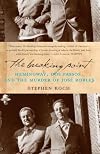
The Breaking Point: Hemingway, Dos Passos, and the Murder of Jose Robles (2005) 106 copies, 4 reviews
El Fin de la Inocencia. Los intelectuales occidentales y la tentación de Stalin (1993) 81 copies, 1 review
Associated Works
Tagged
Common Knowledge
- Birthdate
- 1941-05-08
- Date of death
- 2026-02-24
- Gender
- male
- Occupations
- literary critic
- Nationality
- USA
- Birthplace
- St. Paul, Minnesota, USA
- Places of residence
- Northfield, Minnesota, USA
- Associated Place (for map)
- Minnesota, USA
Members
Reviews

In 1938, a seventeen-year-old called Herschel Grynszpan shot and killed a German embassy official. Grynszpan, naive and possibly bipolar, did so in the hope that his desperate action would call attention to the increasing plight of Jews in his native Germany. Grynszpan was not only successful, but he was used as a scapegoat by the Nazis to commit Kristallnacht. The Nazis intended to put him at the centre of a massive show trial, but this never came to pass and Grynszpan's fate is show more ultimately unknown, although he almost certainly died in a concentration camp.
Stephen Koch does a good job of using the scant available source material to bring the lonely, hot-headed Grynszpan back to life, although at times his ruminations on Grynszpan's character get a bit florid for me. Overall, an interesting exploration of a historical event which often gets relegated to the footnotes, although I felt that some more contextualisation of l'affaire Grynszpan within the history of show trials and political theatre might well have made this a stronger book—and one whose resonances with the present day were even more apparent. show less
Stephen Koch does a good job of using the scant available source material to bring the lonely, hot-headed Grynszpan back to life, although at times his ruminations on Grynszpan's character get a bit florid for me. Overall, an interesting exploration of a historical event which often gets relegated to the footnotes, although I felt that some more contextualisation of l'affaire Grynszpan within the history of show trials and political theatre might well have made this a stronger book—and one whose resonances with the present day were even more apparent. show less
3.5
I was inspired to read this book by the off-broadway play Spain, which examines the interplay between art and propaganda in making the documentary The Spanish Earth, a film about the then-ongoing Spanish Civil War. The Dutch filmmaker Joris Ivens was a frontman for the KGB, and his handlers wanted Ernst Hemingway to be the writer/ narrator. Ivens and his partner used John Dos Passos to lure Hemingway.
I knew nothing of this incident but was intrigued when I learned about Stephen Koch's show more nonfiction book The Breaking Point: Hemingway, Dos Passos, and the Murder of Jose Robles. The book provides the historical context lacking in the play and shifts the focus to the battle between the Stalinists and the independent left during the Civil War. The Stalinists' murder of Jose Robles, Dos Passos's close friend, leads to his disillusionment and break with Hemingway. Like Orwell, whom he befriends, he leaves Spain a changed man.
The book provides an in-depth and complex portrait of the war and the famous writers who traveled to Spain to cover it in the international press. It is thoroughly researched and reads like a novel. I recommend it to anyone interested in this period. show less
I was inspired to read this book by the off-broadway play Spain, which examines the interplay between art and propaganda in making the documentary The Spanish Earth, a film about the then-ongoing Spanish Civil War. The Dutch filmmaker Joris Ivens was a frontman for the KGB, and his handlers wanted Ernst Hemingway to be the writer/ narrator. Ivens and his partner used John Dos Passos to lure Hemingway.
I knew nothing of this incident but was intrigued when I learned about Stephen Koch's show more nonfiction book The Breaking Point: Hemingway, Dos Passos, and the Murder of Jose Robles. The book provides the historical context lacking in the play and shifts the focus to the battle between the Stalinists and the independent left during the Civil War. The Stalinists' murder of Jose Robles, Dos Passos's close friend, leads to his disillusionment and break with Hemingway. Like Orwell, whom he befriends, he leaves Spain a changed man.
The book provides an in-depth and complex portrait of the war and the famous writers who traveled to Spain to cover it in the international press. It is thoroughly researched and reads like a novel. I recommend it to anyone interested in this period. show less
The Modern Library Writer's Workshop: A Guide to the Craft of Fiction (Modern Library Paperbacks) by Stephen Koch
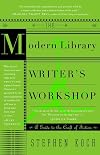
By far the best book on writing a story/novel I've read.
It not a beginner's book, though. You need some mileage behind you to extract significant value from it, else you'll end up with too much information to process which will bog you down.
My least best chapter was Inventing Your Style. This felt a bit arm-wavy, though it provides plenty of examples and stresses the importance of style. The chapter redeems itself with a short section on readability at its end. "What really makes for show more readability is not clarity but attitude."
The most valuable chapter I found to be Working and Reworking; a lecture on early drafts and the techniques of revision. It's also the most prescriptive part of the book, and, for anyone who has wrangled a first draft into submission (or failed to!), the most instructive.
Koch's knowledge and experience is evident on each page, as is his steady, encouraging, relaxed voice. The book is a masterclass that every writer will benefit from reading. show less
It not a beginner's book, though. You need some mileage behind you to extract significant value from it, else you'll end up with too much information to process which will bog you down.
My least best chapter was Inventing Your Style. This felt a bit arm-wavy, though it provides plenty of examples and stresses the importance of style. The chapter redeems itself with a short section on readability at its end. "What really makes for show more readability is not clarity but attitude."
The most valuable chapter I found to be Working and Reworking; a lecture on early drafts and the techniques of revision. It's also the most prescriptive part of the book, and, for anyone who has wrangled a first draft into submission (or failed to!), the most instructive.
Koch's knowledge and experience is evident on each page, as is his steady, encouraging, relaxed voice. The book is a masterclass that every writer will benefit from reading. show less
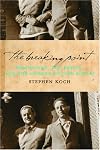
* The Spanish Civil War and the leftist learnings of many 1930s artists are central to the story of the disintegration of the friendship of Ernest Hemingway and John Dos Passos.
A test: Which of these men have you heard of?
* Ernest Hemingway? You kidding? Of course. Read his books and many of his short stories. About the best writer the 20th century produced.
* John Dos Passos? Well, yeah, sort of. A writer, sure. Never read any of his stuff.
* Jose Robles? Sorry. Never heard of him.
Those show more three come together, sort of, in an odd but interesting story of the 1930s' major literary lights by Stephen Koch titled The Breaking Point: Hemingway, Dos Passos, and the Murder of Jose Robles.
Hemingway and Dos Passos in the middle of the 1930 were America's two leading novelists. They were close friends and supporters of the left-wing Popular Front, a Soviet-backed organization of writers and artists. The major battle of the forces of the left against the fascists came during the Spanish Civil War, but with the mix of internal Spanish politics and Soviet meddling, nothing in this tale is simple. The story revolves around the dissipation of the friendship between Hemingway and Dos Passos. That occurred for a number of reasons, including Hemingway's paranoia and his role in spreading the rumor that Jose Robles -- Dos Passos' friend -- was executed by the Spanish government because he was a fascist spy.
Koch has carefully researched this tale of Depression era radical chic. He includes many interesting sidelights, such as the development of the relationship between Hemingway and Martha Gellhorn, the noted journalist who would become Hemingway's third wife. (Gellhorn is about to be honored by the U.S. Postal Service.) Hemingway is clearly the villain, and Dos Passos is the good guy in Koch's view, and it's hard to disagree with him.
One of the over-arching lessons of this book is how extensively the Communist and leftist movement gripped many of the nation's leading authors and artists in the 1930. This hold led many of them to ignore Stalin's atrocities until it was too late, and they too had blood on their hands as Uncle Joe's apologists.
If you are interested in any of these issues, this is an excellent book.
Highly recommended. show less
A test: Which of these men have you heard of?
* Ernest Hemingway? You kidding? Of course. Read his books and many of his short stories. About the best writer the 20th century produced.
* John Dos Passos? Well, yeah, sort of. A writer, sure. Never read any of his stuff.
* Jose Robles? Sorry. Never heard of him.
Those show more three come together, sort of, in an odd but interesting story of the 1930s' major literary lights by Stephen Koch titled The Breaking Point: Hemingway, Dos Passos, and the Murder of Jose Robles.
Hemingway and Dos Passos in the middle of the 1930 were America's two leading novelists. They were close friends and supporters of the left-wing Popular Front, a Soviet-backed organization of writers and artists. The major battle of the forces of the left against the fascists came during the Spanish Civil War, but with the mix of internal Spanish politics and Soviet meddling, nothing in this tale is simple. The story revolves around the dissipation of the friendship between Hemingway and Dos Passos. That occurred for a number of reasons, including Hemingway's paranoia and his role in spreading the rumor that Jose Robles -- Dos Passos' friend -- was executed by the Spanish government because he was a fascist spy.
Koch has carefully researched this tale of Depression era radical chic. He includes many interesting sidelights, such as the development of the relationship between Hemingway and Martha Gellhorn, the noted journalist who would become Hemingway's third wife. (Gellhorn is about to be honored by the U.S. Postal Service.) Hemingway is clearly the villain, and Dos Passos is the good guy in Koch's view, and it's hard to disagree with him.
One of the over-arching lessons of this book is how extensively the Communist and leftist movement gripped many of the nation's leading authors and artists in the 1930. This hold led many of them to ignore Stalin's atrocities until it was too late, and they too had blood on their hands as Uncle Joe's apologists.
If you are interested in any of these issues, this is an excellent book.
Highly recommended. show less
Lists
Craft Books (1)
Awards


You May Also Like


Associated Authors
Statistics
- Works
- 11
- Also by
- 4
- Members
- 762
- Popularity
- #33,390
- Rating
- 3.9
- Reviews
- 14
- ISBNs
- 44
- Languages
- 6