
Ian Johnson (1) (1962–)
Author of The Souls of China: The Return of Religion After Mao
For other authors named Ian Johnson, see the disambiguation page.
About the Author
Pulitzer Prize-winning journalist Ian Johnson spent five years researching and writing this book, interviewing survivors, scouring archives, and pressuring governments to release sensitive intelligence documents. A reporter for the New York Times, he is also the author of Wild Grass: Three show more Portraits of Change in Modern China. show less
Works by Ian Johnson
A Mosque in Munich: Nazis, the CIA, and the Rise of the Muslim Brotherhood in the West (2010) 106 copies, 1 review
Associated Works
Faithful Disobedience: Writings on Church and State from a Chinese House Church Movement (2022) — Foreword — 49 copies
Tagged
Common Knowledge
- Legal name
- Johnson, Ian Denis
- Birthdate
- 1962-07-27
- Gender
- male
- Education
- University of Florida
- Occupations
- reporter
- Organizations
- Wall Street Journal
New York Review of Books
New York Times - Nationality
- USA
- Birthplace
- Montreal, Quebec, Canada
- Places of residence
- Beijing, China
Berlin, Germany
Taipei, Taiwan
Members
Reviews
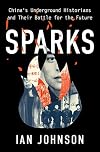
To be succinct, Ian Johnson, a long-time observer of the China scene, who was ultimately kicked out of China by the Xi Jinping regime, is giving you a two-track study.
On one hand, there is the tireless effort of the Chinese Communist Party against "historical nihilism." That is to say, the struggle to make sure that the self-serving notion that the CCP dominance in China was inevitable and that all who are a threat to this will be cut down. Xi's own family suffered from this sort of thinking show more under Mao, but that hasn't prevented him from playing that game with maximum effort.
On the other hand, one has the "Underground Historians," those who try to remember the past as it actually happened, and honor the victims of the CCP's crimes, so that there is at least a little accountability, in the hopes that one day some real justice will be done. Johnson's recounting of the time that he's spent with these people is the real emotional core of the book.
Johnson argues that will it is convenient to write-off the hope that there might be something better in China's future, despite all the pressure public push-back continues, and there is a real sense that the CCP's best days are behind it. The question is how much damage they do on the way out. show less
On one hand, there is the tireless effort of the Chinese Communist Party against "historical nihilism." That is to say, the struggle to make sure that the self-serving notion that the CCP dominance in China was inevitable and that all who are a threat to this will be cut down. Xi's own family suffered from this sort of thinking show more under Mao, but that hasn't prevented him from playing that game with maximum effort.
On the other hand, one has the "Underground Historians," those who try to remember the past as it actually happened, and honor the victims of the CCP's crimes, so that there is at least a little accountability, in the hopes that one day some real justice will be done. Johnson's recounting of the time that he's spent with these people is the real emotional core of the book.
Johnson argues that will it is convenient to write-off the hope that there might be something better in China's future, despite all the pressure public push-back continues, and there is a real sense that the CCP's best days are behind it. The question is how much damage they do on the way out. show less
In the Chinese Communist Party's world, history is a war zone to be dominated. As events move further into the past, they become increasingly contentious. Go back fifty years, and CCP's religious violence is reassigned to World War II Japanese. Go back seventy years, events such as Chinese land reforms are so contentious so as to be entirely taboo.
China is the world's preeminent monolith. How can anyone hope that history hasn't ended, carved in stone? As Ian Johnson meticulously documents, show more there are millions of "wild historians" across China, which, despite the CCP rhetoric, continues to be a diverse, storied, and stalwart.
The books title was inspired by "Spark," a briefly-circulated underground magazine published in China in the 1960s.
This book does depict the gore, cannibalism, and horror of the Cultural Revolution and other eras of China's history. If this sort of things disturbs you, you may need to skip over these parts.
I think that Adam Curtis' "Hypernormalisation" concept is the best way of understanding what is playing out in China right now. When reality becomes too complex to control, autocratic regimes begin to contract the Overton Window until it is small enough for them to control. This is the CCP's agenda as it relates to history.
The reader might ask, "but don't all empires rewrite history?" Well, yes, and of course the United States has done this as well. And yet it is especially illuminating in the case of the CCP, as it is possibly the most extreme case ever witnessed (which is ominous, given the direction of Freedom of the Press in most of the world right now, US included).
Reading this book has contributed to my evolving understanding of the importance of history. I would currently express it thus: history is the discipline of excavating the moments when exterior forces become interior dynamics. Everything that has ever happened has left its mark on the substrate of the present moment, but if you want to expand the present back out to eternity, these artifacts become infinitely subtle.
At the end of the book, Johnson offers an extensive set of books, films, and references to other materials. I can't wait to explore further. show less
China is the world's preeminent monolith. How can anyone hope that history hasn't ended, carved in stone? As Ian Johnson meticulously documents, show more there are millions of "wild historians" across China, which, despite the CCP rhetoric, continues to be a diverse, storied, and stalwart.
The books title was inspired by "Spark," a briefly-circulated underground magazine published in China in the 1960s.
This book does depict the gore, cannibalism, and horror of the Cultural Revolution and other eras of China's history. If this sort of things disturbs you, you may need to skip over these parts.
I think that Adam Curtis' "Hypernormalisation" concept is the best way of understanding what is playing out in China right now. When reality becomes too complex to control, autocratic regimes begin to contract the Overton Window until it is small enough for them to control. This is the CCP's agenda as it relates to history.
The reader might ask, "but don't all empires rewrite history?" Well, yes, and of course the United States has done this as well. And yet it is especially illuminating in the case of the CCP, as it is possibly the most extreme case ever witnessed (which is ominous, given the direction of Freedom of the Press in most of the world right now, US included).
Reading this book has contributed to my evolving understanding of the importance of history. I would currently express it thus: history is the discipline of excavating the moments when exterior forces become interior dynamics. Everything that has ever happened has left its mark on the substrate of the present moment, but if you want to expand the present back out to eternity, these artifacts become infinitely subtle.
At the end of the book, Johnson offers an extensive set of books, films, and references to other materials. I can't wait to explore further. show less
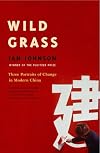
As a mother who adopted my daughter from China in 2005, I read everything about China I can get my hands on and I have a library of books on China I am collecting and saving for my daughter.
Wild Grass is a must read for anyone who is serious about learning about Contemporary China, Chinese history and the lives and struggles of Chinese people.
It is especially valuable for parents adopting from China. We need a deeper understanding of China than the travel guides and a three-week visit can show more give us and we need to step beyond stereotypes of China to share China with our children Johnson reveals the realities our children from China could have faced had they stayed and the life struggles our children's biological birth parents and siblings face today. We can empathize and come to a greater understanding of our children's histories and culture and we can help our children understand through this book.
Johnson gives his insightful and perceptive view into Chinese lives that we can't get for ourselves. He allows us to imagine we are Chinese while we walk in the shoes of three different Chinese citizens. He describes life under communist party rule and some of the ways the Party inhibits personal freedoms... just like the one-child policy does...the basic freedoms many of us take for granted in the United States. Lucky for us, Johnson is an expert on China as well as a gifted writer and he weaves these stories like a mystery making them fun to read, fascinating and as quirky as China can be.
I hope this is only the first of Johnson's many books on China. There are simply not enough books with this caliber of writing to inform us about China. We are fortunate he is in China and continues to write. show less
Wild Grass is a must read for anyone who is serious about learning about Contemporary China, Chinese history and the lives and struggles of Chinese people.
It is especially valuable for parents adopting from China. We need a deeper understanding of China than the travel guides and a three-week visit can show more give us and we need to step beyond stereotypes of China to share China with our children Johnson reveals the realities our children from China could have faced had they stayed and the life struggles our children's biological birth parents and siblings face today. We can empathize and come to a greater understanding of our children's histories and culture and we can help our children understand through this book.
Johnson gives his insightful and perceptive view into Chinese lives that we can't get for ourselves. He allows us to imagine we are Chinese while we walk in the shoes of three different Chinese citizens. He describes life under communist party rule and some of the ways the Party inhibits personal freedoms... just like the one-child policy does...the basic freedoms many of us take for granted in the United States. Lucky for us, Johnson is an expert on China as well as a gifted writer and he weaves these stories like a mystery making them fun to read, fascinating and as quirky as China can be.
I hope this is only the first of Johnson's many books on China. There are simply not enough books with this caliber of writing to inform us about China. We are fortunate he is in China and continues to write. show less
A review in the New York Review of Books by Perry Link, who wrote the biography of Liu Xiaobo ( I Have No Enemies), of this book directed me to this fine exploration of the dissidents writing of history in China. Finely written with an appreciation of relevant details. Johnson skillfully explains through the voice of dissident historians how the current CCP under Xi views the historical narrative directly connected to continued control of society. Johnson covers huge catastrophes such as The show more Great Leap forward which caused a famine resulting in the death of 35 million people. He then moved to a distant province where, due to the Cultural Revolution in which Mao elevated counter-revolutionaries to a level of threats to China who needed to be killed, 9,000 people were murdered via the demands of cadres sent from Bejing. Johnson covers feminist film makers in which he documents how today's dissidents comprise women as compared to the males who comprised protesters and dissidents at the time of Tiananmen in 1989. This large volume of work is well worth the time and effort for any reader interested in dissident historians in today's China. This large volume of work is well worth the time and effort for any reader interested in dissident historians in today's China. The author closes by providing an antidote to be given to future generations by those who put truth to power to prevent amnesia of atrocities. show less
Lists
Awards


You May Also Like


Associated Authors
Statistics
- Works
- 8
- Also by
- 1
- Members
- 490
- Popularity
- #50,415
- Rating
- 4.1
- Reviews
- 10
- ISBNs
- 52
- Languages
- 3