
David G. Dalin
Author of The Myth of Hitler's Pope: How Pope Pius XII Rescued Jews from the Nazis
About the Author
David G. Dalin is a professor of History and Political Science at Ave Maria University in Naples, Florida.
Works by David G. Dalin
The Myth of Hitler's Pope: How Pope Pius XII Rescued Jews from the Nazis (2005) 231 copies, 3 reviews
Tagged
Common Knowledge
- Gender
- male
- Education
- University of California, Berkeley
Brandeis University
Jewish Theological Seminary of America - Occupations
- rabbi
historian
author - Organizations
- Ave Maria University, Florida, USA
University of Hartford - Nationality
- USA
- Associated Place (for map)
- USA
Members
Reviews
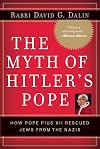
I don't feel this book was a good as it could have been. It suffers from the same as films like "Farenhype 9/11" in that they are released far too quickly, primarily to challenge some incorrect "truthes" presented by a more popular work. Much of "The Myth of Hitlers' Pope" is almost unusable without having read John Cornwell's "Hitler's Pope"
That being said what is there appears to be well documented and properly calls out the errors in the more popular work. Our author David Dalin is a show more Conservative Rabbi. And I do mean Conservative with a Capital C. He probably thinks folks who vote Democrat can't be true believers, with chapters like "The Liberal Medias Lies about the Pope past and present" BUt I digress.
Dalin interviews suriveros of the holocaust who were able to make it through the work of the Church. Some became Catholic after the war (technically during as they were baptized so to prove they weren't Jewish) and some returned to the faith of their fathers when it was safe to do so. He examines the writings of Pope Pius XII in light of the situation at the time. I agree with his conclusion that as a "world leader" in the middle of fascist Europe, he did absolutely everything he could, even when toward the end of the War Hitler wanted him killed. Dalin seems to claim that Cornwell's biggest argument for saying Pius was a Nazi collaborator is because he didn't do enough. If this is true it is a very bad argument. What were American liberals doing during the rise of Hitler? Some where pinning for war, some were fighting against war and claiming Americans should stay out of Europeans' business, and some just wanted to punch Nazi's with no real end game in sight. Really not that different than now. The best it has is reminded me that The Holy Father is still a human, and still primarily has to work within the context of the time he is alive.
If you are interested probably worth reading, though by now their may be better edited works available. show less
That being said what is there appears to be well documented and properly calls out the errors in the more popular work. Our author David Dalin is a show more Conservative Rabbi. And I do mean Conservative with a Capital C. He probably thinks folks who vote Democrat can't be true believers, with chapters like "The Liberal Medias Lies about the Pope past and present" BUt I digress.
Dalin interviews suriveros of the holocaust who were able to make it through the work of the Church. Some became Catholic after the war (technically during as they were baptized so to prove they weren't Jewish) and some returned to the faith of their fathers when it was safe to do so. He examines the writings of Pope Pius XII in light of the situation at the time. I agree with his conclusion that as a "world leader" in the middle of fascist Europe, he did absolutely everything he could, even when toward the end of the War Hitler wanted him killed. Dalin seems to claim that Cornwell's biggest argument for saying Pius was a Nazi collaborator is because he didn't do enough. If this is true it is a very bad argument. What were American liberals doing during the rise of Hitler? Some where pinning for war, some were fighting against war and claiming Americans should stay out of Europeans' business, and some just wanted to punch Nazi's with no real end game in sight. Really not that different than now. The best it has is reminded me that The Holy Father is still a human, and still primarily has to work within the context of the time he is alive.
If you are interested probably worth reading, though by now their may be better edited works available. show less
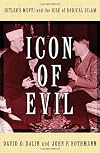
That Haj Amin al-Husseini, the Grand Mufti of Jerusalem, was a bit of a psycho, is not (or should not) a matter of conjecture. The question is why his name is not more synonymous with the Holocaust.
Dalin and Rothman set out to fix this situation but in a book somewhat shorter than I expected, really don't delve deeply into the life and times of the Grand Mufti, and fall into the trap of going to lengths to reinforce the Mufti's evilness (the man complained to German Gas Chamber operators show more that they weren't killing Jews quick enough, so I don't think we need reminding that he wasn't the most savoury of characters).
While "Icon of Evil" might be useful as introduction to the world of Haj Amin al-Husseini, according to the Bibliography there are a multitude of sources that will give you a fuller view of the Mufti. show less
Dalin and Rothman set out to fix this situation but in a book somewhat shorter than I expected, really don't delve deeply into the life and times of the Grand Mufti, and fall into the trap of going to lengths to reinforce the Mufti's evilness (the man complained to German Gas Chamber operators show more that they weren't killing Jews quick enough, so I don't think we need reminding that he wasn't the most savoury of characters).
While "Icon of Evil" might be useful as introduction to the world of Haj Amin al-Husseini, according to the Bibliography there are a multitude of sources that will give you a fuller view of the Mufti. show less
A great book to read in conjunction with Hitler's Pope. Whatever your view on the topic, the book is well written and well documented. After reading both books, I think that both authors make a strong case for their POV, and that each provides ample evidence for his perspective.
this book is based more on testimony from individuals, whereas Hitler's Pope is more arms length review of documents, speeches, and other testimony.
But in any case, it's a good read, and the writer makes a strong show more case that calling him Hitler's Pope was rather sensationalistic. show less
this book is based more on testimony from individuals, whereas Hitler's Pope is more arms length review of documents, speeches, and other testimony.
But in any case, it's a good read, and the writer makes a strong show more case that calling him Hitler's Pope was rather sensationalistic. show less
The Myth of Hitler’s Poe: How Pope Pius XII Rescued Jews from the Nazis. Rabbi David G. Dalin. 2005. I think I started this book last fall and put it aside, but after reading In the Garden of Beasts, When God Looked the Other Way, and Shallow Graves in Siberia, I decided to finish it. Dalin wrote the book in response to several anti-Catholic and anti Pope Pius XII books notably James Carroll’s Constantine’s Sword, Gary Will’s Papal Sin, and John Cornwell’s Hitler’s Pope. The most show more interesting thing to note about the authors of this book is that they are extremely angry with the church and they are using Pius XII’s conduct to attack the church. Dalin leans the other way and makes the case that the church did everything it could during the war. I feel like the truth is somewhere in the middle. I wish James Hitchcock had gone into more depth about it in his history but he didn’t. Dalin also devotes an entire chapter to connection between Hitler and the devotees of radical Islam and the roots of modern anti-Semitism show less
Lists
Awards

You May Also Like


Statistics
- Works
- 11
- Members
- 420
- Popularity
- #58,059
- Rating
- 3.7
- Reviews
- 6
- ISBNs
- 31
- Languages
- 4
- Favorited
- 1