
John Cornwell (1) (1940–)
Author of Hitler's Pope: The Secret History of Pius XII
For other authors named John Cornwell, see the disambiguation page.
About the Author
John Cornwell is Senior Research Fellow at Jesus College, Cambridge, England, and an award-winning journalist and author. His A Thief in the Night: The Death of Pope John Paul I was a world bestseller. He has profiled Pope John Paul II for Vanity Fair and the London Sunday Times magazine and has show more written on Catholic issues for many publications around the world. show less
Image credit: John Cornwell (Jerry Bauer)
Works by John Cornwell
The Pontiff in Winter: Triumph and Conflict in the Reign of John Paul II (2004) 158 copies, 5 reviews
Associated Works
Tagged
Common Knowledge
- Birthdate
- 1940
- Gender
- male
- Education
- Christ's College, Cambridge
St Benet's Hall, Oxford - Occupations
- writer
journalist
university professor - Organizations
- Jesus College, Cambridge
- Awards and honors
- Royal Society of Literature (Fellow)
- Nationality
- UK
- Birthplace
- East Ham, London, England, UK
- Places of residence
- Buenos Aires, Argentina
Santiago, Chile
London, England, UK - Associated Place (for map)
- UK
Members
Reviews
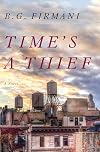
Did you ever have a person or group of people in your life that were horrible for you, but exerted some kind of magical pull on your affections, time and interest? Did you ever know someone who was a bad influence, but you loved being with them? Who treated you horribly but somehow was the best thing that ever happened to you, and the worst all at the same time?
This novel is about such a relationship. The protagonist, "Chess" Varani, is recounting for us her admittedly unhealthy obsession show more with the amazing, maddening, tantalizing family known as the Marr-Lowensteins. She encounters Kendra first of all, Kendra the flighty, drug-addled, exciting, school-skipping rich kid with whom she forms an immediate inexplicable co-dependent relationship, if it can be called that, which consists mainly of Kendra using Chess for whatever the moment demands and then dropping out of her life for lengths of time. Chess is slowly drawn into the circle of the Marr-Lowensteins, eventually coming to work for the matriarch, Clarice, and must come to terms with her unhealthy relationship with this family, her own needs as a blossoming young adult, and whether or not to sever ties with them in order to go into the world and live a full and healthier life.
The book is a modern, or post-modern, bildungsroman, one that deals with an emotional and intellectual growing-up rather than a physical one. In the 1980s New York in which Chess struggles to survive, the pull from the Marr-Lowensteins is like the thrill of a cheap bodice-ripper: you know it's horrible for your constitution, but you just can't pull yourself away and have to read just one more chapter. The Marr-Lowensteins are dysfunctional in the extreme, and Clarice seems to be the chief culprit. Once taken under her wing, Chess can't seem to get out from under it, although she knows she is entangling herself in the family sickness.
As a coming of age tale, this is very well done. The Marr-Lowensteins become a surrogate family for Chess, one she is desperate for, at the same time that she realizes she's got to break away and live her own life. I thought the conflicts and confusions Chess faces were realistically complex and interesting.
The author structures this as a tale-within-a-tale. Chess is telling this story more than 20 years past these events, and the first third of the novel alternates between 20 years hence and the origin of the tale. This seems, at first, a mistake, especially because as the tale moves into the second third, Chess's more recent story, taking place in 2008, is dropped completely, until the very end of the book. However, when it is picked up again towards the end, the author's intent becomes clear: to show just how successful or unsuccessful Chess has been over the decades in emerging fully independent of her past. Whether or not, and how, she does, forms the last part of the novel.
One note: though I liked Chess, the author has her drop numerous -- i.e on almost every single page -- arcane literary and cultural references, to authors, poems, films, art, etc, and expect the reader to understand the significance of the reference. To wit: "I realized that her pose reminded me of a Giorgione: the Dresden Venus." "It put me in the mind of a certain kind of Nordic desolation, of Knut Hamsun walking around Christiania wretched with hunger." This is annoying, because I consider myself fairly cultured and well-read, and couldn't be in Chess's mind with her.
And one more note: can we be done with the "gritty 80s" thing? It's just so done to death at this point.
Thank you to the author and publisher for a review copy. show less
This novel is about such a relationship. The protagonist, "Chess" Varani, is recounting for us her admittedly unhealthy obsession show more with the amazing, maddening, tantalizing family known as the Marr-Lowensteins. She encounters Kendra first of all, Kendra the flighty, drug-addled, exciting, school-skipping rich kid with whom she forms an immediate inexplicable co-dependent relationship, if it can be called that, which consists mainly of Kendra using Chess for whatever the moment demands and then dropping out of her life for lengths of time. Chess is slowly drawn into the circle of the Marr-Lowensteins, eventually coming to work for the matriarch, Clarice, and must come to terms with her unhealthy relationship with this family, her own needs as a blossoming young adult, and whether or not to sever ties with them in order to go into the world and live a full and healthier life.
The book is a modern, or post-modern, bildungsroman, one that deals with an emotional and intellectual growing-up rather than a physical one. In the 1980s New York in which Chess struggles to survive, the pull from the Marr-Lowensteins is like the thrill of a cheap bodice-ripper: you know it's horrible for your constitution, but you just can't pull yourself away and have to read just one more chapter. The Marr-Lowensteins are dysfunctional in the extreme, and Clarice seems to be the chief culprit. Once taken under her wing, Chess can't seem to get out from under it, although she knows she is entangling herself in the family sickness.
As a coming of age tale, this is very well done. The Marr-Lowensteins become a surrogate family for Chess, one she is desperate for, at the same time that she realizes she's got to break away and live her own life. I thought the conflicts and confusions Chess faces were realistically complex and interesting.
The author structures this as a tale-within-a-tale. Chess is telling this story more than 20 years past these events, and the first third of the novel alternates between 20 years hence and the origin of the tale. This seems, at first, a mistake, especially because as the tale moves into the second third, Chess's more recent story, taking place in 2008, is dropped completely, until the very end of the book. However, when it is picked up again towards the end, the author's intent becomes clear: to show just how successful or unsuccessful Chess has been over the decades in emerging fully independent of her past. Whether or not, and how, she does, forms the last part of the novel.
One note: though I liked Chess, the author has her drop numerous -- i.e on almost every single page -- arcane literary and cultural references, to authors, poems, films, art, etc, and expect the reader to understand the significance of the reference. To wit: "I realized that her pose reminded me of a Giorgione: the Dresden Venus." "It put me in the mind of a certain kind of Nordic desolation, of Knut Hamsun walking around Christiania wretched with hunger." This is annoying, because I consider myself fairly cultured and well-read, and couldn't be in Chess's mind with her.
And one more note: can we be done with the "gritty 80s" thing? It's just so done to death at this point.
Thank you to the author and publisher for a review copy. show less
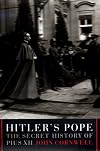
Fascinating account of the rise of Eugenio Pacelli to become Pope, and his reign thereafter. Though narratively focusing on Pacelli, the book is also an account of what can only be described as fascism or authoritarian rule within the Catholic Church, as well as the existence of anti-semitism within the Church. Extraordinarily researched and referenced, if at times a little too meticulously recounted. This corner of World War II world politics has rarely seen the light of day. Pacelli cannot show more be acquitted as he was, at best, willingly inactive when he could have made a difference, or a knowing collaborator with Hitler, at worst. The book certainly has ample evidence of Pacelli's own anti-semitism and fascistic notions with regard to Church rule. Given the length and breadth of his reign, this is necessary reading to understand modern Catholic politics.
4 1/2 bones!!!!!
Highly Recommended show less
4 1/2 bones!!!!!
Highly Recommended show less
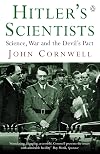
Before Hitler most of the pioneering atomic scientists were working in Germany. Many of them were Jewish. So many brilliant men, working at the same time! Great scientists were not necessarily great men, and some remained in Germany to further their careers, taking the jobs of sacked Jews, disclaiming responsibility for Nazi atrocities and using slave labour.
Cornwell compares the moral limitations and hypocrisy of scientists in Nazi Germany with those of scientists today . He quotes the show more words of Rotblat, winner of the Nobel Peace Prize and the only scientist to resign from the Manhattan Project when it became clear that Germany was not developing an atomic bomb. Rotblat believed that the way to prevent the prostitution of science was for scientists to be "human beings first and scientists second." show less
Cornwell compares the moral limitations and hypocrisy of scientists in Nazi Germany with those of scientists today . He quotes the show more words of Rotblat, winner of the Nobel Peace Prize and the only scientist to resign from the Manhattan Project when it became clear that Germany was not developing an atomic bomb. Rotblat believed that the way to prevent the prostitution of science was for scientists to be "human beings first and scientists second." show less
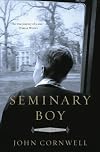
One of the most extraordinary memoirs of recent years, the acclaimed writer John Cornwell has finally written his own story, and the story of a choice he had to make between the Church and a life lived outside its confines. John Cornwell decided to become a priest at the age of thirteen, a strange choice perhaps for a boy who'd been sent to a 'convalescent home' for having whacked a nun about the head. Growing up in a chaotic household, sharing two rooms with his brothers and sisters, his show more hot-headed mother and - when he was around - absconding father, John spent his time roaming the war-torn streets of London looking for trouble. One day, at his mother's suggestion, he responded to a call from his local parish priest for altar servers. The 'dance of the rituals', the murmur of Latin and the candlelit dawn took hold of his imagination and provided him with a new and unexpected comfort. He left post-war London for Cotton, a seminary in the West Midlands. In this hidden, all-male world, with its rhythms of devotion and prayer, John grew up caught between his religious feelings and the rough and tumble of his life back in London; between seeking the face of God in the wild countryside around him and experiencing his first kiss; between monitoring his soul and watching a girl from a moving train whose face he will never forget. Cornwell tells us of a world now vanished: of the colourful community of priests in charge; of the boys and their intense and sometimes passionate friendships; of the hovering threat of abuse in this cloistered environment. And he tells us of his struggle to come to terms with a shameful secret from his London childhood - a vicious sexual attack which haunts his time at Cotton. A book of tremendous warmth and humour, 'Seminary Boy' is about an adolescent's search for a father and for a home. show less
Lists
Awards


You May Also Like


Associated Authors
Statistics
- Works
- 20
- Also by
- 1
- Members
- 3,158
- Popularity
- #8,090
- Rating
- 3.5
- Reviews
- 60
- ISBNs
- 151
- Languages
- 9