
Paul Rees (1)
Author of Robert Plant: A Life
For other authors named Paul Rees, see the disambiguation page.
About the Author
Paul Rees has been writing about popular music and culture since 1990. He is a former award-winning editor of the fabled British rock weekly Kerrang! and was editor-in-chief of Q magazine from 2002-2012. He has interviewed everyone from Paul McCartney, Bono, Bruce Springsteen, and Madonna to AC/DC, show more Noel Gallagher, Like That, and Adele. He is the author of six previous books, including the bestselling Robert Plant: A Life. show less
Works by Paul Rees
Associated Works
Tagged
Common Knowledge
Members
Reviews
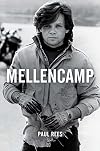
I became aware of "John Cougar" like most, in 1982 with his American Fool album, and became a huge fan. I own all his albums, even the three really crappy early ones. But I will say that, from 1979 to his latest release, with the odd minor exception, I love all his albums.
I even count myself lucky enough to have seen the stage show of Ghost Brothers of Darkland County, his collaboration with Stephen King. Loved that too.
I'd read Kenny Aranoff's biography a couple of years ago, and I'd also show more heard that Mellencamp could be a bit of a dick, but this is the book that confirms it. He's also had to be, to get past the record company's enforced name change, and marketing him as the next Rick Springfield.
He's a dick, yes, but his heart is usually in the right place. I can't imagine he's an easy guy to be around, but I do appreciate the art he makes and I can say I truly enjoyed this warts and all glimpse into his life. Well paced, well observed, well written.
One of the better musician bios I've read. show less
I even count myself lucky enough to have seen the stage show of Ghost Brothers of Darkland County, his collaboration with Stephen King. Loved that too.
I'd read Kenny Aranoff's biography a couple of years ago, and I'd also show more heard that Mellencamp could be a bit of a dick, but this is the book that confirms it. He's also had to be, to get past the record company's enforced name change, and marketing him as the next Rick Springfield.
He's a dick, yes, but his heart is usually in the right place. I can't imagine he's an easy guy to be around, but I do appreciate the art he makes and I can say I truly enjoyed this warts and all glimpse into his life. Well paced, well observed, well written.
One of the better musician bios I've read. show less
I was a longtime fan of John Cougar followed by John Mellencamp. (Alas, my husband HATES John Mellencamp, so it's been kind of difficult for me to enjoy him in recent years; I'm always hearing negative opinions...)
I started reading this book and quickly developed a dislike to what I was learning about John Mellencamp as a person. Volatile, violent, reckless, mean, not nice, and maybe not even all that talented, just lucky...
I finished the book still thinking him volatile, violent, all those show more negative words. And not liking him. And yet... liking him at the same time. show less
I started reading this book and quickly developed a dislike to what I was learning about John Mellencamp as a person. Volatile, violent, reckless, mean, not nice, and maybe not even all that talented, just lucky...
I finished the book still thinking him volatile, violent, all those show more negative words. And not liking him. And yet... liking him at the same time. show less
The Ox: The Last of the Great Rock Stars: The Authorised Biography of The Who's John Entwistle by Paul Rees
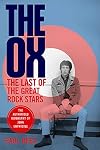
A sorry tale of a young, prodigiously talented musician achieving his wildest dreams whilst never giving the appearance of maturing as a person.
Townshend describes him as disciplined, funny and inspired and "as a bass player John is pretty unbeatable." He clearly loved the adrenaline rush of performing and expressed it best within the fire and mutual antipathy of The Who.
Entwistle is legendary for his outlandish degree of proficiency and originality. This had to come from somewhere and be show more nurtured with long hours of effort. There is no insight provided by the book, or frankly in any of the interviews provided by Entwistle himself. Without the music, the book narrates a life that is a dreary tale of booze, drugs, girls and shallow personal relationships.
The critical coverage of the music is standard fare, and is both shallow and wrong. No mention of Glenn Tipton!
Unfriendly and uncommunicative with a cruel sense of humour, Entwistle is perhaps less likeable close up than he seemed from a distance.
Overall, this is a less than compelling book about a talented kid Who's dreams came true in every possible way and who never grew up to enjoy it. show less
Townshend describes him as disciplined, funny and inspired and "as a bass player John is pretty unbeatable." He clearly loved the adrenaline rush of performing and expressed it best within the fire and mutual antipathy of The Who.
Entwistle is legendary for his outlandish degree of proficiency and originality. This had to come from somewhere and be show more nurtured with long hours of effort. There is no insight provided by the book, or frankly in any of the interviews provided by Entwistle himself. Without the music, the book narrates a life that is a dreary tale of booze, drugs, girls and shallow personal relationships.
The critical coverage of the music is standard fare, and is both shallow and wrong. No mention of Glenn Tipton!
Unfriendly and uncommunicative with a cruel sense of humour, Entwistle is perhaps less likeable close up than he seemed from a distance.
Overall, this is a less than compelling book about a talented kid Who's dreams came true in every possible way and who never grew up to enjoy it. show less
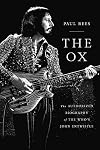
Despite numerous factual errors and the author’s lack of love for The Who’s and John Entwistle’s respective studio albums, this is a pretty good account of JE’s life, particularly his personal life.
The best elements are interviews with Entwistle's family and, best of all, quotes from Entwistle’s abandoned autobiography. I also liked reading most of his pre-fame years.
I first heard about Entwistle writing an autobiography in 1990 when he was interviewed for the TV show ‘Rapido’. show more From that day, I looked forwards to it release. When Entwistle died in June 2002, I never expected a posthumous book release, as I doubted he’d written enough for publication. Therefore, the writings that do exist are a welcome read within this bio.
Entwistle’s ex-wives Alison and Maxine offer numerous insights to the man behind the rock star, as does his son Christopher. Most of their recollections and anecdotes are new to me. I state that as someone who’s read/listened to/watched a lot of Who history over the past 30+ years.
The Who has been my favourite band since I first bought one of their albums (‘The Singles’) in 1988. Since then, the group and its four members have been my heroes, and I can’t imagine life without their music, including their respective solo work. Therefore, I hoped ‘The Ox’ would be the equivalent to Tony Fletcher’s ‘Dear Boy’ (1996), which is the ultimate bio of Keith Moon.
‘The Ox’, sadly, is not researched to the same extent as Fletcher’s masterpiece. As a boy, Fletcher met Moon, and he’s also a Who fan.
‘The Ox’ didn’t necessarily need to be written by a diehard Who devotee, but it would’ve benefited hugely if one or two fans read through the manuscript before publication. If so, they would’ve spotted all the factual errors.
For example, any real Who fan knows that Billy Idol guested at the 1989 ‘Tommy’ performance that was later released on video and DVD. According to this bio, Billy *Joel* guested. A careless error.
Also, it states that John Entwistle wore his famous skeleton jumpsuit at the 1969 Isle of Wight Festival when he in fact wore it at the 1970 IOW festival.
Regarding ‘Tommy – The Movie’, the author states that Oliver Reed was signed up to play Uncle Ernie, while Keith Moon only has a cameo, and that Entwistle only appears in two scenes. In truth, Reed plays Frank Hobbs, Moon plays Uncle Ernie as well himself as a drummer in three scenes, and Entwistle plays in those same three scenes, not two. This suggests that the author hasn’t seen the film, which isn’t compulsory of course, but he could’ve researched it better.
The author further implies that Moon doesn’t play on the ‘Tommy’ soundtrack album whilst adding that Entwistle plays most of the bass. He’s wrong in both instances. Of the 32 songs, Moon drums on seven tracks, while Entwistle plays bass on ten.
Regarding Entwistle’s 1975 solo tour (John Entwistle’s Ox, to be exact), the author states that they included ‘Can’t Explain’ and ‘Cousin Kevin’ among their set. I’d have to hear a recording of Entwistle playing ‘Can’t Explain’ to believe he’d ever play it other than with The Who.
I also doubted he’d play ‘Cousin Kevin’ during the ’75 tour, so I checked The Who Concert File website, which is a great resource. As suspected, it doesn’t list ‘Cousin Kevin’ under the songs played on that tour. Also, I have one official and two unofficial live shows from the tour, and the set is pretty standard.
On a similar note, the author states that on The Who’s 1989 tour, Entwistle only sings lead on two of his songs – ‘Boris the Spider’ and ‘Trick of the Light’ – when he in fact also sang ‘Too Late the Hero’, ‘My Wife’, ‘Cousin Kevin’, ‘Fiddle About’, and ‘Twist & Shout’. He didn’t sing all these at every show, but he typically sang three or four, depending whether they did a large chuck of ‘Tommy’ or not.
One very careless error is, after name-checking ‘I Can See for Miles’, the author mentions “the other ten songs” from 1967's ‘The Who Sell Out’, when there’re *thirteen* in total on the album. How could such a blatant error slip through?
In a similar vein, when mentioning three songs from Entwistle’s 1972 solo album ‘Whistle Rhymes’, the author refers to ‘I Feel Better’ as ‘Feeling Better’. This may not be the author’s fault here, though, as he later refers to it by the correct title. I once wrote a letter to a Who fanzine, which featured three howling factual errors that I’d never have made, so that was down to the editor(s). Could be the case here, but again, it would’ve been beneficial to have a couple of true Who fans read it through before publication to avoid such mistakes.
Although the photo inserts are of excellent quality, featuring some snaps I’ve never seen before, at least two of the photos are accompanied by incorrect text. One shot is described as The Who’s last show with Entwistle at the Royal Albert Hall, February 2002, when the photo was actually taken at the RAH on 27 November 2000.
One photo is supposedly an outtake from the ‘Who Are You’ album cover shoot. Well, to my eyes, it’s identical to the well-known (to Who fans) ‘WAY’ cover.
At times during my reading of this book, I questioned if the author has more than a slight liking for The Who. For instance, he states that the band’s four-song performance at the 2001 Concert for New York City was the band’s ‘first truly great performance in 20 years at least’.
What?! I mean, hasn’t he heard any of the magnificent recordings from The Who’s 2000 tour? Or those wonderful few shows they did towards the 1999 tour? Well, I guess if he has, he wasn’t impressed. Yes, the CFNYC was spectacular, but to state that those four songs are the band’s ‘first truly great performance in 20 years at least’ is a huge insult to The Who, and damned annoying to their real fans.
As noted at the start of this review, the author has little love for The Who’s studio albums. I had to re-read the part where he states that ‘Quadrophenia’ doesn’t have “as many outstanding songs as either ‘Tommy’ or ‘Who’s Next’”.
What?! Over the years, whenever I’ve read polls by fans on what their favourite album is, ‘Quadrophenia’ nearly always wins. It’s always my first choice, and I state that as someone who loves ‘Tommy’ and ‘Who’s Next’. Of the seventeen songs, I’d class sixteen as outstanding (the exception being the atmospheric intro ‘I am the Sea’).
I love all The Who’s albums, except ‘Endless Wire’ (2006), which I like rather than love. I either love or like every song they’ve ever released. Not all diehard fans like every song, and that doesn’t make them less of a Who fan than me, but the author of this book dislikes more than he likes.
After rubbishing Roger Daltrey’s & Keith Moon’s respective songs on The Who’s 1966 album ‘A Quick One’, the author implies that their writing efforts were so bad that they “never wrote more for The Who”. Again, I had to shake my head in disbelief. This is terrible research. Granted, Daltrey only wrote one more completely on his own for the band, and Moon only a few more, but the point is they *did* write more after ‘A Quick One’.
Incidentally, one of the two Moon compositions that the author refers to as crap – or words to that effect – features some incredible drumming. It’s as though the author has listened to ‘Cobwebs and Strange’ once, heard everything excepts Moon’s immaculate drumming, and wrote it off as a waste of space.
It does annoy me when authors of music books state their opinions as facts. I read a bio on Kate Bush in which the author would state that certain songs were good and others were weak, and I often disagreed. Same applies with ‘The Ox.’ It’d be much better to describe the song. Expressing an opinion is fine, but to state as fact that a song is poor makes for frustrating reading when it means something special to you. Who songs are the soundtrack of my life.
The author also rubbishes the 1978 ‘Who Are You’ album, stating that Entwistle’s classic ‘Trick of the Light’ isn’t a bad song, but adds that it “pales next to title track”. Well, I love the title track, but ‘Trick of the Light’ is not only my favourite on this album, it’s my favourite Entwistle-composed Who song. The eight-string bass sounds incredible, and Daltrey’s vocals are sensational.
A few years ago, when I was part of a Who Internet mailing list, someone asked everyone which was their favourite song from ‘Who Are You’. Each of the nine songs received at least one vote. I don’t know which one triumphed, as the results weren’t made known, but the title track, ‘Trick of the Light’, and Entwistle’s other two songs were contenders.
The author of this book, incidentally, states as fact that Entwistle’s ‘Had Enough’ is crap, and that the only thing ‘905’ has going for it is the synth track. Some Who fans may agree. I’m among those who don’t.
While it’s fair to state that ‘Who Are You’ isn’t The Who's best album, that doesn’t mean it’s worthless. I love it, as do many true Who fans. Some don’t, but then I’m sure no real Who fan would label it a load of balderdash like this book’s author does.
He also rubbishes The Who’s 1981 ‘Face Dances’ album, stating that ‘You Better, You Bet’ is the only song to “cut the mustard”. Really? Granted, it was a Top Ten hit, owing to its commercial sound, but if I were to list the nine songs on the album in order of preference, ‘YBYB’ would come in eighth.
The author states that Entwistle’s two compositions – ‘The Quiet One’ and ‘You’ – aren’t “any great shakes at a song”. What?! ‘The Quiet One’ is one hell of a rocker, while the exciting ‘You’ is my favourite song on the album. Ask ten real Who fans to write their own list and you’d get ten different orders of preference. Taste is subjective.
The main ingredient missing from ‘Face Dances’ is Keith Moon, who sadly died in 1978. The Who could never be the same, but it still maintained a special chemistry between Entwistle, Townshend, and Daltrey.
After reading what I alluded to above, it came as no surprise when the author went on to rubbish The Who’s 1982 album ‘It’s Hard’. He states that on ‘It’s Hard’, “Entwistle got three songs on the album like he did on ‘Face Dances’”. Eh? Entwistle had *two* songs on ‘Face Dances’. Again, poor research. It’s as though he’s played the album once and later wrote about it from memory.
If I picked this book up as, say, someone who’s heard of The Who but was only familiar with two or three songs, I think this author’s rubbishing of the band’s studio catalogue would put me off buying any of their albums.
One thing I found about The Who whenever I played a song for the first time is that most of them are growers. A lot of tracks don’t hit you after the first few listens, which might be why they never had a Number 1 single in GB or the US. Once you get to know a song, the more you love it – that’s my experience, anyway. Such as ‘Who Are You’, ‘My Generation’, and ‘The Real Me’ wowed me during my first listen, whereas I must’ve played ‘Baba O’Riley’ 20 times or more before I was struck by its brilliance.
The author is as dismissive with Entwistle’s solo albums, calling the ‘Van-Pires’ album “unmemorable”. Well, I remember it. Probably because I've listened to it more than once.
He rightfully praises Entwistle’s first two albums, which I love the most, but pretty much labels everything else as codswallop.
While I don’t have a favourite member of The Who – they’re equally magnificent in my eyes – I do like Entwistle’s solo work better than the other three’s respective output. I had, therefore, hoped to find some in-depth analysis of Entwistle’s albums, as his studio work is barely mentioned in both DVD documentaries about him.
Sadly, in this book, the author typically name-checks three songs per album, offering little insight, with the main focus being on rubbishing the material. I’ve read more detail on Entwistle’s solo work in the accompanying liner notes of the remastered editions of his albums and on a couple of compilations.
Overall, then, I’m disappointed with the criticisms noted above, but the personal accounts from those closest to Entwistle, plus Entwistle’s personal recollection from his abandoned autobiography, along with the photo inserts, make this book worth having. show less
The best elements are interviews with Entwistle's family and, best of all, quotes from Entwistle’s abandoned autobiography. I also liked reading most of his pre-fame years.
I first heard about Entwistle writing an autobiography in 1990 when he was interviewed for the TV show ‘Rapido’. show more From that day, I looked forwards to it release. When Entwistle died in June 2002, I never expected a posthumous book release, as I doubted he’d written enough for publication. Therefore, the writings that do exist are a welcome read within this bio.
Entwistle’s ex-wives Alison and Maxine offer numerous insights to the man behind the rock star, as does his son Christopher. Most of their recollections and anecdotes are new to me. I state that as someone who’s read/listened to/watched a lot of Who history over the past 30+ years.
The Who has been my favourite band since I first bought one of their albums (‘The Singles’) in 1988. Since then, the group and its four members have been my heroes, and I can’t imagine life without their music, including their respective solo work. Therefore, I hoped ‘The Ox’ would be the equivalent to Tony Fletcher’s ‘Dear Boy’ (1996), which is the ultimate bio of Keith Moon.
‘The Ox’, sadly, is not researched to the same extent as Fletcher’s masterpiece. As a boy, Fletcher met Moon, and he’s also a Who fan.
‘The Ox’ didn’t necessarily need to be written by a diehard Who devotee, but it would’ve benefited hugely if one or two fans read through the manuscript before publication. If so, they would’ve spotted all the factual errors.
For example, any real Who fan knows that Billy Idol guested at the 1989 ‘Tommy’ performance that was later released on video and DVD. According to this bio, Billy *Joel* guested. A careless error.
Also, it states that John Entwistle wore his famous skeleton jumpsuit at the 1969 Isle of Wight Festival when he in fact wore it at the 1970 IOW festival.
Regarding ‘Tommy – The Movie’, the author states that Oliver Reed was signed up to play Uncle Ernie, while Keith Moon only has a cameo, and that Entwistle only appears in two scenes. In truth, Reed plays Frank Hobbs, Moon plays Uncle Ernie as well himself as a drummer in three scenes, and Entwistle plays in those same three scenes, not two. This suggests that the author hasn’t seen the film, which isn’t compulsory of course, but he could’ve researched it better.
The author further implies that Moon doesn’t play on the ‘Tommy’ soundtrack album whilst adding that Entwistle plays most of the bass. He’s wrong in both instances. Of the 32 songs, Moon drums on seven tracks, while Entwistle plays bass on ten.
Regarding Entwistle’s 1975 solo tour (John Entwistle’s Ox, to be exact), the author states that they included ‘Can’t Explain’ and ‘Cousin Kevin’ among their set. I’d have to hear a recording of Entwistle playing ‘Can’t Explain’ to believe he’d ever play it other than with The Who.
I also doubted he’d play ‘Cousin Kevin’ during the ’75 tour, so I checked The Who Concert File website, which is a great resource. As suspected, it doesn’t list ‘Cousin Kevin’ under the songs played on that tour. Also, I have one official and two unofficial live shows from the tour, and the set is pretty standard.
On a similar note, the author states that on The Who’s 1989 tour, Entwistle only sings lead on two of his songs – ‘Boris the Spider’ and ‘Trick of the Light’ – when he in fact also sang ‘Too Late the Hero’, ‘My Wife’, ‘Cousin Kevin’, ‘Fiddle About’, and ‘Twist & Shout’. He didn’t sing all these at every show, but he typically sang three or four, depending whether they did a large chuck of ‘Tommy’ or not.
One very careless error is, after name-checking ‘I Can See for Miles’, the author mentions “the other ten songs” from 1967's ‘The Who Sell Out’, when there’re *thirteen* in total on the album. How could such a blatant error slip through?
In a similar vein, when mentioning three songs from Entwistle’s 1972 solo album ‘Whistle Rhymes’, the author refers to ‘I Feel Better’ as ‘Feeling Better’. This may not be the author’s fault here, though, as he later refers to it by the correct title. I once wrote a letter to a Who fanzine, which featured three howling factual errors that I’d never have made, so that was down to the editor(s). Could be the case here, but again, it would’ve been beneficial to have a couple of true Who fans read it through before publication to avoid such mistakes.
Although the photo inserts are of excellent quality, featuring some snaps I’ve never seen before, at least two of the photos are accompanied by incorrect text. One shot is described as The Who’s last show with Entwistle at the Royal Albert Hall, February 2002, when the photo was actually taken at the RAH on 27 November 2000.
One photo is supposedly an outtake from the ‘Who Are You’ album cover shoot. Well, to my eyes, it’s identical to the well-known (to Who fans) ‘WAY’ cover.
At times during my reading of this book, I questioned if the author has more than a slight liking for The Who. For instance, he states that the band’s four-song performance at the 2001 Concert for New York City was the band’s ‘first truly great performance in 20 years at least’.
What?! I mean, hasn’t he heard any of the magnificent recordings from The Who’s 2000 tour? Or those wonderful few shows they did towards the 1999 tour? Well, I guess if he has, he wasn’t impressed. Yes, the CFNYC was spectacular, but to state that those four songs are the band’s ‘first truly great performance in 20 years at least’ is a huge insult to The Who, and damned annoying to their real fans.
As noted at the start of this review, the author has little love for The Who’s studio albums. I had to re-read the part where he states that ‘Quadrophenia’ doesn’t have “as many outstanding songs as either ‘Tommy’ or ‘Who’s Next’”.
What?! Over the years, whenever I’ve read polls by fans on what their favourite album is, ‘Quadrophenia’ nearly always wins. It’s always my first choice, and I state that as someone who loves ‘Tommy’ and ‘Who’s Next’. Of the seventeen songs, I’d class sixteen as outstanding (the exception being the atmospheric intro ‘I am the Sea’).
I love all The Who’s albums, except ‘Endless Wire’ (2006), which I like rather than love. I either love or like every song they’ve ever released. Not all diehard fans like every song, and that doesn’t make them less of a Who fan than me, but the author of this book dislikes more than he likes.
After rubbishing Roger Daltrey’s & Keith Moon’s respective songs on The Who’s 1966 album ‘A Quick One’, the author implies that their writing efforts were so bad that they “never wrote more for The Who”. Again, I had to shake my head in disbelief. This is terrible research. Granted, Daltrey only wrote one more completely on his own for the band, and Moon only a few more, but the point is they *did* write more after ‘A Quick One’.
Incidentally, one of the two Moon compositions that the author refers to as crap – or words to that effect – features some incredible drumming. It’s as though the author has listened to ‘Cobwebs and Strange’ once, heard everything excepts Moon’s immaculate drumming, and wrote it off as a waste of space.
It does annoy me when authors of music books state their opinions as facts. I read a bio on Kate Bush in which the author would state that certain songs were good and others were weak, and I often disagreed. Same applies with ‘The Ox.’ It’d be much better to describe the song. Expressing an opinion is fine, but to state as fact that a song is poor makes for frustrating reading when it means something special to you. Who songs are the soundtrack of my life.
The author also rubbishes the 1978 ‘Who Are You’ album, stating that Entwistle’s classic ‘Trick of the Light’ isn’t a bad song, but adds that it “pales next to title track”. Well, I love the title track, but ‘Trick of the Light’ is not only my favourite on this album, it’s my favourite Entwistle-composed Who song. The eight-string bass sounds incredible, and Daltrey’s vocals are sensational.
A few years ago, when I was part of a Who Internet mailing list, someone asked everyone which was their favourite song from ‘Who Are You’. Each of the nine songs received at least one vote. I don’t know which one triumphed, as the results weren’t made known, but the title track, ‘Trick of the Light’, and Entwistle’s other two songs were contenders.
The author of this book, incidentally, states as fact that Entwistle’s ‘Had Enough’ is crap, and that the only thing ‘905’ has going for it is the synth track. Some Who fans may agree. I’m among those who don’t.
While it’s fair to state that ‘Who Are You’ isn’t The Who's best album, that doesn’t mean it’s worthless. I love it, as do many true Who fans. Some don’t, but then I’m sure no real Who fan would label it a load of balderdash like this book’s author does.
He also rubbishes The Who’s 1981 ‘Face Dances’ album, stating that ‘You Better, You Bet’ is the only song to “cut the mustard”. Really? Granted, it was a Top Ten hit, owing to its commercial sound, but if I were to list the nine songs on the album in order of preference, ‘YBYB’ would come in eighth.
The author states that Entwistle’s two compositions – ‘The Quiet One’ and ‘You’ – aren’t “any great shakes at a song”. What?! ‘The Quiet One’ is one hell of a rocker, while the exciting ‘You’ is my favourite song on the album. Ask ten real Who fans to write their own list and you’d get ten different orders of preference. Taste is subjective.
The main ingredient missing from ‘Face Dances’ is Keith Moon, who sadly died in 1978. The Who could never be the same, but it still maintained a special chemistry between Entwistle, Townshend, and Daltrey.
After reading what I alluded to above, it came as no surprise when the author went on to rubbish The Who’s 1982 album ‘It’s Hard’. He states that on ‘It’s Hard’, “Entwistle got three songs on the album like he did on ‘Face Dances’”. Eh? Entwistle had *two* songs on ‘Face Dances’. Again, poor research. It’s as though he’s played the album once and later wrote about it from memory.
If I picked this book up as, say, someone who’s heard of The Who but was only familiar with two or three songs, I think this author’s rubbishing of the band’s studio catalogue would put me off buying any of their albums.
One thing I found about The Who whenever I played a song for the first time is that most of them are growers. A lot of tracks don’t hit you after the first few listens, which might be why they never had a Number 1 single in GB or the US. Once you get to know a song, the more you love it – that’s my experience, anyway. Such as ‘Who Are You’, ‘My Generation’, and ‘The Real Me’ wowed me during my first listen, whereas I must’ve played ‘Baba O’Riley’ 20 times or more before I was struck by its brilliance.
The author is as dismissive with Entwistle’s solo albums, calling the ‘Van-Pires’ album “unmemorable”. Well, I remember it. Probably because I've listened to it more than once.
He rightfully praises Entwistle’s first two albums, which I love the most, but pretty much labels everything else as codswallop.
While I don’t have a favourite member of The Who – they’re equally magnificent in my eyes – I do like Entwistle’s solo work better than the other three’s respective output. I had, therefore, hoped to find some in-depth analysis of Entwistle’s albums, as his studio work is barely mentioned in both DVD documentaries about him.
Sadly, in this book, the author typically name-checks three songs per album, offering little insight, with the main focus being on rubbishing the material. I’ve read more detail on Entwistle’s solo work in the accompanying liner notes of the remastered editions of his albums and on a couple of compilations.
Overall, then, I’m disappointed with the criticisms noted above, but the personal accounts from those closest to Entwistle, plus Entwistle’s personal recollection from his abandoned autobiography, along with the photo inserts, make this book worth having. show less
Lists
Awards

You May Also Like


Associated Authors
Statistics
- Works
- 67
- Also by
- 11
- Members
- 286
- Popularity
- #81,617
- Rating
- 3.5
- Reviews
- 12
- ISBNs
- 45
- Languages
- 5