

Lensey Namioka
Author of Ties That Bind, Ties That Break
About the Author
Image credit: via Fantastic Fiction
Series
Works by Lensey Namioka
Associated Works
No Easy Answers: Short Stories About Teenagers Making Tough Choices (1997) — Contributor — 152 copies, 1 review
Join In: Multiethnic Short Stories by Outstanding Writers for Young Adults (1993) — Contributor — 84 copies
Center Stage: One-Act Plays for Teenage Readers and Actors (1990) — Contributor — 57 copies, 1 review
Tagged
Common Knowledge
- Canonical name
- Namioka, Lensey
- Legal name
- Chao Namioka, Lensey
- Birthdate
- 1929-06-14
- Gender
- female
- Education
- University of California, Berkeley (MA|Mathematics)
- Awards and honors
- Washington State Governor's Writers Award (1976)
ALA Best Books List (1983)
Nominated for an Edgar (Young Adult Category, 1983)
ALA Best Books List (1990)
Washington State Governor's Writers Award (1995)
Parents Choice Award (1995) (show all 10)
ALA Best Books list (2000)
Parents Choice Gold Medal (2000)
Washington State Governor's Writers Award (2000)
California Young Reader Medal (2004) - Nationality
- USA
- Birthplace
- Beijing, China
- Places of residence
- Beijing, China (birth)
Cambridge, Massachusetts, USA
Ithaca, New York, USA
Seattle, Washington, USA - Associated Place (for map)
- USA
Members
Reviews
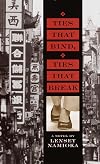
Booktalk: I’d like you to think about . . . your feet. What do they look like? Are they big feet? Are they small feet? Are they wide? Narrow?
Now that you have a picture of your feet in your heads, imagine that the kind of person you can marry depends on what your feet look like. Imagine that you could become a social outcast because of what your feet look like. Imagine that the only choices you had in life were to become a nun, a concubine, or a farmer’s wife because of what your feet show more look like.
In China, for many centuries, if you were a woman, it did matter what your feet looked like. Little girls had their feet bound, wrapped tightly in strips of cloth, and it resulted in deformed feet, tiny wedges upon which they tottered. Why? Because a woman with bound feet was guaranteed a good husband.
But in 1911, change was taking place in China. There was talk of a revolution, new ideas. Alinn is already 5 years old and her feet have yet to be bound. This worries the women in the family because a good marriage has been arranged for Alinn, and her future mother-in-law wants to know why her feet are not yet bound. But when Alinn’s mother and grandmother forcefully bind her feet, she screams and fights so violently that her father stops them from doing it. Four months later, Alinn’s future mother-in-law cancels the engagement to her son.
What good could possibly come of a woman with unbound feet? Find out in TIES THAT BIND... show less
Now that you have a picture of your feet in your heads, imagine that the kind of person you can marry depends on what your feet look like. Imagine that you could become a social outcast because of what your feet look like. Imagine that the only choices you had in life were to become a nun, a concubine, or a farmer’s wife because of what your feet show more look like.
In China, for many centuries, if you were a woman, it did matter what your feet looked like. Little girls had their feet bound, wrapped tightly in strips of cloth, and it resulted in deformed feet, tiny wedges upon which they tottered. Why? Because a woman with bound feet was guaranteed a good husband.
But in 1911, change was taking place in China. There was talk of a revolution, new ideas. Alinn is already 5 years old and her feet have yet to be bound. This worries the women in the family because a good marriage has been arranged for Alinn, and her future mother-in-law wants to know why her feet are not yet bound. But when Alinn’s mother and grandmother forcefully bind her feet, she screams and fights so violently that her father stops them from doing it. Four months later, Alinn’s future mother-in-law cancels the engagement to her son.
What good could possibly come of a woman with unbound feet? Find out in TIES THAT BIND... show less
This book represents many things that I love about Young Adult fiction. There is depth of feeling, a large coming of age component, and a seriousness about the subject matter that is relative to all generations.
The setting is China in 1917 when there were incredibly strict social and cultural rules of tradition.
Wise beyond her age, high-spirited, spunky and stubborn five year old Allin is a member of a wealthy family wherein marriages are arranged according to socioeconomic standards.
The Tao show more family has a unique opportunity to broker a marriage for Allin to a young man from a wealthier family. However, as is the custom, the binding of feet is a necessary requisite to prove class and wealth. Because, only peasants have "big feet."
There is a wonderful weaving of historical conflict of China in great change as Western philosophies are perecieved as either eroding the culture, or moving the country forward from a secluded, claustrophobic nation.
Vehement in her unwillingness to have her feet bound and to succumb to her perceived degradation her grandmother, mother and sister experienced in this process, with her father's support, Allin is successful in averting this occurrence.
However, there is a steep price to pay because this renders Allin unacceptable for marriage to a wealthy family. Thus, the ties that bind the rich culture of the Tao family are riven with anguish. Their daughter and family are now shamed.
Through trial and tribulation Allin literally learns to walk on her own two feet.
Highly recommended! show less
The setting is China in 1917 when there were incredibly strict social and cultural rules of tradition.
Wise beyond her age, high-spirited, spunky and stubborn five year old Allin is a member of a wealthy family wherein marriages are arranged according to socioeconomic standards.
The Tao show more family has a unique opportunity to broker a marriage for Allin to a young man from a wealthier family. However, as is the custom, the binding of feet is a necessary requisite to prove class and wealth. Because, only peasants have "big feet."
There is a wonderful weaving of historical conflict of China in great change as Western philosophies are perecieved as either eroding the culture, or moving the country forward from a secluded, claustrophobic nation.
Vehement in her unwillingness to have her feet bound and to succumb to her perceived degradation her grandmother, mother and sister experienced in this process, with her father's support, Allin is successful in averting this occurrence.
However, there is a steep price to pay because this renders Allin unacceptable for marriage to a wealthy family. Thus, the ties that bind the rich culture of the Tao family are riven with anguish. Their daughter and family are now shamed.
Through trial and tribulation Allin literally learns to walk on her own two feet.
Highly recommended! show less
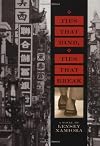
This novel begins with a prologue set in San Francisco's Chinatown in 1925. Ailin is the young wife of a Chinese restaurant owner, and someone from her childhood past in China enters the restaurant. They begin to talk, and Ailin thinks back to what has led her to where she is today... In 1911, China was undergoing political and cultural changes. The empire was falling, and outsiders from the West were becoming more common. Namioka skillfully weaves this change through Ailin's story. Ailin is show more five, and not docile and quiet as upper-class girls should be. Her mother and grandmother feel it is time for her to have her feet bound, as she is now betrothed to the seven-year-old son of another wealthy family. But when Ailin sees how deformed and painful her older sister's bound feet are, she is shocked. Knowing she will not be able to run or even really walk again, Ailin protests. Her indulgent father allows her to keep her feet unbound, even though it results in the cancellation of her betrothal. Later, he enrolls her in a public school run by missionaries where she learns to speak English, unusual for girls at the time. However, before Ailin can graduate, her loving father dies, leaving her old-fashioned uncle as head of the family. He tells her that he can no longer afford to send her to school, and gives the twelve-year-old three unsuitable options, all remnants of the repressive past. She refuses them all, and is forced to come up with a way to support herself. The rest of the book takes Ailin to a world unknown to her, that of working class China, and later on a voyage to America. The details are realistic and Ailin develops strength of character from her experiences. An author's note at the end discusses the history of foot-binding and other customs that women worldwide have endured in the name of tradition or fashion. Indeed, it makes you wonder why people pierce or tattoo their bodies to fit into today's society. The book is aimed at teens ages 12 to 16, but I would even recommend it for adults. The subject is fascinating, there is great attention to historical detail, and the emotion shines through. show less
A lively story about a girl growing up in early 20th century China. From a very traditional family with a very untraditional father, he indulges his daughter entirely too much for the rest of the family's liking. At the age of 5 she runs away from her governess repeatedly wishing to avoid footbinding, as she has seen from her sisters that it is a painful and unpleasant process. She is a girl born at the cusp of a lot of changes to Chinese culture as foreign missionaries and businessmen bring show more an increasing outside influence to Chinese ways of life.
Though she loses her chance to marry her original fiance, a man who admired her independence and strength, she gains an education beyond what many boys in her day would get, and found her own way in the world. When her uncle tries to disgrace her after her father's death, she heads out on her own and becomes a Nanny for a missionary family. She eventually finds her way to San Francisco, where she finds love, happiness and hard work.
Though simply written this book put a smile on my face. It is well worth the time to read. show less
Though she loses her chance to marry her original fiance, a man who admired her independence and strength, she gains an education beyond what many boys in her day would get, and found her own way in the world. When her uncle tries to disgrace her after her father's death, she heads out on her own and becomes a Nanny for a missionary family. She eventually finds her way to San Francisco, where she finds love, happiness and hard work.
Though simply written this book put a smile on my face. It is well worth the time to read. show less
Lists
Awards


You May Also Like


Associated Authors
Statistics
- Works
- 24
- Also by
- 11
- Members
- 2,474
- Popularity
- #10,363
- Rating
- 3.6
- Reviews
- 49
- ISBNs
- 118
- Languages
- 4