

Geoffrey R. Stone
Author of Perilous Times: Free Speech in Wartime: From the Sedition Act of 1798 to the War on Terrorism
About the Author
Neralded for "bringing a bracing a much-needed dose of reality about the Founders' views of sexuality" (Annette Gordon-Reed, New York Review of Books), Geoffrey R. Stone's Sex and the Constitution traces the evolution of legal and moral codes that have legislated sexual behavior from America's show more earliest days to today's fractious political climate. Overturning a raft of contemporary shibboleths, this "fascinating" (Plus burgh Post-Gazette) narrative shows that the Founding Fathers saw traditional Christianity as an impediment to the pursuit of happiness and to the quest for human progress. Acutely aware of the need to separate politics from the divisive forces of religion, the architects of the Constitution Crafted a document that expressed the fundamental values of the Enlightenment. Indeed, it was not until the rise of evangelical Christianity in the late nineteenth century that laws forbidding obscenity and abortion were first enacted. The twentieth century gradually saw the emergence of bitter divisions over issues of sexual "morality" and sexual freedom. Fiercely determined organizations and individuals on both the right and the left wrestled in the domains of politics, religion, public opinion, and law to win over the soul of the nation. Enlivened by a pageant of historical and contemporary character, including Voltaire. Thomas Jefferson, Anthony Corestock, Margaret, Sanger, and Justice Anthony Kennedy, this "powerful history" (Jeffrey Winn, New York Law Journal) reveals how our laws about sex, religion, and morality reflect the cultural schisms that have cleaved our nation from its founding. Geoffrey R. Stone is the author of the prize winning Perilous Times. A professor and former dean at the University of Chicago, he writes for the New York Times and the Huffington Post. He lives in Chicago. show less
Image credit: Photo by Lilithcat
Works by Geoffrey R. Stone
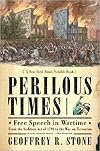
Perilous Times: Free Speech in Wartime: From the Sedition Act of 1798 to the War on Terrorism (2004) 362 copies, 5 reviews
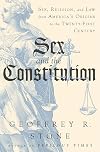
Sex and the Constitution: Sex, Religion, and Law from America's Origins to the Twenty-First Century (2017) 137 copies, 2 reviews
National Security, Leaks and Freedom of the Press: The Pentagon Papers Fifty Years On (2021) 3 copies
Melville 1 copy
Constitutional law 1 copy
Tagged
Common Knowledge
- Birthdate
- 1946
- Gender
- male
- Occupations
- law professor (University of Chicago Law School)
- Organizations
- American Constitution Society
American Civil Liberties Union
Chicago Children's Choir
American Academy of Arts and Sciences
Association of American Law Schools - Nationality
- USA
- Associated Place (for map)
- USA
Members
Reviews
Perilous Times: Free Speech in Wartime: From the Sedition Act of 1798 to the War on Terrorism by Geoffrey R. Stone
One Person’s Villain is Another’s Hero
War excites passions.
The nation itself may find itself in peril; thousands, perhaps millions of lives are at risk. It is often thought that dissent during wartime is tantamount to being disloyal. This view puzzles libertarians. They view it as patriotism's highest manifestation.
During wartime, the line between dissent and disloyalty is cloudy. The First Amendment, prohibiting Congress from enacting any law abridging freedom of speech, is put to the show more test.
Some judges and legal scholars reason the First Amendment is essential to self-government. They argue the First Amendment promotes character traits that are essential to a robust democracy: skepticism, personal responsibility, curiosity, distrust of authority and independent thinking.
“The best test of truth is the power of the thought to get itself accepted in the competition of the market,” wrote one of my favorite Supreme Court justices, Oliver Wendell Holmes, Jr.
Geoffrey Stone, the former dean of law provost at the University of Chicago, identifies six periods of widespread free-speech repression, dating back to the administration of the nation's second president, John Adams, and continuing through the Vietnam era. He identifies three principals that shape the Supreme Court’s understanding of the First Amendment.
1. No government paternalism in the realm of political discourse.
2. Punish the actor, not the speaker.
3. Differentiate between low- and high-value speech.
This is a book about Americans struggling with the responsibilities of self-government during times of war. It is about the presidents who struggled balancing liberty and security. It is about the justices of the Supreme Court who attempted to define the difference. More importantly, it is about those individuals who had the courage to dissent during perilous times. Some were fools; others were villains; some were individuals of great moral courage.
Geoffrey Stone has written a timely masterpiece about individual Americans who struggled to preserve our liberties. show less
War excites passions.
The nation itself may find itself in peril; thousands, perhaps millions of lives are at risk. It is often thought that dissent during wartime is tantamount to being disloyal. This view puzzles libertarians. They view it as patriotism's highest manifestation.
During wartime, the line between dissent and disloyalty is cloudy. The First Amendment, prohibiting Congress from enacting any law abridging freedom of speech, is put to the show more test.
Some judges and legal scholars reason the First Amendment is essential to self-government. They argue the First Amendment promotes character traits that are essential to a robust democracy: skepticism, personal responsibility, curiosity, distrust of authority and independent thinking.
“The best test of truth is the power of the thought to get itself accepted in the competition of the market,” wrote one of my favorite Supreme Court justices, Oliver Wendell Holmes, Jr.
Geoffrey Stone, the former dean of law provost at the University of Chicago, identifies six periods of widespread free-speech repression, dating back to the administration of the nation's second president, John Adams, and continuing through the Vietnam era. He identifies three principals that shape the Supreme Court’s understanding of the First Amendment.
1. No government paternalism in the realm of political discourse.
2. Punish the actor, not the speaker.
3. Differentiate between low- and high-value speech.
This is a book about Americans struggling with the responsibilities of self-government during times of war. It is about the presidents who struggled balancing liberty and security. It is about the justices of the Supreme Court who attempted to define the difference. More importantly, it is about those individuals who had the courage to dissent during perilous times. Some were fools; others were villains; some were individuals of great moral courage.
Geoffrey Stone has written a timely masterpiece about individual Americans who struggled to preserve our liberties. show less
Perilous Times: Free Speech in Wartime: From the Sedition Act of 1798 to the War on Terrorism by Geoffrey R. Stone

I have only one criticism of this book, which was extremely informative and thought-provoking in it’s entirety. And by thought provoking, I do not mean Stone confirms my civil libertarian tendencies. Quite the opposite in fact. After reading the book, I can understand the legal logic that justifies these restrictions, even if I completely disagree with the need to subdue dissent during wartime except in extremely narrow circumstances (e.g., revealing troop movements). My one criticism has show more to do with the formatting. Stone uses extensive footnotes and endnotes. I’m a habitual footnote reader, particularly when both endnotes and footnotes are used in the same work. If it appears in a footnote, it’s probably interesting to read. Most of the footnotes here were. But the asterisk marking most of them never stood out well enough for me to notice it. So I’d get to the bottom of the page with the footnote, and then need to rescan the page looking for the text to which the footnote related. Really really annoying.
(Full review at my blog) show less
(Full review at my blog) show less
Perilous Times: Free Speech in Wartime from The Sedition Act of 1798 to The War on Terrorism by Geoffrey R. Stone
The very best book about the First Amendment and free speech in America since the Constitution I've ever read. I recommend it often, and tell my students about it every semester since it came out.
Sex and the Constitution: Sex, Religion, and Law from America's Origins to the Twenty-First Century by Geoffrey R. Stone
This is a well written and thorough examination of the evolution of laws in the United States regarding obscenity, abortion, and same sex. The author is knowledgeable and provides understandable explanations for judicial decisions. The historical perspective is provided and the key personnel involved are described in appropriate detail. I found this book interesting and educational. I strongly recommend this book.
Awards


You May Also Like


Associated Authors
Statistics
- Works
- 37
- Members
- 875
- Popularity
- #29,265
- Rating
- 4.2
- Reviews
- 8
- ISBNs
- 97
