
Brendan Kiely
Author of All American Boys
About the Author
Image credit: reading at the National Book Festival, Washington, D.C. By slowking4 - Own work, GFDL 1.2, https://commons.wikimedia.org/w/index.php?curid=72267027
Works by Brendan Kiely
Associated Works
Hope Nation: YA Authors Share Personal Moments of Inspiration (2018) — Contributor — 178 copies, 7 reviews
Allies: Real Talk About Showing Up, Screwing Up, And Trying Again (2021) — Contributor — 89 copies, 6 reviews
Tagged
Common Knowledge
- Gender
- male
Members
Reviews
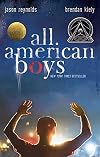
Two boys, one black and one white, act out an all-too-familiar drama when the former is brutally beaten during an arrest and the latter witnesses it.
Rashad wasn't trying to steal that bag of chips, but Officer Paul Galuzzo beats him to a pulp rather than hear him out. Quinn doesn't know that, but he does know that no one should be treated the way he sees family friend and surrogate father Paul whaling on that black kid. Day by day over the next week, each boy tells his story, Rashad in the show more hospital, where he watches endless replays of the incident, and Quinn at school, where he tries to avoid it. Soon Rashad's a trending hashtag, as his brother and friends organize a protest he's not sure he wants. Meanwhile, Quinn negotiates basketball practice with his best friend—Galuzzo's little brother, who expects loyalty—and Rashad's, who tells him bluntly, "White boy like you can just walk away whenever you want." In a series of set pieces, Rashad contemplates his unwanted role as the latest statistic, and Quinn decides whether he'll walk away or stand. Reynolds and Kiely supply their protagonists with a supporting cast that prods them in all the right ways; Rashad's strict, ex-cop dad provides unexpected complexity.
If the hands and agenda of the authors are evident, their passion elevates the novel beyond a needed call to action to a deeply moving experience. (Fiction. 12-18)
-Kirkus Review show less
Rashad wasn't trying to steal that bag of chips, but Officer Paul Galuzzo beats him to a pulp rather than hear him out. Quinn doesn't know that, but he does know that no one should be treated the way he sees family friend and surrogate father Paul whaling on that black kid. Day by day over the next week, each boy tells his story, Rashad in the show more hospital, where he watches endless replays of the incident, and Quinn at school, where he tries to avoid it. Soon Rashad's a trending hashtag, as his brother and friends organize a protest he's not sure he wants. Meanwhile, Quinn negotiates basketball practice with his best friend—Galuzzo's little brother, who expects loyalty—and Rashad's, who tells him bluntly, "White boy like you can just walk away whenever you want." In a series of set pieces, Rashad contemplates his unwanted role as the latest statistic, and Quinn decides whether he'll walk away or stand. Reynolds and Kiely supply their protagonists with a supporting cast that prods them in all the right ways; Rashad's strict, ex-cop dad provides unexpected complexity.
If the hands and agenda of the authors are evident, their passion elevates the novel beyond a needed call to action to a deeply moving experience. (Fiction. 12-18)
-Kirkus Review show less
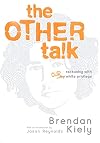
White people don’t need to have “The Talk” about how to survive racism—they need to have a different talk about taking responsibility for and trying to change it.
Jason Reynolds introduces this informal memoir about young adult author Kiely’s experiences of Whiteness, which also serves as a call to action for White people to make similar reckonings. With humility and feeling, Kiely narrates his growing understanding of White privilege: that “what we’ve earned often comes at the show more expense of other people not being able to earn it as easily.” He mixes pithy anecdotes from his own life with trenchant statistics and historical context that make clear the huge extent to which people in power have “legalized, institutionalized, and systematized racism in America.” One section lays out all the opportunities Kiely’s White grandfather had to build wealth for his family, starting with the GI Bill, alongside all the ways these opportunities were denied to veterans of the Global Majority (a phrase he credits learning from Tiffany Jewell’s This Book Is Anti-Racist). His personal stories are equally demonstrative: When teenage Kiely was pulled over for reckless speeding, the police officer let him off with caring, paternal instructions to “go home, be safe, and keep your friends safe.” Kiely doesn’t mince words when it comes to accountability, but his conversational tone invites readers to grow with him.
Well-executed and long overdue. (author's note, endnotes, bibliography) (Nonfiction. 12-18)
-Kirkus Review show less
Jason Reynolds introduces this informal memoir about young adult author Kiely’s experiences of Whiteness, which also serves as a call to action for White people to make similar reckonings. With humility and feeling, Kiely narrates his growing understanding of White privilege: that “what we’ve earned often comes at the show more expense of other people not being able to earn it as easily.” He mixes pithy anecdotes from his own life with trenchant statistics and historical context that make clear the huge extent to which people in power have “legalized, institutionalized, and systematized racism in America.” One section lays out all the opportunities Kiely’s White grandfather had to build wealth for his family, starting with the GI Bill, alongside all the ways these opportunities were denied to veterans of the Global Majority (a phrase he credits learning from Tiffany Jewell’s This Book Is Anti-Racist). His personal stories are equally demonstrative: When teenage Kiely was pulled over for reckless speeding, the police officer let him off with caring, paternal instructions to “go home, be safe, and keep your friends safe.” Kiely doesn’t mince words when it comes to accountability, but his conversational tone invites readers to grow with him.
Well-executed and long overdue. (author's note, endnotes, bibliography) (Nonfiction. 12-18)
-Kirkus Review show less
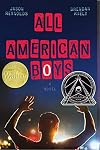
Told from alternating perspectives of Rashad (black) and Quinn (white), All American Boys brings to life a story all too common in our world. Rashad is unjustly accused of stealing and is beaten badly by a white police officer. Quinn, friends with the officer's younger brother, sees the beating and can't shake the feeling that the story he's been told - the officer was "just doing his job" doesn't jive with the brutality he saw. The authors did an amazing job, allowing readers to work show more through the week after the incident from both boys' perspectives, in sometimes surprising ways. Quinn's journey showed the confusion and fear of getting involved slowly becoming an example or roadmap to how white people can and should support and stand up for people of color. Rashad works through his experience through art and contemplation during his hospital stay, showing that the focal point of a movement isn't always comfortable in that position. Highly recommended for everyone. In fact, I think if more people read this, we'd have fewer problems. show less
This moving, all-too-relevant story focuses on two teenage boys. Rashad is a black student who is beaten badly by a white cop after being mistaken for being a robber. Quinn is a white student who sees what happens, but isn't sure what to do when rumors and assumptions start flying. This book deals really well with issues of racism, police brutality, family loyalty, and the power of protest. Inspiring for all teens and adults.
Lists
Awards


You May Also Like


Associated Authors
Statistics
- Works
- 10
- Also by
- 3
- Members
- 2,877
- Popularity
- #8,904
- Rating
- 4.2
- Reviews
- 90
- ISBNs
- 66
- Languages
- 5