
Deb Caletti
Author of Honey, Baby, Sweetheart
About the Author
Image credit: Author photograph by Nancy LeVine
Series
Works by Deb Caletti
Associated Works
First Kiss (Then Tell): A Collection of True Lip-Locked Moments (2007) — Contributor — 92 copies, 3 reviews
The World of the Golden Compass: The Otherworldly Ride Continues (2007) — Contributor — 71 copies, 2 reviews
Through the Wardrobe: Your Favorite Authors on C. S. Lewis's Chronicles of Narnia (2008) — Contributor — 61 copies, 3 reviews
Tagged
Common Knowledge
- Birthdate
- 1963
- Gender
- female
- Education
- Bellevue Community College
University of Washington (BA) - Occupations
- writer
- Nationality
- USA
- Birthplace
- San Raphael, California, USA
- Places of residence
- Seattle, Washington, USA
Kirkland, Washington, USA
Issaquah, Washington, USA - Associated Place (for map)
- Washington, USA
Members
Reviews
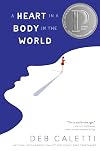
I wrote a review, but Goodreads ate it.
I finally mustered the courage to finish this after picking it up and starting it umpteen times. I just wasn't in the mental or emotional place to keep going with it. Even when I made the choice to start again and finish it this time, dammit, I wasn't in the right place, but I realized that I probably wouldn't be in the right place until sometime in 2020, if even then. So I powered through. And I cried through the whole thing. I saw tragedy coming, show more though I didn't know exactly what form that tragedy would take. And I saw Annabelle's hurt and guilt and self-blame and I recognized them, though I've been lucky to not have experienced anything quite as devastating as what she did. I know that guilt and self-blame because I am a woman in this world and we are all conditioned from an early age to be made to feel accountable for the actions of the men around us. If we are nice to them, we are leading them on. If we dress a certain way, we are distracting or arousing or encouraging them. If we flirt, we must want sex. If we err, we are asking for punishment. So I read this book wanting to tell Annabelle that what happened wasn't her fault, but knowing that she wouldn't be able to hear it. Watching her finally, finally start to put the blame where it belonged and to make something good out of something so awful was beautiful.
And my apologies (but not really) to those of you to whom I recommended this book before finishing it. I didn't lie, though, did I? show less
I finally mustered the courage to finish this after picking it up and starting it umpteen times. I just wasn't in the mental or emotional place to keep going with it. Even when I made the choice to start again and finish it this time, dammit, I wasn't in the right place, but I realized that I probably wouldn't be in the right place until sometime in 2020, if even then. So I powered through. And I cried through the whole thing. I saw tragedy coming, show more though I didn't know exactly what form that tragedy would take. And I saw Annabelle's hurt and guilt and self-blame and I recognized them, though I've been lucky to not have experienced anything quite as devastating as what she did. I know that guilt and self-blame because I am a woman in this world and we are all conditioned from an early age to be made to feel accountable for the actions of the men around us. If we are nice to them, we are leading them on. If we dress a certain way, we are distracting or arousing or encouraging them. If we flirt, we must want sex. If we err, we are asking for punishment. So I read this book wanting to tell Annabelle that what happened wasn't her fault, but knowing that she wouldn't be able to hear it. Watching her finally, finally start to put the blame where it belonged and to make something good out of something so awful was beautiful.
And my apologies (but not really) to those of you to whom I recommended this book before finishing it. I didn't lie, though, did I? show less
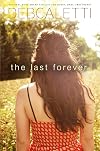
One of the most wonderful things about The Last Forever is Tessa’s self-awareness. The book may belong in the Young Adult category, but Tessa is not a typical YA heroine. She fully recognizes when she is overreacting or pulling a typical teenage tantrum. She acknowledges her behavior and consciously chooses to continue or to stop depending on the situation. Life is not one big conspiracy against her happiness, as it feels with so many other teenage heroines. She’s been through some show more horrific experiences and is understandably emotionally fragile as a result, but she knows that things will improve over time. It is a key difference in her attitude that prevents the story from bogging down into the dregs of teenage angst which is the death knell of many a YA story.
Ms. Caletti always creates the most realistic characters, as she does yet again in The Last Forever. The entire cast is not perfect or even close to being so. They each have their own quirks and foibles that make them human and relatable. What makes Ms. Caletti’s characters relatively unique is the fact that they never stay as full caricatures when it would be so easy to make them that way. Even Tessa’s father, who starts out as a stereotypical quirky, irresponsible, and emotionally distant dad gets his act together and takes steps to improve his fractured relationships. No one is so irredeemable that they cannot learn and grow from the mistakes they make, and they all do just that. It adds an air of hope to even the most depressing of situations.
This is not to say that The Last Forever is not without its problems. It is definitely not Ms. Caletti’s strongest novel. For one, the story is a bit too predictable. One instinctively knows where Tessa’s relationship with Henry is heading as well as her quest to protect her mother’s legacy. Then there is the general feeling of repetitiveness to the plot. It is not Ms. Caletti’s fault that there is an influx of novels dealing with grief, specifically the loss of a parent and its impact on the survivors. Unfortunately, there is a trend of this type of story line, and her version of it blends into all of the others. Given Ms. Caletti’s strong performances in both Stay and He’s Gone, both of which were different and surprising, The Last Forever is somewhat disappointing.
Still, Ms. Caletti’s weaker novels are still better than most books written and published these days. Tessa’s journey through the grief process is wonderfully poignant without being overly sentimental, while Tessa is refreshing in her understanding of herself. The Last Forever remains a beautiful ode to love and the meaning of forever. show less
Ms. Caletti always creates the most realistic characters, as she does yet again in The Last Forever. The entire cast is not perfect or even close to being so. They each have their own quirks and foibles that make them human and relatable. What makes Ms. Caletti’s characters relatively unique is the fact that they never stay as full caricatures when it would be so easy to make them that way. Even Tessa’s father, who starts out as a stereotypical quirky, irresponsible, and emotionally distant dad gets his act together and takes steps to improve his fractured relationships. No one is so irredeemable that they cannot learn and grow from the mistakes they make, and they all do just that. It adds an air of hope to even the most depressing of situations.
This is not to say that The Last Forever is not without its problems. It is definitely not Ms. Caletti’s strongest novel. For one, the story is a bit too predictable. One instinctively knows where Tessa’s relationship with Henry is heading as well as her quest to protect her mother’s legacy. Then there is the general feeling of repetitiveness to the plot. It is not Ms. Caletti’s fault that there is an influx of novels dealing with grief, specifically the loss of a parent and its impact on the survivors. Unfortunately, there is a trend of this type of story line, and her version of it blends into all of the others. Given Ms. Caletti’s strong performances in both Stay and He’s Gone, both of which were different and surprising, The Last Forever is somewhat disappointing.
Still, Ms. Caletti’s weaker novels are still better than most books written and published these days. Tessa’s journey through the grief process is wonderfully poignant without being overly sentimental, while Tessa is refreshing in her understanding of herself. The Last Forever remains a beautiful ode to love and the meaning of forever. show less

Some readers will consider Girl, Unframed by Deb Caletti a cautionary tale. Others will describe it as a coming-of-age tale. In my mind, Girl, Unframed is both types of stories. Sydney's experiences are a large part of being a teen girl, but her situation grows out of control specifically because she does not have the life experience to recognize any danger in that situation.
I finished Girl, Unframed a few weeks ago, but a recent event with my sixteen-year-old daughter reminded me of why show more books like this are so important for teen girls. Jim and Holly recently visited a car dealership, looking to test drive a vehicle his nephew wanted to buy. While there, the salesman helping him admitted that he had assumed Jim and Holly were a couple. She had on no makeup and was wearing nothing that would make her look older than her 15/16 years. Still, both this situation, as well as Sydney's in the book, are stark reminders that many men consider anything with boobs accessible, something too many teen girls don't understand until it is too late.
What makes Girl, Unframed so powerful is that I remember exactly what it felt like to be sixteen and to understand that your looks are enough to turn heads. While you may consciously target that ability to boys of your own age, you take secret pride in having a similar influence over older men (and by older I mean early 20s). It is a heady feeling, strong enough to clearly remember thirty years later.
Ms. Caletti is careful to make it clear that Sydney does nothing wrong. Her actions do have consequences, but what happens to her are not those consequences. Wearing a bikini in the privacy of her backyard or on the beach, experimenting with sex with a boy of her own age, wearing clothes that make her feel good about herself while accentuating her curves - none of this excuses how the men around her act. Herein lies the lesson within the story. Society ALWAYS blames the girl simply for being herself, and that is wrong.
Sydney eventually realizes the mixed messaging given to teen girls. Dress to impress but not too provocatively. Desire the attention of the male species, but don't get upset when you get that attention, no matter in what form it comes. Desire, but don't desire too much. In Girl, Unframed, Ms. Caletti not only highlights this minefield of expectations, but she also illustrates her point through Sydney's confusion as well as the danger in which she finds herself. Thus, Girl, Unframed becomes an important weapon in educating our girls of the dangers they face simply by being themselves thanks to a patriarchal society that glorifies in objectifying young women.
Ms. Caletti excels at explaining what it is to be a teen girl without pandering or demeaning her target audience. She does so in a way that is authentic and evocative so that even middle-aged readers will remember that feeling of invincibility that only the young feel. She also provides her readers with insight into situations they are not yet capable of handling with the necessary maturity, of which Sydney's situation is a perfect example. show less
I finished Girl, Unframed a few weeks ago, but a recent event with my sixteen-year-old daughter reminded me of why show more books like this are so important for teen girls. Jim and Holly recently visited a car dealership, looking to test drive a vehicle his nephew wanted to buy. While there, the salesman helping him admitted that he had assumed Jim and Holly were a couple. She had on no makeup and was wearing nothing that would make her look older than her 15/16 years. Still, both this situation, as well as Sydney's in the book, are stark reminders that many men consider anything with boobs accessible, something too many teen girls don't understand until it is too late.
What makes Girl, Unframed so powerful is that I remember exactly what it felt like to be sixteen and to understand that your looks are enough to turn heads. While you may consciously target that ability to boys of your own age, you take secret pride in having a similar influence over older men (and by older I mean early 20s). It is a heady feeling, strong enough to clearly remember thirty years later.
Ms. Caletti is careful to make it clear that Sydney does nothing wrong. Her actions do have consequences, but what happens to her are not those consequences. Wearing a bikini in the privacy of her backyard or on the beach, experimenting with sex with a boy of her own age, wearing clothes that make her feel good about herself while accentuating her curves - none of this excuses how the men around her act. Herein lies the lesson within the story. Society ALWAYS blames the girl simply for being herself, and that is wrong.
Sydney eventually realizes the mixed messaging given to teen girls. Dress to impress but not too provocatively. Desire the attention of the male species, but don't get upset when you get that attention, no matter in what form it comes. Desire, but don't desire too much. In Girl, Unframed, Ms. Caletti not only highlights this minefield of expectations, but she also illustrates her point through Sydney's confusion as well as the danger in which she finds herself. Thus, Girl, Unframed becomes an important weapon in educating our girls of the dangers they face simply by being themselves thanks to a patriarchal society that glorifies in objectifying young women.
Ms. Caletti excels at explaining what it is to be a teen girl without pandering or demeaning her target audience. She does so in a way that is authentic and evocative so that even middle-aged readers will remember that feeling of invincibility that only the young feel. She also provides her readers with insight into situations they are not yet capable of handling with the necessary maturity, of which Sydney's situation is a perfect example. show less
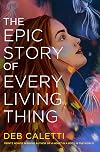
In each and every book, Deb Caletti manages to break me down to the most basic of levels AND builds me back up to become a person filled with a greater sense of female empowerment, better insight, and a more positive outlook towards humanity. With The Epic Story of Every Living Thing, this feels especially true. Some of it is because it is a pandemic novel, and Harper stirs up all those same emotions that we all felt creeping out of our homes after lockdown, confused about the rules of show more wearing a mask, wondering what is safe and what is not. Part of it is the fact that Harper has anxiety, and Ms. Caletti is exceptionally good at portraying what it feels like to live with anxiety. For me, what struck me hardest of all is the domineering nature of Harper’s mother and the overbearing, highly regulated relationship they have. Harper’s story stirred up so many emotions that I had to take reading breaks to ease my own anxiety and turmoil.
What makes Ms. Caletti a stellar author though is not just her ability to allow readers to share in her character’s emotions but rather how she builds both her characters and her readers back up after dragging them down to the lowest of lows. As Harper learns to break the ties that bind, you simultaneously discover your own strengths. While Harper releases her fears, you relinquish yours. What once felt impossible now feels possible. It is a feat very few authors can accomplish, yet Ms. Caletti does it time and again. The Epic Story of Every Living Thing is simply the latest example of her greatness. show less
What makes Ms. Caletti a stellar author though is not just her ability to allow readers to share in her character’s emotions but rather how she builds both her characters and her readers back up after dragging them down to the lowest of lows. As Harper learns to break the ties that bind, you simultaneously discover your own strengths. While Harper releases her fears, you relinquish yours. What once felt impossible now feels possible. It is a feat very few authors can accomplish, yet Ms. Caletti does it time and again. The Epic Story of Every Living Thing is simply the latest example of her greatness. show less
Lists
Awards


You May Also Like


Associated Authors
Statistics
- Works
- 27
- Also by
- 3
- Members
- 5,517
- Popularity
- #4,517
- Rating
- 3.7
- Reviews
- 301
- ISBNs
- 212
- Languages
- 3
- Favorited
- 13

