
Elizabeth Scott (1) (1972–)
Author of Living Dead Girl
For other authors named Elizabeth Scott, see the disambiguation page.
Works by Elizabeth Scott
Tagged
Common Knowledge
- Legal name
- Spencer, Elizabeth
- Birthdate
- 1972-03-15
- Gender
- female
- Occupations
- editor
office manager
author - Agent
- Robin Rue (Writers House)
- Nationality
- USA
- Places of residence
- Washington, D.C., USA
- Map Location
- USA
Members
Discussions
Found: YA Science Fiction? in Name that Book (August 2021)
Reviews
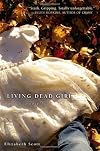
Originally posted here: http://www.goodbooksandgoodwine.com/2011/06/retro-friday-review-living-dead-girl...
Living Dead Girl by Elizabeth Scott is an emotional read detailing ‘Alice’s’ torment at the hands of her captor, Ray. This was one of the books challenged during the whole Bitch Media 100 YA Books For The Feminist list kerfluffle. As I recall there was a comment on there alleging that Living Dead Girl is ‘torture porn.’ I don’t even know if I read the same book as the show more commentor. I saw this as an incredibly heartbreaking portrayal of the evil lurking below the surface of some people.
‘Alice’, not her real name, is abducted at a young age by Ray, a pedo who likes little girls. She’s 15 and we read about her terrifying day to day existence – where she is starved to maintain a little girl-esque body and sent to get brazillian waxes by professionals to keep up the facade. However, time is running short for ‘Alice’ as she looks more and more older by day and Ray is out to find a new ‘Alice’.
I think Elizabeth Scott does an excellent job of capturing the fear felt by victims of sexual assault. Although Alice’s situation is not common, 73% of rapes are perpetrated by someone the victim knows, Living Dead Girl shows the psychological effect sexual assault has. ‘Alice’ has the opportunity to walk to the grocery store alone and pick up groceries. She could run away, but she doesn’t. I know you may question ‘why doesn’t she run away’ which is ultimately victim blaming. However, she has been groomed by Ray, this means that he has molded her to what he wants. He assures her that if she tells, he will kill her family. This is a very real fear. Especially when you have been told this from a very young age.
Further, I’ve seen reviews on goodreads where people stated they did not like this because ‘Alice’ was not relatable or likeable. My opinion, sexual assault victims are people. We don’t always like every single person we meet. Scott doesn’t make ‘Alice’ into a martyr or a saint, but a real person with faults. I wonder if maybe we have this default victim mode in our minds where we expect people who have been through ordeals to be Christlike, instead of allowing them to be human. And really, I think the real tragedy in Living Dead Girl isn’t how unlikeable ‘Alice’ is.
I think the true tragedy is how unwilling the bystanders in Living Dead Girl were to do anything. Just because you aren’t a mandated reporter doesn’t mean it’s okay to just standby without a word. For example, the ladies who gave ‘Alice’ her weekly Brazilian wax. Wouldn’t that set off alarm bells to you, a young girl getting a Brazilian? And yet, they just took the money and stood by, never once giving the police a call. Or the grocery store clerk who sees Alice come by to buy food for Ray. Or the neighbors who instead of helping Alice just want their children to stay away from her. That bothers me. You don’t have to fight off the offender to step in. You can delegate and call the police with an anonymous tip. That frustrates me to no end. And, I think Scott did a great job inciting righteous indignation on my end.
Now, as far as this book being triggering, I think that it could be. However, I also believe in the power of bibliotherapy, and I think because this book does humanize a sexual assault victim, it can be therapeutic because it doesn’t show ‘Alice’ as perfect. I believe triggering is not something to be downplayed and that it is very real, however, I also believe that people have their own internal barometers. If something really bothers me, I set it down or stop watching it. I think most people are willing to do the same. show less
Living Dead Girl by Elizabeth Scott is an emotional read detailing ‘Alice’s’ torment at the hands of her captor, Ray. This was one of the books challenged during the whole Bitch Media 100 YA Books For The Feminist list kerfluffle. As I recall there was a comment on there alleging that Living Dead Girl is ‘torture porn.’ I don’t even know if I read the same book as the show more commentor. I saw this as an incredibly heartbreaking portrayal of the evil lurking below the surface of some people.
‘Alice’, not her real name, is abducted at a young age by Ray, a pedo who likes little girls. She’s 15 and we read about her terrifying day to day existence – where she is starved to maintain a little girl-esque body and sent to get brazillian waxes by professionals to keep up the facade. However, time is running short for ‘Alice’ as she looks more and more older by day and Ray is out to find a new ‘Alice’.
I think Elizabeth Scott does an excellent job of capturing the fear felt by victims of sexual assault. Although Alice’s situation is not common, 73% of rapes are perpetrated by someone the victim knows, Living Dead Girl shows the psychological effect sexual assault has. ‘Alice’ has the opportunity to walk to the grocery store alone and pick up groceries. She could run away, but she doesn’t. I know you may question ‘why doesn’t she run away’ which is ultimately victim blaming. However, she has been groomed by Ray, this means that he has molded her to what he wants. He assures her that if she tells, he will kill her family. This is a very real fear. Especially when you have been told this from a very young age.
Further, I’ve seen reviews on goodreads where people stated they did not like this because ‘Alice’ was not relatable or likeable. My opinion, sexual assault victims are people. We don’t always like every single person we meet. Scott doesn’t make ‘Alice’ into a martyr or a saint, but a real person with faults. I wonder if maybe we have this default victim mode in our minds where we expect people who have been through ordeals to be Christlike, instead of allowing them to be human. And really, I think the real tragedy in Living Dead Girl isn’t how unlikeable ‘Alice’ is.
I think the true tragedy is how unwilling the bystanders in Living Dead Girl were to do anything. Just because you aren’t a mandated reporter doesn’t mean it’s okay to just standby without a word. For example, the ladies who gave ‘Alice’ her weekly Brazilian wax. Wouldn’t that set off alarm bells to you, a young girl getting a Brazilian? And yet, they just took the money and stood by, never once giving the police a call. Or the grocery store clerk who sees Alice come by to buy food for Ray. Or the neighbors who instead of helping Alice just want their children to stay away from her. That bothers me. You don’t have to fight off the offender to step in. You can delegate and call the police with an anonymous tip. That frustrates me to no end. And, I think Scott did a great job inciting righteous indignation on my end.
Now, as far as this book being triggering, I think that it could be. However, I also believe in the power of bibliotherapy, and I think because this book does humanize a sexual assault victim, it can be therapeutic because it doesn’t show ‘Alice’ as perfect. I believe triggering is not something to be downplayed and that it is very real, however, I also believe that people have their own internal barometers. If something really bothers me, I set it down or stop watching it. I think most people are willing to do the same. show less
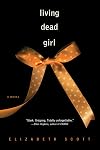
A first-person account of a young girl being sexually abused, Living Dead Girl is a difficult read to say the least.
The writing is fantastic. This isn't your typical pathos-driven abuse story. The pain and terror and hopelessness aren't bursting off the pages in effusive language; instead it is the very absence of emotion that is so evocative. The sentences, the emotion in the structure is flat, revealing a psyche tortured to the point of apathy. Alice's voice lacks the typical qualities of show more teenage girls, lacks rhythm and metaphor and instead is simplistic, practical, and without beauty. She is numb.
The very structure of the novel adds to this with short, to-the-point chapters that range from one sentence to a few pages in length. The language is so brutal, simultaneously painful to read and wonderfully authentic. The lack of a multi-layered plot, the simplicity of the language, kept this a bare-bones, full-frontal assault. It also made it a quite fast read, about an hour and a half.
The contradiction between my enjoyment of the craft and horror at the content makes this a very difficult book to review. show less
The writing is fantastic. This isn't your typical pathos-driven abuse story. The pain and terror and hopelessness aren't bursting off the pages in effusive language; instead it is the very absence of emotion that is so evocative. The sentences, the emotion in the structure is flat, revealing a psyche tortured to the point of apathy. Alice's voice lacks the typical qualities of show more teenage girls, lacks rhythm and metaphor and instead is simplistic, practical, and without beauty. She is numb.
The very structure of the novel adds to this with short, to-the-point chapters that range from one sentence to a few pages in length. The language is so brutal, simultaneously painful to read and wonderfully authentic. The lack of a multi-layered plot, the simplicity of the language, kept this a bare-bones, full-frontal assault. It also made it a quite fast read, about an hour and a half.
The contradiction between my enjoyment of the craft and horror at the content makes this a very difficult book to review. show less
(Edited a week later to add some thoughts I've better developed since discussing with librarian buddies who both love and hate this book.)
I can't deny that this book will appeal to horror-hungry teens, and as a librarian I have to give it credit for that. But frankly, it is ONLY as a genre horror novel that I can give it credit. Same way I don't want to watch Hostel, I don't want to read books like this. Clearly some people do, so however much I personally might have hated the experience of reading it, I can accept that this is a different strokes kind of thing. But I have a real problem with this book being marketed as anything other than horror. It SHOCKS me that anyone could call this a feminist work.
Does it make sense to say that the bleakness of this book makes it pointless? I just wonder, what does a teen reader, or any reader, have to hold onto at the end? Kyla is already apparently damaged beyond repair when the book begins, completely broken and tragic, but well on her way to monstrous, too: using her own sexuality to control others who she perceives as being weak; viciously mean when she has the opportunity to be; positively gleeful over the thought of freeing herself at the cost of another girl's freedom. It seems to me that with the ending she gives us, Scott lazily skirts around the possibility of recovery, of any possible empowerment or justice. And I'm not someone who thinks every book should have a happy (or even optimistic) ending, I just think that THIS book becomes pointless without one. There's no story here -- this is a completely bleak and voyeuristic snapshot of horrific abuse and NOTHING ELSE, merely something you tell little girls to scare them into submission. I think, in the end, a reader has nothing to gain from this book except for a good scare (which it certainly delivers), and I think that does discredit it, pretty much entirely, as a piece of serious literary fiction.
I will say that I thought Scott's writing was much, much better here than in the very boring and awkward Perfect You (except for the dialog, which this author cannot write at all).
But all in all I was happier person before I read this, and the world was probably a better place before it was written. Yuck. A million yucks. I want a shower.
For a better, smarter captor/captive book, try Room. For a better, smarter abuse book, try Push.
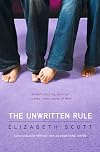
Everyone knows that you shouldn’t like your best friend’s boyfriend. But what if she starts dating the guy whom you liked first? That’s Sarah’s problem. Her best friend, the gorgeous but troubled Brianna, has started dating Ryan, the guy that Sarah has had a crush on for years. Ryan is the most wonderful guy Sarah has known, but Brianna deserves love in her life, and so Sarah walks quietly behind them, secretly wanting Ryan. When things turn even more complicated, though, Sarah must show more learn the extent—and the limitations—of love, and just which ones exactly are worth it.
Elizabeth Scott knows how to get to a wide range of readers’ hearts, and her sixth novel is no exception. THE UNWRITTEN RULE is a quick but emotional read that—despite some construction problems—will easily hit home.
The book could’ve easily been another telling of the ages-old girl-likes-forbidden-guy trope, but Elizabeth Scott skillfully weaves in a complex family subplot makes it a fresh story—and gets our attention. The published synopsis fails to mention that Sarah’s justified concern for Brianna’s emotional well-being and what kind of love her friend deserves is the result of Brianna’s painful relationship with her parents. As a result, we can see that the typical YA contemporary love triangle can have more depth to it than just adolescent “tru luv” feelings. THE UNWRITTEN RULE beautifully illustrates the painful complications of love, and what it means for someone to deserve—or not deserve—love, and to what extent love can be used as an excuse for hurtful behavior.
But THE UNWRITTEN RULE is also flawed in the same way as Scott’s other books. Each individual element of this story—each character, subplot, or event—works well on its own, but combined together, something feels…off. Sarah has been in love with Ryan forever, and when he talks he’s a pretty nice guy, but “nice” doesn’t equate to love: I wanted, and didn’t get, to see the reasons for her crush on him. Brianna’s parents are cruel in their behavior towards her, but their cruelty almost seems like a caricature, a placeholder for the neglectful and woefully underdeveloped parent. And Sarah’s almost feisty one-on-one conversations with Ryan border on vibrant and flirtacious, while at every other time in the book she’s so passive a snail could take advantage of her. While I thought the individual scenes were powerfully emotional, they never extracted themselves from the “staged play” feel and into an effortlessly realistic story.
Along the same lines, Sarah’s character developed infuriatingly little throughout the course of this book. I loved the progressive revelations on the different kinds of love and relationships, but she really barely changed from beginning to end. If her lack of definite personality was an attempt at making her more of a relatable everygirl, the attempt failed. I was left feeling like I had gotten a glimpse into the complex world of conditional love, but the narrator’s passivity ensured that I could never be fully invested in the book. I liked the story’s message, but the story itself was too easily forgettable.
I have no doubt that THE UNWRITTEN RULE will appeal to fans of Elizabeth Scott, because it contains the usual amount of emotional insight and angsty-but-still-lovable characters that she is famous for. However, critical readers will be bugged by these subtle yet significant weaknesses. Nevertheless, THE UNWRITTEN RULE makes for an easy and still overall enjoyable read, perfect for a day when you don’t desire human interaction but don’t want to merely lie in bed, zombie-like. Believe me, it’ll make you feel like an involved member of society without needing to leave the confines of your state of solitude. And sometimes that’s what you really need. show less
Elizabeth Scott knows how to get to a wide range of readers’ hearts, and her sixth novel is no exception. THE UNWRITTEN RULE is a quick but emotional read that—despite some construction problems—will easily hit home.
The book could’ve easily been another telling of the ages-old girl-likes-forbidden-guy trope, but Elizabeth Scott skillfully weaves in a complex family subplot makes it a fresh story—and gets our attention. The published synopsis fails to mention that Sarah’s justified concern for Brianna’s emotional well-being and what kind of love her friend deserves is the result of Brianna’s painful relationship with her parents. As a result, we can see that the typical YA contemporary love triangle can have more depth to it than just adolescent “tru luv” feelings. THE UNWRITTEN RULE beautifully illustrates the painful complications of love, and what it means for someone to deserve—or not deserve—love, and to what extent love can be used as an excuse for hurtful behavior.
But THE UNWRITTEN RULE is also flawed in the same way as Scott’s other books. Each individual element of this story—each character, subplot, or event—works well on its own, but combined together, something feels…off. Sarah has been in love with Ryan forever, and when he talks he’s a pretty nice guy, but “nice” doesn’t equate to love: I wanted, and didn’t get, to see the reasons for her crush on him. Brianna’s parents are cruel in their behavior towards her, but their cruelty almost seems like a caricature, a placeholder for the neglectful and woefully underdeveloped parent. And Sarah’s almost feisty one-on-one conversations with Ryan border on vibrant and flirtacious, while at every other time in the book she’s so passive a snail could take advantage of her. While I thought the individual scenes were powerfully emotional, they never extracted themselves from the “staged play” feel and into an effortlessly realistic story.
Along the same lines, Sarah’s character developed infuriatingly little throughout the course of this book. I loved the progressive revelations on the different kinds of love and relationships, but she really barely changed from beginning to end. If her lack of definite personality was an attempt at making her more of a relatable everygirl, the attempt failed. I was left feeling like I had gotten a glimpse into the complex world of conditional love, but the narrator’s passivity ensured that I could never be fully invested in the book. I liked the story’s message, but the story itself was too easily forgettable.
I have no doubt that THE UNWRITTEN RULE will appeal to fans of Elizabeth Scott, because it contains the usual amount of emotional insight and angsty-but-still-lovable characters that she is famous for. However, critical readers will be bugged by these subtle yet significant weaknesses. Nevertheless, THE UNWRITTEN RULE makes for an easy and still overall enjoyable read, perfect for a day when you don’t desire human interaction but don’t want to merely lie in bed, zombie-like. Believe me, it’ll make you feel like an involved member of society without needing to leave the confines of your state of solitude. And sometimes that’s what you really need. show less
Lists
Awards


You May Also Like


Statistics
- Works
- 12
- Members
- 5,418
- Popularity
- #4,600
- Rating
- 3.7
- Reviews
- 422
- ISBNs
- 117
- Languages
- 3
- Favorited
- 15