
Justina Chen Headley
Author of North Of Beautiful
About the Author
Image credit: via Charlesbridge
Works by Justina Chen Headley
Tagged
Common Knowledge
- Legal name
- Headley, Justina Chen
- Other names
- Chen, Justina
- Birthdate
- 1968
- Gender
- female
- Education
- Stanford University
University of Washington - Occupations
- writer
Product manager for Microsoft - Agent
- Steven Malk (Writers House)
- Nationality
- USA
- Places of residence
- Buffalo, New York, USA (Birth)
California, USA
Seattle, Washington, USA
Sydney, New South Wales, Australia
Shanghai, China - Associated Place (for map)
- USA
Members
Reviews
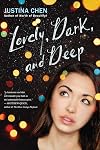
What a frustrating book. It seems like all I can do is close my eyes and shake my head. Half an hour ago, I was shouting, hissing, and growling at the book. One of the first things to initially upset me was that Rosalind, with the nickname of Roz, has been one of my favorite traditionally-female names for awhile, and this book ruined that mostly. This book's Roz is a jaw-dropping, simply astonishingly rude, pampered, entitled, rotten, blustery princess who is a louder, less-screechy version show more of Bella Swan. Roz is a petulant two-year-old who is waited on hand and foot and coddled like a five-year-old. Her parents would probably let her get away with murder. From the way the book is written, her older sister, the protagonist, was apparently only allowed to get her driver's license so she could be Roz's personal driver for free. No one suggests until the book is seventy-five percent done that Roz take the bus, -and this book takes place in Seattle-. I have lived here all my life and use mass transit. Roz goes to a fancy public school (they exist; I went to an increasingly fancy one too), which is a major indicator that mass transit within ten miles of the school sucks Because Can't You Just Drive A Fancy Car Like Everyone Else. Uh, sidetracked a moment. So, I should have sympathized with her, especially since she has to get up at five thirty am. I did not. She earned my increasing wrath as the book progressed. GROW UP, YOU WHINY CHILD. She hates her parents and her sister, and is given no characterization aside from being a tall, muscular girl who lives for ice cream, rowing, and pushing people around. The only way she knows how to operate outside of that is to start pouting, whining, and slamming doors when she doesn't get her way. The book tries and fails miserably to soften her up as the book progresses, instead finding new ways for her to be borderline cruel. In one instance, she offers her sister ice cream, and it turns out there are three spoonfuls left in a large container. What a horrid person.
Her parents encourage this and shelter her from the outside world. Why? It is never explained. They remind me a lot of Charlie from "Twilight"--their kids hate them and infantilize them, they're supposed badassses, and really just mistreated by the author in so many ways. They're married to their jobs and trample effortlessly over so many boundaries, unlike Charlie who is an accomplished police chief and an involved parent who has strong ties to friends and community. I adored Charlie and was so sad at Meyer's portrayal. Here? I couldn't stand the parents. It's no wonder they don't teach their kids boundaries--they have none. They are both intelligent, but increasingly controlling of the protagonist as the story goes on, right up to bullying information out of a career counselor. This is supposed to somehow be cute or caring. These parents are just flat-out creepy, large children and it was either annoying or made my skin crawl. Sometimes both at once.
Viola is the narrator-protagonist, and an ugly combination of AnaBella SteeleSwan and Hazel Grace Lancaster. She is smarter than all of them, however. I will give her that. And she cares about causes, whereas the other three characters only cared about themselves and sex. She is a talented, creative cook and gets emotional fulfillment from it, whereas the other three characters could arguably be approaching sociopathy (Bella) or clinical narcissism (the other two). However, she still is highly self-centered, and cares deeply about sex in such a way to be destructive to herself. Ahem, kissing. Okay. She honestly believes her pain over a breakup of a three-week relationship is more tragic than her aunt's pain over her uncle's untimely death. They were happily married for five years. It took my breath away for a moment, this teenager's horrid viewpoint. Viola berates and teenager-izes her aunt for being single for five years. It's called grief, you fucking jackass. Viola's mother tramples boundaries with the aunt, her SIL, as well, trying desperately to hook her up with any single guy within a twenty-mile radius because being single is soooo bad. Leave her alone! However, something interesting does emerge, that was never explored except for five sentences (I counted): Viola's father's parents were alcoholics, and Viola's aunt--may not have had AlaTeen as a resource. Or maybe she went and it didn't work. This is -never explored-, she just has Abandonment Issues and Is A Badass Woman Who's Uninterested In Men. Look At How Tough She Is, Hiding Her Pain Behind Her Successful Auto Repair Shop. What a waste of something interesting.
I compare Viola to Hazel Grace Lancaster because this book does discuss chronic illness, and especially -rare- chronic illness. For one glowing moment, it -was- about that, and my heart warmed, and then the book went back to being its usual self. Gross. And like Hazel Grace Lancaster, she does judge other people with her condition, disregard their advice, and is snide, but less so. Whereas Hazel Grace Lancaster has an oxygen tank, which I feel quite positively about, Viola is apparently some hellish, nightmare fuel version of Goth Mary Poppins. Seriously, what the fuck was she wearing and -what- did she look like? It is incredibly popular for YA teens to describe themselves in the ugliest terms--my favorite book has the characters unsatisfied with their appearances, and oh, is about sick kids and is much better than this. So, all YA teens think they're hideous, but this one--the writing was so skilled that I was imagining something close to an alien, a shapeless gray force field in a giant Mary Poppins hat that spread eerie, cold, far-reaching shadows wherever she landed. I have a feeling if I manage to figure out what Viola was -supposed- to look like, I will be shocked.
As in many YA novels written in first person, the prose was purple, the melodrama high and whiny, the adults morons, the siblings leaders of the Mean Girls (not addressed in the book, but I would -not- be surprised), the friendships dropped once a boy shows up, the story buried underneath an eye roll-inducing romance, and several moments of the romance quite charming. I wanted to write about cute and funny moments, but there were two. Blink and you missed them. And the romantic interest in this book had a genuinely tragic backstory of his own. I wish the book had been written from his perspective. Sadly, it is a Magical Healing Kiss issued by the protagonist that magically heals this teenager. I was unhappy. I dislike Hurt-Comfort. Now that I think about it--this book had a LOT of fanfiction tropes. It even had Novel Within A Novel, although done so subtly that I actually enjoyed reading about it. Having fanfiction tropes is not bad. I wrote fanfic for the better part of a decade. I just--wish this story hadn't had so many choices a fanfiction writer might make, in it. show less
Her parents encourage this and shelter her from the outside world. Why? It is never explained. They remind me a lot of Charlie from "Twilight"--their kids hate them and infantilize them, they're supposed badassses, and really just mistreated by the author in so many ways. They're married to their jobs and trample effortlessly over so many boundaries, unlike Charlie who is an accomplished police chief and an involved parent who has strong ties to friends and community. I adored Charlie and was so sad at Meyer's portrayal. Here? I couldn't stand the parents. It's no wonder they don't teach their kids boundaries--they have none. They are both intelligent, but increasingly controlling of the protagonist as the story goes on, right up to bullying information out of a career counselor. This is supposed to somehow be cute or caring. These parents are just flat-out creepy, large children and it was either annoying or made my skin crawl. Sometimes both at once.
Viola is the narrator-protagonist, and an ugly combination of AnaBella SteeleSwan and Hazel Grace Lancaster. She is smarter than all of them, however. I will give her that. And she cares about causes, whereas the other three characters only cared about themselves and sex. She is a talented, creative cook and gets emotional fulfillment from it, whereas the other three characters could arguably be approaching sociopathy (Bella) or clinical narcissism (the other two). However, she still is highly self-centered, and cares deeply about sex in such a way to be destructive to herself. Ahem, kissing. Okay. She honestly believes her pain over a breakup of a three-week relationship is more tragic than her aunt's pain over her uncle's untimely death. They were happily married for five years. It took my breath away for a moment, this teenager's horrid viewpoint. Viola berates and teenager-izes her aunt for being single for five years. It's called grief, you fucking jackass. Viola's mother tramples boundaries with the aunt, her SIL, as well, trying desperately to hook her up with any single guy within a twenty-mile radius because being single is soooo bad. Leave her alone! However, something interesting does emerge, that was never explored except for five sentences (I counted): Viola's father's parents were alcoholics, and Viola's aunt--may not have had AlaTeen as a resource. Or maybe she went and it didn't work. This is -never explored-, she just has Abandonment Issues and Is A Badass Woman Who's Uninterested In Men. Look At How Tough She Is, Hiding Her Pain Behind Her Successful Auto Repair Shop. What a waste of something interesting.
I compare Viola to Hazel Grace Lancaster because this book does discuss chronic illness, and especially -rare- chronic illness. For one glowing moment, it -was- about that, and my heart warmed, and then the book went back to being its usual self. Gross. And like Hazel Grace Lancaster, she does judge other people with her condition, disregard their advice, and is snide, but less so. Whereas Hazel Grace Lancaster has an oxygen tank, which I feel quite positively about, Viola is apparently some hellish, nightmare fuel version of Goth Mary Poppins. Seriously, what the fuck was she wearing and -what- did she look like? It is incredibly popular for YA teens to describe themselves in the ugliest terms--my favorite book has the characters unsatisfied with their appearances, and oh, is about sick kids and is much better than this. So, all YA teens think they're hideous, but this one--the writing was so skilled that I was imagining something close to an alien, a shapeless gray force field in a giant Mary Poppins hat that spread eerie, cold, far-reaching shadows wherever she landed. I have a feeling if I manage to figure out what Viola was -supposed- to look like, I will be shocked.
As in many YA novels written in first person, the prose was purple, the melodrama high and whiny, the adults morons, the siblings leaders of the Mean Girls (not addressed in the book, but I would -not- be surprised), the friendships dropped once a boy shows up, the story buried underneath an eye roll-inducing romance, and several moments of the romance quite charming. I wanted to write about cute and funny moments, but there were two. Blink and you missed them. And the romantic interest in this book had a genuinely tragic backstory of his own. I wish the book had been written from his perspective. Sadly, it is a Magical Healing Kiss issued by the protagonist that magically heals this teenager. I was unhappy. I dislike Hurt-Comfort. Now that I think about it--this book had a LOT of fanfiction tropes. It even had Novel Within A Novel, although done so subtly that I actually enjoyed reading about it. Having fanfiction tropes is not bad. I wrote fanfic for the better part of a decade. I just--wish this story hadn't had so many choices a fanfiction writer might make, in it. show less
There is so much to love about this book. It's funny and poignant and the narrator's voice is so, so clear. Viola has opinions and she doesn't hesitate to share them. I love that about her.
And despite the fact that Viola's condition is incredibly rare, it's still a book about a successful high school student suddenly having to shift her life around chronic physical illness as it develops. I had to stop about halfway through because my chest hurt. I felt so seen in a way that I hadn't show more anticipated or even thought I needed.
It's a great book. I loved Viola--she's someone we should all aspire to be more like. show less
And despite the fact that Viola's condition is incredibly rare, it's still a book about a successful high school student suddenly having to shift her life around chronic physical illness as it develops. I had to stop about halfway through because my chest hurt. I felt so seen in a way that I hadn't show more anticipated or even thought I needed.
It's a great book. I loved Viola--she's someone we should all aspire to be more like. show less
I was excited to see another book by Justina Chen; I read North of Beautiful years ago and loved it. This novel is realistic fiction with a side of romance.
Viola’s life takes a drastic turn one day, as she suddenly feels hot and strange and then faints into Thor’s arms. She arrives at the hospital only to learn that she is now allergic to the sun. Not just a little bit either. She is one of 100 people diagnosed with her condition in the history of humanity. You talk about NOT FAIR. Thor, show more real name Josh, comes to check on her at the hospital and they strike up a friendship. He’s got his own demons and can be more empathetic and understanding of her limitations.
The novel progresses through the condition’s progression. Each day and each chapter brings more information and changes for Viola. Her parents are crisis managers and own their own company. They are expert researchers and have taught her daughter these same skills. They go into ultra crisis mode. Viola has a whole new wardrobe that is spf protected. Her lightbulbs are removed. Any form of light can cause a reaction. Viola goes from someone who loves being outside running to someone who has to hide in the dark. While recovering in the dark, Viola helps Josh wrote a graphic novel, incorporating her own photosensitivity to the main character. Josh is always willing to rescue Viola and also values her input--he likes talking out his ideas for the comic with someone. Viola’s parents, however, find him to be reckless. Despite Viola trying to explain, her parents always blame him when it’s Viola’s choices that get them into situations that threaten her.
I enjoyed the novel. I really like the conclusion--well-written conclusions that pull the book together are hard to come by! I do think that there could have been more character development with other characters, particularly Josh and Roz, Viola’s sister. Most characters represent a “type” of person instead of being multidimensional and complex. Her best friends take up a fairly minor role but help her make decisions. Even Josh is fairly one-dimensional, and we never meet his parents. Nonetheless, I really enjoyed learning about the disease and seeing how she ends up making changes and planning her life. The important message is that a Plan B can be a good plan that is as interesting as Plan A. Evaluate and find there is more than one path through life. show less
Viola’s life takes a drastic turn one day, as she suddenly feels hot and strange and then faints into Thor’s arms. She arrives at the hospital only to learn that she is now allergic to the sun. Not just a little bit either. She is one of 100 people diagnosed with her condition in the history of humanity. You talk about NOT FAIR. Thor, show more real name Josh, comes to check on her at the hospital and they strike up a friendship. He’s got his own demons and can be more empathetic and understanding of her limitations.
The novel progresses through the condition’s progression. Each day and each chapter brings more information and changes for Viola. Her parents are crisis managers and own their own company. They are expert researchers and have taught her daughter these same skills. They go into ultra crisis mode. Viola has a whole new wardrobe that is spf protected. Her lightbulbs are removed. Any form of light can cause a reaction. Viola goes from someone who loves being outside running to someone who has to hide in the dark. While recovering in the dark, Viola helps Josh wrote a graphic novel, incorporating her own photosensitivity to the main character. Josh is always willing to rescue Viola and also values her input--he likes talking out his ideas for the comic with someone. Viola’s parents, however, find him to be reckless. Despite Viola trying to explain, her parents always blame him when it’s Viola’s choices that get them into situations that threaten her.
I enjoyed the novel. I really like the conclusion--well-written conclusions that pull the book together are hard to come by! I do think that there could have been more character development with other characters, particularly Josh and Roz, Viola’s sister. Most characters represent a “type” of person instead of being multidimensional and complex. Her best friends take up a fairly minor role but help her make decisions. Even Josh is fairly one-dimensional, and we never meet his parents. Nonetheless, I really enjoyed learning about the disease and seeing how she ends up making changes and planning her life. The important message is that a Plan B can be a good plan that is as interesting as Plan A. Evaluate and find there is more than one path through life. show less
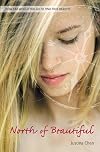
Terra Cooper, 16, has a port-wine stain birthmark that pretty much covers the entire right side of her face. Her father, an emotionally abusive man, has always scorned her for being ugly. He also laughs at her art collages, undermining her confidence in something that means a great deal to her. He is a cartographer, can’t tolerate imperfection, and tries to make his family fit into the rigid lines with which he has circumscribed his life.
Her mother Lois, likewise reviled by Terra’s show more father - in her case for having gained weight, keeps scheduling Terra for surgeries to try to fix her face, in part to placate the father. Terra and her mom have both internalized the constant criticisms. Terra has a veritable make-up shop in her room to help disguise her face for the times when she can’t swing her long hair over her face. Lois takes her comfort in the very activity that drives her husband’s cruel remarks; she eats and eats to fill the void in her life.
While Lois is driving Terra back from yet another unsuccessful treatment on her face, they hit some black ice at a rest area, and slam into a Range Rover, almost killing the boy standing outside of it. Thus they meet the incredibly nice Norah Fremont and her son Jacob, whom she adopted from China when he was a toddler, unwanted because of a cleft palate, and since repaired. Jacob, with his scar and his blonde mom, gets stared at a lot just as does Terra, but Jacob responds in the opposite way from Terra: he sports an attention-getting Goth look, and stares right back with a big smile at those who gawk at him.
Unlike most books about teens, while this book does have a romance, and even a triangle of sorts, the focus is on the main protagonist and her relationship with herself, and with her parents, both of whom in different ways affect how Terra feels about herself. At the beginning of the story, Terra sees her mother from her father’s eyes, as a cringing subservient woman who eats too much, and kowtows excessively to her husband’s vicious moods. Yet, in spite of her contempt (albeit mixed with compassion), Terra feels she must stay around and protect her mother, unlike her two older brothers, who moved as far away as they could as soon as they could.
One of Terra’s brothers, Merc, is now in China, and after a disastrous attempt at a visit from him during Thanksgiving, he sends Terra and their mom a ticket to come visit him. They can’t imagine going, until Norah says she and Jacob will go with them; Norah has always meant to visit Jacob’s orphanage to try to track down his birth mother.
The journey is life-changing for all of them, as they all learn lessons about love and beauty and what really matters in life.
Discussion: This remarkable story grows on you after you have finished and you find you are still thinking about it. It was hard to read because of the horrific abusiveness of the father, but this made the family’s struggles against his influence all the more poignant and significant. And although it has an ending that is hopeful for some of the characters, it is realistic enough not to be totally positive in every way for everyone. Nevertheless, enough good develops to make you want to cheer for the advances, and to bring out the kleenex. show less
Her mother Lois, likewise reviled by Terra’s show more father - in her case for having gained weight, keeps scheduling Terra for surgeries to try to fix her face, in part to placate the father. Terra and her mom have both internalized the constant criticisms. Terra has a veritable make-up shop in her room to help disguise her face for the times when she can’t swing her long hair over her face. Lois takes her comfort in the very activity that drives her husband’s cruel remarks; she eats and eats to fill the void in her life.
While Lois is driving Terra back from yet another unsuccessful treatment on her face, they hit some black ice at a rest area, and slam into a Range Rover, almost killing the boy standing outside of it. Thus they meet the incredibly nice Norah Fremont and her son Jacob, whom she adopted from China when he was a toddler, unwanted because of a cleft palate, and since repaired. Jacob, with his scar and his blonde mom, gets stared at a lot just as does Terra, but Jacob responds in the opposite way from Terra: he sports an attention-getting Goth look, and stares right back with a big smile at those who gawk at him.
Unlike most books about teens, while this book does have a romance, and even a triangle of sorts, the focus is on the main protagonist and her relationship with herself, and with her parents, both of whom in different ways affect how Terra feels about herself. At the beginning of the story, Terra sees her mother from her father’s eyes, as a cringing subservient woman who eats too much, and kowtows excessively to her husband’s vicious moods. Yet, in spite of her contempt (albeit mixed with compassion), Terra feels she must stay around and protect her mother, unlike her two older brothers, who moved as far away as they could as soon as they could.
One of Terra’s brothers, Merc, is now in China, and after a disastrous attempt at a visit from him during Thanksgiving, he sends Terra and their mom a ticket to come visit him. They can’t imagine going, until Norah says she and Jacob will go with them; Norah has always meant to visit Jacob’s orphanage to try to track down his birth mother.
The journey is life-changing for all of them, as they all learn lessons about love and beauty and what really matters in life.
Discussion: This remarkable story grows on you after you have finished and you find you are still thinking about it. It was hard to read because of the horrific abusiveness of the father, but this made the family’s struggles against his influence all the more poignant and significant. And although it has an ending that is hopeful for some of the characters, it is realistic enough not to be totally positive in every way for everyone. Nevertheless, enough good develops to make you want to cheer for the advances, and to bring out the kleenex. show less
Awards


You May Also Like


Statistics
- Works
- 10
- Members
- 2,096
- Popularity
- #12,281
- Rating
- 4.0
- Reviews
- 151
- ISBNs
- 55
- Languages
- 2
- Favorited
- 1