
Isabel Quintero
Author of My Papi Has a Motorcycle
About the Author
Image credit: Author Isabel Quintero at the 2019 Texas Book Festival in Austin, Texas, United States. By Larry D. Moore, CC BY-SA 4.0, https://commons.wikimedia.org/w/index.php?curid=83503296
Works by Isabel Quintero
Ugly Cat 1 copy
Golden State 1 copy
Associated Works
Come On In: 15 Stories about Immigration and Finding Home (2020) — Contributor — 138 copies, 6 reviews
Ab(solutely) Normal: Short Stories That Smash Mental Health Stereotypes (2023) — Contributor — 51 copies, 2 reviews
Tagged
Common Knowledge
- Gender
- female
- Education
- California State University, San Bernardino
- Occupations
- author
poet - Organizations
- San Bernardino Valley College
Mt. San Jacinto College
Arts Council of San Bernardino
PoetrIE - Nationality
- USA
- Birthplace
- Inland Empire, California, USA
- Places of residence
- Coronado, California, USA
- Associated Place (for map)
- California, USA
Members
Reviews
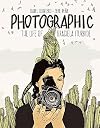
This is a poetic, rhythmic biography written as a graphic novel and including many of the photographer's black and white photos, as well as the cartoons by one of the authors. Often quoting the artist Graciela Iturbide herself, this accessible and intriguing book brings the life story of one of Mexico's award winning photographers to a wide audience of readers. The emphasis is not on dates and documentation, but on what Graciela sees through her lens and her interpretation of the images. The show more book focuses on cultures and symbolism, especially birds. There is a feeling of sadness and grief permeating the images and narration. But ultimately the book provides a sense of triumph that Graciela was able to overcome the limited life prescribed for her by her culture and is able to express herself through her photos and share her vision by exhibiting in a variety of museum collections around the world. show less
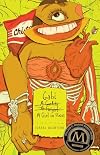
Love Gabi's voice, honest and saucy and so teen-friendly. She's a college-aspiring high school senior coping with best-friend drama, a traditional mother, boys and a meth-addicted dad. She also finds an affinity for poetry and expressing herself through it. This is "Catcher in the Rye" for Mexican-American girls but girls of all persuasions will find so much that resonates in Gabi's story. A must-read and game-changer! (Lib notes: fallout from a rape, abortion, mentions of drinking and drug show more use especially Gabi's dad.) show less
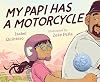
Ascreaming, bright-blue comet zooms through the streets of Corona, California, in a race against the orange setting sun.
A unicorn-decorated purple helmet can’t hide the grin of the young girl tightly gripping the waist of her carpenter father, who’s hunched over his blazing motorcycle as a comet tail of sawdust streams behind them. Basking in her father’s wordless expression of love, she watches the flash of colors zip by as familiar landmarks blend into one another. Changes loom all show more around them, from the abandoned raspado (snow cone) shop to the housing construction displacing old citrus groves. Yet love fills in the spaces between nostalgia and the daily excitement of a rich life shared with neighbors and family. Quintero’s homage to her papi and her hometown creates a vivid landscape that weaves in and out of her little-girl memory, jarring somewhat as it intersects with adult recollections. At the end, her family buys raspados from a handcart—are the vendor and defunct shop’s owner one and the same? Peña’s comic-book–style illustrations capture cultural-insider Mexican-American references, such as a book from Cathy Camper and Raúl the Third’s Lowrider series and the Indigenous jaguar mask on the protagonist’s brother’s T-shirt. Dialogue in speech bubbles incorporates both Spanish and English, and the gist of the conversation is easily followed; a fully Spanish edition releases simultaneously.
Every girl should be so lucky as to have such a papi. (Picture book. 7-11)
-Kirkus Review show less
A unicorn-decorated purple helmet can’t hide the grin of the young girl tightly gripping the waist of her carpenter father, who’s hunched over his blazing motorcycle as a comet tail of sawdust streams behind them. Basking in her father’s wordless expression of love, she watches the flash of colors zip by as familiar landmarks blend into one another. Changes loom all show more around them, from the abandoned raspado (snow cone) shop to the housing construction displacing old citrus groves. Yet love fills in the spaces between nostalgia and the daily excitement of a rich life shared with neighbors and family. Quintero’s homage to her papi and her hometown creates a vivid landscape that weaves in and out of her little-girl memory, jarring somewhat as it intersects with adult recollections. At the end, her family buys raspados from a handcart—are the vendor and defunct shop’s owner one and the same? Peña’s comic-book–style illustrations capture cultural-insider Mexican-American references, such as a book from Cathy Camper and Raúl the Third’s Lowrider series and the Indigenous jaguar mask on the protagonist’s brother’s T-shirt. Dialogue in speech bubbles incorporates both Spanish and English, and the gist of the conversation is easily followed; a fully Spanish edition releases simultaneously.
Every girl should be so lucky as to have such a papi. (Picture book. 7-11)
-Kirkus Review show less
Ascreaming, bright-blue comet zooms through the streets of Corona, California, in a race against the orange setting sun.
A unicorn-decorated purple helmet can’t hide the grin of the young girl tightly gripping the waist of her carpenter father, who’s hunched over his blazing motorcycle as a comet tail of sawdust streams behind them. Basking in her father’s wordless expression of love, she watches the flash of colors zip by as familiar landmarks blend into one another. Changes loom all show more around them, from the abandoned raspado (snow cone) shop to the housing construction displacing old citrus groves. Yet love fills in the spaces between nostalgia and the daily excitement of a rich life shared with neighbors and family. Quintero’s homage to her papi and her hometown creates a vivid landscape that weaves in and out of her little-girl memory, jarring somewhat as it intersects with adult recollections. At the end, her family buys raspados from a handcart—are the vendor and defunct shop’s owner one and the same? Peña’s comic-book–style illustrations capture cultural-insider Mexican-American references, such as a book from Cathy Camper and Raúl the Third’s Lowrider series and the Indigenous jaguar mask on the protagonist’s brother’s T-shirt. Dialogue in speech bubbles incorporates both Spanish and English, and the gist of the conversation is easily followed; a fully Spanish edition releases simultaneously.
Every girl should be so lucky as to have such a papi. (Picture book. 7-11)
-Kirkus Review show less
A unicorn-decorated purple helmet can’t hide the grin of the young girl tightly gripping the waist of her carpenter father, who’s hunched over his blazing motorcycle as a comet tail of sawdust streams behind them. Basking in her father’s wordless expression of love, she watches the flash of colors zip by as familiar landmarks blend into one another. Changes loom all show more around them, from the abandoned raspado (snow cone) shop to the housing construction displacing old citrus groves. Yet love fills in the spaces between nostalgia and the daily excitement of a rich life shared with neighbors and family. Quintero’s homage to her papi and her hometown creates a vivid landscape that weaves in and out of her little-girl memory, jarring somewhat as it intersects with adult recollections. At the end, her family buys raspados from a handcart—are the vendor and defunct shop’s owner one and the same? Peña’s comic-book–style illustrations capture cultural-insider Mexican-American references, such as a book from Cathy Camper and Raúl the Third’s Lowrider series and the Indigenous jaguar mask on the protagonist’s brother’s T-shirt. Dialogue in speech bubbles incorporates both Spanish and English, and the gist of the conversation is easily followed; a fully Spanish edition releases simultaneously.
Every girl should be so lucky as to have such a papi. (Picture book. 7-11)
-Kirkus Review show less
Lists
Things that GO (1)
Awards


You May Also Like


Associated Authors
Statistics
- Works
- 9
- Also by
- 5
- Members
- 2,142
- Popularity
- #12,010
- Rating
- 4.3
- Reviews
- 162
- ISBNs
- 77
- Languages
- 2
- Favorited
- 1