
Juan Felipe Herrera
Author of Imagine
About the Author
Juan Felipe Herrara was named at the U.S.next Poet Laureate by the Library of Congress. He was Poet Laureate of California from 2012-2014 and is the author of more than a dozen books of poetry. (Bowker Author Biography)
Image credit: reading at National Book Festival By Slowking4 - Own work, GFDL 1.2, https://commons.wikimedia.org/w/index.php?curid=62180074
Works by Juan Felipe Herrera
Super Cilantro Girl/La Superniña del Cilantro (English and Spanish Edition) (2003) 57 copies, 7 reviews
Associated Works
Tales of Two Americas: Stories of Inequality in a Divided Nation (2017) — Contributor — 229 copies, 7 reviews
From Totems to Hip-Hop: A Multicultural Anthology of Poetry Across the Americas 1900-2002 (2002) — Contributor — 181 copies
The Poem Is You: 60 Contemporary American Poems and How to Read Them (2016) — Contributor — 78 copies
Sudden Fiction Latino: Short-Short Stories from the United States and Latin America (2010) — Contributor — 76 copies, 15 reviews
Bullets Into Bells: Poets and Citizens Respond to Gun Violence (2017) — Contributor — 68 copies, 3 reviews
Currents from the Dancing River: Contemporary Latino Fiction, Nonfiction, and Poetry (1994) — Contributor — 55 copies
Without Discovery: A Native Response to Columbus (Turning Point Series) (1992) — Contributor — 17 copies
Tagged
Common Knowledge
- Canonical name
- Herrera, Juan Felipe
- Birthdate
- 1948-12-27
- Gender
- male
- Occupations
- poet
professor - Organizations
- University of California, Riverside
University of Washington - Awards and honors
- Poet laureate of California (2013-2014)
Poet Laureate Consultant in Poetry to the Library of Congress (2015-2017)
Robert Kirsch Award (2015)
Ruth Lilly Poetry Prize (2022)
MacArthur Fellowship (2024) - Nationality
- USA
- Birthplace
- Fowler, California, USA
- Places of residence
- Fresno, California, USA
- Associated Place (for map)
- California, USA
Members
Reviews
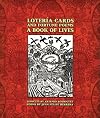
This elegant book of 104 poems and linocuts re-imagines an ancient tradition. Loteria is a popular traditional Mexican game, with roots going back to the Aztecs. As in bingo, players attempt to match their game cards to the loteria announcer's picks, but using a deck of cards illustrated with traditional characters (The Sun, a Flag, a Heart, the Devil and so on) instead of letters and numbers. The announcer often accompanies his calling with a line of traditional or extemporaneous show more verse.
Together, Mexican artist Rodriguez and Chicano poet Herrera explore and explode this tradition. As opposed to the flat images of the cards still being used in contemporary Mexico and the United States, Rodriguez's images are detailed, surreal, often pointedly political. They comment on Mexican history and culture as well as the history of art. He also adds to the cannon of cards with such new images as "The Zapitista," or a gaunt "Mojado" (wetback) on one card being chased by a gruesome man/machine/spider combination of "La Migra" on the card immediately following it.
Herrera's poems replace the brief couplets or sayings associated with the traditional loteria images. Usually limiting himself to twelve to fifteen lines, the poems are beautiful vignettes, either addressed to the image on the card or inhabiting its thoughts. Herrera's Snake claims "no ones' got me right," His Star's "five pointed heart / rotates out of late-night miseries." And he sings to The Mermaid "I stalked her for centuries. / My apologies."
At times Herrera seems overwhelmed by Rodriguez' images, and he feels compelled to mention of every detail of Rodriguez's linocut in his poem, turning some into little more than an image list. These occasional lapses, however, do not diminish the beauty of this elegant volume. This is a book to savor and luxuriate in. show less
Together, Mexican artist Rodriguez and Chicano poet Herrera explore and explode this tradition. As opposed to the flat images of the cards still being used in contemporary Mexico and the United States, Rodriguez's images are detailed, surreal, often pointedly political. They comment on Mexican history and culture as well as the history of art. He also adds to the cannon of cards with such new images as "The Zapitista," or a gaunt "Mojado" (wetback) on one card being chased by a gruesome man/machine/spider combination of "La Migra" on the card immediately following it.
Herrera's poems replace the brief couplets or sayings associated with the traditional loteria images. Usually limiting himself to twelve to fifteen lines, the poems are beautiful vignettes, either addressed to the image on the card or inhabiting its thoughts. Herrera's Snake claims "no ones' got me right," His Star's "five pointed heart / rotates out of late-night miseries." And he sings to The Mermaid "I stalked her for centuries. / My apologies."
At times Herrera seems overwhelmed by Rodriguez' images, and he feels compelled to mention of every detail of Rodriguez's linocut in his poem, turning some into little more than an image list. These occasional lapses, however, do not diminish the beauty of this elegant volume. This is a book to savor and luxuriate in. show less

The Poet Laureate of the United States, Mexican-American Juan Felipe Herrera, tells the story of his life in bilingual free-style poetry illustrated with colorful and often whimsical art work by Elly Simmons.
Herrera was born “on the road” in Fowler, California and grew up traveling with his migrant farmworker parents from labor camp to labor camp. Wherever they stopped, they set up a tent and slept under the stars in any kind of weather.
This is not a story about hardship however, but show more rather conveys the joys of family, love, traditions, and community. Eventually Juan's father build them a home on top of an abandoned car:
“From the distance, my house was
a short loaf of bread on wheels.
Inside it was a warm cave of conversations.”
Herrera fondly remembers his mother’s songs and his father’s stories, and all they shared together:
“A frying pan, a griddle to cook the tortillas,
and a jar of forks and knives -
these were the necessary ingredients.
And, of course, wood for the fire.
The sky was my blue spoon,
the wavy clay of the land was my plate.”
When Herrera was eight, his mother told his father they needed to settle down in one place so Juan could go to school. The biography ends with their journey to a permanent location:
“As the cities came into view, I knew
one day I would follow my own road.
I would let my voice fly the way my mother recited poems,
the way my father called the doves.”
Evaluation: What a beautiful, evocative tribute to Herrera’s parents and childhood. Herrera, who has won a number of awards for his books of poetry, shows that a life that might seem hard to adults can, to a child, seem full of magic, as long as there is love. The gorgeous art by Simmons adds to a sense of magical wonder and warmth.
This book provides a balance to all the negative accounts of migrant farmworker life, which indeed is full of hardship. According to a 2005 National Agricultural Workers Survey, US Dept. of Labor, farm work the second lowest paid job in the nation, after domestic labor. It is also ranked as one of the three most dangerous occupations in the United States. The stress from uncertainty is high for parents, and children of migrant farmworkers have higher rates of pesticide exposure, malnutrition and dental disease than the general population. Many migrant children work alongside their parents: by the time a migrant child is 12, he/she may work in the fields between 16-18 hours per week. And yet, sometimes there can be much to celebrate as well, if one finds new perspectives to think about life, as this story shows. show less
Herrera was born “on the road” in Fowler, California and grew up traveling with his migrant farmworker parents from labor camp to labor camp. Wherever they stopped, they set up a tent and slept under the stars in any kind of weather.
This is not a story about hardship however, but show more rather conveys the joys of family, love, traditions, and community. Eventually Juan's father build them a home on top of an abandoned car:
“From the distance, my house was
a short loaf of bread on wheels.
Inside it was a warm cave of conversations.”
Herrera fondly remembers his mother’s songs and his father’s stories, and all they shared together:
“A frying pan, a griddle to cook the tortillas,
and a jar of forks and knives -
these were the necessary ingredients.
And, of course, wood for the fire.
The sky was my blue spoon,
the wavy clay of the land was my plate.”
When Herrera was eight, his mother told his father they needed to settle down in one place so Juan could go to school. The biography ends with their journey to a permanent location:
“As the cities came into view, I knew
one day I would follow my own road.
I would let my voice fly the way my mother recited poems,
the way my father called the doves.”
Evaluation: What a beautiful, evocative tribute to Herrera’s parents and childhood. Herrera, who has won a number of awards for his books of poetry, shows that a life that might seem hard to adults can, to a child, seem full of magic, as long as there is love. The gorgeous art by Simmons adds to a sense of magical wonder and warmth.
This book provides a balance to all the negative accounts of migrant farmworker life, which indeed is full of hardship. According to a 2005 National Agricultural Workers Survey, US Dept. of Labor, farm work the second lowest paid job in the nation, after domestic labor. It is also ranked as one of the three most dangerous occupations in the United States. The stress from uncertainty is high for parents, and children of migrant farmworkers have higher rates of pesticide exposure, malnutrition and dental disease than the general population. Many migrant children work alongside their parents: by the time a migrant child is 12, he/she may work in the fields between 16-18 hours per week. And yet, sometimes there can be much to celebrate as well, if one finds new perspectives to think about life, as this story shows. show less
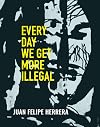
I grabbed this on one of my book crawls (my Grand Rapids book crawl, at We are LIT, specifically), because I had really liked an older collection of Herrera's -- Notes on the Assemblage. Which was a good decision, as I loved this one even more!
This was so overfull with power and truth that my own words seem empty and lukewarm in comparison. One of the very first poems, "You Just Don't Talk About It," stopped me in my tracks and let me know what to expect from the collection. Except this show more isn't just anger and injustice and calling to account, it is also grappling with identity and humor and empathy and glints of hope as well.
A moving and indicting plea for dignity. show less
This was so overfull with power and truth that my own words seem empty and lukewarm in comparison. One of the very first poems, "You Just Don't Talk About It," stopped me in my tracks and let me know what to expect from the collection. Except this show more isn't just anger and injustice and calling to account, it is also grappling with identity and humor and empathy and glints of hope as well.
A moving and indicting plea for dignity. show less
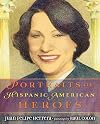
This book for children aged 8-12 features vignettes about twenty Hispanic American men and women who have made outstanding contributions in their respective fields. The author begins with the observation:
“In a land of immigrants, it is an irony that Latino lives have been largely ignored. Although there have been incredible contributions by Hispanic Americans since the beginnings of this nation, their pioneering roles often have been oversadowed and their identities besmirched by terms show more such as ‘alien’ and ‘illegal.’”
Herrera tried to include a mix of people from diverse fields, from community organizers César Chávez and Dolores Huerta, to the astronaut Ellen Ochoa, to physics Nobel Prize winner Luis W. Alvarez, to Supreme Court justice Sonia Sotomayor.
I didn’t know much about some of those he featured, such as the New Mexico-born Dennis “Dionisio” Chavez, 1888-1962, who served in the U.S. House, the U.S. Senate, and for four terms as governor of New Mexico. While in office, he pushed bills to protect Indian rights, voting rights, and to promote fair employment practices.
People may know the name of Desi Arnaz, but tend to think of him as Lucille Ball’s henpecked husband on “I Love Lucy.” He was much more than that. It was Arnaz who first filmed a sitcom in front of a live audience. He used a multicamera setup for the first time and also created the concept of the rerun. The studio he had with Lucille Ball, Desilu, was bigger than any other in Hollywood in the 1950’s and ‘60s. As the author writes, “Desi’s revolución could be seen in everyone’s living room. He changed American television - behind the scenes and on the screen.”
Helen Rodriguez-Trias was born in 1929 in New York City to Puerto Rican parents, and spent her life as an activist for Puerto Rican rights, inter alia. She became a doctor at age thirty-one. Through her efforts to support abortion rights, abolish enforced sterilization, and provide neonatal care to underserved people, she expanded the range of public health services for women and children in minority and low-income populations all over the world. She endeavored to end sterilization abuse, inform women about lead paint hazards, and catered to women with HIV. The author writes, “She believed that issues of social change - helping people make their lives better - were inextricably linked with better health care.”
One could go on and on; the short biographies are so inspirational! Each profile is accompanied by a beautiful full-page painting of the subject by award-winning illustrator Raúl Colón. Using a muted palette done in watercolor, colored pencils, and litho pencils, Colón creates an effect somewhere between intaglio and pointillism that gives his portraits a gauzy appearance.
At the back of the book, there is a list of recommended readings on every hero covered by the book.
Discussion: In an interview, the author pointed out that everyone wants awareness of the stories of their forebears, but he was “bowled over at the lack of materials” on Hispanics. He hopes more writers will undertake the task of remedying this omission. It is all the more critical in times when the President of the United States avers that immigrants are not people but “animals.” Moreover, the current administration further vitiates the truth about contributions of immigrants by bruiting the erroneous claim that immigrants overburden social welfare programs. This, of course, is not true; on the contrary, native-born Americans aren’t footing the bill for immigrants so much as immigrants are contributing to a welfare system that many of them can't take advantage of. And many of those immigrants, as Herrera shows, have excelled admirably.
Evaluation: Herrera has made his “heroes” into relatable people with engaging stories. The bios aren’t too long to get tedious, but give just enough information to create interest in finding out more. show less
“In a land of immigrants, it is an irony that Latino lives have been largely ignored. Although there have been incredible contributions by Hispanic Americans since the beginnings of this nation, their pioneering roles often have been oversadowed and their identities besmirched by terms show more such as ‘alien’ and ‘illegal.’”
Herrera tried to include a mix of people from diverse fields, from community organizers César Chávez and Dolores Huerta, to the astronaut Ellen Ochoa, to physics Nobel Prize winner Luis W. Alvarez, to Supreme Court justice Sonia Sotomayor.
I didn’t know much about some of those he featured, such as the New Mexico-born Dennis “Dionisio” Chavez, 1888-1962, who served in the U.S. House, the U.S. Senate, and for four terms as governor of New Mexico. While in office, he pushed bills to protect Indian rights, voting rights, and to promote fair employment practices.
People may know the name of Desi Arnaz, but tend to think of him as Lucille Ball’s henpecked husband on “I Love Lucy.” He was much more than that. It was Arnaz who first filmed a sitcom in front of a live audience. He used a multicamera setup for the first time and also created the concept of the rerun. The studio he had with Lucille Ball, Desilu, was bigger than any other in Hollywood in the 1950’s and ‘60s. As the author writes, “Desi’s revolución could be seen in everyone’s living room. He changed American television - behind the scenes and on the screen.”
Helen Rodriguez-Trias was born in 1929 in New York City to Puerto Rican parents, and spent her life as an activist for Puerto Rican rights, inter alia. She became a doctor at age thirty-one. Through her efforts to support abortion rights, abolish enforced sterilization, and provide neonatal care to underserved people, she expanded the range of public health services for women and children in minority and low-income populations all over the world. She endeavored to end sterilization abuse, inform women about lead paint hazards, and catered to women with HIV. The author writes, “She believed that issues of social change - helping people make their lives better - were inextricably linked with better health care.”
One could go on and on; the short biographies are so inspirational! Each profile is accompanied by a beautiful full-page painting of the subject by award-winning illustrator Raúl Colón. Using a muted palette done in watercolor, colored pencils, and litho pencils, Colón creates an effect somewhere between intaglio and pointillism that gives his portraits a gauzy appearance.
At the back of the book, there is a list of recommended readings on every hero covered by the book.
Discussion: In an interview, the author pointed out that everyone wants awareness of the stories of their forebears, but he was “bowled over at the lack of materials” on Hispanics. He hopes more writers will undertake the task of remedying this omission. It is all the more critical in times when the President of the United States avers that immigrants are not people but “animals.” Moreover, the current administration further vitiates the truth about contributions of immigrants by bruiting the erroneous claim that immigrants overburden social welfare programs. This, of course, is not true; on the contrary, native-born Americans aren’t footing the bill for immigrants so much as immigrants are contributing to a welfare system that many of them can't take advantage of. And many of those immigrants, as Herrera shows, have excelled admirably.
Evaluation: Herrera has made his “heroes” into relatable people with engaging stories. The bios aren’t too long to get tedious, but give just enough information to create interest in finding out more. show less
Lists
Awards


You May Also Like


Associated Authors
Statistics
- Works
- 47
- Also by
- 25
- Members
- 2,207
- Popularity
- #11,617
- Rating
- 3.9
- Reviews
- 103
- ISBNs
- 115
- Languages
- 1


