
Paul Stephenson (1) (1969–)
Author of Constantine: Roman Emperor, Christian Victor
For other authors named Paul Stephenson, see the disambiguation page.
About the Author
Image credit: Paul Stephenson
Works by Paul Stephenson
Associated Works
A Companion to the Byzantine Culture of War, ca. 300-1204 (Brill's Companions to the Byzantine World) (2018) — Contributor — 9 copies
Tagged
Common Knowledge
- Other names
- STEPHENSON, Paul
- Birthdate
- 1969
- Gender
- male
- Education
- University of Cambridge
University of Oxford - Occupations
- historian
- Organizations
- Keble College, Oxford
British Academy
Durham University
Radboud University Nijmegen
Dumbarton Oaks
University of Lincoln (show all 9)
Higher Education Academy
British School at Athens
Royal Historical Society - Nationality
- UK
- Birthplace
- London, England, UK
- Associated Place (for map)
- England, UK
Members
Reviews
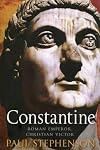
4 solid stars due to the following: 1) it's easy to read; 2) the author's thesis is clearly stated and he sticks to supporting it throughout the book, 3) it's balanced - although much of it is about the early years of Christianity, the author is not pro-Christian or anti-Christian, and 4) his view on why the emperor Constantine championed Christianity is quite original. I will just say it involves the military's role in making or breaking emperors, what the military's true interests were show more (mostly booty & plunder), and how Constantine brilliantly convinced them that one particular god was capable of delivering victories. The author supports his argument by examining primary accounts, statues, architecture, coinage and art. Really excellent if you are interested in how Christianity got its big break. show less
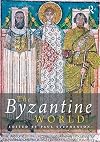
This is a comprehensive review of the current state of Byzantine studies, as of 2009. Mr. Stephenson has edited well, and contributed several articles. Michael Angold, discusses the crisis of the early 700's very well. Thomas Dale talk sthe spread of Byzantine architectural features to Venice, well, but I think the gem of the olio is the article on "Byzantium and historical Sociology" by Johann P. Arnason. It is a succinct but insightful essay about why we bother with Byzantium at all.
NCLA Review - Rather than the barest of facts regarding Constantine’s life, historian Paul Stephenson provides a narrative of Constantine’s life in a broader context. “This work, then, narrative without notes, is as much story as history.” Not entirely intended for a scholarly audience, Stephenson hopes to attract a wider readership. The author relies on contemporary works, though flawed from bias or altered, such as Eusebius, the bishop of Caesarea; Christian writers Lactanius and show more Cyprian; and others. Stephenson thinks that “...it is impossible to write a genuine biography of any pre-modern figure.” The author provides photographs of places, coinage, art, sculpture and architecture that describe the life and times of Constantine. Stephenson actively advocates some major points: 1) Constantine’s conversion was not the reason for the rapid growth of Christianity in the fourth century; women were the catalyst. 2) Constantine’s conversion was not a revelation inspired by a vision, but a lifelong process. 3) The military and the interaction of faith and power in a new Christian Roman Empire were important and 4) the establishment of Constantinople as his victory city was an influential choice. The author includes a glossary, abbreviations, primary sources, bibliographical essays, a helpful index, maps and stemmata. Although interesting, well written and researched, this is not a book that the average church library patron would probably pick up. Most libraries do not have the money to spend on historical biographies of this sort. Rating: 3 —BS show less
Other than Jesus Christ and Paul, Constantine is the most important figure of early Christianity. I liked the way the author uses archeology to confirm his theories and ideas.
Lists
Awards

You May Also Like


Associated Authors
Statistics
- Works
- 7
- Also by
- 3
- Members
- 490
- Popularity
- #50,415
- Rating
- 3.8
- Reviews
- 5
- ISBNs
- 119
- Languages
- 2
- Favorited
- 1

