
Wolfgang Borchert (1921–1947)
Author of The Man Outside : Play & stories
About the Author
Wolfgang Borchert was a dramatist who grew up under the Nazi regime. During World War II he was imprisoned and sentenced to death for what was considered his defeatist attitude. He died at the age of 26, the night before the Hamburg premiere of his play The Outsider (The Man Outside). Surrealistic show more in technique, the play concerns the return of a maimed German prisoner of war who finds everything destroyed and all hope shattered. The efforts of the hero of the play to make a place for himself end in failure. The Outsider remains important because it is an excellent drama. It is the most complete expression of the disillusionment of the youth of postwar Germany with the system that had ruined their country and their own best years. It is the only really successful recreation of the World War II art form known as Expressionsim. Borchert died in 1947. (Bowker Author Biography) show less
Image credit: Deutsch Post AG and Rosemarie Clausen / Wikimedia Commons
Works by Wolfgang Borchert
Königs Erläuterungen : Wolfgang Borchert : Draussen vor der Tür + Die Hundeblume + Die drei dunklen Könige + An diesem Dienstag + Die Küchenuhr + Nachts schlafen die Ratten… (1980) — Author — 5 copies
Königs Erläuterungen : Wolfgang Borchert : Draußen vor der Tür und ausgewählte Kurzgeschichten [1999] (2003) 3 copies
הרבה צרות היו לו עם המלחמות 3 copies
Ukse taga : [näidend ja proosat] 2 copies
По длинной, длинной улице Рассказы 2 copies
Erzahlungen : Marius Muller-Westernhagen liest aus Erzahlungen ; Die Hundeblume, Nachts schlafen die Ratten doch , Die Kuchenuhr, Schischyphusch (1988) 2 copies
מוצרט הקטן שלנו 1 copy
מוצרט הקטן שלנו : סיפורים 1 copy
An diesem Dienstag : Neunzehn Geschichten : Chapter 16 : Nachts schlafen die Ratten doch (2018) 1 copy
Pa garo, garo ielu : stāsti 1 copy
Üzgün Sardunyalar 1 copy
Opere 1 copy
Gibt denn keiner, keiner Antwort?: Nachts schlafen die Ratten doch. Die Hundeblume. Im Mai, im Mai schrie der Kuckuck (2017) 1 copy
Maslačak 1 copy
Associated Works
The Art of the Tale: An International Anthology of Short Stories (1986) — Contributor — 381 copies, 3 reviews
Tales of the German Imagination from the Brothers Grimm to Ingeborg Bachmann (Penguin Classics) (2012) — Contributor — 79 copies, 2 reviews
German Radio Plays: Jurgen Becker, Gunter Eich, Peter Handke, and others (German Library) (1991) — Contributor — 12 copies
Deutsche Kurzgeschichten : eine Auswahl für mittlere Klassen (1972) — Author, some editions — 5 copies, 1 review
Oskar Kokoschka, Städteportraits: [Ausstellung "Oskar Kokoschka - Städteportraits", Österreichisches Museum für Angewandte Kunst, Wien, 4. März - 6. April 1986] (1986) — Contributor — 3 copies
Borcherts "Draußen vor der Tür" erschüttert — Associated Name — 1 copy
Zur Kurzgeschichte mit einer Interpretation der Kurzgeschichte Die drei dunklen Könige von Wolfgang Borchert (2003) — Associated Name — 1 copy
Tagged
Common Knowledge
- Canonical name
- Borchert, Wolfgang
- Birthdate
- 1921-05-20
- Date of death
- 1947-11-20
- Gender
- male
- Occupations
- playwright
actor - Relationships
- Borchert, Hertha (mother)
- Nationality
- Germany (birth)
- Birthplace
- Hamburg, Germany
- Places of residence
- Hamburg, Germany
- Place of death
- Basel, Switzerland
- Burial location
- Friedhof Ohlsdorf, Hamburg, Germany
- Associated Place (for map)
- Hamburg, Germany
Members
Reviews
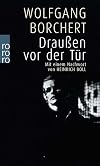
Helmet off helmet off – we have lost!
Wolfgang Borchert was one of millions of Germans who fought in WWII. Not for Hitler, for national socialism, or for Germany; for Germany, he'd written plays against the nazis, which earned him a one-way trip to the front (it's easier to have your enemies take care of dissidents).
When he came back home, the war was over, Hitler was dead and Wolfgang himself wasn't far behind. Four years of bullet wounds (some allegedly self-inflected), field hospitals, show more sickness, jail and POW camps had finished him. So he sat down and started writing again. He wrote about fighting in a war he didn't believe in, where schoolboy fantasies about honour turned out to mean mass graves. He wrote about coming home to a country in both material and moral ruins, where everybody seemed to just want to pretend the last 10 years never happened. He wrote about a Europe that had marched straight into a meat grinder shouting happy slogans. He wrote as quickly as he could; everything old had been obliterated by the war, something new had to come, and he knew he wouldn't be around to see it.
We don’t need poets with good grammar. We lack patience for good grammar. We need those with the hot feeling that’s been sobbed hoarse. Who call a tree tree and a woman woman and say yes and say no: loud and distinctly and threefold and without a subjunctive.
There are several editions of Borchert's work. This one, The Man Outside, collects roughly a dozen of his short stories and the titular play, literature that runs gasping for breath along a knife's edge between furious polemics and horrified sentimentality and somehow manages to never fall off to either side. A direct, frenzied prose that occasionally simmers down into dreamlike, elegic pieces like "The Bread" and "The Rats Sleep At Night" and become completely heartrending.
In Borchert's stories, soldiers stumble down the street of once-again peaceful Germany with their heads full of machine-gun fire and the number of people they had killed. Boys sit in bombed-out buildings, keeping constant vigil so the rats don't eat their little brother buried under the rubble. Decades-old marriages threaten to crash over something as trivial as a piece of bread. Prisoners risk their lives for just a glimpse of a wildflower. And above all there's a narrator who at times seems to have endless sympathy and pity for his co-sufferers, and at other times drop all pretenses of telling a story and just yells at the reader: this is what we are. This is what we did, all of us. There are no attempts at setting it in some ideological or political perspective, all ideologies and politics got massacred in the war, there's just the now, the ground zero, where they need to start again.
Say NO! Say NO! Say NO!
Borchert isn't subtle. He doesn't have time for subtle. He has an incredible raw talent and had he lived, he might have looked back on these early stories today and thought of them as punkishly charming but a little too black and white, but that would never happen and he knew it, so he just needs to get it all down on paper.
Wolfgang Borchert died in 1947, 26 years old. The day after his death saw the first performance of "The Man Outside", the aforementioned play that makes up the centrepiece of the collection, with the subtitle "a play no theatre wants to perform and no audience wants to see." In this, a lone soldier returns to Germany after three years in a Siberian POW camp. His name is Beckmann - just Beckmann, everyone's forgotten his first name; he's never been anything but a soldier. He has no initiative of his own; he's never done anything but take orders. He still wears a uniform; he's never owned any civvies. And now they tell him that's all over, there's no need to feel bad about it, you only did your duty, here, have a schnapps and let's sing Alte Kameraden, why do you keep looking at us like that? But his parents, faithful nazis, are both dead. His wife found someone else. His general refuses to understand why he feels guilty about all the dead. With nowhere to go, nobody to listen, he tries to drown himself in the Elbe, but even Death won't have him. And so he stands there as the curtain falls, one of millions along dozens of riverbanks in a Europe that doesn't know where to go and finds no answers in 2000 years of civilization and millions of dead:
Go on, answer me!
Why won't you say anything? Why?
Won't anybody answer me?
Anybody?
Won't anybody, anybody answer me?
And the voice echoes. show less
Wolfgang Borchert was one of millions of Germans who fought in WWII. Not for Hitler, for national socialism, or for Germany; for Germany, he'd written plays against the nazis, which earned him a one-way trip to the front (it's easier to have your enemies take care of dissidents).
When he came back home, the war was over, Hitler was dead and Wolfgang himself wasn't far behind. Four years of bullet wounds (some allegedly self-inflected), field hospitals, show more sickness, jail and POW camps had finished him. So he sat down and started writing again. He wrote about fighting in a war he didn't believe in, where schoolboy fantasies about honour turned out to mean mass graves. He wrote about coming home to a country in both material and moral ruins, where everybody seemed to just want to pretend the last 10 years never happened. He wrote about a Europe that had marched straight into a meat grinder shouting happy slogans. He wrote as quickly as he could; everything old had been obliterated by the war, something new had to come, and he knew he wouldn't be around to see it.
We don’t need poets with good grammar. We lack patience for good grammar. We need those with the hot feeling that’s been sobbed hoarse. Who call a tree tree and a woman woman and say yes and say no: loud and distinctly and threefold and without a subjunctive.
There are several editions of Borchert's work. This one, The Man Outside, collects roughly a dozen of his short stories and the titular play, literature that runs gasping for breath along a knife's edge between furious polemics and horrified sentimentality and somehow manages to never fall off to either side. A direct, frenzied prose that occasionally simmers down into dreamlike, elegic pieces like "The Bread" and "The Rats Sleep At Night" and become completely heartrending.
In Borchert's stories, soldiers stumble down the street of once-again peaceful Germany with their heads full of machine-gun fire and the number of people they had killed. Boys sit in bombed-out buildings, keeping constant vigil so the rats don't eat their little brother buried under the rubble. Decades-old marriages threaten to crash over something as trivial as a piece of bread. Prisoners risk their lives for just a glimpse of a wildflower. And above all there's a narrator who at times seems to have endless sympathy and pity for his co-sufferers, and at other times drop all pretenses of telling a story and just yells at the reader: this is what we are. This is what we did, all of us. There are no attempts at setting it in some ideological or political perspective, all ideologies and politics got massacred in the war, there's just the now, the ground zero, where they need to start again.
Say NO! Say NO! Say NO!
Borchert isn't subtle. He doesn't have time for subtle. He has an incredible raw talent and had he lived, he might have looked back on these early stories today and thought of them as punkishly charming but a little too black and white, but that would never happen and he knew it, so he just needs to get it all down on paper.
Wolfgang Borchert died in 1947, 26 years old. The day after his death saw the first performance of "The Man Outside", the aforementioned play that makes up the centrepiece of the collection, with the subtitle "a play no theatre wants to perform and no audience wants to see." In this, a lone soldier returns to Germany after three years in a Siberian POW camp. His name is Beckmann - just Beckmann, everyone's forgotten his first name; he's never been anything but a soldier. He has no initiative of his own; he's never done anything but take orders. He still wears a uniform; he's never owned any civvies. And now they tell him that's all over, there's no need to feel bad about it, you only did your duty, here, have a schnapps and let's sing Alte Kameraden, why do you keep looking at us like that? But his parents, faithful nazis, are both dead. His wife found someone else. His general refuses to understand why he feels guilty about all the dead. With nowhere to go, nobody to listen, he tries to drown himself in the Elbe, but even Death won't have him. And so he stands there as the curtain falls, one of millions along dozens of riverbanks in a Europe that doesn't know where to go and finds no answers in 2000 years of civilization and millions of dead:
Go on, answer me!
Why won't you say anything? Why?
Won't anybody answer me?
Anybody?
Won't anybody, anybody answer me?
And the voice echoes. show less

Evet, hiç değilse
ben ölünce
bir fener olsam;
tek başıma geceleri,
uykulardayken dünya,
gökte ayla senli benli
sohbete dalsam.
Wolfgang Borchert, II. Dünya Savaşı yıllarında savaşın bütün acılarını tattı, yaralandı, hastalıklara yakalandı, savaş karşıtı görüşlerinden ötürü hapis yattı. Henüz 26 yaşındayken öldüğünde, ardında bir dolu şiir ve öyküyle tüm dünyayı etkileyen Kapıların Dışında adlı bir oyun ve yüreklerde bugün de yankılanan show more savaş karşıtı bir manifesto bıraktı.
Borchert’in, Behçet Necatigil’in çevirdiği olağanüstü güzellikteki Fener, Gece ve Yıldızlar adlı şiir kitabıyla Ayşe Sarısayın’ın dilimize kazandırdığı ölümünden sonra yayınlanan şiirlerini bir arada sunuyoruz. show less
ben ölünce
bir fener olsam;
tek başıma geceleri,
uykulardayken dünya,
gökte ayla senli benli
sohbete dalsam.
Wolfgang Borchert, II. Dünya Savaşı yıllarında savaşın bütün acılarını tattı, yaralandı, hastalıklara yakalandı, savaş karşıtı görüşlerinden ötürü hapis yattı. Henüz 26 yaşındayken öldüğünde, ardında bir dolu şiir ve öyküyle tüm dünyayı etkileyen Kapıların Dışında adlı bir oyun ve yüreklerde bugün de yankılanan show more savaş karşıtı bir manifesto bıraktı.
Borchert’in, Behçet Necatigil’in çevirdiği olağanüstü güzellikteki Fener, Gece ve Yıldızlar adlı şiir kitabıyla Ayşe Sarısayın’ın dilimize kazandırdığı ölümünden sonra yayınlanan şiirlerini bir arada sunuyoruz. show less

Kapıların Dışında, savaştan dönen Beckmann’ın hikâyesini anlatır. Ölülerin diyarından tesadüfen geri dönebilenlerden biridir o. Fakat ne eşi ne evi ne de ülkesi bıraktığı gibidir. Şimdi her yer enkaz, herkes kaypaktır ve Beckmann nihilist bir tavırla ölümü arzular.
İkinci Dünya Savaşı’nın toplumda yarattığı yıkıcı etkileri ele alan “yıkıntı edebiyatı”nın, HeInrIch Böll’le beraber en önemli temsilcilerinden biri olan Wolfgang Borchert, show more nasyonal sosyalizmin ahlaki ve fiziksel kurbanlarından biridir. Büyük yankı uyandıran Kapıların Dışında, yazarın tek oyunudur ve ölümünden bir gün sonra sahnelenmiştir. show less
İkinci Dünya Savaşı’nın toplumda yarattığı yıkıcı etkileri ele alan “yıkıntı edebiyatı”nın, HeInrIch Böll’le beraber en önemli temsilcilerinden biri olan Wolfgang Borchert, show more nasyonal sosyalizmin ahlaki ve fiziksel kurbanlarından biridir. Büyük yankı uyandıran Kapıların Dışında, yazarın tek oyunudur ve ölümünden bir gün sonra sahnelenmiştir. show less
An excellent small theater piece and some short stories Borchert wrote in the two years he had before dying in Basel and after returning from war. The play relates how a man coming back from war is knocking at different doors at his home town ---Hamburg--- in a desperate trial to rebuild his life. One after the other, all these doors are closed for him. Somewhere between this world and madness our man keep on finding an ungrateful society. On the other hand tales as "Nacht schlafen die show more Ratten schon " are just brilliant. Borchert was probably the best discovery of 2007.
La biografía de Borchert es estremecedora. Cuando terminó la guerra, se arrastró casi literalmente de vuelta a Hamburgo, donde supo que le quedaba un tiempo ínfimo por vivir. Esta pieza de teatro, cuyo título yo habría traducido al castellano como "Fuera, en la puerta", no es sino una metáfora de todas las puertas, que la Alemania en ruinas que dejó la barbarie, cerraba sistemáticamente al perderdor, al perdido. Los relatos, manifiestos, ensayos mínimos que suelen acompañar a la obra son magistrales. Minimalistas e imprescindibles. Borchert, mi mejor descubrimiento del año pasado. show less
La biografía de Borchert es estremecedora. Cuando terminó la guerra, se arrastró casi literalmente de vuelta a Hamburgo, donde supo que le quedaba un tiempo ínfimo por vivir. Esta pieza de teatro, cuyo título yo habría traducido al castellano como "Fuera, en la puerta", no es sino una metáfora de todas las puertas, que la Alemania en ruinas que dejó la barbarie, cerraba sistemáticamente al perderdor, al perdido. Los relatos, manifiestos, ensayos mínimos que suelen acompañar a la obra son magistrales. Minimalistas e imprescindibles. Borchert, mi mejor descubrimiento del año pasado. show less
Lists
Awards


You May Also Like


Associated Authors
Statistics
- Works
- 59
- Also by
- 22
- Members
- 1,202
- Popularity
- #21,357
- Rating
- 4.0
- Reviews
- 17
- ISBNs
- 73
- Languages
- 10
- Favorited
- 10