
Károly Kerényi (1897–1973)
Author of The Gods of the Greeks
About the Author
Those interested in Jungian psychology and ancient religions should look carefully at the work of Karoly (or Karl) Kerenyi. Kerenyi was a friend of, and coauthor with, Carl Jung, a cofounder of the Jung Institute in Zurich, and a regular participant in the Eranos conferences in Ascona, Switzerland. show more His work is not, however, Jungian in the strictest sense of the word. Trained as a classical philologist, Kerenyi attempted to transcend the limits of historical study and to reveal the "theological" or contemporary significance of ancient myths. In doing so, he relied not solely on literary and archaeological documentation but also invoked a relationship of sympathy between the scholar and the evidence. Among an incredible number of publications, Kerenyi pursued this agenda in a series of volumes devoted to the mythologies of individual Greek gods and goddesses. Throughout, his writing is accessible to the general reader. (Bowker Author Biography) show less
Series
Works by Károly Kerényi
Introducción a la esencia de la mitología: El mito del niño divino y los misterios eleusinos (Biblioteca de Ensayo / Serie mayor) (2004) 10 copies, 1 review
Felicità difficile. Un carteggio 4 copies
Dialogo 4 copies
Imágenes primigenias de la religión griega: El Médico Divino / Hermes, el conductor de almas / Misterios de los Cabiros / Prometeo (2022) 3 copies
Pythagoras und Orpheus 3 copies
Archetypal Images in Greek Religion: 5. Zeus and Hera: Archetypal Image of Father, Husband, and Wife (Archetypal Images in Greek Religion, 2) (2016) 2 copies
Geburt der Helena 2 copies
Was ist Mythologie? 1 copy
Urmensch und Mysterium 1 copy
Apollon-Epiphanien 1 copy
Zum Urkind-Mythologem 1 copy
Katull 1 copy
Das Ägäische Fest Erläuterungen zur Szene "Felsbuchten des Ägäischen Meers" in Goethes Faust II 1 copy
Figlie Del Sole 1 copy
Religio academici 1 copy
Der erste Mensch 1 copy
De Odyssee 1 copy
Ekloe 1 copy
Die griechisch-orientalische Romanliteratur in religionsgeschichtlicher Beleuchtung ein Versuch (1973) 1 copy
Griekse Mythologie 1 copy
Scritti sull'arte 1 copy
Telesphoros zum Verständnis etruskischer, griechischer und keltisch-germanischer Dämonengestalten 1 copy
Orphische Seele 1 copy
Ἡ μυθολογία τῶν Ἑλλήνων:… 1 copy
Incontro con il divino 1 copy
Die Mythologie der Griechen 1 copy
Associated Works
The Voyages of Ulysses: A Photographic Interpretation of Homer's Classic (1965) — Introduction, some editions — 62 copies, 3 reviews
Wege zu Vergil (Publius Vergilius Maro). Drei Jahrzehnte Begegnungen in Dichtung u. Wissenschaft (1976) — Contributor — 3 copies
Von den frühen Hochkulturen bis zum Hellenismus. Griechische Dichter und bildende Künstler. (Epochen der Weltgeschichte in Biographien, Band 3) (1985) — Author, some editions — 2 copies
海 1971年01月号 — Contributor — 1 copy
Tagged
Common Knowledge
- Canonical name
- Kerényi, Károly
- Legal name
- Kerényi, Károly
- Other names
- KERENYI, Karl
KERENYI, Karoly
KERENYI, Carl
KERÉNYI, Károly - Birthdate
- 1897-01-19
- Date of death
- 1973-04-14
- Gender
- male
- Education
- University of Budapest (Ph.D|1919)
- Occupations
- classical scholar
teacher - Organizations
- C. G. Jung Institute
University of Szeged
University of Pécs - Awards and honors
- Széchenyi Prize (1990)
Hungarian Academy of Sciences (1989)
Gold medal of the Wilhelm von Humboldt-Gesellschaft (1969)
Royal Norwegian Society of Sciences and Letters (1961)
Fellow, Bollingen Foundation (1947)
Baumgarten Prize (1946) (show all 7)
Medal of Honor of George I of Greece (1931) - Nationality
- Hungary (birth)
Switzerland (naturalized 1962) - Birthplace
- Temesvár, Kingdom of Hungary, Austro-Hungarian Empire (now Timişoara ∙ Romania)
- Places of residence
- Temesvár, Kingdom of Hungary, Austro-Hungarian Empire (birthplace ∙ now ∙ Timişoara ∙ Romania)
Berlin, Germany
Ticino, Switzerland
Ascona, Switzerland
Budapest, Hungary - Place of death
- Kilchberg, Switzerland
- Burial location
- Ascona, Switzerland
- Associated Place (for map)
- Switzerland
Members
Reviews
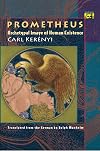
Although Kerenyi is always mentioned in same sentence with Jung I think lots of people are wrong with this. Although Kerenyi might have surfed the wave of Jung's mysticism, his goal (first and foremost) was to establish scientific approach to mythology (as he says in the foreword to the book - he used Archetypal in the title because it became everyday word, not because he wanted it linked to Jung's school). Kerenyi wanted to ensure that mythology is never looked at outside of the context show more (human life) and the role it played in it. Only when looked in the context of everyday life and beliefs mythology plays its role.
Considering that Greeks weren't very fond of their pantheon (at least not in a way monotheistic religions are) - by giving some of them very human nature and habits they tried to ground them into the reality of the world as they saw it. They might have been mighty and immortal, but squabbling bunch with short tempers. They weren't omnipotent but part of the greater scene where primordial forces like time (Kronos) and creation (Gaia) ruled everyone. So nobody was outside the reach so to speak - there was order of things in the universe. New gods led by Zeus and his Olympians were just that - new pantheon ruling in the skies that managed to obtain power after bringing old order - Titans - down. But as any rule achieved by force it is an unsteady one and soon they turn their attention to humanity they see as a potential threat.
And this is how we get to myth of Prometheus. By going through Prometheus myth from ancient times and legends to modern writers like Goethe and Shelley Kerenyi manages to give us clear picture of the Prometheus' life and role he played.
Titan (old god) who defied Zeus (ruler of heaven) in order to make sure humanity survives and prospers - by acts of trickery and outright theft of fire. Titan who accepted his punishment because he wanted to be closer to humanity, who decided to suffer in the same way humanity does (seemingly caught in infinite loop of suffering - in body and in mind - while always striving to be better) aware that it will take millennia to be relived of it.
By taking this suffering on himself Prometheus tries to get closer to man (which is usually opposite from "standard" stories of men trying to get closer to divine) - in some of legends Prometheus created the humanity -and gives him a nudge toward science, prosperity and civilization in general. He becomes the embodiment of humanity - "forethought" that always pushes forward to new achievements but [unfortunately] always with "afterthought" given to possible consequences of their actions.
His punishment is temporary (although for humans this time span is just too huge so it looks like eons) and he knows he will, ultimately, be saved. So you might say there is no tension here but this does not minimize his actions. He decides to take the punishment on himself because he knows he can handle it while humanity might end up wiped out from the face of the world. So it is quite something to have a deity ready to sacrifice itself to ensure survival of human kind against ever changing temper of "righteous" gods.
Very interesting book. Recommended to everyone interested in the mythology. show less
Considering that Greeks weren't very fond of their pantheon (at least not in a way monotheistic religions are) - by giving some of them very human nature and habits they tried to ground them into the reality of the world as they saw it. They might have been mighty and immortal, but squabbling bunch with short tempers. They weren't omnipotent but part of the greater scene where primordial forces like time (Kronos) and creation (Gaia) ruled everyone. So nobody was outside the reach so to speak - there was order of things in the universe. New gods led by Zeus and his Olympians were just that - new pantheon ruling in the skies that managed to obtain power after bringing old order - Titans - down. But as any rule achieved by force it is an unsteady one and soon they turn their attention to humanity they see as a potential threat.
And this is how we get to myth of Prometheus. By going through Prometheus myth from ancient times and legends to modern writers like Goethe and Shelley Kerenyi manages to give us clear picture of the Prometheus' life and role he played.
Titan (old god) who defied Zeus (ruler of heaven) in order to make sure humanity survives and prospers - by acts of trickery and outright theft of fire. Titan who accepted his punishment because he wanted to be closer to humanity, who decided to suffer in the same way humanity does (seemingly caught in infinite loop of suffering - in body and in mind - while always striving to be better) aware that it will take millennia to be relived of it.
By taking this suffering on himself Prometheus tries to get closer to man (which is usually opposite from "standard" stories of men trying to get closer to divine) - in some of legends Prometheus created the humanity -and gives him a nudge toward science, prosperity and civilization in general. He becomes the embodiment of humanity - "forethought" that always pushes forward to new achievements but [unfortunately] always with "afterthought" given to possible consequences of their actions.
His punishment is temporary (although for humans this time span is just too huge so it looks like eons) and he knows he will, ultimately, be saved. So you might say there is no tension here but this does not minimize his actions. He decides to take the punishment on himself because he knows he can handle it while humanity might end up wiped out from the face of the world. So it is quite something to have a deity ready to sacrifice itself to ensure survival of human kind against ever changing temper of "righteous" gods.
Very interesting book. Recommended to everyone interested in the mythology. show less
Introduction to a science of mythology: the myth of the divine child and the mysteries of Eleusis by C. G. Jung
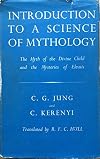
Book Review: "Introduction to a Science of Mythology" by C.G. Jung and C. Kerenyi
"Introduction to a Science of Mythology" by C.G. Jung and C. Kerenyi is a profound exploration of mythology from a psychological and cultural perspective. The authors delve into the symbolic meanings of myths, providing a deep understanding of their relevance in ancient and modern contexts. Jung's psychoanalytic approach complements Kerenyi's classical scholarship, creating a comprehensive framework combining show more psychology, anthropology, and mythology. This book is a treasure trove for those studying mythology, as it presents myths not merely as old stories but as living, dynamic symbols that influence human consciousness and culture.
For writers of fantasy novels, this book is invaluable. It offers rich insights into archetypal themes and characters, making it a perfect source for constructing deeper, resonant narratives. By understanding myths' underlying psychological and symbolic structures, authors can create stories that speak to universal human experiences. The depth of analysis and the interdisciplinary approach make it a scholarly read and an inspiring one for creative minds. Overall, "Introduction to a Science of Mythology" is essential for anyone interested in the intersection of mythology, psychology, and storytelling. show less
"Introduction to a Science of Mythology" by C.G. Jung and C. Kerenyi is a profound exploration of mythology from a psychological and cultural perspective. The authors delve into the symbolic meanings of myths, providing a deep understanding of their relevance in ancient and modern contexts. Jung's psychoanalytic approach complements Kerenyi's classical scholarship, creating a comprehensive framework combining show more psychology, anthropology, and mythology. This book is a treasure trove for those studying mythology, as it presents myths not merely as old stories but as living, dynamic symbols that influence human consciousness and culture.
For writers of fantasy novels, this book is invaluable. It offers rich insights into archetypal themes and characters, making it a perfect source for constructing deeper, resonant narratives. By understanding myths' underlying psychological and symbolic structures, authors can create stories that speak to universal human experiences. The depth of analysis and the interdisciplinary approach make it a scholarly read and an inspiring one for creative minds. Overall, "Introduction to a Science of Mythology" is essential for anyone interested in the intersection of mythology, psychology, and storytelling. show less
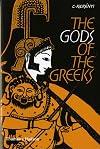
67. The Gods of the Greeks by Karl Kerényi
translation: from German by Norman Cameron
published: 1951
format: 286 page paperback (1994 reprint of 1979 edition)
acquired: March
read: Nov 5-12
rating: 4
wikipedia tells me Kerényi was a classical philologist and that he was a Hungarian who spent a year in Switzerland and then never left. Hungry had swung Nazi right. It also tells me that his "scientific interpretation of the figures of Greek mythology as archetypes of the human soul was in line with show more the approach of the Swiss psychologist Carl Gustav Jung." This curiosity is not in display here, except for a brief comment in the introduction where he says that Greek mythology of interest for the study of human beings and that in the contemporary world that meant "of course, an interest in psychology."
Instead the [The Gods of the Greeks] is a straight-forward summary of everything the classical sources have to say about the Greek Gods. He cites only about 200 sources and they are all classical. He calls it a mythology of the Greek for adults. It is however, anything but straightforward. The mythology of Greeks is nowhere near as simple as [[Edith Hamilton]], or anyone else presented it. There is simply no consistency, but numerous and endless variations. And presented in this form, in the way Kerényi does, it is a bit overwhelming, a constant barrage of uncondensable information.
"The archaic forms of so many tales have been lost that the whole body of what has reached us and can be presented has become exceedingly compact. This compactness should not be artificially loosened. Already in Ovid we find the archaic spirit has been spoilt in a process of dilution. The author has decided against trying to provide any relief of this kind. The reader's best plan, therefore, is to not absorb too much of this solid fare at a sitting, but to read only a few pages at a time—and preferably more than once, as he would read an ancient poem."
I quickly learned to follow his advice. Somewhere around ten pages at a sitting my eyes would start to cross and pressing any further, I could feel my brain actively shrinking.
What comes out of this is no one single thing. It's something of a massive compilation of information, in a very pure form. It's also striking not only how unstructured all this was, but how one thing was many things and how associations and combinations means that many of these characters whom we see as distinct - Gaia and Ouranos, Cronos & Rhea & Demeter and Persephone, Zeus & Hera, Aphrodite & Adonis, Ares, Athena, Apollo, Hermes, and Dyonisos... Prometheus, Io, Fates, Furies, Typhon etc are merely variations on the same theme - the same god or goddess concept could come in many variations then get recombined and forced apart by divine lineages. Flexibility and openness seems to have been one rule - perhaps variation from many forms of communal isolation and connection might have been another.
Certainly recommended to anyone who wants to know enough about mythology that they can finally rest assured they still really know nothing.
2016
https://www.librarything.com/topic/226898#5796816 show less
translation: from German by Norman Cameron
published: 1951
format: 286 page paperback (1994 reprint of 1979 edition)
acquired: March
read: Nov 5-12
rating: 4
wikipedia tells me Kerényi was a classical philologist and that he was a Hungarian who spent a year in Switzerland and then never left. Hungry had swung Nazi right. It also tells me that his "scientific interpretation of the figures of Greek mythology as archetypes of the human soul was in line with show more the approach of the Swiss psychologist Carl Gustav Jung." This curiosity is not in display here, except for a brief comment in the introduction where he says that Greek mythology of interest for the study of human beings and that in the contemporary world that meant "of course, an interest in psychology."
Instead the [The Gods of the Greeks] is a straight-forward summary of everything the classical sources have to say about the Greek Gods. He cites only about 200 sources and they are all classical. He calls it a mythology of the Greek for adults. It is however, anything but straightforward. The mythology of Greeks is nowhere near as simple as [[Edith Hamilton]], or anyone else presented it. There is simply no consistency, but numerous and endless variations. And presented in this form, in the way Kerényi does, it is a bit overwhelming, a constant barrage of uncondensable information.
"The archaic forms of so many tales have been lost that the whole body of what has reached us and can be presented has become exceedingly compact. This compactness should not be artificially loosened. Already in Ovid we find the archaic spirit has been spoilt in a process of dilution. The author has decided against trying to provide any relief of this kind. The reader's best plan, therefore, is to not absorb too much of this solid fare at a sitting, but to read only a few pages at a time—and preferably more than once, as he would read an ancient poem."
I quickly learned to follow his advice. Somewhere around ten pages at a sitting my eyes would start to cross and pressing any further, I could feel my brain actively shrinking.
What comes out of this is no one single thing. It's something of a massive compilation of information, in a very pure form. It's also striking not only how unstructured all this was, but how one thing was many things and how associations and combinations means that many of these characters whom we see as distinct - Gaia and Ouranos, Cronos & Rhea & Demeter and Persephone, Zeus & Hera, Aphrodite & Adonis, Ares, Athena, Apollo, Hermes, and Dyonisos... Prometheus, Io, Fates, Furies, Typhon etc are merely variations on the same theme - the same god or goddess concept could come in many variations then get recombined and forced apart by divine lineages. Flexibility and openness seems to have been one rule - perhaps variation from many forms of communal isolation and connection might have been another.
Certainly recommended to anyone who wants to know enough about mythology that they can finally rest assured they still really know nothing.
2016
https://www.librarything.com/topic/226898#5796816 show less
The Science of Mythology: Essays on the Myth of the Divine Child and the Mysteries of Eleusis (Routledge Classics) by C. G. Jung

The Demeter/Kore/Persephone triad was fascinating. Linking Artemis, Hecate, Athena and Demeter/Kore/Persephone all together into plausible theories sound like one huge muck-around in the grass...but it's not, thankfully. The patient's dreams are incredibly detailed and read like mini works of Surrealism.
Don't have any comments on the Divine Child section unfortunately, because it went over my head.
Don't have any comments on the Divine Child section unfortunately, because it went over my head.
Lists
Awards


You May Also Like


Associated Authors
Statistics
- Works
- 121
- Also by
- 8
- Members
- 2,892
- Popularity
- #8,861
- Rating
- 3.9
- Reviews
- 18
- ISBNs
- 159
- Languages
- 13
- Favorited
- 7