
Nick Cave (1) (1957–)
Author of And the Ass Saw the Angel
For other authors named Nick Cave, see the disambiguation page.
About the Author
Image credit: Nick Cave at the Union Square Barnes & Noble to read from his new book, The Death of Bunny Munro. Photo by David Shankbone
Series
Works by Nick Cave
The Secret Life of the Love Song and The Flesh Made Word: Two Lectures by Nick Cave (King Mob Spoken Word CDs) (1998) 14 copies
The Assassination Of Jesse James By The Coward Robert Ford: Music From The Motion Picture (2007) 4 copies
The Secret Life Of The Love Song 4 copies
Murder Ballads 3 copies
Gladiator 2 3 copies
No More Shall We Part 2 copies
The Best of Nick Cave 2 copies
Push the sky away. DVD+Libro 1 copy
The Little Thing Is Sad 1 copy
Skeleton Tree 1 copy
The Little Thing 1 copy
Live (1992) 1 copy
What A Wonderful World 1 copy
The Little Birthday Book 1 copy
Faraway So Close 1 copy
ATP Nick Cave Sunday 1 copy
Associated Works
The Assassination of Jesse James by the Coward Robert Ford [2007 film] (2007) — Composer — 256 copies, 2 reviews
Speeches of Note: An Eclectic Collection of Orations Deserving of a Wider Audience (2018) — Narrator, some editions — 74 copies, 1 review
Until The End Of The World: Music From The Motion Picture Soundtrack (1991) — Contributor — 25 copies, 1 review
Rogue’s Gallery: Pirate Ballads, Sea Songs & Chanteys [sound recording] (2006) — Contributor — 10 copies
The Score: 20 Ultra-Cool Soundtracks From The Producers Of Mojo — Contributor — 1 copy
Tagged
Common Knowledge
- Legal name
- Cave, Nicholas Edward
- Birthdate
- 1957-09-22
- Gender
- male
- Education
- Caulfield Institute of Technology (now Monash University)
Caulfield Grammar School, Melbourne
Wangaratta High School - Occupations
- musician
songwriter
screenwriter
painter
actor - Awards and honors
- ARIA Awards: Song of the Year(1996)
ARIA Awards: Single of the Year(1996)
ARIA Awards: Best Pop Release(1996)
ARIA Awards: Best Original Soundtrack(1997)
APRA Music Awards: Songwriter of the Year(1997)
APRA Music Awards: "The Ship Song" voted one of Top 30 Best Australian Songs of previous 75 years(2001) (show all 18)
ARIA Awards: Best Male Artist(2001)
MOJO Awards: Best Album of 2004 [2004]
Film Critics Circle of Australia Awards: Best Musical Score(2005)
Inside Film Awards: Best Music(2005)
AFI Awards: Best Original Music Score(2005)
Q magazine: Q Classic Songwriter Award(2005)
Venice Film Festival: Gucci Award(2006)
ARIA Hall of Fame(2007)
Honorary degree as Doctor of Laws, by Monash University(2008)
MOJO Awards: Best Album of 2008
ARIA Awards Male Artist of the Year(2008)
Honorary degree as Doctor of Laws, by University of Dundee(2010) - Nationality
- Australia
- Birthplace
- Warracknabeal, Victoria, Australia
- Places of residence
- Wangaratta, Victoria, Australia
London, England, UK
Brighton & Hove, England, UK
Sao Paulo, Brazil
Murrumbeena, Victoria, Australia - Associated Place (for map)
- Australia
Members
Reviews

Struggling to concisely describe Nick Cave's new work The Sick Bag Song, I have decided to turn to the author himself. On pages 83 to 84, he parodies the whole 'X meets Y' way of describing the concept of a piece of art – and employs a scattergun effect to describe The Sick Bag Song similarly. The Wasteland meets Cocksucker Blues. Nosferatu. Planes, Trains and Automobiles. The Odyssey. PornHub. The Book of Psalms. And so on. From every comparison, you can see where he is coming from: show more that diversity alone shows just how inscrutable the book can be. But, once you accept its rambling nature, its semi-stream-of-consciousness style, and its occasional pretentiousness, The Sick Bag Song opens itself up to you. Cave is spewing out his thoughts onto the page and, if you keep an open mind, you can marry them to your own to create a peculiar and rewarding reading experience. Approached with an open mind, it will evoke a response.
Addressing the book's many themes (life, longing, memory, leaps of faith, inspiration and influence, self-doubt, isolation in a world full of people) would require a review longer and more detailed than I intend this one to be, but the whole 'X meets Y' conceit does allow one some useful points by which to navigate. It is a chronicle of Nick Cave's tour of North America (Planes, Trains and Automobiles) with his band The Bad Seeds (Cocksucker Blues), combined with diversions into the meaning of life and human endeavour (The Wasteland; The Book of Psalms), and with occasional gothic (Nosferatu) and vulgar (PornHub) stylings. It permeates throughout with Cave's earnest longing to return home to his wife (The Odyssey), a longing which is tempered only when she finally picks up the damn phone.
The book's ambition will make it an interesting read for anyone attracted by the more challenging and experimental fringes of art and literature. Nick Cave has always been an artist in touch with his Muse and, more remarkably, is one uncommonly willing and able to articulate his relationship with her. (I think of a lot of Cave's work as like a one-on-one therapy session with the Muse as the psychiatrist – much like one such scene in his pseudo-documentary 20,000 Days on Earth.) This articulation has, in the past, been direct (Google his impressive lecture on 'The Secret Life of the Love Song') or indirect (see the afore-mentioned 20,000 Days on Earth, an excellent exploration of his artistic process). The Sick Bag Song is certainly more indirect, but no less revealing for being so.
The Sick Bag Song was also a unique experience for me because I read it whilst listening to Cave's own audiobook reading (the first time I have ever done so with a book). I found this to be excellent, which should come as no surprise considering Cave has made a living out of transmuting words into spoken (rather, sung) lyrics. Had I read the book mute, it would have been a four-star experience. Having Cave's voice as a companion throughout allowed me to experience it at the pace and with the interpretation that its author intended, and made The Sick Bag Song a five-star experience.
It is, I admit, a hard sell. Its title is not the most appealing, and the 'sick bag' riffs are occasionally overdone. It is difficult to get to the book's essence (hence my reliance on the 'X meets Y' stuff), though I confess it is nice to read a book which manages to be both approachable and challenging at the same time. Fans of Nick Cave's music will enjoy his lyricism, which is fully evident here, and any misgivings I had about the book's apparent pretentiousness were disarmed by the author's self-conscious humour. This is a writer who is confronting his vanity whilst at the same time indulging in it. It is a tightrope that, remarkably, he walks with considerable poise. show less
Addressing the book's many themes (life, longing, memory, leaps of faith, inspiration and influence, self-doubt, isolation in a world full of people) would require a review longer and more detailed than I intend this one to be, but the whole 'X meets Y' conceit does allow one some useful points by which to navigate. It is a chronicle of Nick Cave's tour of North America (Planes, Trains and Automobiles) with his band The Bad Seeds (Cocksucker Blues), combined with diversions into the meaning of life and human endeavour (The Wasteland; The Book of Psalms), and with occasional gothic (Nosferatu) and vulgar (PornHub) stylings. It permeates throughout with Cave's earnest longing to return home to his wife (The Odyssey), a longing which is tempered only when she finally picks up the damn phone.
The book's ambition will make it an interesting read for anyone attracted by the more challenging and experimental fringes of art and literature. Nick Cave has always been an artist in touch with his Muse and, more remarkably, is one uncommonly willing and able to articulate his relationship with her. (I think of a lot of Cave's work as like a one-on-one therapy session with the Muse as the psychiatrist – much like one such scene in his pseudo-documentary 20,000 Days on Earth.) This articulation has, in the past, been direct (Google his impressive lecture on 'The Secret Life of the Love Song') or indirect (see the afore-mentioned 20,000 Days on Earth, an excellent exploration of his artistic process). The Sick Bag Song is certainly more indirect, but no less revealing for being so.
The Sick Bag Song was also a unique experience for me because I read it whilst listening to Cave's own audiobook reading (the first time I have ever done so with a book). I found this to be excellent, which should come as no surprise considering Cave has made a living out of transmuting words into spoken (rather, sung) lyrics. Had I read the book mute, it would have been a four-star experience. Having Cave's voice as a companion throughout allowed me to experience it at the pace and with the interpretation that its author intended, and made The Sick Bag Song a five-star experience.
It is, I admit, a hard sell. Its title is not the most appealing, and the 'sick bag' riffs are occasionally overdone. It is difficult to get to the book's essence (hence my reliance on the 'X meets Y' stuff), though I confess it is nice to read a book which manages to be both approachable and challenging at the same time. Fans of Nick Cave's music will enjoy his lyricism, which is fully evident here, and any misgivings I had about the book's apparent pretentiousness were disarmed by the author's self-conscious humour. This is a writer who is confronting his vanity whilst at the same time indulging in it. It is a tightrope that, remarkably, he walks with considerable poise. show less
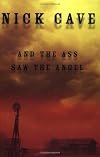
Nick Cave is a man of many talents, known mostly as singer/songwriter for Nick Cave & The Bad Seeds. His lyrical genius is the driving force in his songs, full of vivid imagery, acute observation, metaphorical wit, and striking earnestness. A natural born storyteller, Cave has a gift for creating worlds both forbidding and strangely inviting, inhabited by bizarre characters, whom Cave brings to life through allegory and a keen sense of the subtleties defining personality. His novel, And The show more Ass Saw The Angel, guides the reader through a grim and perverted world of troubling activity, delivered in Cave's own convoluted symbolic representation, which makes this a well‑flowing read in its structure and pitch, but altogether disturbing in its substance.
The story is set in the town of Ukulore, located in filthiest southern U.S., during the time of the 1940s. The town is overrun with religious maniacs, whom Cave paints as malicious to the point of murderous absurdity, all in the name of unyielding faith. Extreme outcast and mute Euchrid Eucrow, whose willfully oblivious father is a mad product of inbreeding and whose mother is an alcoholic mess who frequently beats him, struggles through the death of his stillborn twin brother and later, a fixation on local prostitute Cosey Mo, who is the only member of the town to show him any manner of pity. Cosey Mo is brutally thrashed by the town's people and ostracized, after which she gives birth to a daughter whom the Ukulites believe is the future mother of the Messiah. But she finds Euchrid to be godlike, leading to further complications between the mass insanity and Euchrid. Believing to be on a divine mission, Euchrid creates his own personal domain called Doghead, where is insanity builds towards his ultimate revenge on all who have contributed to his tortuous existence.
Cave's portrayal of the relationship between the crowd and the alienated individual is effortlessly relatable to social phenomena. Through observation or experience of this phenomena, one learns quickly that the uniform masses are terrified of the lone independent spirit who stands opposed to all that the crowd desire. In defense, the crowd seek to strip this independent spirit of all possible power, if not eliminate this spirit entirely. The social dissident sees through the illusions the crowd adores, but because this spirit is far outnumbered, the crowd usually triumphs in the end through sheer quantitative force. Cave twists this around. Perhaps by making Euchrid a mute, so as to keep his intentions hidden, the crowd are confident in their upper hand position, until Euchrid's master plan is unleashed upon them.
In its sinister humor and abstract plot, And The Ass Saw The Angel is a spellbinding and analogical read, as well as a disturbingly dirty one. The course and character of the book parallels Cave's music in its stygian beauty, force of engagement, clever imagination. The blackness and corrosion thicken as the story progresses, as the reader is caught between great loathing and sincere compassion for Euchrid. Given special insight into his inner workings, the reader comes to sympathize with his condition, secretly rooting for his triumph. Cave's first novel is equally uncomfortable and absorbing. The aftereffects are quite unlike that of any other read, and one may wish to dive into something a bit less ghastly and unsettling soon after. One may feel residue from the filth days after having completed the read, and surely no better compliment can be bestowed upon this work. show less
The story is set in the town of Ukulore, located in filthiest southern U.S., during the time of the 1940s. The town is overrun with religious maniacs, whom Cave paints as malicious to the point of murderous absurdity, all in the name of unyielding faith. Extreme outcast and mute Euchrid Eucrow, whose willfully oblivious father is a mad product of inbreeding and whose mother is an alcoholic mess who frequently beats him, struggles through the death of his stillborn twin brother and later, a fixation on local prostitute Cosey Mo, who is the only member of the town to show him any manner of pity. Cosey Mo is brutally thrashed by the town's people and ostracized, after which she gives birth to a daughter whom the Ukulites believe is the future mother of the Messiah. But she finds Euchrid to be godlike, leading to further complications between the mass insanity and Euchrid. Believing to be on a divine mission, Euchrid creates his own personal domain called Doghead, where is insanity builds towards his ultimate revenge on all who have contributed to his tortuous existence.
Cave's portrayal of the relationship between the crowd and the alienated individual is effortlessly relatable to social phenomena. Through observation or experience of this phenomena, one learns quickly that the uniform masses are terrified of the lone independent spirit who stands opposed to all that the crowd desire. In defense, the crowd seek to strip this independent spirit of all possible power, if not eliminate this spirit entirely. The social dissident sees through the illusions the crowd adores, but because this spirit is far outnumbered, the crowd usually triumphs in the end through sheer quantitative force. Cave twists this around. Perhaps by making Euchrid a mute, so as to keep his intentions hidden, the crowd are confident in their upper hand position, until Euchrid's master plan is unleashed upon them.
In its sinister humor and abstract plot, And The Ass Saw The Angel is a spellbinding and analogical read, as well as a disturbingly dirty one. The course and character of the book parallels Cave's music in its stygian beauty, force of engagement, clever imagination. The blackness and corrosion thicken as the story progresses, as the reader is caught between great loathing and sincere compassion for Euchrid. Given special insight into his inner workings, the reader comes to sympathize with his condition, secretly rooting for his triumph. Cave's first novel is equally uncomfortable and absorbing. The aftereffects are quite unlike that of any other read, and one may wish to dive into something a bit less ghastly and unsettling soon after. One may feel residue from the filth days after having completed the read, and surely no better compliment can be bestowed upon this work. show less
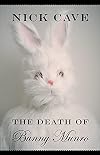
After a hiatus of 20 years, The Death of Bunny Munro is Nick Cave’s second novel. From the first page, Cave very effectively puts us inside the depraved mind of Bunny Munro, a middle-aged salesman of beauty products. He confirms for us that some men are thinking non-stop about sex, no matter how appropriate it may (or may not) be. This makes for some very black humour. As we follow Bunny through a death, a funeral and a road trip, we may well wonder, how did he get to be this way? Perhaps show more Cave is making a commentary on the power of charisma. Bunny’s charisma has everyone elevating him to hero status: the friends who think he’s great; his female customers who open their cheque books (and often their legs) for him; his wife, who stays despite his infidelity; his intelligent but impressionable 9-year-old son, who puts his father on a high pedestal indeed; and even himself, justifying his wanton behaviour, believing he still has “it”.Cave is a master of description: “He feels like the flensed blubber a butcher may trim from a choice fillet of prime English beef…..”. The novel is full of rich imagery, some of it delightful, some grotesque. A novel with humour, horror, heartache, haunting and humanity. The author’s cameo in Bunny Munro’s death scene is a cute touch. We are left wondering if his son will survive his influence. Comedy and tragedy both, this is a powerful read. show less
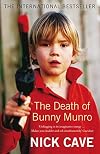
I read this book having fairly recently become a fan of Nick Cave's music. As an artistic vision, The Death of Bunny Munro at 278 pages is unfortunately not as fully realised as the stories which Cave can put into a song of about four minutes. But Bunny himself is perhaps a character that one may find in one of Nick's songs (perhaps on Dig, Lazarus, Dig!!! or Grinderman ?). Certainly, he is as dark and unsympathetic a character as Cave has ever written about, even on Murder Ballads. Bunny show more has no redeeming features and his exploits (and the language Cave uses to describe them) will be off-putting for many readers. But it is rather bold of a writer (particularly one who has only written one previous book) to write a character so depraved. Perhaps counter-intuitively, it is this lack of sympathy for Bunny that engages the reader. We look on Bunny as we might look on a car crash (beneath our screaming umbrellas?). It is this realisation that one has a sort of voyeuristic interest/pleasure in the grime and misfortune of others that makes the book such a unique read.
However, there are to my mind some negatives to the story. For such an unpleasant man, it is surprising how easily Bunny can make his conquests. Over a three-day period, his liaisons are probably into double figures (I didn't keep count) and at times it seems like every woman he encounters is willing at the drop of a hat to engage in the most explicit acts with him. The awkwardness and disgust with which the women greet him later on in the story as he unravels and loses his mojo, is probably the reaction that any man acting like this would get in real life, not just when they're at the end of their rope. Cave also has a slightly annoying tendency to end descriptive passages with 'or something'. It's hard to explain without providing a load of examples, but it stuck out for me. It kind of fits given that the prose is stream-of-consciousness from the perspective of Bunny or Bunny Junior, but to my mind it was a technique used far too often.
Finally, I thought the ending with the crowd in the ballroom was either forced or rushed. The redemptive angle of the scene fits in well with Cave's persona (it shouldn't come as a surprise to anyone familiar with his work that he is interested in religious themes and imagery) but, when you think about it, he is apologising to no-one but himself in the rain. That is rather pathetic, though perhaps this was intended to show just how ignorant and self-involved Bunny is, even in the throes of death. But the truth is, one can draw many such inferences from the novel, but the novel itself does not do a great job of guiding you towards them. Nick Cave remains an excellent songwriter and musician, but I will reserve my judgement on whether he is a good writer of fiction until I have read And the Ass Saw the Angel. show less
However, there are to my mind some negatives to the story. For such an unpleasant man, it is surprising how easily Bunny can make his conquests. Over a three-day period, his liaisons are probably into double figures (I didn't keep count) and at times it seems like every woman he encounters is willing at the drop of a hat to engage in the most explicit acts with him. The awkwardness and disgust with which the women greet him later on in the story as he unravels and loses his mojo, is probably the reaction that any man acting like this would get in real life, not just when they're at the end of their rope. Cave also has a slightly annoying tendency to end descriptive passages with 'or something'. It's hard to explain without providing a load of examples, but it stuck out for me. It kind of fits given that the prose is stream-of-consciousness from the perspective of Bunny or Bunny Junior, but to my mind it was a technique used far too often.
Finally, I thought the ending with the crowd in the ballroom was either forced or rushed. The redemptive angle of the scene fits in well with Cave's persona (it shouldn't come as a surprise to anyone familiar with his work that he is interested in religious themes and imagery) but, when you think about it, he is apologising to no-one but himself in the rain. That is rather pathetic, though perhaps this was intended to show just how ignorant and self-involved Bunny is, even in the throes of death. But the truth is, one can draw many such inferences from the novel, but the novel itself does not do a great job of guiding you towards them. Nick Cave remains an excellent songwriter and musician, but I will reserve my judgement on whether he is a good writer of fiction until I have read And the Ass Saw the Angel. show less
Lists
Awards


You May Also Like


Associated Authors
Statistics
- Works
- 65
- Also by
- 25
- Members
- 4,874
- Popularity
- #5,158
- Rating
- 3.8
- Reviews
- 100
- ISBNs
- 209
- Languages
- 23
- Favorited
- 1
