
B. Alan Wallace
Author of The Attention Revolution: Unlocking the Power of the Focused Mind
About the Author
B. Alan Wallace teaches at the University of California, Santa Barbara. (Bowker Author Biography)
Image credit: http://alanwallace.org/
Works by B. Alan Wallace
Tibetan Buddhism from the Ground Up: A Practical Approach for Modern Life (1992) 149 copies, 2 reviews
Dreaming Yourself Awake: Lucid Dreaming and Tibetan Dream Yoga for Insight and Transformation (2012) 93 copies, 1 review
Ancient Wisdom: Nyingma Teachings on Dream Yoga, Meditation and Transformation (1993) — Translator — 57 copies, 1 review
Heart of the Great Perfection: Dudjom Lingpa's Visions of the Great Perfection (2016) — Translator — 18 copies
The Art of Transforming the Mind: A Meditator's Guide to the Tibetan Practice of Lojong (2022) 13 copies
La ciencia de la mente: Cuando la ciencia y la espiritualidad se encuentran (Coleccion Nueva Ciencia) (Spanish Edition) (2010) 5 copies
Spirit Of Zen. The 1 copy
Integrating science and religion : an interview with Alan Wallace (Holos : forum for a new worldview) [online interview] (2004) — Interviewee — 1 copy
La force de l'attention - 10 étapes pour développer nos facultés de concentration (2023) 1 copy, 1 review
Aquietando a Mente: Ensinamentos Sobre Shamatha, Segundo a Essencia Vajra de Dudjom Lingpa (2015) 1 copy
Associated Works
A Guide to the Bodhisattva Way of Life (1992) — Translator, some editions — 1,662 copies, 19 reviews
Consciousness at the Crossroads: Conversations with the Dalai Lama on Brainscience and Buddhism (1999) — Translator; Afterword; Editor — 137 copies, 2 reviews
Calming the Mind: Tibetan Buddhist Teachings on the Cultivation of Meditative Quiescence (1992) — Translator, some editions — 92 copies
The View from Within: First-Person Approaches to the Study of Consciousness (1999) — Contributor, some editions — 60 copies
Buddhahood without Meditation (2) (Dudjom Lingpa's Visions of the Great Per) (2015) — Translator, some editions — 21 copies, 1 review
Tagged
Common Knowledge
- Birthdate
- 1950-04-17
- Gender
- male
- Education
- Amherst College (Physics and Philosophy of Science)
Stanford University (PhD|Religious Studies) - Occupations
- monk
professor
translator - Organizations
- Santa Barbara Institute for Consciousness Studies
- Relationships
- Wallace, Vesna (wife)
- Short biography
- B. Alan Wallace spent fourteen years as a Buddhist monk, ordained by H. H. the Dalai Lama. He then earned his undergraduate degree, summa cum laude, in physics and the philosophy of science at Amherst College, and his doctorate in religious studies from Stanford University, A prolific writer and translator of numerous Tibetan Buddhist texts, he is the founder and president of the Santa Barbara Institute for Consciousness Studies. [from Meditations of a Buddhist Skeptic (2012)]
- Nationality
- USA
- Birthplace
- Pasadena, California, USA
- Places of residence
- Rikon, Switzerland
Scotland, UK
Dharamsala, India
Mt. Pèlerin, Switzerland
Sri Lanka
Castle Rock, Washington, USA (show all 7)
Santa Barbara, California, USA
Members
Reviews
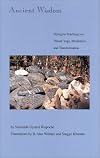
Three root texts with lengthy commentaries by Gyatrul Rinpoche. Yes, you get some good offerings here by the incomparable Dudjom Rinpoche as well as one of His Holiness the Dalai Lama's favourite writers, Dodrupchen Jikmé Tenpé Nyima and a Dream Yoga text by Lochen Dharma Shri, the brother of Terdag Lingpa. But the section that always sticks out in my mind is in one of the sections by Gyatrul Rinpoche, in which he humbly recounts his hardships in escaping Tibet and settling in exile. It show more was just a few paragraphs in the midst of the main teaching but it gave me a clear flash of insight into what the Tibetans have been through and brought me to tears . That moment is worth far more than the price of the book. show less
Dreaming Yourself Awake: Lucid Dreaming and Tibetan Dream Yoga for Insight and Transformation by B. Alan Wallace

I’m interested in learning to lucid dream, but found out too late that this author asserts that for better to lucid dream we need to be an expert at an obscure form of meditation called Shamatha.
I should have paid more attention to the text on the front of the book which includes the phrase “Tibetan Dream Yoga”, but I didn’t.
The first chapter deals with what the author calls Meditative Quiescence - laying the foundation for lucidity, but since other lucid dreaming authors do not show more prioritize this nor even mention it, I feel of course it must be possible to learn to lucid dream without this particular approach or preparation.
I am at this point not ready to tackle the challenging practice of Shamatha, so I never got to the chapters about lucid dreaming.
Those who do find dream yoga appealing will probably find the book exciting and rewarding, but I do not belong to this category. Such people may well feel that the book warrants 5 stars, but my subjective view of the book has led me to award it only 2.
It seems to deal more with dream yoga, spiritual awakening and Buddhism than anything else. show less
I should have paid more attention to the text on the front of the book which includes the phrase “Tibetan Dream Yoga”, but I didn’t.
The first chapter deals with what the author calls Meditative Quiescence - laying the foundation for lucidity, but since other lucid dreaming authors do not show more prioritize this nor even mention it, I feel of course it must be possible to learn to lucid dream without this particular approach or preparation.
I am at this point not ready to tackle the challenging practice of Shamatha, so I never got to the chapters about lucid dreaming.
Those who do find dream yoga appealing will probably find the book exciting and rewarding, but I do not belong to this category. Such people may well feel that the book warrants 5 stars, but my subjective view of the book has led me to award it only 2.
It seems to deal more with dream yoga, spiritual awakening and Buddhism than anything else. show less
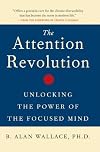
This book grew on me as I read it. At first, I felt quite discouraged by Wallace's frequent references about the true amount of time that one would likely need to spend to even begin to possibly achieve shamatha, particularly during modern times for those of us that have "worldly duties" [my words, not his].
Furthermore, he indicates that Buddhist experts believe that it is rare, at least during our modern times, to achieve shamatha.
Wallace has over 30 years practice, and it is not clear from show more this book whether he reached shamatha.
Nevertheless, as I finished the book, I was encouraged to recall that Wallace asserts early on in the book (and other references confirm) that even earlier stages and practices of attention are definitely beneficial.
It was also fascinating to read small snippets of Wallace's interweaving the concepts of physics and Buddhist philosophy. Though this book only touches on these interrelationships, it was enough to entice me to read more of Wallace's books.
Finally, the techniques and practices of meditation and attention and frequent exhortations of Wallace regarding letting go of one's preexisting conceptualizations, helped to open my mind regarding the nature of consciousness and even reality. show less
Furthermore, he indicates that Buddhist experts believe that it is rare, at least during our modern times, to achieve shamatha.
Wallace has over 30 years practice, and it is not clear from show more this book whether he reached shamatha.
Nevertheless, as I finished the book, I was encouraged to recall that Wallace asserts early on in the book (and other references confirm) that even earlier stages and practices of attention are definitely beneficial.
It was also fascinating to read small snippets of Wallace's interweaving the concepts of physics and Buddhist philosophy. Though this book only touches on these interrelationships, it was enough to entice me to read more of Wallace's books.
Finally, the techniques and practices of meditation and attention and frequent exhortations of Wallace regarding letting go of one's preexisting conceptualizations, helped to open my mind regarding the nature of consciousness and even reality. show less
Mind in the Balance: Meditation in Science, Buddhism, and Christianity (Columbia Series in Science and Religion) by B. Alan Wallace
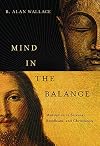
Heavy but thought provoking read. The practical sessions where not actually very practical after about the second one - rapidly progressing to concepts I suspect lifetime practioners might have trouble with.
The concepts where well researched and quite engaging, and left me with a strong desire to try more introspective research of my own.
The concepts where well researched and quite engaging, and left me with a strong desire to try more introspective research of my own.
Lists
You May Also Like


Associated Authors
Statistics
- Works
- 53
- Also by
- 8
- Members
- 2,204
- Popularity
- #11,638
- Rating
- 4.2
- Reviews
- 24
- ISBNs
- 107
- Languages
- 9
- Favorited
- 4