

Padmasambhava
Author of The Tibetan Book of the Dead: First Complete Translation (Penguin Classics Deluxe Edition)
About the Author
Image credit: Padmasambhava | Guru Rinpoche
Works by Padmasambhava
The Tibetan Book of the Dead: First Complete Translation (Penguin Classics Deluxe Edition) (2005) 1,410 copies, 5 reviews
Advice from the Lotus-Born: A Collection of Padmasambhavas Advice to the Dakini Yeshe Tsogyal and Other Close Disciples (2004) 81 copies, 1 review
Treasures from Juniper Ridge: The Profound Instructions of Padmasambhava to the Dakini Yeshe Tsogyal (2008) 56 copies, 1 review
Secret Teachings of Padmasambhava: Essential Instructions on Mastering the Energies of Life (2010) 37 copies, 1 review
The Tibetan book of the dead 8 copies
La clé du sens profond du livre des morts tibétain. La libération naturelle des six bardo (2003) 5 copies, 1 review
Following in Your Footsteps, Volume II: The Lotus-Born Guru in India (Following in Your Footsteps (2)) (2021) 4 copies
Naakt zien: de spontane bevrijding in elk moment van leven en sterven (Serie dzokchen teksten) (2011) 3 copies
Following in Your Footsteps, Volume III: The Lotus-Born Guru in Tibet (Following in Your Footsteps, 3) (2023) 3 copies
Le livre des morts tibétain : La grande libération par l'écoute dans les états intermédiaires (2009) 2 copies
Tesouros do Pico do Junipero: As Profundas Instrucoes de Tesouros de Padmasambhava a Dakini Yeshe Tsogyal (2015) 1 copy
L'insegnamento esoterico di Padmasambhava: la collana delle visioni: traduzione dal tibetano del Man ngag lta baʼi phreng ba (1990) 1 copy
A Great Treasure of Blessings: a book of prayers to Guru Rinpoche to celebrate the Wood Monkey Year 2004-5 (2016) 1 copy
Tibetanska knjiga mrtvih 1 copy
ගුරු පද්මසම්භව 1 copy
Тибетская книга мертвых 1 copy
西藏度亡经 1 copy
Tibetan Book Of The Dead 1 copy
Associated Works
The Graphic Canon, Vol. 1: From the Epic of Gilgamesh to Shakespeare to Dangerous Liaisons (2012) — Contributor — 307 copies, 7 reviews
Tagged
Common Knowledge
- Birthdate
- ca. 717
- Date of death
- ca. 762
- Gender
- male
- Occupations
- Buddhist teacher
meditation master - Nationality
- Tibet
- Birthplace
- Tibet
- Associated Place (for map)
- Tibet
Members
Reviews
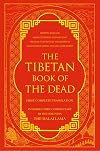
The book is certainly interesting. Coming from a culture that spawned Buddhism, some or most of what was revealed in the book wasn't new, strange or weird to me. However, as I read this book, I couldn't help feeling how people can everything, including death, so ritualistic.
I believe that a soul is given a second chance at redemption after death, though I don't think the process is as elaborate as narrated in this book. But then, there is no way to prove or disprove anything with regards to show more death, until one really gets there, isn't it? show less
I believe that a soul is given a second chance at redemption after death, though I don't think the process is as elaborate as narrated in this book. But then, there is no way to prove or disprove anything with regards to show more death, until one really gets there, isn't it? show less
Treasures from Juniper Ridge: The Profound Instructions of Padmasambhava to the Dakini Yeshe Tsogyal by Padmasambhava
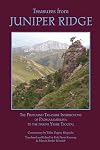
Treasures from Juniper Ridge combines meditation and pith practice
instructions in a way that is easy to apply and comprehend. It is a compilation
of discovered teachings, termas, by the greatest master of Vajrayana
Buddhism, Padmasambhava, hidden by his female disciple, Yeshe Tsogyal.
Treasures is replete with pieces that are direct, profound, fresh, and pertinent
to our times.
These various revelations are for all levels of practitioners. They provide indepth explanations of assorted aspects of show more practice, including: deity, death
and dying, non-conceptual meditation and recognizing mind nature. The
book outlines ways to apply these teachings for the modern student, while
remaining true to traditional principles.
“Padmasambhava’s pith instructions are extremely important because he
is not just a legendary figure or an ancient myth. He is an actual person
who continuously carries out spontaneous activities, including manifesting
as treasure revealers, so that there is always a fresh, unimpaired teaching
that people can practice. This also ensures that Padmasambhava’s spiritual
influence and blessings are unceasing.
The special quality of these terma teachings is that they provide a method
for accomplishment that is appropriate for each specific generation, period
of time, and individual person who meets them. The treasure teachings
he gave on the Juniper Ridge of Crystal Pearls contain the essential meaning
of hundreds of such instructions.”
—Tulku Urgyen Rinpoche show less
instructions in a way that is easy to apply and comprehend. It is a compilation
of discovered teachings, termas, by the greatest master of Vajrayana
Buddhism, Padmasambhava, hidden by his female disciple, Yeshe Tsogyal.
Treasures is replete with pieces that are direct, profound, fresh, and pertinent
to our times.
These various revelations are for all levels of practitioners. They provide indepth explanations of assorted aspects of show more practice, including: deity, death
and dying, non-conceptual meditation and recognizing mind nature. The
book outlines ways to apply these teachings for the modern student, while
remaining true to traditional principles.
“Padmasambhava’s pith instructions are extremely important because he
is not just a legendary figure or an ancient myth. He is an actual person
who continuously carries out spontaneous activities, including manifesting
as treasure revealers, so that there is always a fresh, unimpaired teaching
that people can practice. This also ensures that Padmasambhava’s spiritual
influence and blessings are unceasing.
The special quality of these terma teachings is that they provide a method
for accomplishment that is appropriate for each specific generation, period
of time, and individual person who meets them. The treasure teachings
he gave on the Juniper Ridge of Crystal Pearls contain the essential meaning
of hundreds of such instructions.”
—Tulku Urgyen Rinpoche show less
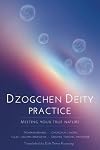
Tulku Urgyen Rinpoche exactly defines deity practice from the Dzogchen perspective, offering key points on how to engage in this discipline as a pure Dzogchen yogi. Tulku Urgyen Rinpoche was one of the greatest Dzogchen Masters of the last century. His teaching style was direct, simple, and powerful, a comfortable ambiance created by his compassionate humility that opened one up to being able to absorb his profound words. He was fearless in teaching the view, meditation, and conduct of the show more Great Perfection, due to the strength of his realization. Although Dzogchen Deity Practice uses the peaceful and wrathful practice as its basis, the efficacy of these teachings on development and completion stage practices apply to many other sadhanas as well.
It is a hands on guide to engaging in the skillful methods of Vajrayana that prepare us for this life's experiences as well as what will unfold when we die and are in the intermediate state or the Bardo. The beautiful poetry offered expresses a reality beyond our mundane everyday life and helps our minds to be open and aware. show less
It is a hands on guide to engaging in the skillful methods of Vajrayana that prepare us for this life's experiences as well as what will unfold when we die and are in the intermediate state or the Bardo. The beautiful poetry offered expresses a reality beyond our mundane everyday life and helps our minds to be open and aware. show less
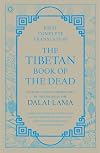
The Penguin Classics 2005 hardbound edition is the first complete translation of the whole cycle, rather than just the section that has been translated many times before (chapter 11 in this edition). It also includes introductions, notes and general interpretation aid from actual holders of the lineage/transmission, which probably makes it more accurate than many alternatives (given how heavily Vajrayana Buddhism relies on oral transmission).
What I appreciated most was the translation itself show more (by Gyume Dorje), done in prose (while preserving line breaks) and aiming to clarity and precision rather than "beauty". Given that beauty is a subjective concept, I tend to find 19th century translation of Buddhist texts rather unreadable: this edition is as readable as the subject allows.
I heartily recommend this edition to anybody who wants to read the "Tibetan book of the dead".
As for the content itself, I don't feel it can be rated. It is a classic from an ancient spiritual tradition, and as such its value depends on one's spiritual path and practice. For myself, having read it, I cannot help seeing it as magic rather than spirituality (despite being myself a buddhist and influenced by Tibetan buddhism among other schools). It is fascinating as an anthropological and cultural document, but I haven't found it useful as a spiritual tool. In this I obviously differ from countless generations of Tibetan buddhists: my judgment is not to be taken as condemnation, but as a personal view based on my own inclination and experience. show less
What I appreciated most was the translation itself show more (by Gyume Dorje), done in prose (while preserving line breaks) and aiming to clarity and precision rather than "beauty". Given that beauty is a subjective concept, I tend to find 19th century translation of Buddhist texts rather unreadable: this edition is as readable as the subject allows.
I heartily recommend this edition to anybody who wants to read the "Tibetan book of the dead".
As for the content itself, I don't feel it can be rated. It is a classic from an ancient spiritual tradition, and as such its value depends on one's spiritual path and practice. For myself, having read it, I cannot help seeing it as magic rather than spirituality (despite being myself a buddhist and influenced by Tibetan buddhism among other schools). It is fascinating as an anthropological and cultural document, but I haven't found it useful as a spiritual tool. In this I obviously differ from countless generations of Tibetan buddhists: my judgment is not to be taken as condemnation, but as a personal view based on my own inclination and experience. show less
Lists
You May Also Like


Associated Authors
Statistics
- Works
- 70
- Also by
- 1
- Members
- 2,391
- Popularity
- #10,732
- Rating
- 4.0
- Reviews
- 25
- ISBNs
- 89
- Languages
- 13
- Favorited
- 4