
Jonah Berger (1)
Author of Contagious: Why Things Catch On
For other authors named Jonah Berger, see the disambiguation page.
About the Author
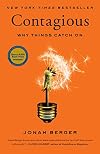
Jonah Berger is an associate professor of marketing at the Wharton School at the University of Pennsylvania. Berger has been recognized with a number of awards for both scholarship and teaching. He is the author of Contagious: Why Things Catch On, a 2016 New York Times bestseller, and Invisible show more Influence:The Hidden Forces That Shape Behavior. (Bowker Author Biography) show less
Works by Jonah Berger
Tagged
Common Knowledge
- Gender
- male
- Occupations
- assistant professor (marketing ∙ Wharton School)
- Organizations
- Wharton School
- Nationality
- USA
- Places of residence
- Philadelphia, Pennsylvania, USA
- Associated Place (for map)
- Pennsylvania, USA
Members
Reviews
I'm always after books that pry open my cranium with a crowbar and mess around with everything that's in there, unlearning what I've learned, and learning something I've never learned. It seems like a conceit at the outset, with a claim of knowing about something that seems actually be the result of random forces, but as the book sweeps along, the case for specificity is solidified. The entire top of my head popped off when he showed how "Just say no!" resulted in increased drug use, amid show more other such examples, coupled with useful advice to produce the opposite effects. I'll apply this new knowledge to develop branding and awareness for myself, my books, my writing, my running club, and other interests. show less

No one is ever satisfied with others. Everyone wants others to change. It’s the way of the world, from social programs to closed-minded managers to sales reps to elections. Everyone wants everyone else to see it their way. Jonah Berger tries to bring successful change tactics to this conundrum in The Catalyst. I’m not sure he succeeds. He needs to apply them to me, I guess.
The book is a collection of tactics, assembled in anecdotes. People all over the world try new approaches to old show more problems, and sometimes they succeed. The change agents don’t have to be academics or professionals. They just have to think outside the box. Sometimes you can move mountains that way.
It starts off well, telling readers they might be asking the wrong questions. What they really should be asking is: “Why weren’t people doing this in the first place? What was stopping them?” This puts any problem in a very different light, and can lead to innovative approaches. As opposed to telling them they’re just wrong and this other way is clearly and obviously better. Could be smoking or gay rights or politics; persistent badgering does not work.
My favorite example of breaking down a firm conviction comes from Thailand, where a local health initiative with essentially no money used children to ask for a light for their cigarette. Many of the smokers they approached refused and actually lectured the kids on the dangers of smoking. At which point the children handed them a small piece of paper, folded in four, which contained the contact information for the health center that wanted to help them quit. Apparently the phones lit up continuously all throughout the campaign and continued to long after. All the ads in the world couldn’t change their minds over decades, but a child pointing out their own hypocrisy did the trick.
The basic problem is that people don’t like to be told what to do; they like to think it’s their own decision. So hammering them doesn’t work and often simply reinforces their stand. Finding common ground and switching the scenario to the one at hand can succeed far more effectively. Berger has a small shopping list of tactics that have worked for someone, somewhere, at some point. But not always and not everywhere.
As in so many of these summary books, the author has stacked the anecdotes to make their points. Because hindsight is so keen. But you could just as easily use the same evidence to come to the opposite conclusion.
For example, in the Brexit referendum, you might think that leaving would be too much of a change, taking voters out of their zone of acceptance – the range of possibilities voters might find acceptable. Or you might find the slogan “Take Back Control” was so appealing, it overcame the lies put forward on the famous red campaign bus (It claimed Britain contributed more than twice as much to Europe as it actually did). Or you might say the lies fooled voters into thinking they were making a genuine decision on their own. On the other hand, confirmation bias would have had voters thinking why they should believe any of this at all. Consider the source – Nigel Farage, Boris Johnson… And on still another hand, the force of inertia is dependable for rejection of radical change. No matter how bad things are, better the devil you know. Then, there’s reactance. Spouting all these supposed negative effects and figures would normally reinforce voters’ positions coming in, as Leave was the strange new concept after 50 years of European co-operation. And since polls showed all along that voters would choose Remain (by ever-narrowing margins, it is true), the bleatings of the Leave crowd should have just reinforced the will to Remain.
So all of these (italicized) factors that Berger employs to change minds come into play in Brexit. How to evaluate their effectiveness? Berger gives the impression it was the slogan Take Back Control that changed minds most. Leave won, of course, but only a quarter of eligible voters chose Leave, as two thirds weren’t even moved enough to vote. So it hardly caused a major shift in public opinion.
The point is, you can find a scenario that works and proves the method – after the fact.
The book includes the heartwarming stories of a rabbi and his wife who turned a Klansman threatening their lives, by offering him help, which apparently no one had ever done before. And a Florida canvasser who turned a macho South American from voting against transgender rights by revealing herself as gay, and empathizing with the discrimination the man was going through because his wife was disabled. So it definitely has its moments. They boil down to a common basis: To truly change something, you need to understand it.
The Catalyst is harmed by Berger’s longwinded setups that seem to say the reader knows nothing and everything must be spoonfed at length in the most basic terms. He makes it too easy to skip ahead. It also suffers from cutesy management speak. Rather than be straight with readers, Berger creates the totally forgettable acronym REDUCE to encompass reactance endowment distance uncertainty corroborating-evidence. Great for consultants, not so much for book buyers. It becomes yet worse when he writes cheesy things like if you’re stepping on the gas and making no forward movement, check the parking brake.
So The Catalyst is a mixed bag: an eyeroller as well as an inspiration.
David Wineberg show less
The book is a collection of tactics, assembled in anecdotes. People all over the world try new approaches to old show more problems, and sometimes they succeed. The change agents don’t have to be academics or professionals. They just have to think outside the box. Sometimes you can move mountains that way.
It starts off well, telling readers they might be asking the wrong questions. What they really should be asking is: “Why weren’t people doing this in the first place? What was stopping them?” This puts any problem in a very different light, and can lead to innovative approaches. As opposed to telling them they’re just wrong and this other way is clearly and obviously better. Could be smoking or gay rights or politics; persistent badgering does not work.
My favorite example of breaking down a firm conviction comes from Thailand, where a local health initiative with essentially no money used children to ask for a light for their cigarette. Many of the smokers they approached refused and actually lectured the kids on the dangers of smoking. At which point the children handed them a small piece of paper, folded in four, which contained the contact information for the health center that wanted to help them quit. Apparently the phones lit up continuously all throughout the campaign and continued to long after. All the ads in the world couldn’t change their minds over decades, but a child pointing out their own hypocrisy did the trick.
The basic problem is that people don’t like to be told what to do; they like to think it’s their own decision. So hammering them doesn’t work and often simply reinforces their stand. Finding common ground and switching the scenario to the one at hand can succeed far more effectively. Berger has a small shopping list of tactics that have worked for someone, somewhere, at some point. But not always and not everywhere.
As in so many of these summary books, the author has stacked the anecdotes to make their points. Because hindsight is so keen. But you could just as easily use the same evidence to come to the opposite conclusion.
For example, in the Brexit referendum, you might think that leaving would be too much of a change, taking voters out of their zone of acceptance – the range of possibilities voters might find acceptable. Or you might find the slogan “Take Back Control” was so appealing, it overcame the lies put forward on the famous red campaign bus (It claimed Britain contributed more than twice as much to Europe as it actually did). Or you might say the lies fooled voters into thinking they were making a genuine decision on their own. On the other hand, confirmation bias would have had voters thinking why they should believe any of this at all. Consider the source – Nigel Farage, Boris Johnson… And on still another hand, the force of inertia is dependable for rejection of radical change. No matter how bad things are, better the devil you know. Then, there’s reactance. Spouting all these supposed negative effects and figures would normally reinforce voters’ positions coming in, as Leave was the strange new concept after 50 years of European co-operation. And since polls showed all along that voters would choose Remain (by ever-narrowing margins, it is true), the bleatings of the Leave crowd should have just reinforced the will to Remain.
So all of these (italicized) factors that Berger employs to change minds come into play in Brexit. How to evaluate their effectiveness? Berger gives the impression it was the slogan Take Back Control that changed minds most. Leave won, of course, but only a quarter of eligible voters chose Leave, as two thirds weren’t even moved enough to vote. So it hardly caused a major shift in public opinion.
The point is, you can find a scenario that works and proves the method – after the fact.
The book includes the heartwarming stories of a rabbi and his wife who turned a Klansman threatening their lives, by offering him help, which apparently no one had ever done before. And a Florida canvasser who turned a macho South American from voting against transgender rights by revealing herself as gay, and empathizing with the discrimination the man was going through because his wife was disabled. So it definitely has its moments. They boil down to a common basis: To truly change something, you need to understand it.
The Catalyst is harmed by Berger’s longwinded setups that seem to say the reader knows nothing and everything must be spoonfed at length in the most basic terms. He makes it too easy to skip ahead. It also suffers from cutesy management speak. Rather than be straight with readers, Berger creates the totally forgettable acronym REDUCE to encompass reactance endowment distance uncertainty corroborating-evidence. Great for consultants, not so much for book buyers. It becomes yet worse when he writes cheesy things like if you’re stepping on the gas and making no forward movement, check the parking brake.
So The Catalyst is a mixed bag: an eyeroller as well as an inspiration.
David Wineberg show less
In this day and age so many people believe that advertising and/or social media drive trends. New words have even been coined to describe the phenomenon … trending or viral. But are those two things enough to explain why people would be willing to pay $100 for a cheese steak sandwich, why a certain video gets millions of hits on YouTube or one brand of blender outsells another? Not really.
In this book Jonah Berger looks at why things catch on. A look at his credentials and there is no show more doubt that he did the research he describes and that his theories are sound. Not only sound, but surprisingly interesting and delivered in a concise and often humorous manner. Even someone who has never studied marketing (ME) understood and enjoyed this book. The scariest thing about reading this little book? I came to realize just how gullible I am when it comes to advertising and media. It’s a bit of an eye-opener! show less
In this book Jonah Berger looks at why things catch on. A look at his credentials and there is no show more doubt that he did the research he describes and that his theories are sound. Not only sound, but surprisingly interesting and delivered in a concise and often humorous manner. Even someone who has never studied marketing (ME) understood and enjoyed this book. The scariest thing about reading this little book? I came to realize just how gullible I am when it comes to advertising and media. It’s a bit of an eye-opener! show less
Berger has penned a highly-readable book that is driven by lively anecdotes. True, some of his insights seem quite simplistic. For example, one of the earliest case studies involves an eatery in Philadelpia that created a hundred buck Philly Cheesesteak sandwich merely to generate "buzz." The implied message is that "shock value" is a key ingredient to making a message stick. Some would justifiably argue that Malcolm Gladwell took a more scholarly approach to this fascinating topic in his show more classic "Tipping Point." That being said, Berger, offers an accessible user-friendly guide that provides some practical tips for creating "social epidemics." show less
Lists
Awards


You May Also Like


Associated Authors
Statistics
- Works
- 4
- Members
- 1,833
- Popularity
- #14,046
- Rating
- 3.8
- Reviews
- 44
- ISBNs
- 70
- Languages
- 10
- Favorited
- 1