
Matthew Dunn (1) (1968–)
Author of Spycatcher
For other authors named Matthew Dunn, see the disambiguation page.
Series
Works by Matthew Dunn
Spycatcher with a Bonus Excerpt 2 copies
Tagged
Common Knowledge
- Birthdate
- 1968-11-25
- Gender
- male
Members
Reviews

It comes to the attention of MI5 and the CIA that the new Evil Empire, Iran, is planning a massive attack on either England or the USA. The Iranian agent in charge must be found and the plot stopped, or thousands will die. To find the him, the two governments turn to Will Cochrane, code name Spartan. He is the only person who has ever successfully completed a super secret training mission to earn this title and, along with a small number of US special forces men, heads off to cities show more throughout Europe and the US chasing, down the monster who would set off this terrible act and, he hopes, set off a world war.
OK, I did not like this book for so many reasons.
They fooled me. I read the description that said that because this was written by an actual former MI5 agent, this book would portray a realistic view of spy work. Well, in that the whole middle of the book was boring and repetitious, that may be true. Get on a plane...fly to another city...chase a bunch of bad guys, kill them...off to another city..
Oh, but that brings up another issue. In everyone of these incidents, Will seems to get injured. There are the three bullets to his stomach that opens the book, then the gunshot to his shoulder in another fights and the knife sized shards of glass in his legs. I could go on. But not to worry! Those three shots. One day in a secret medical facility and Will is good enough to get on a plane and start his new mission. True, he did feel a bit sick..after three bullets to his stomach! That bullet to the shoulder, which at first renders his arm useless...a soldier takes it out, after it bounces off his bone...and he is right as rain. Shards of glass in your legs. No problem, never mentioned again. It seems he has extraordinary healing powers...OK...
Except for a handful of lead characters, everyone is about as deep as a one line description, as thin as cardboard. The dialogue is wooden and unrealistic. Will's talks with his CIA handler are so unrealistic, so flowery, that they belong in a bad romance moves..and I mean bad. I can see the guy reading this, because I assume the target audience for a spy thriller like this is largely men, throwing the book across the room at this point.
Sadly, I could go on. Bad plot, bad dialogue, unrealistic or cardboard characters.
At best, if I had to describe this book in one word, it would be amateurish .
I finished the book, sort of. Big skimming, because I was a bit curious how it would end. I should not have bothered.
Usually, I would not have reviewed the book because of that.
Then why am I this time?
Well, I see this book getting a lot of publicity, a lot of ad space. I have seem written, in a few places, that the publisher sees this as the first in a series starring Will Cochrane. If so, you might foresee that I will not be reading those. But you, my dear reader may see it out there, with the push it is getting and may be tempted to buy it with your hard earned money. I must suggest that you do not.
Ignore the blurb on the cover from Lee Child, an author I respect and enjoy, that calls this "one of the year's best thriller debuts". And ignore the author's interview on Amazon by Jeffrey Deaver.
Really guys..really..did you read the same book? I really have to wonder. I must say, I am not trusting your opinion anymore.
Note to self. Ignore blurbs. show less
OK, I did not like this book for so many reasons.
They fooled me. I read the description that said that because this was written by an actual former MI5 agent, this book would portray a realistic view of spy work. Well, in that the whole middle of the book was boring and repetitious, that may be true. Get on a plane...fly to another city...chase a bunch of bad guys, kill them...off to another city..
Oh, but that brings up another issue. In everyone of these incidents, Will seems to get injured. There are the three bullets to his stomach that opens the book, then the gunshot to his shoulder in another fights and the knife sized shards of glass in his legs. I could go on. But not to worry! Those three shots. One day in a secret medical facility and Will is good enough to get on a plane and start his new mission. True, he did feel a bit sick..after three bullets to his stomach! That bullet to the shoulder, which at first renders his arm useless...a soldier takes it out, after it bounces off his bone...and he is right as rain. Shards of glass in your legs. No problem, never mentioned again. It seems he has extraordinary healing powers...OK...
Except for a handful of lead characters, everyone is about as deep as a one line description, as thin as cardboard. The dialogue is wooden and unrealistic. Will's talks with his CIA handler are so unrealistic, so flowery, that they belong in a bad romance moves..and I mean bad. I can see the guy reading this, because I assume the target audience for a spy thriller like this is largely men, throwing the book across the room at this point.
Sadly, I could go on. Bad plot, bad dialogue, unrealistic or cardboard characters.
At best, if I had to describe this book in one word, it would be amateurish .
I finished the book, sort of. Big skimming, because I was a bit curious how it would end. I should not have bothered.
Usually, I would not have reviewed the book because of that.
Then why am I this time?
Well, I see this book getting a lot of publicity, a lot of ad space. I have seem written, in a few places, that the publisher sees this as the first in a series starring Will Cochrane. If so, you might foresee that I will not be reading those. But you, my dear reader may see it out there, with the push it is getting and may be tempted to buy it with your hard earned money. I must suggest that you do not.
Ignore the blurb on the cover from Lee Child, an author I respect and enjoy, that calls this "one of the year's best thriller debuts". And ignore the author's interview on Amazon by Jeffrey Deaver.
Really guys..really..did you read the same book? I really have to wonder. I must say, I am not trusting your opinion anymore.
Note to self. Ignore blurbs. show less

Spycatcher: A Novel is very different from what I expected it to be. This modern day spy thriller was written by Matthew Dunn, himself a veteran of Britain’s MI6, so I expected that the novel would be more realistic than most others of this genre. I was only partially right in that assumption. Dunn’s rendering of the relationship between the various intelligence agencies (American and British, primarily) and the way that complicated missions are so precisely coordinated rings true for show more the most part. Realism, however, does not appear to have been Dunn’s chief objective for Spycatcher.
MI6 agent Will Cochrane is more superhero than human being. This man apparently heals faster, and is able to tolerate more pain, than anyone else on the face of the Earth. Within hours of taking three bullets to the stomach (and resigning himself to fact of his impending death), Cochrane is traveling back to the U.K. on a new mission for the American and British governments. This new mission will take its own physical toll on Cochrane but he will again walk away from injuries (and tolerate unbearable levels of pain) that would kill, or at least disable anyone else for days, if not for weeks.
Surprisingly, however, this combination of realism and traditional James Bond style heroism works pretty well. Cochrane is charged with capturing an Iranian terrorist before the man can trigger a major event in either the U.K. or the United States. He does not know the terrorist’s name, his whereabouts, or any specifics of the man’s plan; he does not even know in which of two countries the attack will occur. Watching Cochrane pull together a team to track down the terrorist is fascinating because the man they are trying to find is every bit as clever as anyone on the team searching for him. The search, in fact, becomes a game of cat and mouse in which the roles of the two men are sometimes reversed as the terrorist begins to manipulate Cochrane’s efforts to locate him.
I enjoyed Spycatcher largely because Cochrane has more personal depth than a James Bond type character. He is a man filled with personal conflicts that go back to his childhood and early teen years, years during which both his parents were shockingly snatched from him. Now, he is dedicated to protecting those unable to protect themselves, leaving him no time for personal relationships. His job with MI6 is his whole world.
My only complaint about the novel concerns its climax – a complaint that I will not attempt to detail because, to do so, would require me to spoil the ending for those who have not yet read the book. I will simply say that a key decision made by one of the book’s main characters at the very end is so farfetched that it taints my overall impression of the book. I am willing to suspend my disbelief in order to enjoy all the thriller aspects of Spycatcher, but this one scene is just too much to overlook.
That said, if you enjoy spy thrillers, and are looking for a new author and a new superspy, Spycatcher is for you.
Rated at: 3.5 show less
MI6 agent Will Cochrane is more superhero than human being. This man apparently heals faster, and is able to tolerate more pain, than anyone else on the face of the Earth. Within hours of taking three bullets to the stomach (and resigning himself to fact of his impending death), Cochrane is traveling back to the U.K. on a new mission for the American and British governments. This new mission will take its own physical toll on Cochrane but he will again walk away from injuries (and tolerate unbearable levels of pain) that would kill, or at least disable anyone else for days, if not for weeks.
Surprisingly, however, this combination of realism and traditional James Bond style heroism works pretty well. Cochrane is charged with capturing an Iranian terrorist before the man can trigger a major event in either the U.K. or the United States. He does not know the terrorist’s name, his whereabouts, or any specifics of the man’s plan; he does not even know in which of two countries the attack will occur. Watching Cochrane pull together a team to track down the terrorist is fascinating because the man they are trying to find is every bit as clever as anyone on the team searching for him. The search, in fact, becomes a game of cat and mouse in which the roles of the two men are sometimes reversed as the terrorist begins to manipulate Cochrane’s efforts to locate him.
I enjoyed Spycatcher largely because Cochrane has more personal depth than a James Bond type character. He is a man filled with personal conflicts that go back to his childhood and early teen years, years during which both his parents were shockingly snatched from him. Now, he is dedicated to protecting those unable to protect themselves, leaving him no time for personal relationships. His job with MI6 is his whole world.
My only complaint about the novel concerns its climax – a complaint that I will not attempt to detail because, to do so, would require me to spoil the ending for those who have not yet read the book. I will simply say that a key decision made by one of the book’s main characters at the very end is so farfetched that it taints my overall impression of the book. I am willing to suspend my disbelief in order to enjoy all the thriller aspects of Spycatcher, but this one scene is just too much to overlook.
That said, if you enjoy spy thrillers, and are looking for a new author and a new superspy, Spycatcher is for you.
Rated at: 3.5 show less
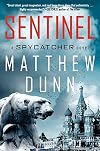
William Cochrane is a super spy for M16. Sentinel is the code name of one of his colleague’s stations in Eastern Europe. When Sentinel’s tier 1 agents within the Russian military begin to be murdered, Will is sent to help Sentinel save his move valuable assets and hunt down Razin, a former double-agent who is responsible for the murders. He must use his highly trained skills to track down Razin and stop him before a new war erupts between Russia and America.
Matthew Dunn brings first-hand show more spy knowledge to this fast-paced spy thriller. The story line is intriguing and Dunn writes the fight scenes with an accuracy that allows the reader to visualize the scenes as if they were being played on a movie screen. Unfortunately, as someone who has little knowledge of weapons, much of the detail was lost on me and even slowed down my reading pace as I felt overwhelmed with information that didn’t seem necessary. I haven’t read much in this genre of literature and this novel makes me hesitant to read more as the world of Will Cochrane seems so foreign and difficult to understand to the lay reader. show less
Matthew Dunn brings first-hand show more spy knowledge to this fast-paced spy thriller. The story line is intriguing and Dunn writes the fight scenes with an accuracy that allows the reader to visualize the scenes as if they were being played on a movie screen. Unfortunately, as someone who has little knowledge of weapons, much of the detail was lost on me and even slowed down my reading pace as I felt overwhelmed with information that didn’t seem necessary. I haven’t read much in this genre of literature and this novel makes me hesitant to read more as the world of Will Cochrane seems so foreign and difficult to understand to the lay reader. show less
**Spoiler Alert**
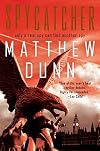
Spycatcher is debut novel written by an ex-MI6 (British CIA) spy. Ultimately, I think ‘debut’ is the key word, i.e. not that great but nice try.
As a thriller, this book was far from being a page-turner, not at the beginning, not even the last quarter of the book. I literally read a few pages and put it down throughout the entire book. Nothing was grasping me – which does not make it a ‘thriller’.
The spy story itself, centered around Will Cochrane, was predictable, show more non-thrilling (did I already say this), flat, relatively straightforward. I kept looking for nuggets that gets my adrenaline up a bit, but none presented itself.
Repeat: Spoiler Alert
The ending was a triple annoyance.
1) Numero Uno bad guy, Megiddo, actually made a mistake about Will’s father and their two families are in fact not intertwined. It was such an unnecessary arc and diminishes Megiddo’s uber-bad guy strategist reputation. The encounter was short with a shoot-them up ending, old-western style no less. (my eyes are rolling)
2) The ‘female’ of the book, Lana, was so EASILY talked down and converted in 14 minutes, tossing away a near-lifetime devotion to Megiddo. Such a slap to the female conviction and entirely too trivial to end the final stand-off. (Yawn!)
3) The well-connected second mastermind, Harry, was recruited to the next assignment. I have a serious pet-peeve against book endings that are designed for more stories. Shouldn’t all books simply stand as great books in and of itself without the need to leave overtly obvious hooks?
I was also skeptical of the ‘love’ story arc between Will and Lana. I didn’t trust Lana, nor did I believe Will can truly walk away from the spy life – even though he revisited this many times over. I found that entire arc to be an inconvenient nuisance or perhaps simply poorly written.
Ok, I gave it 2 stars so there must be something worthwhile. Here they are:
A) I was much more fascinated with the background stories of Will Cochrane – what happened to him and his family members that formed and forged his core, and his personal mental and physical strength that fortified him to be the man he is today. In addition, his learning of his dad’s true past and the hidden guidance from the two men that he didn’t know participate in his life to the extent that they have. These background stories were far stronger than the spy story. (It almost felt as though the backstory is the true core of the book, and the spy story is loosely stretched to wrap around the backstory.)
B) The compadre and cohesiveness of the CIA team, led by Roger with Ben, Julian, and Laith – all working with Will, were very well presented. It’s a well-oiled engine and their movements, actions, and the ultimate sacrifice for two of them, made this otherwise flat story much more tolerable.
C) Brownie points that the top spy is codenamed the “Spartan”. Ok, I just like the codename. :P
Quotes:
These two quotes were found in different portions of the book, but I found their correlation to be powerful.
A boy’s mind goes dark… forever, in an effort to protect his mom and his sister:
“…He had always been scared of this knife, but now that he held it for the first time it felt so light and innocent in his hand. He convinced himself that it would not be scary enough for the big men in the other room. He decided it wasn’t the knife that mattered but the hand carrying it. He walked back into the room. He felt energized but no longer himself. He felt as if everywhere around him was on fire but only he could feel no heat or pain. He felt a blackness descend upon his mind. He looked at the men and smiled. And then he destroyed them.”
Will reflecting on who he was and who has become:
“…The boy now angry, scared, and alone. The boy changing into a man who had no fear, who embraced isolation, anger, and death and nothing else…” show less
Spycatcher is debut novel written by an ex-MI6 (British CIA) spy. Ultimately, I think ‘debut’ is the key word, i.e. not that great but nice try.
As a thriller, this book was far from being a page-turner, not at the beginning, not even the last quarter of the book. I literally read a few pages and put it down throughout the entire book. Nothing was grasping me – which does not make it a ‘thriller’.
The spy story itself, centered around Will Cochrane, was predictable, show more non-thrilling (did I already say this), flat, relatively straightforward. I kept looking for nuggets that gets my adrenaline up a bit, but none presented itself.
Repeat: Spoiler Alert
The ending was a triple annoyance.
1) Numero Uno bad guy, Megiddo, actually made a mistake about Will’s father and their two families are in fact not intertwined. It was such an unnecessary arc and diminishes Megiddo’s uber-bad guy strategist reputation. The encounter was short with a shoot-them up ending, old-western style no less. (my eyes are rolling)
2) The ‘female’ of the book, Lana, was so EASILY talked down and converted in 14 minutes, tossing away a near-lifetime devotion to Megiddo. Such a slap to the female conviction and entirely too trivial to end the final stand-off. (Yawn!)
3) The well-connected second mastermind, Harry, was recruited to the next assignment. I have a serious pet-peeve against book endings that are designed for more stories. Shouldn’t all books simply stand as great books in and of itself without the need to leave overtly obvious hooks?
I was also skeptical of the ‘love’ story arc between Will and Lana. I didn’t trust Lana, nor did I believe Will can truly walk away from the spy life – even though he revisited this many times over. I found that entire arc to be an inconvenient nuisance or perhaps simply poorly written.
Ok, I gave it 2 stars so there must be something worthwhile. Here they are:
A) I was much more fascinated with the background stories of Will Cochrane – what happened to him and his family members that formed and forged his core, and his personal mental and physical strength that fortified him to be the man he is today. In addition, his learning of his dad’s true past and the hidden guidance from the two men that he didn’t know participate in his life to the extent that they have. These background stories were far stronger than the spy story. (It almost felt as though the backstory is the true core of the book, and the spy story is loosely stretched to wrap around the backstory.)
B) The compadre and cohesiveness of the CIA team, led by Roger with Ben, Julian, and Laith – all working with Will, were very well presented. It’s a well-oiled engine and their movements, actions, and the ultimate sacrifice for two of them, made this otherwise flat story much more tolerable.
C) Brownie points that the top spy is codenamed the “Spartan”. Ok, I just like the codename. :P
Quotes:
These two quotes were found in different portions of the book, but I found their correlation to be powerful.
A boy’s mind goes dark… forever, in an effort to protect his mom and his sister:
“…He had always been scared of this knife, but now that he held it for the first time it felt so light and innocent in his hand. He convinced himself that it would not be scary enough for the big men in the other room. He decided it wasn’t the knife that mattered but the hand carrying it. He walked back into the room. He felt energized but no longer himself. He felt as if everywhere around him was on fire but only he could feel no heat or pain. He felt a blackness descend upon his mind. He looked at the men and smiled. And then he destroyed them.”
Will reflecting on who he was and who has become:
“…The boy now angry, scared, and alone. The boy changing into a man who had no fear, who embraced isolation, anger, and death and nothing else…” show less
Lists
Awards

You May Also Like


Statistics
- Works
- 18
- Members
- 926
- Popularity
- #27,711
- Rating
- 3.4
- Reviews
- 47
- ISBNs
- 101
- Languages
- 5