
John R. Kohlenberger, III (1951–2015)
Author of The Interlinear NIV Hebrew-English Old Testament
About the Author
Series
Works by John R. Kohlenberger, III
The Precise Parallel New Testament: Greek Text · King James Version · Rheims Bible · New International Version · New Revised Standard Version · New ... New American Standard… (1995) 191 copies, 2 reviews
The Parallel Apocrypha: Greek · Douay-Rheims · King James Version · New Revised Standard Version · New American Bible · New Jerusalem Bible… (1997) 82 copies
The Analytical Concordance to the New Revised Standard Version of the New Testament (2000) 60 copies
The NIV Exhaustive Bible Concordance, Third Edition: A Better Strong's Bible Concordance (2015) 58 copies
The Evangelical Parallel New Testament: English Standard Version · Holman Christian Standard Bible · The Message · New Living Translation · New ... Version · Today's New… (1974) 53 copies, 1 review
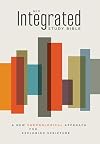
NIV, Integrated Study Bible, Hardcover: A New Chronological Approach for Exploring Scripture (2013) 19 copies, 2 reviews
A Comparative Psalter: Hebrew (Masoretic Text) · Revised Standard Version Bible · The New English Translation of the Septuagint · Greek (Septuagint) (2007) 19 copies
The Contemporary Parallel Bible, NKJV/NIV: New King James Version · New International Version (2005) 8 copies
KM Hebrew Dictionary 6 copies
Passover Haggadah 1 copy
The NIV handy concordance 1 copy
The NRSV Concordance 1 copy
Tagged
Common Knowledge
- Canonical name
- Kohlenberger, John R., III
- Birthdate
- 1951-04-06
- Date of death
- 2015-09-29
- Gender
- male
- Birthplace
- Chicago, Illinois, USA
- Place of death
- Battle Ground, Washington, USA
- Associated Place (for map)
- USA
Members
Reviews
NIV Integrated Study Bible: A New Chronological Approach for Exploring Scripture by John R. Kohlenberger, III
On the making of books there is no end and much study wearies the body (Ecclesiaties 12:12).
When Qoheleth penned these words, he could not have imagined how many times his own prose would be copied, translated, edited and bound. On the publishing of Bibles there is no end, and Study Bibles weary the Body. There is an ever-growing number of translations to choose from (i.e. CEB, ESV, NASB, NAB, GNB, The Message, KJV, NKJV, NIV, TNIV( now deceased), NIrV, Amplified Bible, Living Bible, NLV, show more ISV, NKOTB, Jerusalem Bible, New Jerusalem Bible, God’s Word Translation, RSV, NRSV, and more). There are also devotional Bibles marketed to ever niche from teenage girls to used car salesman (I’m exaggerating, slightly). Study Bible’s are no better. There is a constant deluge of new study Bibles, each boasting a unique lens, approach, or aimed at a particularly age group, denomination or theological camp. The Bible is inspired but the notes seldom are. Still there are some great resources for those seeking to go deeper into the Biblical text.
Here is a Bible I think will be a beneficial for those wanting to go deeper into biblical history. The NIV Integrated Study Bible (NIVISB) presents the entire Bible in chronological order. When events are described by more than one biblical author, they appear in parallel columns (2-4). Geneologies are paralleled by then repeated later in their actual context. For example, Genesis 5, shows parallels in 1 Chronicles 1:1-4, and Luke 3:36b-38. But these also appear later in 1 Chronicles 1, and Luke 3, respectively. The effect is that the reader can see at a glance how events and people in biblical history relate to one another. This is particularly helpful in relating the history books and the prophets, or in illuminating gospel parallels. It is also helpful for navigating how some of Paul’s letters fit within Acts.
The NIVISB is edited by John R. Kohlenberger III and organized under six chronological categories: (1) Creation through the Patriarchs, (2) Conquest Through United Kingdom, (3) Divided Kingdom & Exile; (4) Return to the Land, (5) The Life of Jesus and (6) The Early Church. Additionally there are other helpful aids, like a timeline on the bottom of each page which locates the passages in the broad sweep of Biblical history, brief commentary linking transition between each era, and charts which illuminate each era. An index at the back of the Bible, aids in finding passages quickly.
Resources like this are helpful, because they do at a glance what cross references and commentaries do for us: they remind you of a passage’s place within the larger biblical story and show how different books relate together. I find this helpful. Nevertheless there are drawbacks to this format. First, it examines the Bible through a historical lens, but breaks up literary units. It is important to also read these passages in their own habitat. Second, this is the work of a New Testament scholar, giving his best guess on the chronology and timeline. Not every commentator would agree with all of Kohlenberger’s choices, though I think in the main, his timeline is quite reasonable. Third, on a practical level, those most at home in the traditional canon will have some difficulty in navigating to particular passages. But Kohlenberger doesn’t intend for this Bible to replace all others. His proposal is more modest. This is an aid for studying one aspect of scripture and helping readers grasp historical connections. He also suggests several other resources for digging into the text (conveniently all published by Zondervan).I give it four stars. ★★★★
Notice of material connection: I received this book for free from Book Look Bloggers in exchange for my honest review. show less
When Qoheleth penned these words, he could not have imagined how many times his own prose would be copied, translated, edited and bound. On the publishing of Bibles there is no end, and Study Bibles weary the Body. There is an ever-growing number of translations to choose from (i.e. CEB, ESV, NASB, NAB, GNB, The Message, KJV, NKJV, NIV, TNIV( now deceased), NIrV, Amplified Bible, Living Bible, NLV, show more ISV, NKOTB, Jerusalem Bible, New Jerusalem Bible, God’s Word Translation, RSV, NRSV, and more). There are also devotional Bibles marketed to ever niche from teenage girls to used car salesman (I’m exaggerating, slightly). Study Bible’s are no better. There is a constant deluge of new study Bibles, each boasting a unique lens, approach, or aimed at a particularly age group, denomination or theological camp. The Bible is inspired but the notes seldom are. Still there are some great resources for those seeking to go deeper into the Biblical text.
Here is a Bible I think will be a beneficial for those wanting to go deeper into biblical history. The NIV Integrated Study Bible (NIVISB) presents the entire Bible in chronological order. When events are described by more than one biblical author, they appear in parallel columns (2-4). Geneologies are paralleled by then repeated later in their actual context. For example, Genesis 5, shows parallels in 1 Chronicles 1:1-4, and Luke 3:36b-38. But these also appear later in 1 Chronicles 1, and Luke 3, respectively. The effect is that the reader can see at a glance how events and people in biblical history relate to one another. This is particularly helpful in relating the history books and the prophets, or in illuminating gospel parallels. It is also helpful for navigating how some of Paul’s letters fit within Acts.
The NIVISB is edited by John R. Kohlenberger III and organized under six chronological categories: (1) Creation through the Patriarchs, (2) Conquest Through United Kingdom, (3) Divided Kingdom & Exile; (4) Return to the Land, (5) The Life of Jesus and (6) The Early Church. Additionally there are other helpful aids, like a timeline on the bottom of each page which locates the passages in the broad sweep of Biblical history, brief commentary linking transition between each era, and charts which illuminate each era. An index at the back of the Bible, aids in finding passages quickly.
Resources like this are helpful, because they do at a glance what cross references and commentaries do for us: they remind you of a passage’s place within the larger biblical story and show how different books relate together. I find this helpful. Nevertheless there are drawbacks to this format. First, it examines the Bible through a historical lens, but breaks up literary units. It is important to also read these passages in their own habitat. Second, this is the work of a New Testament scholar, giving his best guess on the chronology and timeline. Not every commentator would agree with all of Kohlenberger’s choices, though I think in the main, his timeline is quite reasonable. Third, on a practical level, those most at home in the traditional canon will have some difficulty in navigating to particular passages. But Kohlenberger doesn’t intend for this Bible to replace all others. His proposal is more modest. This is an aid for studying one aspect of scripture and helping readers grasp historical connections. He also suggests several other resources for digging into the text (conveniently all published by Zondervan).I give it four stars. ★★★★
Notice of material connection: I received this book for free from Book Look Bloggers in exchange for my honest review. show less

The concept of this volume is excellent: Hebrew Bible, Septuagint, and an English version in one volume. The weakness lies in the execution: The Hebrew, Greek, and English texts used. Perhaps there can be debate over the English translation (the New Revised Standard Version would probably have been better for a scholarly edition), but to use the Hebrew text of Hahn and the Greek of Tischendorf, neither of which has a true critical text, is absurd. And to print both without textual notes show more makes it worse. This is a very large book with very small print, and it really isn't a reference to either the Hebrew or the Greek. Students would be better advised to pick up the English translation of their choice, plus the Rahlfs edition of the Septuagint, and an edition of Biblia Hebraica. This would have the amazing combination of virtues of being both more portable and more useful. show less
The Precise Parallel New Testament: Greek Text · King James Version · Rheims Bible · New International Version · New Revised Standard Version · New ... New American Standard Bible · Amplified Bible by III John R. Kohlenberger

I’ve tried different routines while reading this New Testament, but mostly ended up just reading the King James Version and the New American Standard Bible together. That means I still have 6 more New Testaments to go in this book, including the Greek N.T., which will not be read soon, since I don’t know N.T. Greek yet. A parallel Bible like this is intended to offer insights into the the different translations, but, admittedly, to know the Greek is much better. This is an excellent way, show more though, to read different translations of the N.T., because it includes such a variety of translations, including some that are evangelical and some that are Catholic. It also includes older N.T.’s (KJV and Rheims) and newer ones (including New International Version and New Revised Standard Version). I did enjoy my readings in this Bible, but the ideal, I think, is to know the Greek, and to compare the Greek with all these English translations. I think that’s the real purpose of this book. Unfortunately, it will be some time before I’m able to do that. In the meantime, the job is to compare these English translations with each other. show less
NIV, Integrated Study Bible, Hardcover: A New Chronological Approach for Exploring Scripture by John R. Kohlenberger, III
I have followed some chronological Bible reading plans before, but have never used a Chronological Bible, so this is my first one and I am delighted with it. It has several timelines and also a timeline across the bottom of every page indicating what year, or approximate year, you are in at whatever point you are at in your reading. As example of how this type of Bible arrangement works: when you reach the book of Acts and are reading at the time the letter to Galatians was probably written, show more the book of Galatians is inserted 'into', as it were, the book of Acts and you read it as a part of the account instead of as a separate book. It is so nice not to have to keep turning back and forth every few minutes in order to read chronologically, instead you can just read right through, simply turning one page after another. When you are done, you can just place a bookmark where you stopped instead of having to mark the spot on a reading chart when you are done. So convenient!
Not only is this chronological, it also uses a parallel column format at times. For instance, since the four Gospels recount some of the same events, instead of placing them one right after another, these chronologically 'parallel' accounts are placed side by side in two, three, or even four columns. Oh, and be sure to read the introduction to this Bible first. I did not do this at first and thus had a misconception for a while that the people who arranged this Bible were fudging the chronological aspect by placing the repetition of the law that was given when Israel is finally about to enter the promised land, parallel to the first giving of the law about forty years earlier. Later on I examined their arrangement again, and found that they actually repeated this recounting of the law when it is reached at the correct time. If I had read the introduction first I would have found that they use 'conceptual parallels' and not just chronological parallels: "Conceptual parallels occur primarily in the books of Moses when similar commands and instructions are repeated in different historical settings...In order to keep genealogies and conceptual parallels in their historical setting, they are repeated whenever they appear in the chronological presentation..." Conceptual parallels are indicated by a light grey title instead of the normal solid black title.
The text of the NIV 2011 seems fine so far, though I know there has been some concern over the rendering of some verses, such as changing New Testament epistles addressed to 'brothers' as 'brothers and sisters'. I don't really like and would prefer a more literal translation, but can overlook it. Daniel Wallace(professor of New Testament Studies at Dallas Theological Seminary) has some articles on his blog critiquing the new NIV that you may find interesting. I do LOVE that they still have the footnotes that the old NIV had, regarding different renderings of verses in the Septuagint, the Dead Sea Scrolls and other manuscripts in the Old Testament and New Testament as well.
All in all, I like the format of this Bible, very convenient and interesting.
Thanks to BookSneeze® and Zondervan for sending me a free review copy of this book!(My review did not have to be favorable) show less
Not only is this chronological, it also uses a parallel column format at times. For instance, since the four Gospels recount some of the same events, instead of placing them one right after another, these chronologically 'parallel' accounts are placed side by side in two, three, or even four columns. Oh, and be sure to read the introduction to this Bible first. I did not do this at first and thus had a misconception for a while that the people who arranged this Bible were fudging the chronological aspect by placing the repetition of the law that was given when Israel is finally about to enter the promised land, parallel to the first giving of the law about forty years earlier. Later on I examined their arrangement again, and found that they actually repeated this recounting of the law when it is reached at the correct time. If I had read the introduction first I would have found that they use 'conceptual parallels' and not just chronological parallels: "Conceptual parallels occur primarily in the books of Moses when similar commands and instructions are repeated in different historical settings...In order to keep genealogies and conceptual parallels in their historical setting, they are repeated whenever they appear in the chronological presentation..." Conceptual parallels are indicated by a light grey title instead of the normal solid black title.
The text of the NIV 2011 seems fine so far, though I know there has been some concern over the rendering of some verses, such as changing New Testament epistles addressed to 'brothers' as 'brothers and sisters'. I don't really like and would prefer a more literal translation, but can overlook it. Daniel Wallace(professor of New Testament Studies at Dallas Theological Seminary) has some articles on his blog critiquing the new NIV that you may find interesting. I do LOVE that they still have the footnotes that the old NIV had, regarding different renderings of verses in the Septuagint, the Dead Sea Scrolls and other manuscripts in the Old Testament and New Testament as well.
All in all, I like the format of this Bible, very convenient and interesting.
Thanks to BookSneeze® and Zondervan for sending me a free review copy of this book!(My review did not have to be favorable) show less
Lists
You May Also Like


Associated Authors
Statistics
- Works
- 54
- Members
- 3,750
- Popularity
- #6,761
- Rating
- 4.1
- Reviews
- 18
- ISBNs
- 76
- Languages
- 4