
Bruce M. Metzger (1914–2007)
Author of Lexical Aids for Students of New Testament Greek
About the Author
Bruce M. Metzger was the George L. Collard Professor of New Testament Language and Literature at Princeton Theological Seminary. One of the world's best-known scholars on the text of the New Testament, he wrote or edited more than thirty books and chaired the NRSV translation committee. David A. show more Desilva, an elder in The United Methodist Church, attended Princeton University and Princeton Theological Seminary, and earned his Ph.D. in Religion at Emory University. He currently serves as Trustees' Distinguished Professor of New Testament and Greek at Ashland Theological Seminary. He has written over twenty books, including Unholy Allegiances: Heeding Revelation's Warning; The Jewish Teachers of Jesus, James, and Jude; An introduction to the New Testament; and Introducing the Apocrypha He also served as Apocrypha Editor for the Common English Bible and has published extensively in journals, reference works, and adult Bible curriculum. show less
Image credit: Used by permission of Baker Publishing Group, copyright © 2008. All rights to this material are reserved. Materials are not to be distributed to other web locations for retrieval, published(see © info.)
Series
Works by Bruce M. Metzger
The Holy Bible: New Revised Standard Version with Apocrypha (1989) — Editor — 1,797 copies, 10 reviews
The New Oxford Annotated Bible with the Apocrypha, Revised Standard Version (1973) 1,065 copies, 2 reviews
The Greek New Testament (Includes Dictionary) (Greek and English Edition) (2007) 457 copies, 2 reviews
The Canon of the New Testament: Its Origin, Development, and Significance (1987) 435 copies, 2 reviews
Great Events of Bible Times: New Perspectives on the People, Places, and History of the Biblical World (1987) 432 copies, 1 review
The Oxford Annotated Apocrypha: The Apocrypha of the Old Testament, Revised Standard Version, Expanded Edition (1977) 197 copies, 1 review
The Oxford Annotated Apocrypha: The Apocrypha of the Old Testament, Revised Standard Version (1924) 181 copies, 3 reviews
The Early Versions of the New Testament: Their Origin, Transmission, and Limitations (1977) 141 copies, 3 reviews
Breaking the Code : Understanding the Book of Revelation [video and leader's guide] (1993) 23 copies
The New Oxford Annotated Bible With the Apocryphal / Deuterocanonical Books, Revised Edition (1991) 11 copies
Annotated bibliography of the textual criticism of the New Testament, 1914-1939 (Studies and documents) (1955) 3 copies
Index of Articles on the New Testament and the Early Church Published in Festschriften (1951) 3 copies
Quien Es Quien En La Biblia / The Oxford Guide to People and Places of the Bible (Spanish Edition) (2003) 1 copy
220.5204 MET 1 copy
Apocalyptic Literature 1 copy
Oxford Concise Concordance 1 copy
Associated Works
The Case for Christ: A Journalist's Personal Investigation of the Evidence for Jesus (1998) — Contributor, some editions — 10,500 copies, 97 reviews
The New Oxford Annotated Bible, New Revised Standard Version with the Apocrypha (1991) — Editor — 4,656 copies, 12 reviews
Tagged
Common Knowledge
- Canonical name
- Metzger, Bruce M.
- Legal name
- Metzger, Bruce Manning (birth name)
- Birthdate
- 1914-02-09
- Date of death
- 2007-02-13
- Gender
- male
- Education
- Princeton University (PhD|1942)
Princeton University (AM|1940)
Princeton Theological Seminary (ThB|1938)
Lebanon Valley College (AB|1935) - Occupations
- bible scholar
seminary professor emeritus - Organizations
- Princeton Theological Seminary
Presbyterian Church USA
American Bible Society - Awards and honors
- Burkitt Medal for Biblical Studies (1994)
- Cause of death
- respiratory failure
- Nationality
- USA
- Birthplace
- Middletown, Pennsylvania, USA
- Places of residence
- Middletown, Pennsylvania, USA
Princeton, New Jersey, USA
Campinas, Brazil
Cambridge, England, UK - Place of death
- Princeton, New Jersey, USA
- Associated Place (for map)
- USA
Members
Reviews
The Early Versions of the New Testament: Their Origin, Transmission, and Limitations by Bruce M. Metzger
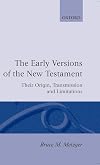
A thorough, and in its densely technical way, charming tour of the early translations of the New Testament. A wonderful introduction to the wider world of textual history and textual criticism -- and a helpful reminder that a bit of Greek is only the beginning for understanding the early Christian world.
(Those who would look down their noses at Metzger's work on the Greek New Testament (or on that of his student, Bart Ehrman) are well advised to read this book and Metzger's _Orthodox show more Corruption of Scripture_ before speaking at length.)
-Kushana show less
(Those who would look down their noses at Metzger's work on the Greek New Testament (or on that of his student, Bart Ehrman) are well advised to read this book and Metzger's _Orthodox show more Corruption of Scripture_ before speaking at length.)
-Kushana show less
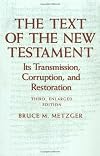
Textual criticism manuals are to be weighed and not counted.
That's a variation on an old rule of textual criticism, "Manuscripts are to be weighed and not counted." The idea is that not all manuscripts are equally valuable in reconstructing the original text of the New Testament (some are badly copied, some have seen many generations of corruption, and so forth). Just because a type of text is popular doesn't mean it's good.
And that applies to textual criticism manuals, too. Based on show more LibraryThing ownership statistics, it looks as if there are more copies of this book out there than all other textual criticism manuals combined.
It's easy to see why. Bruce M. Metzger was an immensely respected scholar, and a member of the committee that prepared the well-known United Bible Societies text. His introduction is easy to read and understand. And it's relatively modern.
But there are a number of weaknesses. Metzger's assessments of the type and value of manuscripts have not kept up to date -- most manuscripts are classified as they would have been around 1940. The lesser "versions" (early translations into languages other than Greek) are rather poorly covered -- ironic from a man who edited a book on the versions of the New Testament. The Church Fathers and lectionaries are given only the most cursory inspection. The canons of criticism -- the rules by which one reconstructs a text -- are not given much attention. And Metzger's whole theory of the text goes back in large extent to the views of Westcott and Hort -- the basis for all modern criticism, but significantly modified in the more than a century since their time.
I just don't think you can learn all you need to be a good textual critic from this book.
To be sure, I can't point you to a better alternative. There really doesn't seem to be one. You just have to read many, many books, and study a critical apparatus in depth -- and, if possible, take some statistics classes, and even a class in stemmatics and non-Biblical textual criticism. Stir that all up, and you might finally get a feeling for all it takes to be a textual critic. So maybe this book is a good place to start. It's not a good place to finish. show less
That's a variation on an old rule of textual criticism, "Manuscripts are to be weighed and not counted." The idea is that not all manuscripts are equally valuable in reconstructing the original text of the New Testament (some are badly copied, some have seen many generations of corruption, and so forth). Just because a type of text is popular doesn't mean it's good.
And that applies to textual criticism manuals, too. Based on show more LibraryThing ownership statistics, it looks as if there are more copies of this book out there than all other textual criticism manuals combined.
It's easy to see why. Bruce M. Metzger was an immensely respected scholar, and a member of the committee that prepared the well-known United Bible Societies text. His introduction is easy to read and understand. And it's relatively modern.
But there are a number of weaknesses. Metzger's assessments of the type and value of manuscripts have not kept up to date -- most manuscripts are classified as they would have been around 1940. The lesser "versions" (early translations into languages other than Greek) are rather poorly covered -- ironic from a man who edited a book on the versions of the New Testament. The Church Fathers and lectionaries are given only the most cursory inspection. The canons of criticism -- the rules by which one reconstructs a text -- are not given much attention. And Metzger's whole theory of the text goes back in large extent to the views of Westcott and Hort -- the basis for all modern criticism, but significantly modified in the more than a century since their time.
I just don't think you can learn all you need to be a good textual critic from this book.
To be sure, I can't point you to a better alternative. There really doesn't seem to be one. You just have to read many, many books, and study a critical apparatus in depth -- and, if possible, take some statistics classes, and even a class in stemmatics and non-Biblical textual criticism. Stir that all up, and you might finally get a feeling for all it takes to be a textual critic. So maybe this book is a good place to start. It's not a good place to finish. show less
Holy Bible, With The Apocryphal/Deuterocanonical Books, New Revised Standard Edition by Bruce M. Metzger
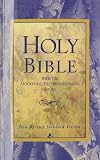
My latest deep dive subject is biblical history, and on top of my decades-old New Oxford Annotated Bible and my recently purchased Harper Collins Study Bible, I wanted a version without all the extras that might be easier for just reading without distraction. I'm sure not everyone is reviewing the same version here. Mine is the paperback, which was a bargain at $5.99 on Amazon. The print is tiny--I mean the scriptures themselves--and the short footnotes, which are just references or show more alternate readings, are smaller still. The print does appear readable, however, and there may be room for a note here or there, although the margins are very small. I'll treat this as almost a disposable version, and see how long it lasts! I must add though that despite its reputation for being the most accurate translation, the NRSV lacks the poetry that I have come to associate with the bible. No one will be quoting many of these translations alongside Shakespeare, that's for sure. show less
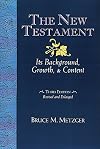
My son’s gone back to college. He left this book lying around on his bedroom floor, so I decided to read it. After all, I’m leading a Bible study on the book of Mark on Tuesday mornings. Knowing more about the New Testament, Its Background, Growth and Content, can only help.
Since the book was clearly a college text book I wasn’t sure how far I’d get. After all, college texts can be really slow to read. But I actually finished the book in two days and could scarcely put it down.
Since show more I grew up with a “Catholic” Bible, I was fascinated to learn more about the history of intertestament times and the Maccabean revolt. The insights into all the different groups of people in Judea at the time of Christ help bring a lot of the Gospel stories and Christ’s teachings to life. And the information on local customs, in action and in speech, are truly amazing.
Interesting examples included the use of Judean overstatement (as opposed to British understatement I suppose), and picturesque speech (logs and specks in peoples’ eyes). Rhythm and puns that we miss in translation were quite fascinating too. And the insights into how texts were collected, combined, used and preserved make the whole question of where our New Testament comes from much more interesting and well-grounded, besides providing a logical background to modern arguments about “hidden” and “lost” books.
I liked the fact that the author didn’t shy away from difficulties. He doesn’t assume that every word in some favorite translation is perfectly preserved, but instead looks at how the translations were made, how changes crept in, and how well-researched the analysis of those changes is. I’ve always known that the historical evidence for the Bible rivals and probably beats that for the Roman documents I studied in Latin in school, but it was nice to see the arguments so clearly laid out.
I really enjoyed this book. I don’t know that I’m ready to take an exam on it, and I probably don’t want to go back to college to find out. But I’m glad my son left it lying around. show less
Since the book was clearly a college text book I wasn’t sure how far I’d get. After all, college texts can be really slow to read. But I actually finished the book in two days and could scarcely put it down.
Since show more I grew up with a “Catholic” Bible, I was fascinated to learn more about the history of intertestament times and the Maccabean revolt. The insights into all the different groups of people in Judea at the time of Christ help bring a lot of the Gospel stories and Christ’s teachings to life. And the information on local customs, in action and in speech, are truly amazing.
Interesting examples included the use of Judean overstatement (as opposed to British understatement I suppose), and picturesque speech (logs and specks in peoples’ eyes). Rhythm and puns that we miss in translation were quite fascinating too. And the insights into how texts were collected, combined, used and preserved make the whole question of where our New Testament comes from much more interesting and well-grounded, besides providing a logical background to modern arguments about “hidden” and “lost” books.
I liked the fact that the author didn’t shy away from difficulties. He doesn’t assume that every word in some favorite translation is perfectly preserved, but instead looks at how the translations were made, how changes crept in, and how well-researched the analysis of those changes is. I’ve always known that the historical evidence for the Bible rivals and probably beats that for the Roman documents I studied in Latin in school, but it was nice to see the arguments so clearly laid out.
I really enjoyed this book. I don’t know that I’m ready to take an exam on it, and I probably don’t want to go back to college to find out. But I’m glad my son left it lying around. show less
Lists
Awards

You May Also Like


Associated Authors
Statistics
- Works
- 82
- Also by
- 9
- Members
- 17,156
- Popularity
- #1,295
- Rating
- 4.1
- Reviews
- 77
- ISBNs
- 260
- Languages
- 8
- Favorited
- 9
