

Kurt Aland (1915–1994)
Author of Synopsis of the Four Gospels
About the Author
Image credit: Kurt Aland
Series
Works by Kurt Aland
Greek New Testament: With English Introduction including Greek/English dictionary/flexible (1983) 884 copies, 2 reviews
The Text of the New Testament: An Introduction to the Critical Editions and to the Theory and Practice of Modern Textual Criticism (1981) 617 copies, 4 reviews
Novum Testamentum Graece Et Latine - Greek/Latin New Testament (1906) — Contributor, some editions — 461 copies, 1 review
The Greek New Testament (Includes Dictionary) (Greek and English Edition) (2007) 457 copies, 2 reviews
A History of Christianity: From the Beginnings to the Threshold of the Reformation (History of Christianity) (Volume 1) (1980) 46 copies
Martin Luther's 95 Theses: With the Pertinent Documents from the History of the Reformation (1967) 39 copies
The New Testament in Greek and English: The Greek Text of the United Bible Societies and Today's English Version (1966) 30 copies
Text Und Textwert Der Griechischen Handschriften Des Neuen Testaments (Arbeiten Zur Neutestamentlichen Textforschung) (1987) 6 copies
Text und Textwert der griechischen Handschriften des Neuen Testaments II, Band 2, Die Paulinischen Briefe. Der 1. und der 2. Korintherbrief (1991) 4 copies
Geist und Geschichte der Reformation : Festgabe Hanns Rückert zum 65. Geburtstag : Dargebracht von Freunden, Kollegen und Schülern (1967) 4 copies
Biblische Papyri, Altes Testament, Neues Testament, Varia, Apokryphen (Patristische Texte Und Studien) (1976) 4 copies
Das Evangelium Urtext und deutsche Übertragung ; eine Auswahl aus dem Neuen Testament (2014) 3 copies
Das Matthausevangelium: Bd 2.2: Resultate Der Kollation Und Hauptliste Sowie Erganz ... ... Zur Neutestamentlichen Textforschung) (2003) 3 copies
Luther Deutsch: Der Reformator. (Bd. 2): Bd. 2 (Veroffentlichungen Des Max-Planck-Instituts Fur Geschichte) (1981) 3 copies
Studia Patristica: Papers presented to the Second International Conference on Patristic Studies held at Christ Church, Oxford, 1955 (1957) 3 copies
Materialien Zur Neutestamentlichen Handschriftenkunde I (Arbeiten zur neutestamentlichen Textforschung) (German Edition) (1969) 2 copies
Vad säger Luther? : ett Luther-lexikon : [1700 citat under 575 huvudord alfabetiskt ordnade] 2 copies
Luther Deutsch : Die Werke Martin Luthers in neuer Auswahl für die Gegenwart (Registerband) (1984) 2 copies
The Problem of Anonymity and Pseudonymity in Christian Literature of the First Two Centuries 2 copies
Die Korrespondenz Heinrich Melchior Mühlenbergs. aus der Anfangszeit des deutschen Luthertums in Nordamerika / Band IV, 1769-1776 (2015) 2 copies
Neutestamentliche Entwurfe (Theologische Bucherei ; Bd. 63 : Neues Testament) (German Edition) (1979) 2 copies
Studien zum Neuen Testament (Texte und Untersuchungen zur Geschichte der altchristlichen Literatur, 68) (German Edition) (1958) 1 copy
Luther Deutsch. Die Werke Martin Luthers in neuer Auswahl für die Gegenwart. Erzählungsband III (1957) 1 copy
Luther Deutsch : Die Werke Martin Luthers in neuer Auswahl für die Gegenwart (Band 10: Die Briefe) 1 copy
Studia evangelica, Vol. I 1 copy
Text und Textwert der griechischen Handschriften des Neuen Testaments. I, Die katholischen Briefe (2014) 1 copy
Luther Deutsch : Die Werke Martin Luthers in neuer Auswahl für die Gegenwart (Band 9: Tischreden) 1 copy
Luther Deutsch : Die Werke Martin Luthers in neuer Auswahl für die Gegenwart (Lutherlexikon) (1974) 1 copy
Papers presented to the International Congress on "The Four Gospels in 1957" held at Christ Church, Oxford, 1957 (1959) 1 copy
Associated Works
Novum Testamentum Graecum, Editio Critica Maior: Parallel Pericopes - Special Volume Regarding the Synoptic Gospels (2005) — Editor, some editions — 6 copies
Zeitrechnung der römischen kaiserzeit, des Mittelalters und der neuzeit für die jahre 1-2000 n. Chr. (2013) — Composer, some editions — 5 copies
Das Neue Testament Auf Papyrus: Die Katholischen Briefe (Arbeiten Zur Neutestamentlichen Texforschung, Band 6) (German Edition) (1986) — Foreword — 4 copies
Humanismus, Renaissance und Reformation. Heilige, Ketzer, Reformatoren. (Epochen der Weltgeschichte in Biographien, Band 25) (1983) — Author — 3 copies
Net Greek English Diglot Nt 1 copy
Tagged
Common Knowledge
- Birthdate
- 1915-03-25
- Date of death
- 1994-04-13
- Gender
- male
- Education
- University of Berlin
- Occupations
- theologian
biblical scholar - Organizations
- Institute for New Testament Textual Research
Saxonian Academy
Goettingen Academy
American Bible Society
Society of Biblical Literature - Awards and honors
- Fellow British Academy
Fellow Academy of the Netherlands - Relationships
- Aland, Barbara (widow)
- Nationality
- Germany
- Birthplace
- Berlin, Brandenburg, Germany
- Places of residence
- Berlin, Brandenburg, Germany
Münster, Nordrhein-Westfalen, Germany - Place of death
- Münster, Nordrhein-Westfalen, Germany
- Associated Place (for map)
- Nordrhein-Westfalen, Germany
Members
Reviews
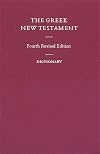
Reviewing or rating the GNT seems somewhat impertinent. I have been reading/rereading parts of the GNT since graduate school over three decades ago (3rd ed then, 4th now because I haven't got around to buying the 5th), so it may live in currently reading on a quasi-permanent basis.
The Gospels are the main course. Mark's Greek is terse and abrupt, the syntax somewhat jagged. Everyone is constantly afraid and the genuine ending at 16.8 ἐφοβοῦντο γάρ characterizes it well. It has show more the ring of authenticity in a way that Luke's novelization doesn't. Although John remains my favorite.
There is a lot (too much) of Paul. He has his moments, but often leaves you wondering what the bishops at Nicaea were thinking when they put it in the canon. show less
The Gospels are the main course. Mark's Greek is terse and abrupt, the syntax somewhat jagged. Everyone is constantly afraid and the genuine ending at 16.8 ἐφοβοῦντο γάρ characterizes it well. It has show more the ring of authenticity in a way that Luke's novelization doesn't. Although John remains my favorite.
There is a lot (too much) of Paul. He has his moments, but often leaves you wondering what the bishops at Nicaea were thinking when they put it in the canon. show less
The Text of the New Testament: An Introduction to the Critical Editions and to the Theory and Practice of Modern Textual Criticism by Kurt Aland

It will perhaps tell you something that the leading book on New Testament Textual Criticism still hasn't gotten a LibraryThing review after more than a decade in print.
Textual criticism is the task of comparing late copies of a work to determine what the lost original said. Almost every ancient book -- from the Iliad to the Bible to the Canterbury Tales -- required textual criticism. But textual criticism of the New Testament is a bit different.
Some of this is because it's the New Testament. show more That of course means that people have a somewhat different attitude about it. But the main reason is simply that there are so many New Testament manuscripts -- about three thousand in Greek, plus lectionaries, plus translations into other languages, all of which have some role to play in reconstructing the text.
So, obviously, there is a great need for an introduction.
Sadly, this book, while very strong in some regards, is weak in others. It's not because it's a translation from German; the translation is excellent. The problem is in the German version. The Alands provide a good catalog of the materials of textual criticism (the manuscripts, translations etc.). There is some circularity in their assessments of the materials, but this shouldn't harm the beginner very much.
But while they do a good job with the "what" of textual criticism, the "how" is badly neglected, and the "why" is rather weak as well. The Alands have a list of canons of criticism -- that is, ideas for how one reconstructs a text -- but their examples are weak. This book doesn't really give a feeling for how to be a textual critic. And, since that's the whole point of the exercise, it's a real defect. This is a good book for a textual critic to have. But it can't really be the only book. show less
Textual criticism is the task of comparing late copies of a work to determine what the lost original said. Almost every ancient book -- from the Iliad to the Bible to the Canterbury Tales -- required textual criticism. But textual criticism of the New Testament is a bit different.
Some of this is because it's the New Testament. show more That of course means that people have a somewhat different attitude about it. But the main reason is simply that there are so many New Testament manuscripts -- about three thousand in Greek, plus lectionaries, plus translations into other languages, all of which have some role to play in reconstructing the text.
So, obviously, there is a great need for an introduction.
Sadly, this book, while very strong in some regards, is weak in others. It's not because it's a translation from German; the translation is excellent. The problem is in the German version. The Alands provide a good catalog of the materials of textual criticism (the manuscripts, translations etc.). There is some circularity in their assessments of the materials, but this shouldn't harm the beginner very much.
But while they do a good job with the "what" of textual criticism, the "how" is badly neglected, and the "why" is rather weak as well. The Alands have a list of canons of criticism -- that is, ideas for how one reconstructs a text -- but their examples are weak. This book doesn't really give a feeling for how to be a textual critic. And, since that's the whole point of the exercise, it's a real defect. This is a good book for a textual critic to have. But it can't really be the only book. show less
The text of the New Testament : an introduction to the critical editions and to the theory and practice of modern textual criticisms by Kurt Aland

This was fascinating reading. I certainly did not spend the time on the examples and lists that a student would have to, but the general information was valuable. However, anyone trying to use it needs to be aware that 'a beginner' is someone with a few years of Greek. The big thing I learned is that I don't need the critical apparatus. I'm perfectly willing to do with the results of the research the Alands and others have put in. Maybe some day when I get to the rank of beginner...
There are show more always going to be problems with a book that is 30 years old. (Even the second edition is nearly 20.) While the Alands celebrate the advances the computer age has brought to their work, I spent time today discussing what texts are available (or will be available soon) to down load or at least use online with my iPad. When it comes to advice on reference materials anything this old is useless. Not just the specific books, but how they are used is different since we have apps. show less
There are show more always going to be problems with a book that is 30 years old. (Even the second edition is nearly 20.) While the Alands celebrate the advances the computer age has brought to their work, I spent time today discussing what texts are available (or will be available soon) to down load or at least use online with my iPad. When it comes to advice on reference materials anything this old is useless. Not just the specific books, but how they are used is different since we have apps. show less
The Text of the New Testament: An Introduction to the Critical Editions and to the Theory and Practice of Modern Textual Criticism by Kurt Aland

I'm not a scholar, but a blogger researching textual criticism. This book is written for people who are either experienced in TC, or are willing to dedicate a significant amount of time to learn about it. This book would not be a good choice for someone who just wants an introduction to TC. Knowing Greek would help in a number of places, but I was able to get quite a bit out of the book without knowing Greek.
You May Also Like


Associated Authors
Statistics
- Works
- 88
- Also by
- 8
- Members
- 6,838
- Popularity
- #3,574
- Rating
- 4.4
- Reviews
- 20
- ISBNs
- 101
- Languages
- 6
- Favorited
- 1