
John Woolman (1) (1720–1772)
Author of The Autobiography of Benjamin Franklin / The Journal of John Woolman / Fruits of Solitude
For other authors named John Woolman, see the disambiguation page.
About the Author
Image credit: Courtesy of the NYPL Digital Gallery (image use requires permission from the New York Public Library)
Works by John Woolman
The Autobiography of Benjamin Franklin / The Journal of John Woolman / Fruits of Solitude (1909) 928 copies, 5 reviews
Walking Humbly With God: Selected Writings of John Woolman (Upper Room Spiritual Classics. Series 3) (2000) 60 copies, 1 review
Some considerations on the keeping of Negroes, 1754 ; Considerations on keeping Negroes, 1762 (1976) 25 copies
The wisdom of John Woolman : with a selection from his writings as a guide to the seekers of today 5 copies
Associated Works
The Heath Anthology of American Literature, Volume 1 (1990) — Contributor, some editions — 252 copies, 1 review
American Antislavery Writings: Colonial Beginnings to Emancipation (2012) — Contributor — 145 copies
War No More: Three Centuries of American Antiwar and Peace Writing (2016) — Contributor — 108 copies, 2 reviews
The Heath Anthology of American Literature, Concise Edition (2003) — Contributor — 72 copies, 1 review
Out of the Best Books: An Anthology of Literature, Vol. 2: Love, Marriage, and the Family (1966) — Contributor — 36 copies
American Literature: The Makers and the Making (In Two Volumes) (1973) — Contributor, some editions — 24 copies
Tagged
Common Knowledge
- Birthdate
- 1720-10-19
- Date of death
- 1772-10-07
- Gender
- male
- Occupations
- tradesman
tailor
minister
abolitionist - Organizations
- Society of Friends
- Short biography
- John Woolman (October 19, 1720 (O.S.)/October 30, 1720 (N.S.)– October 7, 1772) was an American merchant, tailor, journalist, Quaker preacher, and early abolitionist during the colonial era.
- Nationality
- England
- Birthplace
- Province of New Jersey
- Place of death
- York, Yorkshire, England, UK
- Burial location
- York, England
Members
Reviews
After reading the first volume of President Eliot's Five Foot Shelf, I'm afraid I really do wonder about the President's mindset. It's not that these works of Mr. Franklin, Mr. Woolman and Mr. Penn are not worth reading--they certainly are, and in the cases of Mr. Woolman and Mr. Penn, in parts "inspiring". But all three raise more questions than they provide answers. I read Franklin in high school and remembered mostly his table or scheme for self-improvement, which to a high school boy show more seemed rather absurd. This time, though, I found more sympathy for old Ben and noticed what I had not seen before, his humorous touches.
But why in the world would these be chosen as the first volume of Mr. Eliot's ambitious effort? Was he serious? If so, what was his point? show less
But why in the world would these be chosen as the first volume of Mr. Eliot's ambitious effort? Was he serious? If so, what was his point? show less

This pamphlet is a reprint of Woolman's essay (first published in 1793, after his death), along with a brief introduction by Phillips Moulton. Woolman wrote a rambling argument clearly attributing poverty, oppression, and war to the accumulation of wealth and its attendant power. He is very plain, though gentle, in his condemnation of oppression of the poor and slaves, of the desire for gathering wealth for luxury and ease, and of the lack of empathy, as utterly contrary to God's principle show more of universal righteousness, justice, and love. Woolman calls for us to live plain and simple lives, without luxury, so we can live in brotherhood (sic), happiness, and close relationship with God.
Woolman is our great Quaker prophet, and his 18th century English (totally comprehensible) still speaks powerfully and eloquently to us.
Woolman is indeed remarkable for his love for everybody, expressed in his gentleness as he explains the depth of the challenge to us. It is interesting to note some of our other wonderful more recent Quaker prophets writing about poverty and wealth, such as Mildred Binns Young (PHPs 90, 109, and 145), Alice and Staughton Lynd (PHP 326), David Morse (PHP 356), Tom Head (PHP 405), Paul Christiansen (PHP 429), and Steve Chase (PHP431). show less
Woolman is our great Quaker prophet, and his 18th century English (totally comprehensible) still speaks powerfully and eloquently to us.
Woolman is indeed remarkable for his love for everybody, expressed in his gentleness as he explains the depth of the challenge to us. It is interesting to note some of our other wonderful more recent Quaker prophets writing about poverty and wealth, such as Mildred Binns Young (PHPs 90, 109, and 145), Alice and Staughton Lynd (PHP 326), David Morse (PHP 356), Tom Head (PHP 405), Paul Christiansen (PHP 429), and Steve Chase (PHP431). show less
Born in 1720, John Woolman is, more frequently than any other, dubbed the Quaker saint. He practiced what he preached, and it was rarely an easy or popular path that he chose. Published in 1793, A Plea for the Poor was his treatise on the causes of poverty, a gently chastising tract addressed to the wealthy. Poverty, he wrote, is caused by wasteful consumption, and the antidote is to lead a simpler life.
He addressed the evils of slavery as an example of an institution that exploits one show more class to support the luxurious lifestyle of another. Woolman was one of the first among Quakers to condemn the practice and became quite unpopular among those of his Quaker brethren who depended on slavery to operate their plantations. But by 1830, the Religious Society of Friends (Quakers) were requiring their membership to free their slaves; their activist stance as abolitionists was underway.
In typical Quaker fashion, Woolman addressed the subject of slavery thoughtfully and tactfully: “When the ancestors of these people were imported from Africa, some I believe bought them with intent to treat them kindly as slaves. They bought them as though those violent men had a right to sell them, but I believe without weightily considering the nature and tendency of such a bargain, and thus building on an unrighteous foundation, a veil was gradually drawn over a practice very grievous and afflicting to great numbers of the Gentiles.” show less
He addressed the evils of slavery as an example of an institution that exploits one show more class to support the luxurious lifestyle of another. Woolman was one of the first among Quakers to condemn the practice and became quite unpopular among those of his Quaker brethren who depended on slavery to operate their plantations. But by 1830, the Religious Society of Friends (Quakers) were requiring their membership to free their slaves; their activist stance as abolitionists was underway.
In typical Quaker fashion, Woolman addressed the subject of slavery thoughtfully and tactfully: “When the ancestors of these people were imported from Africa, some I believe bought them with intent to treat them kindly as slaves. They bought them as though those violent men had a right to sell them, but I believe without weightily considering the nature and tendency of such a bargain, and thus building on an unrighteous foundation, a veil was gradually drawn over a practice very grievous and afflicting to great numbers of the Gentiles.” show less
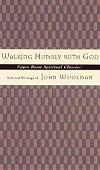
John Woolman's Journal reveals the development of a Christian soul seeking to know and do God's will in all things. He lived simply, in solidarity with the poor and oppressed. He traveled throughout the American colonies in the mid-1700's, urging other Quakers to free their slaves and to stand with him against slavery.
Lists
You May Also Like


Associated Authors
Statistics
- Works
- 19
- Also by
- 7
- Members
- 2,203
- Popularity
- #11,646
- Rating
- 4.1
- Reviews
- 28
- ISBNs
- 55
- Languages
- 2