

Kitty Burns Florey
Author of Sister Bernadette's Barking Dog
About the Author
Works by Kitty Burns Florey
Associated Works
Tagged
Common Knowledge
- Canonical name
- Florey, Kitty Burns
- Birthdate
- 1943
- Gender
- female
- Education
- Boston University (BA | English literature)
Syracuse University (MA | English literature) - Occupations
- editor
- Nationality
- USA
- Places of residence
- Syracuse, New York, USA
Boston, Massachusetts, USA
New Haven, Connecticut, USA
Amherst, Massachusetts, USA
Brooklyn, New York, USA - Associated Place (for map)
- USA
Members
Reviews
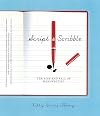
Here it is, folks – the quintessential book about writing – handwriting, that is; penmanship – and more information about the topic than you ever imagined could possibly exist about it. For me, it was a page-turner, and even more fascinating than her previous book, Sister Bernadette’s Barking Dog, which is a treatise about the lost art of diagramming sentences.
I may as well get this out of the way now… There are two flaws in the book. One is a typographical error. (In fact, there show more are several.) The other, though is more annoying than I care to think about. In Chapter One, the superscript indices in the text are out-of-sync with the marginotes (a word I just coined to refer to footnotes printed in the margins) they are supposed to reference. The marginotes are numbered correctly; it’s the indices that are messed up. There are two #1s, then it syncs up at #6, only to reuse numbers 5 and 6 again, so the they’re off by two until the end of the chapter (the longest one in the book). Am I being too picky? It drove me nuts until I figured out where the problems occurred. `
Beyond that, this is a delightful book and I often refer to it in some things that I am currently writing. I learned the Palmer Method in grade school, but had never heard of Spencerian Script, and I was vaguely aware of the term “Copperplate”. Now, I know it all. It hasn’t improved my penmanship at all, but I am at least more aware of the mechanics when I write now. My only question about the more flowery script styles is this: How is it that people had the ~time~ to write that way?
This is a must-read for all those who remember how to use something other than a keyboard or a cell phone to communicate. Loved it! show less
I may as well get this out of the way now… There are two flaws in the book. One is a typographical error. (In fact, there show more are several.) The other, though is more annoying than I care to think about. In Chapter One, the superscript indices in the text are out-of-sync with the marginotes (a word I just coined to refer to footnotes printed in the margins) they are supposed to reference. The marginotes are numbered correctly; it’s the indices that are messed up. There are two #1s, then it syncs up at #6, only to reuse numbers 5 and 6 again, so the they’re off by two until the end of the chapter (the longest one in the book). Am I being too picky? It drove me nuts until I figured out where the problems occurred. `
Beyond that, this is a delightful book and I often refer to it in some things that I am currently writing. I learned the Palmer Method in grade school, but had never heard of Spencerian Script, and I was vaguely aware of the term “Copperplate”. Now, I know it all. It hasn’t improved my penmanship at all, but I am at least more aware of the mechanics when I write now. My only question about the more flowery script styles is this: How is it that people had the ~time~ to write that way?
This is a must-read for all those who remember how to use something other than a keyboard or a cell phone to communicate. Loved it! show less
Sister Bernadette's barking dog : the quirky history and lost art of diagramming sentences by Kitty Burns Florey
I've never liked writing, but in high school I discovered that I could enjoy grammar and have fun with diagramming sentences. I haven't been asked to diagram a sentence since high school, and the practice receded from my memory until I came across this book. The author reminisces about the nun who taught her to diagram sentences, provides a history of the origin and eventual decline of sentence diagramming, and comments on diagrams of sentences taken from the works of well known authors like show more Gertrude Stein, Henry James, Ernest Hemingway, James Fenimore Cooper, Marcel Proust, Joyce Carol Oates, John Updike, F. Scott Fitzgerald, and Eudora Welty. Some of these authors would have been taught to diagram sentences during their school days. Florey considers whether sentence diagramming made them better writers or imposed boundaries that they had to escape in order to succeed. Despite her professed love for sentence diagramming, the author is doubtful about its effectiveness as a teaching method. I was disappointed to learn from the acknowledgments at the end of the book that another person had created the complex diagrams that illustrate the book. show less
Sister Bernadette's Barking Dog: The Quirky History and Lost Art of Diagramming Sentences by Kitty Burns Florey
As a grammar geek, I found this book about the lost art of diagramming sentences quite charming. It drags at times and is pretentious in places, but it rises in others to be downright funny. Case in point: Burns Florey takes issue with whether sentence diagramming actually improves one's grammar. She argues that even bad sentences can be diagrammed and puts forward (among others) two of former President George W. Bush's as an example. The sentences: "(W)e want our teachers to be trained so show more they can meet the obligations, their obligations as teachers. We want them to know how to teach the science of reading in order to make sure there's not this kind of federal -- federal cufflink," can indeed be diagrammed. She goes on to say "...although diagramming a sentence can sometimes expose its structural problems, it doesn't touch the deeper issues. A diagram can't ferret out a lie, correct a lapse in logic, or explain a foray into sheer lunacy." Now ain't that the truth!
For language lovers, it's worth it to pick up this book just to see the diagrams of sentences from some famous authors, including the verbose Henry James and Proust. show less
For language lovers, it's worth it to pick up this book just to see the diagrams of sentences from some famous authors, including the verbose Henry James and Proust. show less
Sister Bernadette's Barking Dog: The Quirky History and Lost Art of Diagramming Sentences by Kitty Burns Florey

I got this recommendation from rebeccanyc, and picked up a used copy at a local bookshop. It’s an engaging history of how diagramming sentences came to be so in vogue in American grammar schools. I was intrigued by the topic because I distinctly remember having to diagram sentences around the fourth or fifth grade, and I remember really liking it. It appeals to my sense of order and slotting things into their appropriate places. My memory of exactly how to diagram has faded, however, and I show more had hoped this book would fill in the gaps. It didn’t really do that, because there isn’t much detail about the nuts and bolts of diagramming. That was a disappointment but overall I’m happy to know more about how diagramming sentences came to be. Florey peppers the book liberally with very engaging side notes about authors like Gertrude Stein and others whose prose is virtually impossible to diagram. Having only read a little bit of Stein, I’d have to agree on that point! show less
Lists
Awards


You May Also Like


Associated Authors
Statistics
- Works
- 11
- Also by
- 1
- Members
- 1,194
- Popularity
- #21,529
- Rating
- 3.5
- Reviews
- 55
- ISBNs
- 51
- Favorited
- 1

