
George Jonas (1935–2016)
Author of Vengeance: The True Story of an Israeli Counter-Terrorist Team
About the Author
George Jonas was born on June 15, 1935 in Budapest, Hungary. Without formal education beyond secondary school, he worked in radio broadcasting in Budapest. He emigrated to Canada after the Soviet Union invaded Hungary in November 1956 to suppress a popular revolt. For more than three decades, he show more was affiliated with the Canadian Broadcasting Corporation. He wrote, produced, and edited dramas and documentary programs including The Scales of Justice. As a newspaper columnist, he worked at The Toronto Sun for 20 years before joining The National Post. He was the author of over 15 fiction and non-fiction books including Beethoven's Mask, Final Decree, A Passion Observed, Reflections on Islam, and By Persons Unknown: The Strange Death of Christine Demeter written with Barbara Amiel. His book, Vengeance: The True Story of an Israeli Counter-Terrorist Team, was adapted into a television movie entitled Sword of Gideon and a movie entitled Munich. His collections of poetry include The Absolute Smile and Selected Poems, 1967-2011. He also wrote the librettos for two one-act operas by Tibor Polgar. He died on January 10, 2016 at the age of 80. (Bowker Author Biography) show less
Works by George Jonas
Vozes da incerteza 1 copy
The happy hungry man 1 copy
Tagged
Common Knowledge
- Birthdate
- 1935-06-15
- Date of death
- 2016-01-10
- Gender
- male
- Education
- Lutheran Gymnasium (Hungary)
- Occupations
- journalist
newspaper columnist - Organizations
- Canadian Broadcasting Corporation
Toronto Sun
National Post
Radio Budapest - Relationships
- Amiel, Barbara (wife)
- Short biography
- After attending the Lutheran Gymnasium between 1945 and 1954, Jonas worked briefly as a program editor for Radio Budapest. Following the Hungarian uprising of 1956, he emigrated to Canada. He became a script editor (1962), and later TV producer (1971), for the Canadian Broadcasting Corporation, where he worked until 1985. Since then he has been a freelance journalist, writer, and TV producer based in Toronto. In 2005 he has been appointed Senior Policy Advisor to the Aurea Foundation.
- Nationality
- Canada
- Birthplace
- Budapest, Hungary
- Places of residence
- Budapest, Hungary
Toronto, Ontario, Canada - Place of death
- Toronto, Ontario, Canada
- Map Location
- Canada
Members
Reviews

I think I owe Steven Spielberg a half-apology for bashing Munich two years ago. I still have objections toward his portrayal of the Mossad agents in the film. However, I was wrong when I accused him for disrespecting the Mossad (and the Israeli government, in that case), because they selected "Avner" (not a real name, obviously) who was an inexperienced junior field agent to lead a five-man team to avenge the deaths of eleven Israeli athletes massacred by the Black September terrorists show more during the Munich Olympics in 1972.
Apparently, that WAS the truth. Of course, Avner used to serve as a commando in one of Israelis’ many special forces, but being an intel proves to be much different than being a mere soldier.
This book is written using a first-hand account notably from Avner himself. The description provided on the team’s activities was a horrifying/mesmerizing/heart-wrenching/mind-boggling one. The author admitted that certain details were incapable of being verified and he had to alter some of them (esp. names) to protect his sources.
In my opinion, the author had done a great job as a biographer/researcher. He clearly separated his own opinion from other people’s. The prologue about the Munich massacre…OMG. It made me shuddered. I just can’t believe the Germans were so stupid – whilst they wanted to erase their bad image after more than 30 years anniversary of Nazi’s atrocities – they acted carelessly in dealing with the hostage situation. Thank goodness finally they came to their senses, admitted they did not have a special unit for counter-terrorism by then, so they asked Israel to help them establishing the GSG-9.
Anyway, the following chapters told about the journey of Avner’s team, mostly in European countries (Rome, Paris, Athens, etc) and also Beirut and Cyprus. His team consisted of five very different individuals: the ex-commando, youngest-of-the-lot Avner (team leader), the quiet, laid-back Hans (document forger), the eccentric Robert (bomb maker), the happy-go-lucky, practical Steve (driver, route strategist), and last but not least, the oldest, most experienced, calm, cautious Carl.
Avner was asked to do the assignment (i.e. assassinating 11 top terrorists responsible for the Munich massacre) by Golda Meir herself in her apartment. Well, who could refuse that great woman’s request? Not Avner of course. There's a catch. Mossad and the government would not acknowledge them and their operation.
Mossad was genious, gotta admit that. They used one team as a self-contained unit, supplied with nothing but a hit-list and funds, to make its own way in the Europe underground in exactly the same way as any other small terrorist cell. To their credit, the Mossad also strongly prohibited collateral damage. They’d rather have the team to tail a person for months rather than kill him at the spot but with a non-combatant also killed.
The narrations for each mission blew me away. Amazingly real and meticulous. The methods used were varied, from simple assassination using Berettas, or putting six tailor-made, localized bombs under the target’s bed. I was amused by the fact that Avner’s team “outsourced” some of the supporting works to a French privateer group called “Le Group” (not a real name again, I assume). Well, well, living underground is expensive and difficult. One always needs supports for safe houses, logistics, weapon materials, surveillance, etc.
Another interesting aspect in this book is the human-interest issue. Two years living underground, with rare visits to their families, would definitely take its toll on the team members, including Avner. He's a sabra (an Israeli who is born in Israel), but he never really felt home in Israel. This is where Spielberg was wrong. In Munich, Eric Bana played a more frustrated Avner (close to going loco, I daresay). This book, which was supposed to be Spielberg’s main source, told otherwise. Yes, Avner was having reasonable and not-baseless paranoia, but he neither regretted doing the mission, or whether it made any difference (which it did) nor completely blaming the Mossad’s ruthless and cynical actions for everything bad that happened.
In general, I think counter-terrorism will always be controversial. However, counter-terrorism could be classified as an act or war, and terrorism as a war crime. The maps of the world are drawn in blood. That's the sad fact. Le monde, c'est la f*cking guerre, no? show less
Apparently, that WAS the truth. Of course, Avner used to serve as a commando in one of Israelis’ many special forces, but being an intel proves to be much different than being a mere soldier.
This book is written using a first-hand account notably from Avner himself. The description provided on the team’s activities was a horrifying/mesmerizing/heart-wrenching/mind-boggling one. The author admitted that certain details were incapable of being verified and he had to alter some of them (esp. names) to protect his sources.
In my opinion, the author had done a great job as a biographer/researcher. He clearly separated his own opinion from other people’s. The prologue about the Munich massacre…OMG. It made me shuddered. I just can’t believe the Germans were so stupid – whilst they wanted to erase their bad image after more than 30 years anniversary of Nazi’s atrocities – they acted carelessly in dealing with the hostage situation. Thank goodness finally they came to their senses, admitted they did not have a special unit for counter-terrorism by then, so they asked Israel to help them establishing the GSG-9.
Anyway, the following chapters told about the journey of Avner’s team, mostly in European countries (Rome, Paris, Athens, etc) and also Beirut and Cyprus. His team consisted of five very different individuals: the ex-commando, youngest-of-the-lot Avner (team leader), the quiet, laid-back Hans (document forger), the eccentric Robert (bomb maker), the happy-go-lucky, practical Steve (driver, route strategist), and last but not least, the oldest, most experienced, calm, cautious Carl.
Avner was asked to do the assignment (i.e. assassinating 11 top terrorists responsible for the Munich massacre) by Golda Meir herself in her apartment. Well, who could refuse that great woman’s request? Not Avner of course. There's a catch. Mossad and the government would not acknowledge them and their operation.
Mossad was genious, gotta admit that. They used one team as a self-contained unit, supplied with nothing but a hit-list and funds, to make its own way in the Europe underground in exactly the same way as any other small terrorist cell. To their credit, the Mossad also strongly prohibited collateral damage. They’d rather have the team to tail a person for months rather than kill him at the spot but with a non-combatant also killed.
The narrations for each mission blew me away. Amazingly real and meticulous. The methods used were varied, from simple assassination using Berettas, or putting six tailor-made, localized bombs under the target’s bed. I was amused by the fact that Avner’s team “outsourced” some of the supporting works to a French privateer group called “Le Group” (not a real name again, I assume). Well, well, living underground is expensive and difficult. One always needs supports for safe houses, logistics, weapon materials, surveillance, etc.
Another interesting aspect in this book is the human-interest issue. Two years living underground, with rare visits to their families, would definitely take its toll on the team members, including Avner. He's a sabra (an Israeli who is born in Israel), but he never really felt home in Israel. This is where Spielberg was wrong. In Munich, Eric Bana played a more frustrated Avner (close to going loco, I daresay). This book, which was supposed to be Spielberg’s main source, told otherwise. Yes, Avner was having reasonable and not-baseless paranoia, but he neither regretted doing the mission, or whether it made any difference (which it did) nor completely blaming the Mossad’s ruthless and cynical actions for everything bad that happened.
In general, I think counter-terrorism will always be controversial. However, counter-terrorism could be classified as an act or war, and terrorism as a war crime. The maps of the world are drawn in blood. That's the sad fact. Le monde, c'est la f*cking guerre, no? show less

Sarà tutto vero?
Sarà tutto falso?
Diciamo che è vero un po' e non vero un po' u_u
In fondo se uno vuole informarsi su questa storia ci saranno altri libri, immagino... dei saggi più autorevoli, non come questo che è molto ma molto romanzato.
In ogni caso, chissenefrega della storia vera, è un ottima lettura, appassionante, intrigante e scorrevole. Anche se di parte >_>
Mi era piaciuto quando l'avevo letto per la prima volta anni fa e mi è piaciuto anche stavolta u_u
Sarà tutto falso?
Diciamo che è vero un po' e non vero un po' u_u
In fondo se uno vuole informarsi su questa storia ci saranno altri libri, immagino... dei saggi più autorevoli, non come questo che è molto ma molto romanzato.
In ogni caso, chissenefrega della storia vera, è un ottima lettura, appassionante, intrigante e scorrevole. Anche se di parte >_>
Mi era piaciuto quando l'avevo letto per la prima volta anni fa e mi è piaciuto anche stavolta u_u
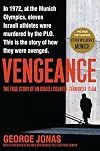
The thrills, mystery, backstabbing reads like a Hollywood movie. Though the author makes clear of his position in this whole thing, the story does have an unbiased views (on certain matters at least). However, the purpose of this book is not about who's wrong or right. I feel it's more about one man's take on the whole issue of whether counter-terrorism, in whatever from, really works or not and whether it's worth it at all.
Quite easy to read considering that I don't know much about the show more Israel-Palestine fued and I don't read a lot of non-fictions. show less
Quite easy to read considering that I don't know much about the show more Israel-Palestine fued and I don't read a lot of non-fictions. show less

I read this autobiography sometime between my grade 11 and 12 law classes, just before Eddie Greenspan participated in a televised mock re-trial of Louis Riel on the CBC, not because I wanted to be a lawyer but to fight the crushing boredom and tedium of high school. Though this biography was dry and dated, it nevertheless conveyed to me in clear and effective writing a sense of the practice of law, the usual legwork, its tedium, and the hard work necessary to succeed. However, there really show more needs to be a revised edition, especially one that covers Greenspan's most recent defence cases, e.g. Garth Drabinsky and Conrad Black. show less
Lists
Edgar Award (1)
Awards


You May Also Like


Associated Authors
Statistics
- Works
- 22
- Members
- 727
- Popularity
- #34,930
- Rating
- 3.8
- Reviews
- 14
- ISBNs
- 54
- Languages
- 11