
Joanna Walsh (1) (1970–)
Author of Vertigo
For other authors named Joanna Walsh, see the disambiguation page.
Works by Joanna Walsh
Associated Works
I Am Because You Are: An Anthology of Stories Celebrating the Centenary of the Theory of General Relativity (2015) — Contributor — 7 copies
Tagged
Common Knowledge
- Legal name
- Walsh, Joanna Margaret
- Other names
- Badaude
- Birthdate
- 1970-05-24
- Gender
- female
- Education
- University of East Anglia (PhD|Critical and Creative Writing)
- Short biography
- Joanna Walsh's writing has been published by Dalkey (Best European Fiction 2015), Granta, Salt (Best British Short Stories, 2014 and 2015), and others. Her books include Hotel (Bloomsbury) Vertigo (Dorothy, a Publishing Project), and Fractals (Blue Pavilion/3:AM Press). She writes criticism for The Guardian, The New Statesman, and The National (UAE). She is fiction editor at 3:AM Magazine, and she runs #readwomen, described by the New York Times as "a rallying cry for equal treatment for women writers". She is also an illustrator. [Amazon.co.uk]
- Nationality
- UK
- Associated Place (for map)
- UK
Members
Reviews
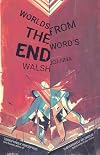
Sometimes you come across a book which nudges you out of your comfort zone, like an exotic literary dish which looks and tastes different, exciting and that wee bit dangerous. This slender collection of short (and some very short) stories had that effect on me.
This was the first time I read anything by Joanna Walsh and her style struck me for its whimsical invention and clever wordplay. The title piece – Worlds from the Word’s End – is a perfect example. It features a narrator who show more writes a final letter to an estranged partner in a world where words are no longer in use and language has become an old-fashioned means of communication only current amongst immigrants. It is a post-apocalyptic scenario with a metaphorical weirdness worthy of China Miéville. Yet the title also instantly reveals an author who delights in linguistic virtuosity and brilliant, startling puns. Much of the story in fact keeps up the title’s play on wor(l)ds, as in “We were always words apart”, “I’m dead to the word and you don’t have a care in it”, “Love’s a word that makes the word go round … I love you and I’m not aloud…”
A similar approach can be seen in “Bookselves”, which imagines a ghostly presence which inhabits our bookshelves and voraciously reads all the books we’ve left unopened or uncompleted: the relics of a more intense age of reading…washed up on a beech of elegant shelves. The imagery is fantastical, but the insight into common reading habits is all too real.
Some stories emphasize the surreal and border on the obscure – I’m still grappling with the opening story, “Two” whose meanings yet escape me. Other pieces include an Angela-Carteresque retelling of “Clever Hans”, now renamed Simple Hans and laced with blood and sex, and the one-pager “Exes” which is at once a reflection on kisses in text messages (x’s) and a bittersweet memoir of past relationships (“exes”).
Too clever by half? Yes, but only if you want to keep living in the same old words. show less
This was the first time I read anything by Joanna Walsh and her style struck me for its whimsical invention and clever wordplay. The title piece – Worlds from the Word’s End – is a perfect example. It features a narrator who show more writes a final letter to an estranged partner in a world where words are no longer in use and language has become an old-fashioned means of communication only current amongst immigrants. It is a post-apocalyptic scenario with a metaphorical weirdness worthy of China Miéville. Yet the title also instantly reveals an author who delights in linguistic virtuosity and brilliant, startling puns. Much of the story in fact keeps up the title’s play on wor(l)ds, as in “We were always words apart”, “I’m dead to the word and you don’t have a care in it”, “Love’s a word that makes the word go round … I love you and I’m not aloud…”
A similar approach can be seen in “Bookselves”, which imagines a ghostly presence which inhabits our bookshelves and voraciously reads all the books we’ve left unopened or uncompleted: the relics of a more intense age of reading…washed up on a beech of elegant shelves. The imagery is fantastical, but the insight into common reading habits is all too real.
Some stories emphasize the surreal and border on the obscure – I’m still grappling with the opening story, “Two” whose meanings yet escape me. Other pieces include an Angela-Carteresque retelling of “Clever Hans”, now renamed Simple Hans and laced with blood and sex, and the one-pager “Exes” which is at once a reflection on kisses in text messages (x’s) and a bittersweet memoir of past relationships (“exes”).
Too clever by half? Yes, but only if you want to keep living in the same old words. show less
Sometimes you come across a book which nudges you out of your comfort zone, like an exotic literary dish which looks and tastes different, exciting and that wee bit dangerous. This slender collection of short (and some very short) stories had that effect on me.
This was the first time I read anything by Joanna Walsh and her style struck me for its whimsical invention and clever wordplay. The title piece – Worlds from the Word’s End – is a perfect example. It features a narrator who show more writes a final letter to an estranged partner in a world where words are no longer in use and language has become an old-fashioned means of communication only current amongst immigrants. It is a post-apocalyptic scenario with a metaphorical weirdness worthy of China Miéville. Yet the title also instantly reveals an author who delights in linguistic virtuosity and brilliant, startling puns. Much of the story in fact keeps up the title’s play on wor(l)ds, as in “We were always words apart”, “I’m dead to the word and you don’t have a care in it”, “Love’s a word that makes the word go round … I love you and I’m not aloud…”
A similar approach can be seen in “Bookselves”, which imagines a ghostly presence which inhabits our bookshelves and voraciously reads all the books we’ve left unopened or uncompleted: the relics of a more intense age of reading…washed up on a beech of elegant shelves. The imagery is fantastical, but the insight into common reading habits is all too real.
Some stories emphasize the surreal and border on the obscure – I’m still grappling with the opening story, “Two” whose meanings yet escape me. Other pieces include an Angela-Carteresque retelling of “Clever Hans”, now renamed Simple Hans and laced with blood and sex, and the one-pager “Exes” which is at once a reflection on kisses in text messages (x’s) and a bittersweet memoir of past relationships (“exes”).
Too clever by half? Yes, but only if you want to keep living in the same old words. show less
This was the first time I read anything by Joanna Walsh and her style struck me for its whimsical invention and clever wordplay. The title piece – Worlds from the Word’s End – is a perfect example. It features a narrator who show more writes a final letter to an estranged partner in a world where words are no longer in use and language has become an old-fashioned means of communication only current amongst immigrants. It is a post-apocalyptic scenario with a metaphorical weirdness worthy of China Miéville. Yet the title also instantly reveals an author who delights in linguistic virtuosity and brilliant, startling puns. Much of the story in fact keeps up the title’s play on wor(l)ds, as in “We were always words apart”, “I’m dead to the word and you don’t have a care in it”, “Love’s a word that makes the word go round … I love you and I’m not aloud…”
A similar approach can be seen in “Bookselves”, which imagines a ghostly presence which inhabits our bookshelves and voraciously reads all the books we’ve left unopened or uncompleted: the relics of a more intense age of reading…washed up on a beech of elegant shelves. The imagery is fantastical, but the insight into common reading habits is all too real.
Some stories emphasize the surreal and border on the obscure – I’m still grappling with the opening story, “Two” whose meanings yet escape me. Other pieces include an Angela-Carteresque retelling of “Clever Hans”, now renamed Simple Hans and laced with blood and sex, and the one-pager “Exes” which is at once a reflection on kisses in text messages (x’s) and a bittersweet memoir of past relationships (“exes”).
Too clever by half? Yes, but only if you want to keep living in the same old words. show less
there were some compelling ideas in this book, but i struggled with the framing and the mixed metaphors, and a lack of coherence between what seemed like three unconnected theses/chapters. i also just hate alice in wonderland and didn't find it in any way an apt metaphor for MY experience as a girl online - walsh's experience of girlblogging is dated and this book would've been a lot more relevant if it came out 10 years ago. unfortunately for her, the internet moves too fast. still her show more thoughts on confessional blogging and chick lit were interesting and the book was consistently thought-provoking even if i didn't agree with what was on the page. show less
A short story collection I picked up after an unsuccessful venture into a pair of very large nonfiction books which I won't be continuing with.
Walsh is a quiet favorite of mine, having read her more recent collection some time last year and enjoyed it. Her command of language is impressive, and she twists words and phrases around on themselves to create intricate stories, perfectly contained within themselves.
Major themes include infidelity, growing older, motherhood, language, and the show more sensation of being alone (but not lonely, necessarily) in a foreign country. show less
Walsh is a quiet favorite of mine, having read her more recent collection some time last year and enjoyed it. Her command of language is impressive, and she twists words and phrases around on themselves to create intricate stories, perfectly contained within themselves.
Major themes include infidelity, growing older, motherhood, language, and the show more sensation of being alone (but not lonely, necessarily) in a foreign country. show less
Lists
Awards


You May Also Like


Associated Authors
Statistics
- Works
- 9
- Also by
- 4
- Members
- 405
- Popularity
- #60,013
- Rating
- 3.4
- Reviews
- 10
- ISBNs
- 81
- Languages
- 3