
Nell Zink
Author of Mislaid
About the Author
Works by Nell Zink
Associated Works
Light the Dark: Writers on Creativity, Inspiration, and the Artistic Process (2017) — Contributor — 162 copies, 5 reviews
Tagged
Common Knowledge
- Birthdate
- 1964
- Gender
- female
- Education
- Stuart Hall School
College of William and Mary B.A.
University of Tübingen PhD in Media Studies - Short biography
- NELL ZINK grew up in the Tidewater region of Virginia. She did a variety of service and administrative jobs before becoming a professional novelist at age fifty. Before then, her publications were confined to an indie rock fanzine and short-lived blog, both titled Animal Review. Her books to date include The Wallcreeper, Mislaid, Private Novelist (two novellas written for her friend Avner Shats), Nicotine, Doxology, and Avalon. Three of her books became New York Times Notable Books, and one was longlisted for the National Book Award. Her writing has appeared in n+1, Granta, and Harper's Magazine. In 2022, she served as the Friedrich Dürrenmatt Guest Professor for World Literature at the University of Bern, Switzerland. She lives near Berlin.
- Nationality
- USA
- Birthplace
- California, USA
- Places of residence
- Bad Belzig, Germany
- Associated Place (for map)
- USA
Members
Discussions
Contemporary fiction: couple hides injured bird in apartment in Name that Book (November 2018)
Reviews
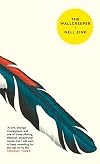
The cover quotes on ‘The Wallcreeper’ really talk it up, and rightly so for once. Nell Zink’s prose has an incredible clipped, ironic sincerity that is much harder to describe than it is to appreciate. Historically, I have been bored and irritated by novels about marriage, adultery, and couples deciding whether to have children, particularly if they were written in the last twenty years. Although ostensibly ‘The Wallcreeper’ ticks all these boxes, and features a main female show more character seemingly unable to exist without being married to a man, I loved it. Honestly, I’m not sure what happened. The writing reminded me a little of Miranda July’s [b:The First Bad Man|21412400|The First Bad Man|Miranda July|https://images.gr-assets.com/books/1421037741s/21412400.jpg|40713322] (which I also adored), although it is powerfully distinctive. Every page contains a quotable aphorism or remark. Samples:
I greatly appreciated the satirical angle on environmentalism. I never thought I’d come across the Water Framework Directive in literary fiction.
I also enjoyed the incredibly arbitrary and mocking literary references. Three favourites:
I'm not sure what to think of the final paragraph. Is it too meta? I think Zink pulls it off. Apparently she wrote ‘a large section’ of this novel in four days. Incredible.
EDITED TO ADD: I posted this and then realised that I hadn't clearly stated that 'The Wallcreeper' is absolutely fucking hilarious. Surely I heavily implied as much? In any case, it really is. show less
"Once I moved out of my parents’ house, I calmed down a lot. I just didn’t like having people breathing down my neck."
That made sense. It would be a reason to marry someone too shy to ask personal questions. It was also a way of saying: I wasn’t doing drugs when we met and I’m not doing drugs now, but if you breathe down my neck, I’ll do drugs.
[...]
Our next stop was called Mancuso’s Loft. It was running drum 'n' bass. The proprietor waved us in. Here I saw Stephen through new eyes. Then I ran to the ladies’ room and stuffed my ears with toilet paper. Stephen led me to the floor and yelled, “I’m going to dance a little bit!” He then proceeded to dance as if he had never seen me, or any other human being, before in his life.
[...]
She stumbled along, obviously unused to explaining her actions or motivations to anyone and therefore making them as transparent as frog spawn. She wasn’t up to prevaricating with every word, the skill she so admired in Stephen. It takes a lifetime of practice. She had found her master, her teacher, too late. She simply knew she was about to lose something valuable, and like anybody else, she wanted to take the next logical step to make it her own: She wanted to fuck it.
I greatly appreciated the satirical angle on environmentalism. I never thought I’d come across the Water Framework Directive in literary fiction.
The poster campaign hadn’t cost Stephen any real heartache. But once the money ran out, Global Rivers Alliance’s self-promotion migrated online, and to his sorrow, every single person who toyed with the idea of wiring two dollars to George first felt compelled to debate the merits of Wasserkraft Nein Danke with him. Most were themselves running tiny organisations that had arisen by spontaneous generation or mitosis. No one had supporters. Stephen spent hours writing closely argued defenses of himself and his aims. Each one is unique, because you can’t copy anything anymore without being caught. Rushed, because anyone who didn’t get an answer within fourteen hours would write again with more questions.
I also enjoyed the incredibly arbitrary and mocking literary references. Three favourites:
He was silent for three minutes, as long as the minutes of silence that pepper the conversations in Women in Love by D.H. Lawrence.
[...]
“A life laid waste before it begins,” I said, quoting Stephen’s frequent references to the profoundly discouraging climax of the classic Icelandic novel Independent People by Halldor Laxness.
“I wouldn’t go that far.”
[...]
The sordidness of my reflections was dragging my mood through the cocoa powder, as the Germans say, and I recalled that the author of Philosophy in the Boudoir did not come to a good end, so I joined in the conversation. “I like birds,” I said.
I'm not sure what to think of the final paragraph. Is it too meta? I think Zink pulls it off. Apparently she wrote ‘a large section’ of this novel in four days. Incredible.
EDITED TO ADD: I posted this and then realised that I hadn't clearly stated that 'The Wallcreeper' is absolutely fucking hilarious. Surely I heavily implied as much? In any case, it really is. show less
The story moved quickly, made me laugh, and I could empathize with the characters foreign dislocation. I relished the metaphors: "we were drinking piña coladas and watching the coots sweep the water with bits of reed held in their bills they way they do, like brownie scouts sweeping out a parish hall, inept and squeaking, and the DJ had put on Horace Andy ("Skylarking")." Or "I slunk out like a joker-slash-thief with my collar up and my hat pulled past my eyebrows" when she quits her job at show more the nightclub ticket window. Her sister who works as a bikini barista in Tukwila had me of course, knowing Tukwila: "Tukwila, in my opinion, was the trap in the drain..Easterners hear 'coffee culture' and think of Vienna, not longshoremen idling their pickups at a drive-through." And Stephen's mother "who was always wearing scarves and big pants, like 'flowing garments,' and slept with Paul from Peter, Paul and Mary." Or the pitiful bar where Elvis takes them dancing is vividly depicted as "garbage in, garbage out" in terms of imprints on the human brain "turning to dust and slowly wafting a thin layer of grime on to every other object in your brain....[needing] to scrape the gunk off" Haven't you ever felt like that? Sometimes my own brain needs a thorough vacuuming particularly after visiting a sordid dance club like that., But on behalf of my friends who love a plot and thrive on characterization, this is not their book. Stephen is a cipher with an irratic on again/off again desire to have a child and count birds, but he's not much of a character, in fact, most of the characters are funny but thin until they get environmental (or just mental?). Tiffany and her sister join the men in strenuous bed hopping, as if "miming reproductive acts were my sole aim in life," in love, out of love. But as a satirical look at men, women, marriage, multinationals, environmentalists, birdwatchers and German or Croatian or Macedonian or Albanian"anarcho-sensualist renegade(s)," it is perfectly tuned. I had a good time. show less
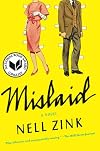
Rating: 3.5* of five
The Publisher Says: A sharply observed, mordantly funny, and startlingly original novel from an exciting, unconventional new voice—the author of the acclaimed The Wallcreeper—about the making and unmaking of the American family that lays bare all of our assumptions about race and racism, sexuality and desire.
Stillwater College in Virginia, 1966. Freshman Peggy, an ingénue with literary pretensions, falls under the spell of Lee, a blue-blooded poet and professor, and show more they begin an ill-advised affair that results in an unplanned pregnancy and marriage. The two are mismatched from the start—she’s a lesbian, he’s gay—but it takes a decade of emotional erosion before Peggy runs off with their three-year-old daughter, leaving their nine-year-old son behind.
Worried that Lee will have her committed for her erratic behavior, Peggy goes underground, adopting an African American persona for her and her daughter. They squat in a house in an African-American settlement, eventually moving to a housing project where no one questions their true racial identities. As Peggy and Lee’s children grow up, they must contend with diverse emotional issues: Byrdie deals with his father’s compulsive honesty; while Karen struggles with her mother’s lies—she knows neither her real age, nor that she is “white,” nor that she has any other family.
Years later, a minority scholarship lands Karen at the University of Virginia, where Byrdie is in his senior year. Eventually the long lost siblings will meet, setting off a series of misunderstandings and culminating in a comedic finale worthy of Shakespeare.
I CHECKED THIS BOOK OUT FROM THE PRIME LENDING SERVICE. USE THEM OFTEN, THEY PAY AUTHORS FOR OUR USE.
My Review: Longlisted for the 2015 National Book Award, this absurdist-humor take on closeted family life is...dated. Nothing dates faster than humor. I decided to read it so I could borrow another Prime Lending title.
The idea of the book did not appeal to 2025 me but I'm pretty sure I can't blame my lack of enthusiasm for the read on that. It is an idea that never gets old: Fish out of water, mistaken identity/dark family secret, male privilege...all present and ready for their close-up, Mr. deMille.
So why wasn't I amused, I mused. I got a lot of pleasure from the author's evocation of place, I resonated to her skewering of idiotic-to-me performative DEI stuff that masquerades as help but is meant to stigmatize and demean, I was wickedly entertained by the silliness of the closet and its Procrustean demands. Sounds like I ought to be warbling, no? So what the hell, old man, is the problem?
It's mean.
It felt to me as though all the laffs it sought were AT the people here, not with them, knowingly winking at the nonsensical antics. It felt like I was invited to sneer and judge. I'm guilty of both those nasty things, but not at hapless victims of circumstance. Mental illness played for humor isn't on nowadays.
In 2015, this was the mode for humor. It was enough that a nebbishy gay poet and a sexually adveturous sapphic-at-heart woman would try to form a stable family, let alone raise kids, when they could not possibly answer one another's needs of any sort. (It's that last bit that bugs me.)
So, well, award nominee or not, nice sense of Appalachian place or not, it's just not a story I'm going to like in 2025. In 2015, I'd've been its biggest booster. In Trump Two, I am not. show less
The Publisher Says: A sharply observed, mordantly funny, and startlingly original novel from an exciting, unconventional new voice—the author of the acclaimed The Wallcreeper—about the making and unmaking of the American family that lays bare all of our assumptions about race and racism, sexuality and desire.
Stillwater College in Virginia, 1966. Freshman Peggy, an ingénue with literary pretensions, falls under the spell of Lee, a blue-blooded poet and professor, and show more they begin an ill-advised affair that results in an unplanned pregnancy and marriage. The two are mismatched from the start—she’s a lesbian, he’s gay—but it takes a decade of emotional erosion before Peggy runs off with their three-year-old daughter, leaving their nine-year-old son behind.
Worried that Lee will have her committed for her erratic behavior, Peggy goes underground, adopting an African American persona for her and her daughter. They squat in a house in an African-American settlement, eventually moving to a housing project where no one questions their true racial identities. As Peggy and Lee’s children grow up, they must contend with diverse emotional issues: Byrdie deals with his father’s compulsive honesty; while Karen struggles with her mother’s lies—she knows neither her real age, nor that she is “white,” nor that she has any other family.
Years later, a minority scholarship lands Karen at the University of Virginia, where Byrdie is in his senior year. Eventually the long lost siblings will meet, setting off a series of misunderstandings and culminating in a comedic finale worthy of Shakespeare.
I CHECKED THIS BOOK OUT FROM THE PRIME LENDING SERVICE. USE THEM OFTEN, THEY PAY AUTHORS FOR OUR USE.
My Review: Longlisted for the 2015 National Book Award, this absurdist-humor take on closeted family life is...dated. Nothing dates faster than humor. I decided to read it so I could borrow another Prime Lending title.
The idea of the book did not appeal to 2025 me but I'm pretty sure I can't blame my lack of enthusiasm for the read on that. It is an idea that never gets old: Fish out of water, mistaken identity/dark family secret, male privilege...all present and ready for their close-up, Mr. deMille.
So why wasn't I amused, I mused. I got a lot of pleasure from the author's evocation of place, I resonated to her skewering of idiotic-to-me performative DEI stuff that masquerades as help but is meant to stigmatize and demean, I was wickedly entertained by the silliness of the closet and its Procrustean demands. Sounds like I ought to be warbling, no? So what the hell, old man, is the problem?
It's mean.
It felt to me as though all the laffs it sought were AT the people here, not with them, knowingly winking at the nonsensical antics. It felt like I was invited to sneer and judge. I'm guilty of both those nasty things, but not at hapless victims of circumstance. Mental illness played for humor isn't on nowadays.
In 2015, this was the mode for humor. It was enough that a nebbishy gay poet and a sexually adveturous sapphic-at-heart woman would try to form a stable family, let alone raise kids, when they could not possibly answer one another's needs of any sort. (It's that last bit that bugs me.)
So, well, award nominee or not, nice sense of Appalachian place or not, it's just not a story I'm going to like in 2025. In 2015, I'd've been its biggest booster. In Trump Two, I am not. show less
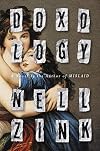
Pam is born the same year as me and spends her young adulthood in gritty downtown NYC, working in the financial district as a programmer and living in Chinatown. So forgive me if I liked this book right off the bat.
She does live a much more hardscrabble life than me, running away from home and arriving in NYC young and anonymous. She does much more interesting programming than I ever did, too.
Joe has a fictional neurological syndrome that manifests something like a mild Down's Syndrome in show more some ways, with Joe always happy and optimistic and trusting; yet fully functioning, if quirky, and tremendously creative and talented as a songwriter.
Daniel lives in an illegal apartment over a video store in the heart of Chinatown; its only entrance and egress being through the store, Daniel must be home every night by 1 AM when the metal gate comes down, else he has to stay out till 6 AM when it comes back up. He falls for Pam, and she's into him enough to move in with him into this crazy place.
Flora is their unexpected offspring. She grows up fast. She's precocious and smart. She's a child when 9/11 happens, and her parents relocate her to her grandparents' place in the DC suburbs, where she spends the remains of her childhood. She wants to save the world from climate change. She does a semester abroad in Chad and becomes a soil expert, but never can figure out quite how to channel her energy and enthusiasm to go about actually saving the world.
And that's it. It's the life story of these four people from the late 80s to the present moment. I was riveted. show less
She does live a much more hardscrabble life than me, running away from home and arriving in NYC young and anonymous. She does much more interesting programming than I ever did, too.
Joe has a fictional neurological syndrome that manifests something like a mild Down's Syndrome in show more some ways, with Joe always happy and optimistic and trusting; yet fully functioning, if quirky, and tremendously creative and talented as a songwriter.
Daniel lives in an illegal apartment over a video store in the heart of Chinatown; its only entrance and egress being through the store, Daniel must be home every night by 1 AM when the metal gate comes down, else he has to stay out till 6 AM when it comes back up. He falls for Pam, and she's into him enough to move in with him into this crazy place.
Flora is their unexpected offspring. She grows up fast. She's precocious and smart. She's a child when 9/11 happens, and her parents relocate her to her grandparents' place in the DC suburbs, where she spends the remains of her childhood. She wants to save the world from climate change. She does a semester abroad in Chad and becomes a soil expert, but never can figure out quite how to channel her energy and enthusiasm to go about actually saving the world.
And that's it. It's the life story of these four people from the late 80s to the present moment. I was riveted. show less
Lists
Awards


You May Also Like


Associated Authors
Statistics
- Works
- 8
- Also by
- 1
- Members
- 1,747
- Popularity
- #14,722
- Rating
- 3.3
- Reviews
- 68
- ISBNs
- 91
- Languages
- 6
- Favorited
- 2