
Shida Bazyar
Author of The Nights Are Quiet in Tehran
About the Author
Image credit: Shida Bazyar stellt auf dem Erlanger Poetenfest 2016 ihren Roman "Nachts ist es leise in Teheran" vor. By Amrei-Marie - Own work, CC BY-SA 4.0, https://commons.wikimedia.org/w/index.php?curid=50955776
Works by Shida Bazyar
Bornemann Sokagi'nda Yangin 1 copy
Tagged
Common Knowledge
- Birthdate
- 1988
- Gender
- female
- Nationality
- Deutschland
Members
Reviews
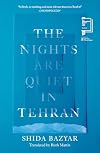
How do you know when to flee your homeland? How do you know if you should? What will it be like in whatever place you find that will take you? When the branch of your own life is broken from the tree of your shared and communal life, such as it is, how will it affect you?
I’ve been thinking a lot about these questions since the United States accelerated its slide into authoritarianism under the second coming of Trump, Steven Miller, and Project 2024. There are lots of “regular” people show more I know who are wondering if they should be leaving, mostly well-to-do people who can follow Conde-Nast’s advice on best places to be a wealthy ex-pat. But also people who can’t afford it and particularly people being targeted by the administration, like trans and LGBTQIA+ and BIPOC people. Like immigrants. Not all of us have good options other than to stick it out in our homelands and fight or not fight for the kind of nation we want to live in. Maybe a nation true to its non-Christian roots or one not actively funding and providing diplomatic cover for a genocide.
The first generation of protagonists in The Nights are Quiet in Tehran are students protesting just such a government: the U.S.-installed dictatorship of the Shah of Iran. To be honest, what the couple does seems pretty tame, not much more than my participation in some of the “No Kings” and other protests I’ve been involved in. But with the success of the revolution, made possible by all sorts of Iranian citizens like our secular protagonists, the Islamic religious extremists seize the momentum and the power. And the people that fought so hard against the Shah are betrayed by the Ayatollah and fundamentalism. Soon non-Islamic people are filling the jails emptied after the Shah’s overthrow and many of the revolutionaries and non-involved citizens are living in terror again.
The couple flees with their young children, first to a refugee camp, and then to one of the European countries willing to take Iranian asylum seekers at the time. They leave behind almost all their belongings, their parents and extended families, their friends and fellow-protestors, many of whom will disappear into the torture chambers of the new state (same as the old state, at least in this regard). They raise their children in a foreign country, watching as their tentative connections to “home” are only weakly developed in the kids. And as their own hearts break with each voice from the homeland that goes silent in their absence.
This is a book that gives us the refugee experience from many different perspectives: the left behind, the asylum seekers, and those born outside the home country. Bazyar shows us how memory and heartbreak evolve over the years and how trauma and experience gets passed through the generations.
The kids eventually get to visit Iran with their mother, seeing or meeting their grandparents, aunts and uncles, and cousins, for the first time ever, or in an eternity for a child’s mind. Still, it doesn’t feel necessarily safe or comfortable in the spaces between the text or in the precautions the family takes that are explicitly stated in the story. And then the 2009 Green Revolution happens. Can they go home for good now? Well, we know a little about that 15 years later.
So now what? Where do people go in a world more closed and hostile to the larger and larger number of refugees that the state of the world create? It’s books like this that give us insight into what is at stake as we try to create a world we want to live in full of nations that accept the diversity of their peoples.
“Other words cross my mind: Natarsid. Natarsid, ma hame ba ham hastim. My mind shouts them, shouts them loud, yells them, but in my mind is where they remain: Natarsid, natarsid, ma hame ba ham hastim. Have no fear. We are all together here.” show less
I’ve been thinking a lot about these questions since the United States accelerated its slide into authoritarianism under the second coming of Trump, Steven Miller, and Project 2024. There are lots of “regular” people show more I know who are wondering if they should be leaving, mostly well-to-do people who can follow Conde-Nast’s advice on best places to be a wealthy ex-pat. But also people who can’t afford it and particularly people being targeted by the administration, like trans and LGBTQIA+ and BIPOC people. Like immigrants. Not all of us have good options other than to stick it out in our homelands and fight or not fight for the kind of nation we want to live in. Maybe a nation true to its non-Christian roots or one not actively funding and providing diplomatic cover for a genocide.
The first generation of protagonists in The Nights are Quiet in Tehran are students protesting just such a government: the U.S.-installed dictatorship of the Shah of Iran. To be honest, what the couple does seems pretty tame, not much more than my participation in some of the “No Kings” and other protests I’ve been involved in. But with the success of the revolution, made possible by all sorts of Iranian citizens like our secular protagonists, the Islamic religious extremists seize the momentum and the power. And the people that fought so hard against the Shah are betrayed by the Ayatollah and fundamentalism. Soon non-Islamic people are filling the jails emptied after the Shah’s overthrow and many of the revolutionaries and non-involved citizens are living in terror again.
The couple flees with their young children, first to a refugee camp, and then to one of the European countries willing to take Iranian asylum seekers at the time. They leave behind almost all their belongings, their parents and extended families, their friends and fellow-protestors, many of whom will disappear into the torture chambers of the new state (same as the old state, at least in this regard). They raise their children in a foreign country, watching as their tentative connections to “home” are only weakly developed in the kids. And as their own hearts break with each voice from the homeland that goes silent in their absence.
This is a book that gives us the refugee experience from many different perspectives: the left behind, the asylum seekers, and those born outside the home country. Bazyar shows us how memory and heartbreak evolve over the years and how trauma and experience gets passed through the generations.
The kids eventually get to visit Iran with their mother, seeing or meeting their grandparents, aunts and uncles, and cousins, for the first time ever, or in an eternity for a child’s mind. Still, it doesn’t feel necessarily safe or comfortable in the spaces between the text or in the precautions the family takes that are explicitly stated in the story. And then the 2009 Green Revolution happens. Can they go home for good now? Well, we know a little about that 15 years later.
So now what? Where do people go in a world more closed and hostile to the larger and larger number of refugees that the state of the world create? It’s books like this that give us insight into what is at stake as we try to create a world we want to live in full of nations that accept the diversity of their peoples.
“Other words cross my mind: Natarsid. Natarsid, ma hame ba ham hastim. My mind shouts them, shouts them loud, yells them, but in my mind is where they remain: Natarsid, natarsid, ma hame ba ham hastim. Have no fear. We are all together here.” show less

[Nachts ist es leise in Teheran] consists of four parts, each concentrating on a different member of one family, and each ten years apart. The story starts with Behsad, who is a communist revolutionist in 1979 Teheran, but whose hopes and ambitions are shattered. In the next part, told from his wife Nahid's perspective in 1989, the reader learns that the couple had to leave Iran and start a new life in Western Germany, struggling to come to terms with the cold language, the strange show more neighbors, the memories that hurt so much. Fast forward to 1999, there are reforms and new hopes in Iran, and through Laleh's (the daughter's) eyes the reader experience's her first visit back to Iran after she had to flee when she was just four years old. There is a wild mix of emotions, of feeling both like belonging while still being an outsider. Clashing expectations make this visit difficult, as well as questions about her own identity. And in 2009, there is Laleh's brother Mo who has only ever known Germany while still being read as non-German by most of the people he meets. He does not feel a connection to Iran until he is suddenly glued to his screen, watching YouTube streams and Facebook posts of the Green Revolution. When he sees his fellow students in Germany protesting against tuition fees and feeling smug about it, he cannot help but feel estranged from them, knowing that his relatives in Iran risk all they have for their protests, as did his parents in the 1970s.
The author includes a lot of aspects in this novel, she touches upon many subjects. The structure of four decades and four characters enables this, but it is also restricting because it means that some points of view are excluded. I would have liked to know more about how Behsad and Nahid felt in the end of the story, but this does not play a big role anymore in the end. While all characters are strong, Nahid was my favourite and I would have liked to learn more about her. I feel like I am craving more of a conclusion, but maybe that is not the point of the novel.
In the end, there is another short chapter, told from the youngest sister, Tara, who was born in Germany. There is no given year, but it is simply called an epilogue.Tara and her niece - the third generation of the family - return from holiday and learn that there has been a new revolution that has finally succeeded, and the novel ends in euphoria. Thinking about the current situation in Iran, this scene hit deep. It is a utopia, as this chapter must take place around 2030. I have no words except that I hope that it will become true, as soon as possible. show less
The author includes a lot of aspects in this novel, she touches upon many subjects. The structure of four decades and four characters enables this, but it is also restricting because it means that some points of view are excluded. I would have liked to know more about how Behsad and Nahid felt in the end of the story, but this does not play a big role anymore in the end. While all characters are strong, Nahid was my favourite and I would have liked to learn more about her. I feel like I am craving more of a conclusion, but maybe that is not the point of the novel.
In the end, there is another short chapter, told from the youngest sister, Tara, who was born in Germany. There is no given year, but it is simply called an epilogue.
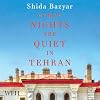
I was looking forward to this book for two reasons. I’ve been in Tehran pre-1979 when it was ruled by Mohammad Reza Shah who was a puppet of Western powers and attempted to Westernise the country. I enjoyed my months in Iran - I appreciated the Western attitudes toward women which were a contrast to my time in Pakistan and Afghanistan. There were signs on public transport advocating women’s rights and encouraging women to study. The other reason that I was anticipating reading the book show more was that it was longlisted for the 2026 Booker prize.
I was disappointed while reading the book, which is divided into four parts from the points of view of different members of the one family. I won’t go into detail of the four parts that make up the book, as they are well-covered by other reviewers.
The book starts in 1979 when a young Behsad is involved with other communists, hoping for a revolution against the autocratic Shah. He falls in love with fellow student Nahid. The reader knows that the ensuing revolution only succeeded with another autocrat, Ayatollah Khomeini taking control, but the book jumps to ten years on.
It is 1989 and Nahid and Behsad are married with young children. We see the family from the wife’s perspective. They have fled Iran, settled in West Germany and are attempting to adjust to German life. Nahid misses her country, and we see Iran from the point of view of the exiled political refugee. This part of the novel seemed most meaningful to me, possibly because I’ve had experience of living in other countries and having to change my way of life to fit in.
In 1999 Ayatollah Khomeini died. Behsad”s family is cautiously optimistic and decide that it is safe enough for Nahid and the children to travel to Tehran. By this time the eldest child Laleh is a teenager. She was only four when the family left and so knows mainly second-hand about her old culture. She is surprised and conflicted when she has to don a hijab in public and discovers other restrictions such as the wearing of nail-polish openly, restrictive.
In 2009 the book resumes the family’s history. This time it is from the point of view of the now young adult son Mo, who has never been to Iran and has experienced as of a refugee in Germany where he was seen as “other“. Mo discovers the “Green Revolution” on TV and social media, and looks down on his fellow students who protest about “unsubstantive” issues such as the cost of education. He compares their lives with those of his father and mother in the 1979 revolution.
The final part of the book is the epilogue. It 1929 and the youngest child Tara knows less about Iran than other members of her family. She sees the new protests on TV and rejoices in the hope of a new revolution.
Knowing what we know now in 2025 the epilogue seems over-optimistic. I left the book feeling somewhat disturbed, and I’m not sure whether it was because of what the book’s ending implied, or because of the current news items appearing daily along with the policies of the Trump administration.
Strangely, although we know much about four members of the family individually, their characters and points of view on Iran and Germany, there is no progression. What happened to Behsad and Nahid? What were their views over time? Did they ever settle in the West? The ten years jumps in time mean that we miss what happens in between the beginnings of the decades. Although I understand why the writer chose this structure, I found it somewhat unrewarding..
Although the book, successfully explored its major themes, of exiles and failed revolutions, of loss of homeland and different generations’ perspectives, they were not binding enough for me to see the novel as a whole. We never really got to know about revolutionary Behsad after he left Iran, and he was perhaps the most dynamic of the characters. In fact as the book moved through its decades each character seemed both less-formed and less well-informed than the previous.
I recommend this book for people interested in the country of Iran and in how revolutions so often take the wrong path. show less
I was disappointed while reading the book, which is divided into four parts from the points of view of different members of the one family. I won’t go into detail of the four parts that make up the book, as they are well-covered by other reviewers.
The book starts in 1979 when a young Behsad is involved with other communists, hoping for a revolution against the autocratic Shah. He falls in love with fellow student Nahid. The reader knows that the ensuing revolution only succeeded with another autocrat, Ayatollah Khomeini taking control, but the book jumps to ten years on.
It is 1989 and Nahid and Behsad are married with young children. We see the family from the wife’s perspective. They have fled Iran, settled in West Germany and are attempting to adjust to German life. Nahid misses her country, and we see Iran from the point of view of the exiled political refugee. This part of the novel seemed most meaningful to me, possibly because I’ve had experience of living in other countries and having to change my way of life to fit in.
In 1999 Ayatollah Khomeini died. Behsad”s family is cautiously optimistic and decide that it is safe enough for Nahid and the children to travel to Tehran. By this time the eldest child Laleh is a teenager. She was only four when the family left and so knows mainly second-hand about her old culture. She is surprised and conflicted when she has to don a hijab in public and discovers other restrictions such as the wearing of nail-polish openly, restrictive.
In 2009 the book resumes the family’s history. This time it is from the point of view of the now young adult son Mo, who has never been to Iran and has experienced as of a refugee in Germany where he was seen as “other“. Mo discovers the “Green Revolution” on TV and social media, and looks down on his fellow students who protest about “unsubstantive” issues such as the cost of education. He compares their lives with those of his father and mother in the 1979 revolution.
The final part of the book is the epilogue. It 1929 and the youngest child Tara knows less about Iran than other members of her family. She sees the new protests on TV and rejoices in the hope of a new revolution.
Knowing what we know now in 2025 the epilogue seems over-optimistic. I left the book feeling somewhat disturbed, and I’m not sure whether it was because of what the book’s ending implied, or because of the current news items appearing daily along with the policies of the Trump administration.
Strangely, although we know much about four members of the family individually, their characters and points of view on Iran and Germany, there is no progression. What happened to Behsad and Nahid? What were their views over time? Did they ever settle in the West? The ten years jumps in time mean that we miss what happens in between the beginnings of the decades. Although I understand why the writer chose this structure, I found it somewhat unrewarding..
Although the book, successfully explored its major themes, of exiles and failed revolutions, of loss of homeland and different generations’ perspectives, they were not binding enough for me to see the novel as a whole. We never really got to know about revolutionary Behsad after he left Iran, and he was perhaps the most dynamic of the characters. In fact as the book moved through its decades each character seemed both less-formed and less well-informed than the previous.
I recommend this book for people interested in the country of Iran and in how revolutions so often take the wrong path. show less
This book started strong with radicals at the dawn of the Islamic Revolution, and it lost steam from there. A look at migration and politics. Things are still in flux in Iran, and given that, the subject still seems relevant for a nominee for the International Booker Prize in 2026. It's also a novel about family and the toll that politics takes on family dynamics. It spans the years starting in 1979, but at times, it refers to incidents in 1953 with the coup and the Tudeh party. A show more rudimentary understanding of modern Iranian politics might help one's enjoyment of this novel. And speaking of the novel. The book, at times, often seemed like a series of vignettes rather than a coherent narrative. show less
Lists
Awards


You May Also Like
Associated Authors
Statistics
- Works
- 5
- Members
- 187
- Popularity
- #116,276
- Rating
- 3.8
- Reviews
- 13
- ISBNs
- 19
- Languages
- 4