

Marc Davis (2)
Author of Bottom Line
For other authors named Marc Davis, see the disambiguation page.
Works by Marc Davis
Tagged
Common Knowledge
There is no Common Knowledge data for this author yet. You can help.
Members
Reviews
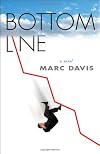
I found this book very difficult to enjoy because there was very little provided to encourage the reader to bond, like, pull for, or even care about the main character, instead he just comes across like an immature brat. The story arc started out quite good but about a third of the way in things felt unpolished. There were a few variances and parts that just didn't make sense. The closing of the story didn't have any flow and instead felt like it was just an attempt to bring together all the show more floaters and mistakes with a well known tragedy.
Free copy provided through goodreads First Reads. Thank you for the free book in exchange for an honest review. show less
Free copy provided through goodreads First Reads. Thank you for the free book in exchange for an honest review. show less
This book is a ripping good story with believable characters and a plot that kept me interested and involved. However, after finishing it I am vaguely disappointed, which I will try to explain. The protagonist, Nick Blake, is a senior executive in Martell and Company. Think Arthur Anderson on a smaller scale. In 2001 the company finds itself in trouble, losing customers, and with the CEO, Adrian Martell, under indictment for insider trading. As the business begins to collapse, Adrian show more absconds with $100 million in partners’ funds, and Nick endeavors to find him. Nick is also under a cloud with the other partners, because his paramour, who is a business reporter for the Chicago Examiner, writes about confidential matters that could only have come from Nick.
The ensuing chase is interesting and even gripping in spots. As the reader knows the date of 9/11/01 is rapidly approaching, you expect that it will have a significant part in the story. Without revealing too much, I’ll simply say that my expectations of a smashing ending were not fulfilled. Up to the last 20 pages the book was excellent, but then it sort of dribbled to a close. I can see no reason the story needed to be set in 2001 as opposed to the present. Rapacious CEOs are not a rarity. show less
The ensuing chase is interesting and even gripping in spots. As the reader knows the date of 9/11/01 is rapidly approaching, you expect that it will have a significant part in the story. Without revealing too much, I’ll simply say that my expectations of a smashing ending were not fulfilled. Up to the last 20 pages the book was excellent, but then it sort of dribbled to a close. I can see no reason the story needed to be set in 2001 as opposed to the present. Rapacious CEOs are not a rarity. show less
 This review was written for LibraryThing Early Reviewers.
Bottom Line by Marc Davis is his third novel but my first read of his fictional work. Davis is a prolific non-fiction writer for major business publications as well - particularly on business and financial issues. This latest novel is based on the world of management consulting, insider trading and the inevitable end-result of excessive greed and capitalism.
The story starts with an oft-repeated scene that consultants the world over (and I was one myself) are all too familiar with - giving show more bad news to a company’s executive management team. However, Nick Blake, our 30-year-old consulting whiz kid delivers the bad news in a lone-ranger cowboy sort of way - rather lofty and heavy-handed up there on his metaphorical high horse - that results in the client CEO firing him and his firm, never mind heeding the corporate death warrant he issues. Our hero is not fazed too much, even as his boss, the great Adrian Martell, CEO whisperer extraordinaire, commands him to figure out ASAP how to win the business back.
From this start, we go on to learn more about Martell, Blake and their dysfunctional relationships with each other, their employees, partners, clients and “close friends”. I use quotation marks for the last category as a way of sarcasm. Neither man has any close relationship that means anything to him - part of the overall winner-gets-all-and-the-rest-get-fucked charm.
Martell’s private management consulting firm sounds a lot like Arthur Andersen Consulting before it imploded due to the Enron debacle around 2000-2001. In fact, this fictional company is even based in Chicago, like Arthur Andersen was. And, like the latter, Martell and Company is also involved in the fraudulent accounting and auditing of several of its clients while making millions off them. Martell himself indulges in insider trading based on his knowledge of the inner workings of these clients. In this, he is very reminiscent of Rajat Gupta, 64-year-old ex-CEO of McKinsey and Company, also a CEO-whisperer extraordinaire, and convicted of insider trading in 2011-2012.
While the basic premise of the novel is grounded in real-life corporate shenanigans, the fictional drama really starts when the press (well, um, basically, Blake's zealous reporter-girlfriend, Rita) manages to get and publish some of these dealings and Martell gets indicted for insider trading. As the federal investigations get underway, Martell goes on the run with the executive pension fund, which is a cool $100 million.
And, this is as far as the story held my interest despite the wooden first-voice narration of Nick Blake and the cliched supporting cast of reporter-girlfriend, secretary-lover, lawyer-shyster, et al. What happens after is that, somehow, Blake manages to track down Martell in Mexico (before the Feds even get 1 sniff-worthy trail, it seems) with rather smug, if tiredly-predictable, private sleuthing. And, finally, Blake even masterminds the Fed sting that gets Martell back in Chicago and behind bars. Through it all, we’re meant to believe that Blake’s quest for bringing Martell, his former boss, mentor and father-like figure, to justice is driven by past demons - his own father was an accountant who had gone to jail for malpractice. Unfortunately, we do not get to learn more about this father or Blake’s relationship with him whatsoever. And, while the epilogue tries to shed some light on Blake’s past through a story of how his 16-year-old self negotiated a winning deal with his supermarket job supervisor and won his mother’s approval, there just isn’t enough to make this character and his motivations credible (Likability, for fictional characters, is not necessary but credibility is a must.) Further, Blake’s narrative voice and conversational voice make him sound like two entirely different individuals, reducing him almost entirely to a caricature as we trudge to the end.
And, that ending..... Ah, perhaps that is the biggest disappointment of all. The World Trade Center Bombing of September 2001 makes Blake realize that greed, capitalism and materialistic hubris are pointless, not to be envied and only lead to hollow, brittle achievements that will not last, but come crumbling down as quickly as they soared. It also makes his long-lost reporter-girlfriend (who had broken into his computer to find and leak confidential information) reunite with him. Apparently, his newfound morality does not stop him from taking her back with no recriminations. Perhaps that's because she has suddenly found God - part of her wake-up call from the bombing crisis. Hallelujah.
This is a harsh review, perhaps. Is there anything redeemable, you ask?
Here’s the thing. There aren’t many stories written about the business world. As one who has worked in both management consulting and financial services, as boring as these worlds may seem to some, I do think there are some great stories to be told about some of the self-appointed heroes, villains and, above all, the everyday people who enable and/or revile them. With the debacles and decimations of large firms like Enron, Worldcom, real-life stories about corporate greed and malpractices and CEO arrogance and ambition continue to be highlighted in the media with increasing regularity. So, there is, clearly, plenty of real-life material to work from. And, the appetite that the 99% has shown for ensuring that the corrupt 1% get their just desserts has never been keener, going by the platform issues of the presidential candidates during the 2012 US elections. So, I was really hopeful that Bottom Line would take all this fertile ground and give us a story that took us beyond the hackneyed backward glances to seed an imaginative vision of our cultural future - where are we, as a society, headed with the haves and have-nots continuing to grow apart. Sadly, for me, the stilted dialogue, cliched characters and a general lack of plot creativity sold that hope short.
A couple of footnotes, if I may. In the course of reading this book and wanting to learn more about the author, I was able to hunt down some of his other writing online - non-fiction. I have to say that the financial/business journalistic works impressed me a whole lot more than this fictional work. I do have a new-found respect for this author, but not because of this particular novel, unfortunately. show less
The story starts with an oft-repeated scene that consultants the world over (and I was one myself) are all too familiar with - giving show more bad news to a company’s executive management team. However, Nick Blake, our 30-year-old consulting whiz kid delivers the bad news in a lone-ranger cowboy sort of way - rather lofty and heavy-handed up there on his metaphorical high horse - that results in the client CEO firing him and his firm, never mind heeding the corporate death warrant he issues. Our hero is not fazed too much, even as his boss, the great Adrian Martell, CEO whisperer extraordinaire, commands him to figure out ASAP how to win the business back.
From this start, we go on to learn more about Martell, Blake and their dysfunctional relationships with each other, their employees, partners, clients and “close friends”. I use quotation marks for the last category as a way of sarcasm. Neither man has any close relationship that means anything to him - part of the overall winner-gets-all-and-the-rest-get-fucked charm.
Martell’s private management consulting firm sounds a lot like Arthur Andersen Consulting before it imploded due to the Enron debacle around 2000-2001. In fact, this fictional company is even based in Chicago, like Arthur Andersen was. And, like the latter, Martell and Company is also involved in the fraudulent accounting and auditing of several of its clients while making millions off them. Martell himself indulges in insider trading based on his knowledge of the inner workings of these clients. In this, he is very reminiscent of Rajat Gupta, 64-year-old ex-CEO of McKinsey and Company, also a CEO-whisperer extraordinaire, and convicted of insider trading in 2011-2012.
While the basic premise of the novel is grounded in real-life corporate shenanigans, the fictional drama really starts when the press (well, um, basically, Blake's zealous reporter-girlfriend, Rita) manages to get and publish some of these dealings and Martell gets indicted for insider trading. As the federal investigations get underway, Martell goes on the run with the executive pension fund, which is a cool $100 million.
And, this is as far as the story held my interest despite the wooden first-voice narration of Nick Blake and the cliched supporting cast of reporter-girlfriend, secretary-lover, lawyer-shyster, et al. What happens after is that, somehow, Blake manages to track down Martell in Mexico (before the Feds even get 1 sniff-worthy trail, it seems) with rather smug, if tiredly-predictable, private sleuthing. And, finally, Blake even masterminds the Fed sting that gets Martell back in Chicago and behind bars. Through it all, we’re meant to believe that Blake’s quest for bringing Martell, his former boss, mentor and father-like figure, to justice is driven by past demons - his own father was an accountant who had gone to jail for malpractice. Unfortunately, we do not get to learn more about this father or Blake’s relationship with him whatsoever. And, while the epilogue tries to shed some light on Blake’s past through a story of how his 16-year-old self negotiated a winning deal with his supermarket job supervisor and won his mother’s approval, there just isn’t enough to make this character and his motivations credible (Likability, for fictional characters, is not necessary but credibility is a must.) Further, Blake’s narrative voice and conversational voice make him sound like two entirely different individuals, reducing him almost entirely to a caricature as we trudge to the end.
And, that ending..... Ah, perhaps that is the biggest disappointment of all. The World Trade Center Bombing of September 2001 makes Blake realize that greed, capitalism and materialistic hubris are pointless, not to be envied and only lead to hollow, brittle achievements that will not last, but come crumbling down as quickly as they soared. It also makes his long-lost reporter-girlfriend (who had broken into his computer to find and leak confidential information) reunite with him. Apparently, his newfound morality does not stop him from taking her back with no recriminations. Perhaps that's because she has suddenly found God - part of her wake-up call from the bombing crisis. Hallelujah.
This is a harsh review, perhaps. Is there anything redeemable, you ask?
Here’s the thing. There aren’t many stories written about the business world. As one who has worked in both management consulting and financial services, as boring as these worlds may seem to some, I do think there are some great stories to be told about some of the self-appointed heroes, villains and, above all, the everyday people who enable and/or revile them. With the debacles and decimations of large firms like Enron, Worldcom, real-life stories about corporate greed and malpractices and CEO arrogance and ambition continue to be highlighted in the media with increasing regularity. So, there is, clearly, plenty of real-life material to work from. And, the appetite that the 99% has shown for ensuring that the corrupt 1% get their just desserts has never been keener, going by the platform issues of the presidential candidates during the 2012 US elections. So, I was really hopeful that Bottom Line would take all this fertile ground and give us a story that took us beyond the hackneyed backward glances to seed an imaginative vision of our cultural future - where are we, as a society, headed with the haves and have-nots continuing to grow apart. Sadly, for me, the stilted dialogue, cliched characters and a general lack of plot creativity sold that hope short.
A couple of footnotes, if I may. In the course of reading this book and wanting to learn more about the author, I was able to hunt down some of his other writing online - non-fiction. I have to say that the financial/business journalistic works impressed me a whole lot more than this fictional work. I do have a new-found respect for this author, but not because of this particular novel, unfortunately. show less
This review was written for LibraryThing Early Reviewers.Marc Davis' Bottom Line is a fair book - interesting, an easy read, but also quite uneven. I expected more, given the first several pages, but but so many odd things started cropping up that I wasn't sure if Davis was sending out the right message - or any message at all.
Nick Blake is a partner in Martell and Company, a consultancy and accounting company. He is second to Adrian Martell, the charismatic founder of Martell & Co. Adrian, it turns out, has been cooking the books for his clients, show more and gets indicted for insider trading. Adrian flees, taking company money with him, including the funds that constituted a "golden parachute" for the ten partners. Nick is determined to bring Adrian to justice and get the partner's money back.
All very fine and well, and perhaps the stuff an interesting white-collar-crime story could be made of. But I don't know whether the author is incredibly naive, or the book is too simplistic, or Davis just can't write without loading the book with inconsistencies and contrivances galore and gross manipulations (i.e., he's just a really bad author). Nick Blake, whom Davis tries to make into a "take-charge, get-it-done" kind of executive, turns out to be a whiny, self-centered bully who doesn't know when to quit.
To make matters worse, the story takes place in 2001, and Davis uses 9/11 as a plot device to tie up all the inconsistent, implausible loose ends he has laying around.
Read this book if you want to, but don't pay the $28 retail price. In fact, just get it at your local library, so you can read it free. It has its moments, but on the whole, it is just fair. show less
Nick Blake is a partner in Martell and Company, a consultancy and accounting company. He is second to Adrian Martell, the charismatic founder of Martell & Co. Adrian, it turns out, has been cooking the books for his clients, show more and gets indicted for insider trading. Adrian flees, taking company money with him, including the funds that constituted a "golden parachute" for the ten partners. Nick is determined to bring Adrian to justice and get the partner's money back.
All very fine and well, and perhaps the stuff an interesting white-collar-crime story could be made of. But I don't know whether the author is incredibly naive, or the book is too simplistic, or Davis just can't write without loading the book with inconsistencies and contrivances galore and gross manipulations (i.e., he's just a really bad author). Nick Blake, whom Davis tries to make into a "take-charge, get-it-done" kind of executive, turns out to be a whiny, self-centered bully who doesn't know when to quit.
To make matters worse, the story takes place in 2001, and Davis uses 9/11 as a plot device to tie up all the inconsistent, implausible loose ends he has laying around.
Read this book if you want to, but don't pay the $28 retail price. In fact, just get it at your local library, so you can read it free. It has its moments, but on the whole, it is just fair. show less
This review was written for LibraryThing Early Reviewers.Awards

Statistics
- Works
- 2
- Members
- 19
- Popularity
- #609,293
- Rating
- 3.4
- Reviews
- 10
- ISBNs
- 22
