
Durian Sukegawa
Author of Sweet Bean Paste
About the Author
Image credit: Wikimedia Commons - Andriy Makukha
Works by Durian Sukegawa
Tagged
Common Knowledge
- Birthdate
- 1962-06-17
- Gender
- male
- Education
- Waseda University
- Nationality
- Japan
- Places of residence
- Tokyo, Japan
- Associated Place (for map)
- Tokyo, Japan
Members
Reviews
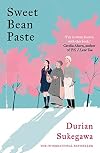
I was looking for something a bit different to read and found glowing reviews of this Japanese novella about an unconventional friendship.
Sentaro Tsujii feels like a failure. With a checkered past, he has few opportunities so works in a tiny confectionary shop selling dorayaki, a type of pancake filled with sweet bean paste. Adrift, he feels his life has no purpose. One day, a 76-year-old woman, Tokue Yoshii, asks for a job. Her age, gnarled hands, and partially paralyzed face make him show more hesitate, but then he learns she makes the best sweet bean paste and so hires her. A friendship develops, one which changes Sentaro’s outlook on life.
Over time, Sentaro learns about Tokue’s life. She is reluctant at first to share her story, but eventually the truth is revealed. To say her past was harrowing would be an understatement. The author reveals a dark chapter in Japanese history when imprisonment, forced labour, sterilization and arbitrary punishment were the fate of those affected with Hansen’s disease. Though cured 40 years ago, Tokue still faces prejudice and ostracism.
The message of the book is that no existence is devoid of meaning. Tokue stresses that a person's worth lies not in their career or in their contributions to society, but simply in their being: “we were born in order to see and listen to the world. And that’s all this world wants of us.” A person’s life has meaning if he/she has simply observed or sensed the sky and wind. Tokue also emphasizes that joy can be found if people learn from nature and enjoy the wonder of life moment by moment, regardless of how restricted their circumstances.
This is not an action-packed book. What plot exists is predictable. Instead, the novel is gentle and meditative, both bittersweet and heart-warming. Parts are very sad, but in the end, it is uplifting and inspiring with its life-affirming message. Sweet Bean, a 2015 film based on this book, has been credited with helping Japanese society become fully aware of the existence of its outcasts.
Note: Please check out my reader's blog (https://schatjesshelves.blogspot.com/) and follow me on Twitter (@DCYakabuski). show less
Sentaro Tsujii feels like a failure. With a checkered past, he has few opportunities so works in a tiny confectionary shop selling dorayaki, a type of pancake filled with sweet bean paste. Adrift, he feels his life has no purpose. One day, a 76-year-old woman, Tokue Yoshii, asks for a job. Her age, gnarled hands, and partially paralyzed face make him show more hesitate, but then he learns she makes the best sweet bean paste and so hires her. A friendship develops, one which changes Sentaro’s outlook on life.
Over time, Sentaro learns about Tokue’s life. She is reluctant at first to share her story, but eventually the truth is revealed. To say her past was harrowing would be an understatement. The author reveals a dark chapter in Japanese history when imprisonment, forced labour, sterilization and arbitrary punishment were the fate of those affected with Hansen’s disease. Though cured 40 years ago, Tokue still faces prejudice and ostracism.
The message of the book is that no existence is devoid of meaning. Tokue stresses that a person's worth lies not in their career or in their contributions to society, but simply in their being: “we were born in order to see and listen to the world. And that’s all this world wants of us.” A person’s life has meaning if he/she has simply observed or sensed the sky and wind. Tokue also emphasizes that joy can be found if people learn from nature and enjoy the wonder of life moment by moment, regardless of how restricted their circumstances.
This is not an action-packed book. What plot exists is predictable. Instead, the novel is gentle and meditative, both bittersweet and heart-warming. Parts are very sad, but in the end, it is uplifting and inspiring with its life-affirming message. Sweet Bean, a 2015 film based on this book, has been credited with helping Japanese society become fully aware of the existence of its outcasts.
Note: Please check out my reader's blog (https://schatjesshelves.blogspot.com/) and follow me on Twitter (@DCYakabuski). show less
4.5⭐️
“All experience adds up to a life lived as only you could. I feel sure the day will come when you can say: this is my life.”
Sentaro Tsujii, once an aspiring writer, now works in the Doraharu shop making and selling dorayaki, a Japanese sweet made with pancakes and sweet bean paste. This is not his chosen vocation and his working in the shop is a means of paying off his previous debts to his employer. Having previously served a two-year prison sentence, he is also aware that his show more checkered past limits his options in terms of employment opportunities. He is not content with his life and listlessly passes his days. One day he meets seventy-six-year-old Tokue Yoshii, a Hansen’s Disease (leprosy) survivor who has lived in a leper’s community, ostracized from mainstream society since she was diagnosed at the age of fourteen. Though she is now cured and after the Leprosy Prevention Act had been repealed in 1996, is allowed to mix freely, her illness has partially disfigured her face and affected her fingers. She convinces him to let her work alongside him, making sweet bean paste with care and precision – a sweet bean paste that elevates the reputation of the shop and has customers lining up for more. Among the customers is school girl Wakana, who befriends Tokue and Sentaro. However, Tokue’s medical history becomes an issue that affects business and eventually results in her quitting. However, their unlikely friendship continues and they continue to meet , correspond and positively impact each other’s lives.
“It’s my belief that everything in this world has its own language. We have the ability to open up our ears and minds to anything and everything. That could be someone walking down the street, or it could be the sunshine or the wind.”
Sweet Bean Paste by Durian Sukegawa is a bittersweet, heartwarming and deeply moving story. The prose is simple yet beautiful. The vivid imagery of the sights and sounds of the busy streets, the cherry blossoms and the bustling shops and food make you feel as if you are walking with the characters as they bare their souls to one another. The author also sheds a light on the stigma and prejudice faced by people like Tokue, deprived of the life they desire. After living in a closed-off colony for decades, she now has nowhere to go even though she is free to travel. There is so much she wants to do with her life but she has been unable to. But does that render her life meaningless? What does it mean to lead a meaningful life? In a world that measures success with tangible yardsticks and visible “contribution” to society, Tokue’s wisdom as she shares with Sentaro and Wakana is in acknowledging that life lived on the fringes can also be a life worth living as long as your heart and soul are willing to experience all that world has to offer as she has strived to do despite all she has been through. As she shares her story, she teaches Sentaro that even though her life hasn't given her what she wanted, rather than brood over her past disappointments it is important to appreciate whatever she did have and how being mindful of the world around you may instigate positive change in your life and even in how you feel about yourself.
“I began to understand that we were born in order to see and listen to the world. And that’s all this world wants of us. It doesn’t matter that I was never a teacher or a member of the workforce, my life had meaning.”
This is a beautiful story, meant to be read, reread and shared with friends. This short novel is a beautiful reminder to pause, reflect and truly experience the world around us and in the process be kinder to each other and to ourselves.
Excerpt from the Author's Note:
“ Over the aeons the universe has nurtured life forms whose very awareness makes them involved in its continued existence. Hence we are all alike in having materialized on this Earth because that was what the universe so desired. The ill, the bed-ridden, and children whose lives are over before they’ve barely begun; all are equal in their relationship to the universe. Anyone is capable of making a positive contribution to the world through simple observation, irrespective of circumstance.” show less
“All experience adds up to a life lived as only you could. I feel sure the day will come when you can say: this is my life.”
Sentaro Tsujii, once an aspiring writer, now works in the Doraharu shop making and selling dorayaki, a Japanese sweet made with pancakes and sweet bean paste. This is not his chosen vocation and his working in the shop is a means of paying off his previous debts to his employer. Having previously served a two-year prison sentence, he is also aware that his show more checkered past limits his options in terms of employment opportunities. He is not content with his life and listlessly passes his days. One day he meets seventy-six-year-old Tokue Yoshii, a Hansen’s Disease (leprosy) survivor who has lived in a leper’s community, ostracized from mainstream society since she was diagnosed at the age of fourteen. Though she is now cured and after the Leprosy Prevention Act had been repealed in 1996, is allowed to mix freely, her illness has partially disfigured her face and affected her fingers. She convinces him to let her work alongside him, making sweet bean paste with care and precision – a sweet bean paste that elevates the reputation of the shop and has customers lining up for more. Among the customers is school girl Wakana, who befriends Tokue and Sentaro. However, Tokue’s medical history becomes an issue that affects business and eventually results in her quitting. However, their unlikely friendship continues and they continue to meet , correspond and positively impact each other’s lives.
“It’s my belief that everything in this world has its own language. We have the ability to open up our ears and minds to anything and everything. That could be someone walking down the street, or it could be the sunshine or the wind.”
Sweet Bean Paste by Durian Sukegawa is a bittersweet, heartwarming and deeply moving story. The prose is simple yet beautiful. The vivid imagery of the sights and sounds of the busy streets, the cherry blossoms and the bustling shops and food make you feel as if you are walking with the characters as they bare their souls to one another. The author also sheds a light on the stigma and prejudice faced by people like Tokue, deprived of the life they desire. After living in a closed-off colony for decades, she now has nowhere to go even though she is free to travel. There is so much she wants to do with her life but she has been unable to. But does that render her life meaningless? What does it mean to lead a meaningful life? In a world that measures success with tangible yardsticks and visible “contribution” to society, Tokue’s wisdom as she shares with Sentaro and Wakana is in acknowledging that life lived on the fringes can also be a life worth living as long as your heart and soul are willing to experience all that world has to offer as she has strived to do despite all she has been through. As she shares her story, she teaches Sentaro that even though her life hasn't given her what she wanted, rather than brood over her past disappointments it is important to appreciate whatever she did have and how being mindful of the world around you may instigate positive change in your life and even in how you feel about yourself.
“I began to understand that we were born in order to see and listen to the world. And that’s all this world wants of us. It doesn’t matter that I was never a teacher or a member of the workforce, my life had meaning.”
This is a beautiful story, meant to be read, reread and shared with friends. This short novel is a beautiful reminder to pause, reflect and truly experience the world around us and in the process be kinder to each other and to ourselves.
Excerpt from the Author's Note:
“ Over the aeons the universe has nurtured life forms whose very awareness makes them involved in its continued existence. Hence we are all alike in having materialized on this Earth because that was what the universe so desired. The ill, the bed-ridden, and children whose lives are over before they’ve barely begun; all are equal in their relationship to the universe. Anyone is capable of making a positive contribution to the world through simple observation, irrespective of circumstance.” show less
With a sweet depth and surprisingly emotion, Sukegawa takes the reader on a sweet journey through redemption and friendship. Sentaro’s days are long and lonely, filled with tasteless bean paste and alcohol. Until Tokue comes. With her bent fingers and savant knowledge of sweet bean paste, she transforms Sentaro, and later a young school girl, with her kindness and her story.
With simple prose, Sukegawa draws the reader in to the complex lives of the characters. Each character is in need of show more redemption from their past sins and from the despair that covers them.
It’s hard to classify this book. It’s a gentle read, soft on the spirit but touching to the heart. There is a touch of bitterness to it, as well. Not all things work out, as in real life. But Hope, well, hope comes again, like the Cherry Blossoms in Spring.
Worth reading, in particular if you find yourself in a place where you need a bit of hope. Drink with a soft soul and a fragrant cup of tea. show less
With simple prose, Sukegawa draws the reader in to the complex lives of the characters. Each character is in need of show more redemption from their past sins and from the despair that covers them.
It’s hard to classify this book. It’s a gentle read, soft on the spirit but touching to the heart. There is a touch of bitterness to it, as well. Not all things work out, as in real life. But Hope, well, hope comes again, like the Cherry Blossoms in Spring.
Worth reading, in particular if you find yourself in a place where you need a bit of hope. Drink with a soft soul and a fragrant cup of tea. show less
Meet Sentaro, a bit of a loser who has a humdrum existence making and selling sweet bean dorayaki for his snack-shack. They're not the best - he cuts corners. Then along comes Tokue, a spectacularly ugly old woman who begs him for a job, and finally he gives in. She introduces him to her highly superior sweet bean paste, and business looks up. He learns that she had been incarcerated in a leper colony for much of her life- hence her deformities - though she is no longer infectious. This is show more their story - one of confronting prejudice and your own demons, and in which they come to learn that being a useful member of society is not the be-all and end-all. Instead, humans exist to verify the existence of the universe. That is enough. A charming and lyrically written story, if perhaps a little sentimental for hard-bitten English sensibilities. show less
Lists
2023 Reads (1)
You May Also Like


Associated Authors
Statistics
- Works
- 9
- Members
- 956
- Popularity
- #26,956
- Rating
- 3.9
- Reviews
- 44
- ISBNs
- 42
- Languages
- 10
