
Muhammad Asad (1900–1992)
Author of The Message of the Qur'an (Asad, 1980)
About the Author
Works by Muhammad Asad
الطريق إلى الإسلام 1 copy
Risalah Al-Qur'an, Juz 30 1 copy
Tagged
Common Knowledge
- Canonical name
- Asad, Muhammad
- Other names
- Weiss, Leopold (birth name)
Leopold of Arabia - Birthdate
- 1900-07-02
- Date of death
- 1992-02-23
- Gender
- male
- Education
- University of Vienna (attended)
- Occupations
- journalist
traveler
social critic
linguist
diplomat - Organizations
- Frankfurter Zeitung (German newspaper)
Neue Zürcher Zeitung (Swiss newspaper) - Nationality
- Poland
Austria (citizenship) - Birthplace
- Lemberg, Galicia, Austro-Hungarian Empire (now Ukraine)
- Places of residence
- Lvov, Poland
Berlin, Germany
Makkah, Saudi Arabia
Pakistan
Spain - Place of death
- Mijas, Andalucia, Spain
- Burial location
- Spain
Members
Reviews
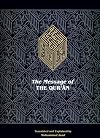
I have read the translations by Yusuf Ali, Arberry, and Dawood. Muhammad Asad's translation and interpretations stands above all. It is the Quran translation I reccomend to non-Muslims to get a true (in my view) understanding of Islam.
I am an American born Muslim (Pakistani descent). I have been raised here, and schooled here, and so have a western perspective of events and history. What I like about Asad's translation is that it is written by a "westerner," who was formerly a Viennese Jew. show more As such, he carries the gestalt of the West (rationalism, the Enlightenment, evolution, etc.).
In contrast, Yusuf Ali, carries a certain cultural baggage derived from his experiences in India. The effects of British colonialism probably colored his world view, and my recollection (I read his translation many years ago) is that this coloring displays itself in his translation. I guess I would characterize his translation and commentary consistent with liberation theology-which is fine, but is of a certain view that many in the West may not identify.
Asad's translation and commentary, on the other hand, incorporates many of our modern understandings of the world into his explanation. So for example, evolution is considered a natural process operating as part of the ordered universe just as the laws of gravity, electricity, etc. These are the signs of God, that Muslims are required to believe. Many Muslims who are not from the West, cannot reconcile modern understandings of science with faith. Just like the fundamentalist Christian community, they cannot integrate evolution (and its theological ramifications) into their faith (as a corollary, it is worthy to note that many scientists-call them darwinian fundamentalist- cannot integrate religion into science). In Islam, there is no separation between science and religion. All of your actions in physical reality are part of your Islam, and an expression of your religious faith. Obtaining knowledge through science is also part of your submission to God's will-your Islam. Asad's interpretation repeatedly affirms this.
Asad's explanations and commentary are illuminating. He explains phenomenon, like miracles, in a way that don't require the reader to suspend his belief in the normal physical laws of daily experience. You are not required to believe in phenomenon that run contrary to objective experience. For example, in the Bible, Jesus is said to have healed the blind and raised the dead to the living. Ordinary experience tells us that physically these things are impossible, but you are required to have faith that these suspended laws of physical reality actually occurred. Asad's explanation is that in Islam, people who are closed to the God's spiritual message as relayed through the prophets, are blind to the obvious truth of God. They are spiritually dead. Jesus's miracle, was to pass his grace onto his followers, and make those whose hearts were hardened against God (blind and spiritually dead), to see the truth and to become spiritually alive. I find this explanation much more satisfactory than having to believe in a miracle. The explanation is far more simple and straightforward.
I highly recommend reading the Asad translation in conjunction with William Chittick's book Visions of Islam, and the Self-Disclosure of God, to really appreciate the sublime spirituality inhering to Islam. To my mind, it bestows on the reader how your conduct today carries with it spiritual and metaphysical dimensions.
In this post 9/11 world, where every "expert" on Islam opines on the violent nature of Islam as revealed through Quran, Asad's translation dispels these absurdities. Extremists in the Islamic world and the Western world would do well to read this, as well. For all reasonable people seeking to truly understand what Islam is about, read Asad's translation over any other. show less
I am an American born Muslim (Pakistani descent). I have been raised here, and schooled here, and so have a western perspective of events and history. What I like about Asad's translation is that it is written by a "westerner," who was formerly a Viennese Jew. show more As such, he carries the gestalt of the West (rationalism, the Enlightenment, evolution, etc.).
In contrast, Yusuf Ali, carries a certain cultural baggage derived from his experiences in India. The effects of British colonialism probably colored his world view, and my recollection (I read his translation many years ago) is that this coloring displays itself in his translation. I guess I would characterize his translation and commentary consistent with liberation theology-which is fine, but is of a certain view that many in the West may not identify.
Asad's translation and commentary, on the other hand, incorporates many of our modern understandings of the world into his explanation. So for example, evolution is considered a natural process operating as part of the ordered universe just as the laws of gravity, electricity, etc. These are the signs of God, that Muslims are required to believe. Many Muslims who are not from the West, cannot reconcile modern understandings of science with faith. Just like the fundamentalist Christian community, they cannot integrate evolution (and its theological ramifications) into their faith (as a corollary, it is worthy to note that many scientists-call them darwinian fundamentalist- cannot integrate religion into science). In Islam, there is no separation between science and religion. All of your actions in physical reality are part of your Islam, and an expression of your religious faith. Obtaining knowledge through science is also part of your submission to God's will-your Islam. Asad's interpretation repeatedly affirms this.
Asad's explanations and commentary are illuminating. He explains phenomenon, like miracles, in a way that don't require the reader to suspend his belief in the normal physical laws of daily experience. You are not required to believe in phenomenon that run contrary to objective experience. For example, in the Bible, Jesus is said to have healed the blind and raised the dead to the living. Ordinary experience tells us that physically these things are impossible, but you are required to have faith that these suspended laws of physical reality actually occurred. Asad's explanation is that in Islam, people who are closed to the God's spiritual message as relayed through the prophets, are blind to the obvious truth of God. They are spiritually dead. Jesus's miracle, was to pass his grace onto his followers, and make those whose hearts were hardened against God (blind and spiritually dead), to see the truth and to become spiritually alive. I find this explanation much more satisfactory than having to believe in a miracle. The explanation is far more simple and straightforward.
I highly recommend reading the Asad translation in conjunction with William Chittick's book Visions of Islam, and the Self-Disclosure of God, to really appreciate the sublime spirituality inhering to Islam. To my mind, it bestows on the reader how your conduct today carries with it spiritual and metaphysical dimensions.
In this post 9/11 world, where every "expert" on Islam opines on the violent nature of Islam as revealed through Quran, Asad's translation dispels these absurdities. Extremists in the Islamic world and the Western world would do well to read this, as well. For all reasonable people seeking to truly understand what Islam is about, read Asad's translation over any other. show less
Der Weg nach Mekka. Reporter, Diplomat, islamischer Gelehrter. Das Abenteuer eines Lebens. by Muhammad Asad

Leopold Weiß war Jude. Er wagte den Schritt über den Zaun, ging auf in einer fremden Welt, verwandelte sich - die Liebe ist zweifellos die intensivste Weise, andere zu verstehen. Aus Leopold Weiß wurde Muhammad Asade, aus dem Reporter ein verehrter Weiser des Islam. Später, als reifer Mann, hat er die Geschichte dieses Abeinteuers aufgeschrieben - 'Der Weg nach Mekka'.
The Message of the Quran : The Full Account of the Revealed Arabic Text Accompanied by Parallel transliteration by Muhammad Asad

This was an over-the-transom donation from the Council on American-Islamic Relations, funded by state of Qatar. We accepted it for its extensive commentary. It is reputed on internet as a good introduction for non-Muslims.The author is an Austrian-Polish convert to Islam who changed his name. The annotations are directed at the Christian reader.
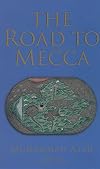
Interesting story about a Jewish convert to Islam. Some obnoxious fawning which I found cringeworthy. Asad's translation of the Qur'an is quite popular.
Lists
You May Also Like


Statistics
- Works
- 14
- Members
- 939
- Popularity
- #27,356
- Rating
- 4.3
- Reviews
- 10
- ISBNs
- 80
- Languages
- 7
- Favorited
- 1