
Angela J. Hanscom
Author of Balanced and Barefoot: How Unrestricted Outdoor Play Makes for Strong, Confident, and Capable Children
Works by Angela J. Hanscom
Balanced and Barefoot: How Unrestricted Outdoor Play Makes for Strong, Confident, and Capable Children (2016) 237 copies, 7 reviews
Tagged
Common Knowledge
There is no Common Knowledge data for this author yet. You can help.
Members
Reviews
Balanced and Barefoot: How Unrestricted Outdoor Play Makes for Strong, Confident, and Capable Children by Angela J. Hanscom
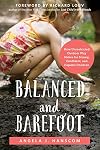
Finally finished it! I read every word (mostly), which is different for NF for me. Let me just state that I think Occupational Therapy is amazingly awesome and that I am a proud practitioner of said awesomeness.
Is this the best how-to book, probably not. But as the foundation, the reason why we need this for our children, as a jumping point, the book is very good. I am especially excited about the recommended readings and references--very thorough.
Take home point: kids need to be outside, show more as much as possible; without devices, minimal supervision. Free to explore, try things, figure stuff out, get out energy, get in energy, to relax/refocus/energize, to be independent. Hanscom offers us many baby steps to get partially to that level that we were about 30-40 years ago--riding bikes to friends houses, playing outside most of the day, talking to ourselves, building forts, etc. But in this big scary world, it isn't easy as a parent to trust that everything is going to be okay. Trust me, as a person who knows the benefits of kids being outside, paired with the parent who hears horrible stories on the news about what can happen to children, I have been there, totally. It is good stuff, sometimes scary, but our kids need this. show less
Is this the best how-to book, probably not. But as the foundation, the reason why we need this for our children, as a jumping point, the book is very good. I am especially excited about the recommended readings and references--very thorough.
Take home point: kids need to be outside, show more as much as possible; without devices, minimal supervision. Free to explore, try things, figure stuff out, get out energy, get in energy, to relax/refocus/energize, to be independent. Hanscom offers us many baby steps to get partially to that level that we were about 30-40 years ago--riding bikes to friends houses, playing outside most of the day, talking to ourselves, building forts, etc. But in this big scary world, it isn't easy as a parent to trust that everything is going to be okay. Trust me, as a person who knows the benefits of kids being outside, paired with the parent who hears horrible stories on the news about what can happen to children, I have been there, totally. It is good stuff, sometimes scary, but our kids need this. show less
Balanced and Barefoot: How Unrestricted Outdoor Play Makes for Strong, Confident, and Capable Children by Angela J. Hanscom
It's a common trope that most children these days fare badly, very badly, when compared to that of previous generations. Poorer attention skills; struggles in controlling their emotions; less resilience, grit, physical strength and endurance; poorer motor skills (both gross and fine); less imagination, creativity and problem-solving skills; a weaker immune system etc. In the worst cases, ADHD and other behavioural, sensory and developmental disorders of all sorts seem to have skyrocketed. show more But then: whose fault is that?
It's a common trope too that most children these days get a more restricted, far more restricted childhood when compared to that of previous generations. Free play outdoor has been replaced by junk play indoor. Fear moral panic about safety issues has led to completely bonkers approaches to play time and play settings (e.g. the author devotes a whole chapter to the history of city playgrounds, and it makes for a very sad read indeed...). Sedentary lifestyles have become the default choice for too many kids. Many parents can't seem to find a balance between screen time and overscheduling their children with too many 'organised hobbies' and activities anymore. Heck! Even babies are now confined into devices (e.g. baby chairs and bouncers etc.) impeding their development! Is it all doom and gloom, though?
Angela J. Hanscom, a paediatric occupational therapist, is such an advocate for free play and the outdoor that she founded TimberNook, 'an award-winning developmental and nature-based program' to give their childhood back to our kids. This book, then, is an outlining of her ethos, by listing, chapter after chapter, the benefits of free play; and especially free play when in nature (or a park, if you live in an urban area). She also expands it by dedicating a chapter on how teachers can implement her principles into their schools and classrooms.
Personally, I didn't learn much since I am already a convert to that type of parenting. If you wonder why modern-days kids may be bouncing off the walls or get all sorts of issues, though, and/ or why adults-led activities, indoor playing as opposed to outdoor playing, and, most importantly, 'over-protecting' children from the dangers of the world (e.g. dirt and germs, climbing up trees, facing harsh weather, getting out on their own etc.) is not a good thing for their development, then you ought to pick this book. It's a very short read (it clocks at barely 200 pages, with very good resources at the end) but nail in the points with strong arguments and research. show less
It's a common trope too that most children these days get a more restricted, far more restricted childhood when compared to that of previous generations. Free play outdoor has been replaced by junk play indoor. Fear moral panic about safety issues has led to completely bonkers approaches to play time and play settings (e.g. the author devotes a whole chapter to the history of city playgrounds, and it makes for a very sad read indeed...). Sedentary lifestyles have become the default choice for too many kids. Many parents can't seem to find a balance between screen time and overscheduling their children with too many 'organised hobbies' and activities anymore. Heck! Even babies are now confined into devices (e.g. baby chairs and bouncers etc.) impeding their development! Is it all doom and gloom, though?
Angela J. Hanscom, a paediatric occupational therapist, is such an advocate for free play and the outdoor that she founded TimberNook, 'an award-winning developmental and nature-based program' to give their childhood back to our kids. This book, then, is an outlining of her ethos, by listing, chapter after chapter, the benefits of free play; and especially free play when in nature (or a park, if you live in an urban area). She also expands it by dedicating a chapter on how teachers can implement her principles into their schools and classrooms.
Personally, I didn't learn much since I am already a convert to that type of parenting. If you wonder why modern-days kids may be bouncing off the walls or get all sorts of issues, though, and/ or why adults-led activities, indoor playing as opposed to outdoor playing, and, most importantly, 'over-protecting' children from the dangers of the world (e.g. dirt and germs, climbing up trees, facing harsh weather, getting out on their own etc.) is not a good thing for their development, then you ought to pick this book. It's a very short read (it clocks at barely 200 pages, with very good resources at the end) but nail in the points with strong arguments and research. show less
Balanced and Barefoot: How Unrestricted Outdoor Play Makes for Strong, Confident, and Capable Children by Angela J. Hanscom
A great nonfiction read that shows just how important it is for kids to get outdoor free time to play and use their imaginations. I really learned a lot reading this eye opening book. The number of kids that are becoming weaker and having more problems with health due to lack of outdoors time is truly sad. I remember spending a LOT of time outdoors as a kid. Growing up running around my backyard making up elaborate play schemes. One day we'd just be playing hide and seek tag and another we show more were pretending to be a different family making dinner out of leaves, dirt, and flowers. I don't personally know many kids these days to see just how much has changed, but I know that a lot of it is being on digital devices and parents' fear of their children getting hurt. The author of Balanced and Barefoot has put in a lot of research to prove that outdoor play does make an impact on the health and lives of children: a great one. If you are a parent or teacher, anyone who spends lots of time taking care of children, I highly recommend reading this book and adding some of the Hanscom's suggestions to your daily life. I know my kids (when and if I have any) will have plenty of access to the outdoors and will come to love it just as much as did.
Also, a side note. I did feel like I kept reading the same thing over and over again information wise, but other than that I really did learn a lot. show less
Also, a side note. I did feel like I kept reading the same thing over and over again information wise, but other than that I really did learn a lot. show less
Balanced and Barefoot: How Unrestricted Outdoor Play Makes for Strong, Confident, and Capable Children by Angela J. Hanscom
Richard Louv's book "Last Child in the Woods" made the case that the outdoors is good for you. Angela Hanson, an occupational therapist, makes the case that we injure and maybe even disable children when we have them spend so much time indoors, on "safe" play equipment, and in supervised pay.
We even need new terminology to describe this. Container Baby Syndrome (CBS) describes the problems caused by spending too much time in "baby containers", like child seats, walkers, strollers, and so on. show more These "safe" containers cause flat spots on heads, poor visual/body coordination, low strength, poor vestibular development, poor balance, and more.
She tested three classrooms of fifth-graders who had trouble paying attention. They fidgeted, even fell out of their chairs. She tested core strength and balance skills, simple things like spinning in a circle ten times with eyes open, then closed. Compared to the average for children from 1984, only one out of twelve children could meet the expected level! [pages 47 and 48] show less
We even need new terminology to describe this. Container Baby Syndrome (CBS) describes the problems caused by spending too much time in "baby containers", like child seats, walkers, strollers, and so on. show more These "safe" containers cause flat spots on heads, poor visual/body coordination, low strength, poor vestibular development, poor balance, and more.
She tested three classrooms of fifth-graders who had trouble paying attention. They fidgeted, even fell out of their chairs. She tested core strength and balance skills, simple things like spinning in a circle ten times with eyes open, then closed. Compared to the average for children from 1984, only one out of twelve children could meet the expected level! [pages 47 and 48] show less
Lists
You May Also Like


Statistics
- Works
- 4
- Members
- 240
- Popularity
- #94,568
- Rating
- 4.0
- Reviews
- 7
- ISBNs
- 9
- Languages
- 3