
James Lucas (1923–2002)
Author of Last Days of the Reich: The Collapse of Nazi Germany, May 1945
About the Author
James Lucas fought with the British infantry in the Second World War. After the war he developed close contacts with German ex-servicemen, enabling him to undertake the extensive research that underlies the success of his many books. Lucas received international acclaim as one of the leading show more experts on all aspects of German military conduct in WWII. show less
Works by James Lucas
The Last Year of the German Army May 1944-May 1945 (Last year of the Luftwaffe/Kreigsmarine) (1994) 55 copies
Rommel's Year of Victory: The Wartime Illustrations of the Afrika Korps by Kurt Caesar (1998) 14 copies
Fighting Troops of the Austro-Hungarian Army, 1868-1914 (Militaria Pictorial History) (1987) 11 copies
Watchstar 1 copy
German mountain troops 1 copy
Birth in a Chicken House II 1 copy
shoulder ARMS 1 copy
Herbal Medicine Book, Encyclopedia of Herbal Medicine: Medicinal Plants and Herbs book (2021) 1 copy
Herbal Tea recipes Book, How to Make Healing Tea with Flowers, Seeds, Fruits, Roots, Leaves and with Barks (2022) 1 copy
Pro-Active Parenting 1 copy
Surrency 1 copy
Associated Works
Hymns of the Church of Jesus Christ of Latter-day Saints (1985) — Contributor — 318 copies, 3 reviews
Tagged
Common Knowledge
- Legal name
- Lucas, James Sidney
- Birthdate
- 1923
- Date of death
- 2002
- Gender
- male
Members
Reviews
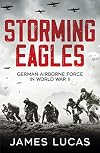
I picked this book up because I have recently read an account of the Nazi invasion of the Netherlands in May 1940 (Ryan Noppen's Holland 1940; the Luftwaffe's first setback in the West), which looked at Fall Gelb ('Case Yellow') from the point of view of the Dutch air defences. Noppen was a neutral author, and painted a picture of Fall Gelb that is rather at variance with the standard history of the Blitzkrieg in the West. I immediately looked to see what perspective this book offered on the show more same subject.
Lucas' book is written from a different perspective, using accounts from many of the German Fallschirmjäger (paratroops) themselves. It came as little surprise, then, to find that this gave an account of the campaign in the Netherlands that reinforced the German view that victory was achieved through the shock tactics of force projection and the rapid support of forward airborne forces by the timely movement of armoured forces in support.
Noppen's account suggests otherwise. The Dutch possessed an effective centralised air defence network which was able to alert airfields to Luftwaffe formation movements in the initial stages of the attack. This meant that air defences were alerted to the threat and were able to mount an effective defence. In the five days of Fall Gelb, 455 of the German aircraft deployed were put out of action by the Dutch, 69% of which were the Junkers Ju.52 transports that the Germans intended to rely upon for the insertion of the second wave of airborne assaults (let alone the subsequent invasion of Britain). Only 35% of the intended total of German troops were landed by the end of the day one of the operation, and many of those were out of position in relation to their objectives; more than 2,700 out of 3,500 of those troops became either casualties or prisoners of war. The PoWs were handed over to the British, who had facilities for handling captives; hence these troops were not returned to service after the Netherlands fell.
So this history, at least as far as the invasion of the Netherlands is concerned, is definitely written by those who survived the initial wave of the attack, who were quite happy to relate their account of their eventual victory and their part in it. The real reason for the Dutch surrender - that Goering threatened to reduce both Rotterdam and Utrecht to rubble through aerial bombardment if the Netherlands did not surrender - was way beyond the level of those who provided their account of the victory for this book. The surviving foot soldiers' view of victory or defeat is based wholly on what they saw, and only reinforced by what they are told later. So we get accounts of individuals seeing Ju.52s damaged by opposition fire - but they saw the ones that made it back to base, not the ones left burning on beaches.
As far as the invasion of the Netherlands is concerned, then, this is definitely history written by (or in this case, on behalf of) the winners. It simply reinforces the German propaganda of the invincibility of those who planned and carried out Blitzkrieg. It should be read with that in mind.
Be aware however, that this is my initial reaction based on the chapter I read because another account of the same action was fresh in my mind. A deeper review will follow my more detailed reading of the whole book. show less
Lucas' book is written from a different perspective, using accounts from many of the German Fallschirmjäger (paratroops) themselves. It came as little surprise, then, to find that this gave an account of the campaign in the Netherlands that reinforced the German view that victory was achieved through the shock tactics of force projection and the rapid support of forward airborne forces by the timely movement of armoured forces in support.
Noppen's account suggests otherwise. The Dutch possessed an effective centralised air defence network which was able to alert airfields to Luftwaffe formation movements in the initial stages of the attack. This meant that air defences were alerted to the threat and were able to mount an effective defence. In the five days of Fall Gelb, 455 of the German aircraft deployed were put out of action by the Dutch, 69% of which were the Junkers Ju.52 transports that the Germans intended to rely upon for the insertion of the second wave of airborne assaults (let alone the subsequent invasion of Britain). Only 35% of the intended total of German troops were landed by the end of the day one of the operation, and many of those were out of position in relation to their objectives; more than 2,700 out of 3,500 of those troops became either casualties or prisoners of war. The PoWs were handed over to the British, who had facilities for handling captives; hence these troops were not returned to service after the Netherlands fell.
So this history, at least as far as the invasion of the Netherlands is concerned, is definitely written by those who survived the initial wave of the attack, who were quite happy to relate their account of their eventual victory and their part in it. The real reason for the Dutch surrender - that Goering threatened to reduce both Rotterdam and Utrecht to rubble through aerial bombardment if the Netherlands did not surrender - was way beyond the level of those who provided their account of the victory for this book. The surviving foot soldiers' view of victory or defeat is based wholly on what they saw, and only reinforced by what they are told later. So we get accounts of individuals seeing Ju.52s damaged by opposition fire - but they saw the ones that made it back to base, not the ones left burning on beaches.
As far as the invasion of the Netherlands is concerned, then, this is definitely history written by (or in this case, on behalf of) the winners. It simply reinforces the German propaganda of the invincibility of those who planned and carried out Blitzkrieg. It should be read with that in mind.
Be aware however, that this is my initial reaction based on the chapter I read because another account of the same action was fresh in my mind. A deeper review will follow my more detailed reading of the whole book. show less
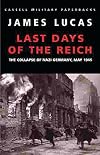
I was drawn to this book as it is one of the few wartime histories to talk about Austria in any detail. But there is certainly more to it than that. Written in 1986, it has a Cold War perspective on the events of May 1945, complete with the rhetoric of the times. (The odd favourable comment about contemporary Yugoslavia will certainly raise eyebrows for the modern reader.)
The usual narrative on May 1945 is taken up almost completely with the fall of Berlin under the onslaught of the Red Army show more and Hitler's suicide. More recent histories have mentioned, to a greater or lesser extent, the rampage of rape and looting that the Red Army carried out in the following days. The end of the war elsewhere in Europe is little appreciated. Lucas details the ending of the war on all the remaining fronts, and describes well the chaos as different elements of the German forces reacted to the news differently, some of them fighting on, others attempting to arrange an honourable surrender. In nearly all cases, the impetus to escape the oncoming Russians was considerable.
Lucas talks at length about the attempts to evacuate German civilians from the Baltic ports to the west; the liberation of Vienna, Graz, Innsbruck and Salzburg; and he touches on the actions of other Allied forces in their final moves into the Reich. As a British writer, it is notable that he does write about the excesses exercised by French and American troops on the civilian populations, whilst the British are described almost as paragons of virtue in comparison. His contempt is reserved for the Allied governments and senior commanders who oversaw the handing back of displaced civilians and combatants from occupied countries to the Red Army.
There is a detailed discussion of the Austrian Freedom Front and O5, the partisan forces operating in the west of the country; American and British troops entering Austria were surprised to find the country already under the control of a post-Nazi provisional government and with well-organised partisans exercising military control. However, this outward display of organisation hid underlying internal tensions, some of which were a continuation of the period Austrians call "the Civil War" in the inter-war period, and some of which continue to have faint echoes today.
He devotes considerable discussion to the "Alpine Redoubt", the propaganda thread that suggested that the Nazi high command had a series of impregnable fortifications in the Austrian and Bavarian Alps, to where the surviving German forces would retreat and from where they would then wage continual war, including with the secret super weapons that were supposedly only weeks away from deployment. The Allies, especially the Americans, fell for this so thoroughly that it shaped the whole outcome of the final stages of the war, Eisenhower diverting his armies to the south-east and pouring additional resources into the Italian front to defeat a strong enemy that wasn't there. Although the intelligence suggested otherwise, there was sufficient of it that suggested the "Alpine Redoubt" story that it convinced senior commanders, though it is quite likely that they were seeing what they expected to see. So the Americans, British and other allied forces on the western front concentrated on the south and the Baltic coast, and left Berlin to the Russians. And so Europe was shaped for the next fifty years.
The one point about there being considerable Allied force strength in northern Italy and southern Austria was that those forces were present in sufficient numbers to deter Tito from expanding Yugoslavia into the Austrian province of Carinthia (Kärnten) and also into the adjoining provinces of Italy. At one point, the western allies were contemplating having to fight a new war against Tito days after the end of the German war. Fortunately, that fate was averted.
Lucas makes reference to manpower shortages amongst the British, but omits to set that into context. At that time, troops were being rotated out of the front and sent back to the UK in preparation for the formation of Tiger Force, the Allied expeditionary force to invade the Japanese Home Islands. (This was my father's experience; he was a part of that rotation, leaving Italy immediately after the fall of Rome to go to a holding battallion before starting training for the Far East.)
This is specifically a military history, but there is a fair amount of content relating to the fate of civilian populations. However, as a military history, it stops with the arrival of members of the Allied Control Commissions and the transition from military invasion to occupation. How the events of the early post-war years set the political agenda that led to the European Union is outside the scope of this book, yet the modern EU grew from the ashes of war in ways that we find difficult to contemplate nowadays.
Nonetheless, this is a useful account of the military detail of that short period. (It should be noted that proof-reading is quite poor and there are a number of geographical inaccuracies.) show less
The usual narrative on May 1945 is taken up almost completely with the fall of Berlin under the onslaught of the Red Army show more and Hitler's suicide. More recent histories have mentioned, to a greater or lesser extent, the rampage of rape and looting that the Red Army carried out in the following days. The end of the war elsewhere in Europe is little appreciated. Lucas details the ending of the war on all the remaining fronts, and describes well the chaos as different elements of the German forces reacted to the news differently, some of them fighting on, others attempting to arrange an honourable surrender. In nearly all cases, the impetus to escape the oncoming Russians was considerable.
Lucas talks at length about the attempts to evacuate German civilians from the Baltic ports to the west; the liberation of Vienna, Graz, Innsbruck and Salzburg; and he touches on the actions of other Allied forces in their final moves into the Reich. As a British writer, it is notable that he does write about the excesses exercised by French and American troops on the civilian populations, whilst the British are described almost as paragons of virtue in comparison. His contempt is reserved for the Allied governments and senior commanders who oversaw the handing back of displaced civilians and combatants from occupied countries to the Red Army.
There is a detailed discussion of the Austrian Freedom Front and O5, the partisan forces operating in the west of the country; American and British troops entering Austria were surprised to find the country already under the control of a post-Nazi provisional government and with well-organised partisans exercising military control. However, this outward display of organisation hid underlying internal tensions, some of which were a continuation of the period Austrians call "the Civil War" in the inter-war period, and some of which continue to have faint echoes today.
He devotes considerable discussion to the "Alpine Redoubt", the propaganda thread that suggested that the Nazi high command had a series of impregnable fortifications in the Austrian and Bavarian Alps, to where the surviving German forces would retreat and from where they would then wage continual war, including with the secret super weapons that were supposedly only weeks away from deployment. The Allies, especially the Americans, fell for this so thoroughly that it shaped the whole outcome of the final stages of the war, Eisenhower diverting his armies to the south-east and pouring additional resources into the Italian front to defeat a strong enemy that wasn't there. Although the intelligence suggested otherwise, there was sufficient of it that suggested the "Alpine Redoubt" story that it convinced senior commanders, though it is quite likely that they were seeing what they expected to see. So the Americans, British and other allied forces on the western front concentrated on the south and the Baltic coast, and left Berlin to the Russians. And so Europe was shaped for the next fifty years.
The one point about there being considerable Allied force strength in northern Italy and southern Austria was that those forces were present in sufficient numbers to deter Tito from expanding Yugoslavia into the Austrian province of Carinthia (Kärnten) and also into the adjoining provinces of Italy. At one point, the western allies were contemplating having to fight a new war against Tito days after the end of the German war. Fortunately, that fate was averted.
Lucas makes reference to manpower shortages amongst the British, but omits to set that into context. At that time, troops were being rotated out of the front and sent back to the UK in preparation for the formation of Tiger Force, the Allied expeditionary force to invade the Japanese Home Islands. (This was my father's experience; he was a part of that rotation, leaving Italy immediately after the fall of Rome to go to a holding battallion before starting training for the Far East.)
This is specifically a military history, but there is a fair amount of content relating to the fate of civilian populations. However, as a military history, it stops with the arrival of members of the Allied Control Commissions and the transition from military invasion to occupation. How the events of the early post-war years set the political agenda that led to the European Union is outside the scope of this book, yet the modern EU grew from the ashes of war in ways that we find difficult to contemplate nowadays.
Nonetheless, this is a useful account of the military detail of that short period. (It should be noted that proof-reading is quite poor and there are a number of geographical inaccuracies.) show less

Very interesting and informative overview of the German special forces in WW2. Author split the book into sections per branch of the armed services - army, navy, air force - and additional chapter on German Werewolf program, underground partisan movement with goal to harass the Allied forces as they moved further into Germany (which backfired on an epic scale).
From all of the special forces mentioned it is clear that only army units had an actual effect on the battlefield. Brandenburgers, show more parachute forces and Skorzeny's commandos fought from the start of the war and were involved in some daring and (as end approached) some quite outrageous operations. They were the nucleus of the German special forces and had the necessary training and attitude for the dangerous mission they were sent into.
Navy midget-submarine units and majority of air force specialist forces acted very much like Kamikaze - fighting with inadequate and quite dangerous technology they were more danger to themselves than to the enemy. This was the first time I heard about the air force ramming squads - it just shows how desperate Nazi regime became at the end and how ready they were to spend the lives of their own people (if they could not rule then everything should go to dust).
Less said about the disaster called Werewolf the better.
Author gives a very detail picture how well trained, specialist force quickly degenerated through attrition and mad-supreme-command into a rag tag force tasked with the impossible.
I have to agree with author's final sentence in this book - Germans showed they were apt at unconventional warfare but due to internal Nazi party conflicts and lack of specialized equipment and weapons these forces did not fully develop. And thank God for that.
Recommended to all interested in WW2 and special forces. show less
From all of the special forces mentioned it is clear that only army units had an actual effect on the battlefield. Brandenburgers, show more parachute forces and Skorzeny's commandos fought from the start of the war and were involved in some daring and (as end approached) some quite outrageous operations. They were the nucleus of the German special forces and had the necessary training and attitude for the dangerous mission they were sent into.
Navy midget-submarine units and majority of air force specialist forces acted very much like Kamikaze - fighting with inadequate and quite dangerous technology they were more danger to themselves than to the enemy. This was the first time I heard about the air force ramming squads - it just shows how desperate Nazi regime became at the end and how ready they were to spend the lives of their own people (if they could not rule then everything should go to dust).
Less said about the disaster called Werewolf the better.
Author gives a very detail picture how well trained, specialist force quickly degenerated through attrition and mad-supreme-command into a rag tag force tasked with the impossible.
I have to agree with author's final sentence in this book - Germans showed they were apt at unconventional warfare but due to internal Nazi party conflicts and lack of specialized equipment and weapons these forces did not fully develop. And thank God for that.
Recommended to all interested in WW2 and special forces. show less
The Last Days of Hitler : Legend, Evidence and Truth (Military History Ser.) by Anton Joachimsthaler
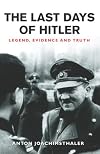
This curate's egg of a book takes its place in the voluminous literature of the Fuhrerbunker in 1945. It begins unpromisingly and uninterestingly with a cavalcade of minutiae, petty and pedantic, wherein he savages previous researches of the events described. Who can get interested in, or really cares, whether the toilet was on the left side or the right of the main entrance, or whether the walls were 1.85 m thick or 2.7? Next up, the main thrust of the book ensues, which is a thorough and show more interesting narrative of the final year of the war viewed through the prism of Reichsfuhrer Hitler's health and the inside politics within the Nazi hierarchy which becomes extremely detailed during late April 1945. Interest shrinks again in the book's final portion, which pores through eyewitness accounts, mostly repetitive, of how the suicides and cremations were were carried out. It is difficult to fault the author's research, but the trivialities and his didactic tone make stretches of this a difficult go. show less
Lists
You May Also Like


Associated Authors
Statistics
- Works
- 54
- Also by
- 3
- Members
- 1,815
- Popularity
- #14,160
- Rating
- 3.8
- Reviews
- 19
- ISBNs
- 139
- Languages
- 8
- Favorited
- 1