
Laura Imai Messina
Author of The Phone Box at the Edge of the World
About the Author
Image credit: Wikipedia
Works by Laura Imai Messina
Tagged
Common Knowledge
- Canonical name
- Imai Messina, Laura
- Other names
- Messina, Laura
- Birthdate
- 01/20/1981
- Gender
- female
- Education
- Tokyo University of Foreign Studies (PhD|comparative studies)
- Organizations
- Tokyo University of Foreign Studies
Scuola Holden
Vallardi Editore
Einaudi editore
Edizioni Piemme - Short biography
- Laura Imai Messina is an Italian novelist born and raised in Rome. She earned her PhD in comparative studies from Tokyo University of Foreign Studies and lives in Japan with her husband and two children. [from The Phone Booth at the Edge of the World]
From Facebook: she is a writer at Vallardi Editore, Einaudi editore, and Edizioni Piemme. She works at Scuola Holden and the Tokyo University of Foreign Studies (TUFS) - Nationality
- Italy
- Birthplace
- Rome
- Places of residence
- Japan
Members
Reviews
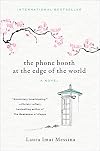
“…Inside each of us we preserve the fingerprints of those who taught us how to love…”
To be honest, I didn’t pick up this book thinking I’d like it. But as someone who has experienced the kind of great personal loss talked about in this book, I surprisingly fell in love with it.
The story of Yui, Takeshi, and all the other people who come to find themselves at the Wind Phone of Bell Gardia does such an amazing and beautiful job of portraying grief and its many forms. It shows how show more everyone goes through the grieving process differently. And it shows that healing is possible - you can find joy and love on the other side. Everyone who has lost a part of themselves needs to read this book; I am certain you will find something that you relate to. show less
To be honest, I didn’t pick up this book thinking I’d like it. But as someone who has experienced the kind of great personal loss talked about in this book, I surprisingly fell in love with it.
The story of Yui, Takeshi, and all the other people who come to find themselves at the Wind Phone of Bell Gardia does such an amazing and beautiful job of portraying grief and its many forms. It shows how show more everyone goes through the grieving process differently. And it shows that healing is possible - you can find joy and love on the other side. Everyone who has lost a part of themselves needs to read this book; I am certain you will find something that you relate to. show less

In a Nutshell: A slowburn and heartwarming literary fiction about two lonely souls who find solace in each other. (No, this isn’t a romance.) Evocative writing, realistic characters. Grief and hope intertwined. Wanted more of the titular library, but the rest was beautiful. This is a mood read. Better if actually read than on audio.
~~~~~~~~~~~~~~~~~~~~~~~~~~~~
Plot Preview:
I am not a big fan of Japanese literature. Whatever I have read so far by Japanese authors has not clicked much with me. However, I do surprisingly well when outsiders write books based in Japan. The setting and the social mores are utilised so beautifully by these ‘gaijin’ that it results in deeply poignant stories without the usual constraints (at least in my eyes) of Japanese writing. This book is one of them.
Author Laura Imai Messina is an Italian who has lived in Tokyo ever since she was twenty-three. This book, like all her other works, was originally written in Italian. "L'isola Dei Battiti Del Cuore" (2022) has now been translated to English by her regular collaborator, translator Lucy Rand. I found this book a well-written literary narrative that offers a touching ode to Japanese culture and beliefs.
A character-oriented literary fiction needs well-defined characters, and the two main characters fit the bill perfectly. While there are some women characters in the story as well, it is primarily focussed on the two males. With the large age gap between the two, it is easy to see them in a pseudo parent-child bond. But as they are unrelated, this bond fluidly shifts into a sibling bond or a neighbourly bond or a friendship bond, as per the need of their emotions. I love how the author (along with the translator) was able to capture Shuichi’s and Kenta’s emotions in a genuine manner.
Both Shuichi and Kenta have grief in their past. But the true extent of their heartbreaks, the depth of their familial struggles, and their desperate attempts at overcoming sorrow and loneliness aren’t dumped on us at a go. The story unveils its lead characters’ backstories gradually, so there are many surprises and revelations along the way that help us understand the characters and their emotions even better.
Through this layered pattern of storytelling, the book covers many tricky themes. I won't reveal more beyond what I have said above as these would be major spoilers. But suffice it to say, don’t pick up this book when you are feeling low or maudlin. Of course, there is a lot of hope, love, understanding, resilience, and joy in the story as well. But the dominant tone is somewhat melancholic, so read it only when you are in a strong headspace.
The story is much more than just about the man and the boy connecting over their shared sadness. We see some realistic connections across characters in varied relationships, we see the impact of the past on the present, and we see the role guilt plays in hindering happiness. Shuichi’s connection with his mother is also strongly felt on the pages, even though she is no longer alive when the book begins.
Thanks to the various characters’ interactions, we see several interesting details about how Japanese kanji are formed. I appreciate how the book included the Japanese characters also so that we could actually see the kanji. But my favourite add-on was the part detailing the sound of the heartbeat in various languages – this was such a treat! In fact, the whole book has several interesting titbits about hearts and heartbeats – all amazing facts that trivia lovers will relish.
The titular “Heartbeat Library” felt like such a fabulous but fantastical idea. Imagine a place that records the heartbeats of visitors for perpetuity! As much as I loved learning about this unusual library on Teshima Island, I was even more impressed that the place is not fictional but real. However, unlike what the title indicates, the library is more like a background to the events of the book than the focal point, It is hardly present until the 30%, and even then, it pops up only sporadically. This doesn’t take away anything from the story because patience does show us the importance of the library in the plot. But if you wanted the library to be the main setting of the story, you might need to readjust your expectations.
The writing is truly beautiful. There are so many thought-provoking quotes that made me pause and ponder. The narrative gets a tad abstract and philosophical at times, but the overall feel is still very grounded. While the timeline is linear, there are several interludes from other characters and other time points. These might at times seem unrelated to the main plot but they all connect neatly later in the story. After I finished the book the second time, I went through the interludes again.
Did you notice that I said ‘the second time’? More on this in the next section.
show less
~~~~~~~~~~~~~~~~~~~~~~~~~~~~
Plot Preview:
Off the west coast of Japan on the serene island of Teshima is a small library, where the heartbeats of thousands ofshow more
people from all over the world have been collected. Whether now living or dead, their heartbeats continue to thrum in this quaint library.
In the distant city of Kakamura, there are two persons in very different circumstances but equally lonely. Forty-year-old Shuichi, who has just lost his mother, has returned to his childhood home to clear her house. Eight-year-old Kenta, stuck with separated parents who have no time for him, keeps hovering around Shuichi’s mother’s house. As the two discover each other’s presence, their daily interactions create a bond between the man and the boy. But what have these two people got to do with the library of heartbeats? Read and find out.
The story comes to us mostly in the third-person perspectives of Shuichi and Kenta.
I am not a big fan of Japanese literature. Whatever I have read so far by Japanese authors has not clicked much with me. However, I do surprisingly well when outsiders write books based in Japan. The setting and the social mores are utilised so beautifully by these ‘gaijin’ that it results in deeply poignant stories without the usual constraints (at least in my eyes) of Japanese writing. This book is one of them.
Author Laura Imai Messina is an Italian who has lived in Tokyo ever since she was twenty-three. This book, like all her other works, was originally written in Italian. "L'isola Dei Battiti Del Cuore" (2022) has now been translated to English by her regular collaborator, translator Lucy Rand. I found this book a well-written literary narrative that offers a touching ode to Japanese culture and beliefs.
A character-oriented literary fiction needs well-defined characters, and the two main characters fit the bill perfectly. While there are some women characters in the story as well, it is primarily focussed on the two males. With the large age gap between the two, it is easy to see them in a pseudo parent-child bond. But as they are unrelated, this bond fluidly shifts into a sibling bond or a neighbourly bond or a friendship bond, as per the need of their emotions. I love how the author (along with the translator) was able to capture Shuichi’s and Kenta’s emotions in a genuine manner.
Both Shuichi and Kenta have grief in their past. But the true extent of their heartbreaks, the depth of their familial struggles, and their desperate attempts at overcoming sorrow and loneliness aren’t dumped on us at a go. The story unveils its lead characters’ backstories gradually, so there are many surprises and revelations along the way that help us understand the characters and their emotions even better.
Through this layered pattern of storytelling, the book covers many tricky themes. I won't reveal more beyond what I have said above as these would be major spoilers. But suffice it to say, don’t pick up this book when you are feeling low or maudlin. Of course, there is a lot of hope, love, understanding, resilience, and joy in the story as well. But the dominant tone is somewhat melancholic, so read it only when you are in a strong headspace.
The story is much more than just about the man and the boy connecting over their shared sadness. We see some realistic connections across characters in varied relationships, we see the impact of the past on the present, and we see the role guilt plays in hindering happiness. Shuichi’s connection with his mother is also strongly felt on the pages, even though she is no longer alive when the book begins.
Thanks to the various characters’ interactions, we see several interesting details about how Japanese kanji are formed. I appreciate how the book included the Japanese characters also so that we could actually see the kanji. But my favourite add-on was the part detailing the sound of the heartbeat in various languages – this was such a treat! In fact, the whole book has several interesting titbits about hearts and heartbeats – all amazing facts that trivia lovers will relish.
The titular “Heartbeat Library” felt like such a fabulous but fantastical idea. Imagine a place that records the heartbeats of visitors for perpetuity! As much as I loved learning about this unusual library on Teshima Island, I was even more impressed that the place is not fictional but real. However, unlike what the title indicates, the library is more like a background to the events of the book than the focal point, It is hardly present until the 30%, and even then, it pops up only sporadically. This doesn’t take away anything from the story because patience does show us the importance of the library in the plot. But if you wanted the library to be the main setting of the story, you might need to readjust your expectations.
The writing is truly beautiful. There are so many thought-provoking quotes that made me pause and ponder. The narrative gets a tad abstract and philosophical at times, but the overall feel is still very grounded. While the timeline is linear, there are several interludes from other characters and other time points. These might at times seem unrelated to the main plot but they all connect neatly later in the story. After I finished the book the second time, I went through the interludes again.
Did you notice that I said ‘the second time’? More on this in the next section.
show less
I loved this book - drawn in by the cover and title and its true premise based on the Wind Phone in Japan near the city of Otsuchi where those who lost loved ones (18,500 people from the wave and resulting earthquake and fires) can speak to them via a single phone booth with a disconnected phone. The fictional part follows Yui, who lost her mother and 3-yr. old daughter, and has immersed herself in her work as a radio show host to try to contain her grief. A caller/guest mentions the phone show more and Yui begins a journey back to herself and living life. Her first visit, after a 6 hour drive from Tokyo connects her with Takeshi, also a first-time pilgrim who lost his wife and is struggling to parent his own 3-yr. old daughter who stopped speaking after the disaster. The two become friends, and support each other, and begin monthly trips together to visit the garden where the phone resides, and its keeper Suzuki. They get to know some of the other grieving people - some briefly, some repeatedly and between community and communication, they begin to heal. It is beautifully written, poignant, full of hope and speaks to both collective grief and individual grief and the intersection of the two. A lovely twist is that chapters alternate with narration and short little 'extras' that give us another peek inside the people and their stories. For example, one of the inter-chapters is the playlist Yui listens to on her drive to the mountain. They add a little humor to a hard topic, which never feels too heavy, thanks to the writer's skill and poetic language. show less
One Sentence Summary: When the tsunami on March 11, 2011 took her mother and young daughter, Yui struggles to move forward, until she hears of a disconnected phone booth people use to speak to those they have lost and meets Takeshi, a man with a young daughter who lost his wife.
In an attempt to get myself reading more Asian and Asian-inspired books, I requested this one from NetGalley, and was approved! I thought it might be interesting and was intrigued by the idea of people using a show more disconnected phone booth to talk to the people they had lost as a way of dealing with grief. I did not expect for this book to make me feel so deeply, to look at my children and treasure their lives any more than I already do, and find a place of hope and healing.
The Plot: Rooted in Grief
Yui lost her mother and daughter in the March 11, 2011 tsunami that struck part of Japan. Afterwards, she does little more than go through the motions of life, only coming alive when hosting her radio show. Until a man calls in and talks about the disconnected phone booth at Bell Gardia that offers a way for people to speak to their loved ones. There, the winds carry their messages to those that have been lost.
On her way from Tokyo to Bell Gardia, Yui encounters a man who has lost his wife and whose young daughter hasn't spoken since her mother died. Takeshi has decided to travel to the phone booth to speak with his wife, and they decide to go together.
Yui and Takeshi begin to travel to Bell Gardia together every month, forming a friendship that goes a long way to healing both of them.
I really enjoyed The Phone Booth at the Edge of the World, but it also felt like it was split between two different kinds of stories. The first half focused on Yui and Takeshi and their grief at losing their loved ones. It felt heavy and sad, but the blooming friendship between the two provided a sweet counterpoint and a flourish of hope. I loved that it introduced other minor characters, some who recur and some who are only mentioned in passing later in the story, but they all had grief and the phone booth in common. It highlighted the many ways people deal with grief and how the loss affects them. The second half, though, read more like a love story and I was disappointed the heavy grief themes were overridden by it. I couldn't help the feeling that the second half was trying to erase or mute the first half in favor of simply moving on. At the same time, it does highlight the need to move on, the hope of finding something good to love again, the joy that comes after the pain. I just wish the second half had felt more like a continuation and evolution of the first half instead of a turn around the corner.
This book was written in a really interesting way. Between each chapter was something of a little bite of life. There were mundane lists, an item on exhibit, a short conversation between characters. They were in some way related to the story and I loved how they helped bring the characters to life a little more, showcased how normal they were. At first they were a little weird, but I came to enjoy and appreciate them. They were good reminders that people actually lived through the many losses detailed throughout the first half of the book and that their lives aren't that different from our own.
The Characters: Polite and Restrained
As The Phone Booth at the Edge of the World is set in Japan, all of the main characters are Japanese. They all had some measure of emotional restraint, which made it a little difficult to get to know them. They felt almost sleek and too polite and proper, but, reading deeper, there were bits and pieces almost like wisps that spoke to deeper emotions. The second half especially deep dived into Yui and a bit into Takeshi, but it also made them feel like they took a sudden turn as the first half focused more on their grief than really developing them. Then the second half hits and the reader really jumps into what they think and feel.
Most of the story is told from Yui's perspective, so it's her the reader gets to know the most. She's restrained, polite, quiet, but she thinks deeply and constantly. Often, her thoughts run away from her, but she seems almost incapable of voicing them, so prefers to find something to run off to. While she seemed kind of cold and distant during the first half, the reader gets to see a woman with deep worries and insecurities in the second half that really make the story roll.
The Setting: Japan
I loved The Phone Booth at the Edge of the World because it's set in Japan and so unapologetically drops the reader straight into the Japanese culture. No time is taken to introduced the reader to this Eastern culture, which is quite different from Western cultures. Being from an East Asian culture myself, it was almost comforting to find similarities, to find a book that I felt like I got and that got me.
On one hand, it might be a bit alienating to readers who don't understand Eastern cultures. It is absolutely a full immersion in the Japanese culture, not how various media sources portray it, but as how life actually operates. On the other, it almost felt like home. Close to home as I'm Chinese, but, still, it's rare when I read a book that just screams Asian and wraps me in a comforting blanket. I felt like I got it and was actually thankful the author didn't take time out of the story to fully orient the reader to the world.
Overall: Beautiful Despite Revolving Around Grief
The Phone Booth at the Edge of the World is not a light read. It deals very heavily and very deeply with grief. It really affected me as Yui loses her three-year-old daughter, and I couldn't help but look at my own three-year-old daughter and want to hug her closer. Her memory of the last time she saw her daughter really struck and stayed with me. Overall, this is a beautiful story. It's heartbreaking, it's sometimes hard to read, but it also speaks to moving forward while still remembering, of having hope and finding the drive to live again.
Thank you to NetGalley and the publisher for a review copy. All opinions expressed are my own. show less
In an attempt to get myself reading more Asian and Asian-inspired books, I requested this one from NetGalley, and was approved! I thought it might be interesting and was intrigued by the idea of people using a show more disconnected phone booth to talk to the people they had lost as a way of dealing with grief. I did not expect for this book to make me feel so deeply, to look at my children and treasure their lives any more than I already do, and find a place of hope and healing.
The Plot: Rooted in Grief
Yui lost her mother and daughter in the March 11, 2011 tsunami that struck part of Japan. Afterwards, she does little more than go through the motions of life, only coming alive when hosting her radio show. Until a man calls in and talks about the disconnected phone booth at Bell Gardia that offers a way for people to speak to their loved ones. There, the winds carry their messages to those that have been lost.
On her way from Tokyo to Bell Gardia, Yui encounters a man who has lost his wife and whose young daughter hasn't spoken since her mother died. Takeshi has decided to travel to the phone booth to speak with his wife, and they decide to go together.
Yui and Takeshi begin to travel to Bell Gardia together every month, forming a friendship that goes a long way to healing both of them.
I really enjoyed The Phone Booth at the Edge of the World, but it also felt like it was split between two different kinds of stories. The first half focused on Yui and Takeshi and their grief at losing their loved ones. It felt heavy and sad, but the blooming friendship between the two provided a sweet counterpoint and a flourish of hope. I loved that it introduced other minor characters, some who recur and some who are only mentioned in passing later in the story, but they all had grief and the phone booth in common. It highlighted the many ways people deal with grief and how the loss affects them. The second half, though, read more like a love story and I was disappointed the heavy grief themes were overridden by it. I couldn't help the feeling that the second half was trying to erase or mute the first half in favor of simply moving on. At the same time, it does highlight the need to move on, the hope of finding something good to love again, the joy that comes after the pain. I just wish the second half had felt more like a continuation and evolution of the first half instead of a turn around the corner.
This book was written in a really interesting way. Between each chapter was something of a little bite of life. There were mundane lists, an item on exhibit, a short conversation between characters. They were in some way related to the story and I loved how they helped bring the characters to life a little more, showcased how normal they were. At first they were a little weird, but I came to enjoy and appreciate them. They were good reminders that people actually lived through the many losses detailed throughout the first half of the book and that their lives aren't that different from our own.
The Characters: Polite and Restrained
As The Phone Booth at the Edge of the World is set in Japan, all of the main characters are Japanese. They all had some measure of emotional restraint, which made it a little difficult to get to know them. They felt almost sleek and too polite and proper, but, reading deeper, there were bits and pieces almost like wisps that spoke to deeper emotions. The second half especially deep dived into Yui and a bit into Takeshi, but it also made them feel like they took a sudden turn as the first half focused more on their grief than really developing them. Then the second half hits and the reader really jumps into what they think and feel.
Most of the story is told from Yui's perspective, so it's her the reader gets to know the most. She's restrained, polite, quiet, but she thinks deeply and constantly. Often, her thoughts run away from her, but she seems almost incapable of voicing them, so prefers to find something to run off to. While she seemed kind of cold and distant during the first half, the reader gets to see a woman with deep worries and insecurities in the second half that really make the story roll.
The Setting: Japan
I loved The Phone Booth at the Edge of the World because it's set in Japan and so unapologetically drops the reader straight into the Japanese culture. No time is taken to introduced the reader to this Eastern culture, which is quite different from Western cultures. Being from an East Asian culture myself, it was almost comforting to find similarities, to find a book that I felt like I got and that got me.
On one hand, it might be a bit alienating to readers who don't understand Eastern cultures. It is absolutely a full immersion in the Japanese culture, not how various media sources portray it, but as how life actually operates. On the other, it almost felt like home. Close to home as I'm Chinese, but, still, it's rare when I read a book that just screams Asian and wraps me in a comforting blanket. I felt like I got it and was actually thankful the author didn't take time out of the story to fully orient the reader to the world.
Overall: Beautiful Despite Revolving Around Grief
The Phone Booth at the Edge of the World is not a light read. It deals very heavily and very deeply with grief. It really affected me as Yui loses her three-year-old daughter, and I couldn't help but look at my own three-year-old daughter and want to hug her closer. Her memory of the last time she saw her daughter really struck and stayed with me. Overall, this is a beautiful story. It's heartbreaking, it's sometimes hard to read, but it also speaks to moving forward while still remembering, of having hope and finding the drive to live again.
Thank you to NetGalley and the publisher for a review copy. All opinions expressed are my own. show less
Lists
Awards


You May Also Like


Associated Authors
Statistics
- Works
- 18
- Members
- 865
- Popularity
- #29,594
- Rating
- 3.9
- Reviews
- 27
- ISBNs
- 66
- Languages
- 8