
Ruth Ozeki
Author of A Tale for the Time Being
About the Author
Ruth Ozeki received degrees in English literature and Asian studies from Smith College. She is a novelist, filmmaker, and Zen Buddhist priest. Her first novel, My Year of Meats, was published in 1998. Her other novels include All Over Creation and A Tale for the Time-Being, which was shortlisted show more for the Man Booker Prize. Her documentary and dramatic independent films, including Body of Correspondence and Halving the Bones, have been shown on PBS and at the Sundance Film Festival. (Bowker Author Biography) show less
Works by Ruth Ozeki
Body of Correspondence 1 copy
Ozeki, Ruth Archive 1 copy
Associated Works
Charlie Chan Is Dead 2: At Home in the World: An Anthology of Contemporary Asian-American Fiction (2004) — Contributor — 98 copies, 1 review
Inside and Other Short Fiction: Japanese Women by Japanese Women (2008) — Foreword, some editions — 80 copies, 2 reviews
The Artists' and Writers' Cookbook: A Collection of Stories with Recipes (2016) — Contributor — 19 copies
Tagged
Common Knowledge
- Canonical name
- Ozeki, Ruth
- Legal name
- Lounsbury, Ruth Diana
- Birthdate
- 1956-03-12
- Gender
- female
- Education
- Smith College (English and Asian Studies)
Nara University (classical Japanese literature)
Concord Academy - Occupations
- Zen priest
film director
instructor (Kyoto Sangyo University ∙ English)
art director
novelist - Organizations
- Everyday Zen (website)
- Awards and honors
- John Dos Passos Prize (2014)
- Relationships
- Kellhammer, Oliver (husband)
- Nationality
- USA (birth)
Canada - Birthplace
- New Haven, Connecticut, USA
- Places of residence
- New Haven, Connecticut, USA
New York, New York, USA
Vancouver, British Columbia, Canada
Cortez Island, British Columbia, Canada - Map Location
- Canada
Members
Discussions
2013 Booker longlist: A Tale for the Time Being by Ruth Ozeki in Booker Prize (October 2015)
Reviews

Annabelle and her son Benny are thrown completely off course by the accidental death of husband and father Kenji. Annabelle works from home and Benny is a bit of an outcast at school; without a social support network things begin to fall apart. Annabelle’s grief manifests itself in hoarding behavior. In addition to demonstrating typical early adolescent behaviors like testing boundaries and creating emotional distance from his mom, Benny begins hearing voices from inanimate objects.
Ruth show more Ozeki introduces a number of colorful supporting characters, including a book that serves as narrator. This provides much-needed objectivity and emotional distance, as well as structure for Annabelle and Benny’s journey through grief and healing, which is anything but linear. I found both Annabelle and Benny annoying at times, but their flaws and idiosyncrasies are essential elements of the story. There were a couple of plot developments that I failed to connect with and didn’t add much to the story, but despite that I found the book hard to put down and zipped through it. show less
Ruth show more Ozeki introduces a number of colorful supporting characters, including a book that serves as narrator. This provides much-needed objectivity and emotional distance, as well as structure for Annabelle and Benny’s journey through grief and healing, which is anything but linear. I found both Annabelle and Benny annoying at times, but their flaws and idiosyncrasies are essential elements of the story. There were a couple of plot developments that I failed to connect with and didn’t add much to the story, but despite that I found the book hard to put down and zipped through it. show less

"My Year Of Meats" was a delightful read that provided an accessible story, engaging characters, humorous glimpses of two culture misunderstanding one another and still managed to take a serious look at the American meat industry and the American' public's unwillingness to believe unpleasant truths.
Published in 1999, "My Year Of Meats" tells the story of Jane, a Japanese American documentarian, who spends a year making a series called “My American Wife” that is intended to promote the show more sale of American beef in Japan by showing wholesome American housewives cooking wholesome American meat.
Much humor arises from the gaps in perception between what is happening in front of the camera and what makes it to the TV show, the gap between Japanese and American views of wholesomeness and the gaps between how men and women react to things. It's a sign of Ruth Ozeki's skill that the same gaps are also used to generate empathy and compassion for the people involved.
One of the themes of the book is our willingness and ability to take in a fact-based view of the world and to take action on what we know. Jane's journey from seeing her role as "Hey, it's a job." through, "I want to be fair to the people I film" to "I need to do something about these abuses" provides a vehicle for us to consider how and why we engage with what we know. During her journey, Jane comes to the view that, to some extent, we all cultivate an level of ignorance to protect ourselves from "Bad Knowledge", that is, knowledge that we acquire from a constant barrage of bad news that leaves us feeling powerless because we can't act on what we know so we would rather no know it.
I enjoyed Ruth Ozeki's lightness of touch. Her people are believable. Her humour is compassionate in its way and yet she still manages to seed new ideas and concepts. show less
Published in 1999, "My Year Of Meats" tells the story of Jane, a Japanese American documentarian, who spends a year making a series called “My American Wife” that is intended to promote the show more sale of American beef in Japan by showing wholesome American housewives cooking wholesome American meat.
Much humor arises from the gaps in perception between what is happening in front of the camera and what makes it to the TV show, the gap between Japanese and American views of wholesomeness and the gaps between how men and women react to things. It's a sign of Ruth Ozeki's skill that the same gaps are also used to generate empathy and compassion for the people involved.
One of the themes of the book is our willingness and ability to take in a fact-based view of the world and to take action on what we know. Jane's journey from seeing her role as "Hey, it's a job." through, "I want to be fair to the people I film" to "I need to do something about these abuses" provides a vehicle for us to consider how and why we engage with what we know. During her journey, Jane comes to the view that, to some extent, we all cultivate an level of ignorance to protect ourselves from "Bad Knowledge", that is, knowledge that we acquire from a constant barrage of bad news that leaves us feeling powerless because we can't act on what we know so we would rather no know it.
I enjoyed Ruth Ozeki's lightness of touch. Her people are believable. Her humour is compassionate in its way and yet she still manages to seed new ideas and concepts. show less
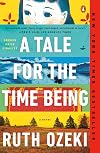
A Tale for the Time Being will rivet you to the page. You will share in the lives - trials and triumphs, and cares and grievances, of two Japanese women. One - a teenage girl - has written a diary full of frightful bullying and soul searching; the other is a novelist afraid she is losing her memory, or worse, going mad. As these two heroines’ stories unfold in alternating streams, our clever author mixes in meditations on Zen Buddhism, Japanese imperial wartime excesses, the idea that show more ordinary people have superpowers, and the possibility we live in multiple universes at once. It’s a rich, heady mix, told in honest, understandable human emotion; Ms. Ozeki’s ineffable results match her lofty ambitions in this beautiful, multifarious novel. It was shortlisted for the 2013 Booker Prize.
Naoko, or Nao, a young Japanese girl about to turn 16, starts keeping a diary. Somehow, about ten years later, a backpack containing it and some letters washes up on the shore of an island in British Columbia. Its discoverer, a novelist named Ruth, picks it up, starts to read it, and quickly feels a bond with this girl and her father, both of whom are beaten down by life. We read Nao’s heartbreaking story alongside Ruth, and drama unfolds in each strand. Nao struggles with cruel beatings and ostracization, her imminent failure in her classes, and beloved dad’s attempted suicides. Ruth relates very closely with Nao, and becomes concerned about her and her dad’s welfare, even though the diary was written ten years before.
These narratives sparkle with philosophical learning and outré possibility. Nao’s voice is pitch-perfect in her portion of the proceedings. But to her also belong the deepest thoughts on philosophical conundrums. She goes on a retreat to visit her great aunt Jiko, 104 year-old Buddhist nun, and finally begins to learn about life, the universe, selflessness, and mysticism. She considers these lessons in a child’s honest voice - and this is one of Ms. Ozeki’s foremost achievements here: she places into this yearning, confused girl’s unsophisticated language the most challenging and most timeless human questions. What is life and death? How is a life to be lived? How can we most effectively serve others? Why is there so much cruelty in the world?
These considerations take us into the realms also of modern quantum physics; the author provides an appendix (one of several on various subjects) with a detailed explanation of Schrödinger’s cat, for example. And these speculations serve her plot - there’s nothing gratuitous about them. (There is also, as though anything more were needed, a reference to a brief flowering of literature and a liberalization of women’s rights in pre-imperial Japan; this book might also serve as an example of the I-book genre published at that time.)
All the layers, all the twists, all the philosophy, all the superpowers,the fascinating structure - these mix together into a work of genius. Prepare to open yourself to a new experience and take this piece up.
http://bassoprofundo1.blogspot.com/2016/01/a-tale-for-time-being-by-ruth-ozeki.h... show less
Naoko, or Nao, a young Japanese girl about to turn 16, starts keeping a diary. Somehow, about ten years later, a backpack containing it and some letters washes up on the shore of an island in British Columbia. Its discoverer, a novelist named Ruth, picks it up, starts to read it, and quickly feels a bond with this girl and her father, both of whom are beaten down by life. We read Nao’s heartbreaking story alongside Ruth, and drama unfolds in each strand. Nao struggles with cruel beatings and ostracization, her imminent failure in her classes, and beloved dad’s attempted suicides. Ruth relates very closely with Nao, and becomes concerned about her and her dad’s welfare, even though the diary was written ten years before.
These narratives sparkle with philosophical learning and outré possibility. Nao’s voice is pitch-perfect in her portion of the proceedings. But to her also belong the deepest thoughts on philosophical conundrums. She goes on a retreat to visit her great aunt Jiko, 104 year-old Buddhist nun, and finally begins to learn about life, the universe, selflessness, and mysticism. She considers these lessons in a child’s honest voice - and this is one of Ms. Ozeki’s foremost achievements here: she places into this yearning, confused girl’s unsophisticated language the most challenging and most timeless human questions. What is life and death? How is a life to be lived? How can we most effectively serve others? Why is there so much cruelty in the world?
These considerations take us into the realms also of modern quantum physics; the author provides an appendix (one of several on various subjects) with a detailed explanation of Schrödinger’s cat, for example. And these speculations serve her plot - there’s nothing gratuitous about them. (There is also, as though anything more were needed, a reference to a brief flowering of literature and a liberalization of women’s rights in pre-imperial Japan; this book might also serve as an example of the I-book genre published at that time.)
All the layers, all the twists, all the philosophy, all the superpowers,the fascinating structure - these mix together into a work of genius. Prepare to open yourself to a new experience and take this piece up.
http://bassoprofundo1.blogspot.com/2016/01/a-tale-for-time-being-by-ruth-ozeki.h... show less
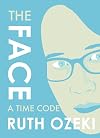
A philosophical memoir on selfhood from Ruth Ozeki, part of a series of writerly reflections on their face, identity, and books. Intermixed with a thoughtful traditional memoir on race, parental impact, femininity and aging, she also includes snippets from the experience of meditating on her face in a mirror for three (long) hours, a practice inspired by the Buddhist charnel house meditation.
I found this book gripping and very easy to read, with a few observations that particularly resonated show more and a few that feel ever so slightly sore. I'm sure my appreciation is in part related to my fascination with Buddhism and identity, and would recommend this book to anyone with similar interests. I'll definitely read more by Ozeki, and I'm quite curious about what the other equally-unknown-to-me authors in this series produced on this theme (Chris Abani and Tash Aw). show less
I found this book gripping and very easy to read, with a few observations that particularly resonated show more and a few that feel ever so slightly sore. I'm sure my appreciation is in part related to my fascination with Buddhism and identity, and would recommend this book to anyone with similar interests. I'll definitely read more by Ozeki, and I'm quite curious about what the other equally-unknown-to-me authors in this series produced on this theme (Chris Abani and Tash Aw). show less
Lists
Women Writers (1)
To Read (1)
READ IN 2022 (1)
Wishlist (1)
Overdue Podcast (1)
Five star books (2)
SFFCat 2015 (1)
First Novels (1)
Favourite Books (2)
Asia (1)
Canada (1)
Booker Prize (1)
Female Author (1)
Library List 4.5 (1)
Awards


You May Also Like


Associated Authors
Statistics
- Works
- 10
- Also by
- 7
- Members
- 10,458
- Popularity
- #2,276
- Rating
- 4.0
- Reviews
- 428
- ISBNs
- 182
- Languages
- 19
- Favorited
- 20


