
Paul Kriwaczek (1937–2011)
Author of Babylon: Mesopotamia and the Birth of Civilization
About the Author
Disambiguation Notice:
(yid) VIAF:34750413
Works by Paul Kriwaczek
In Search of Zarathustra: The First Prophet and the Ideas That Changed the World (2004) 460 copies, 9 reviews
Jiddische wereld 1 copy
Tagged
Common Knowledge
- Canonical name
- Kriwaczek, Paul
- Birthdate
- 1937-11-30
- Date of death
- 2011-03-02
- Gender
- male
- Education
- London Hospital Medical School
- Occupations
- dentist
broadcaster - Organizations
- BBC World Service
- Nationality
- Austria (birth)
UK (naturalized) - Birthplace
- Vienna, Austria
- Places of residence
- London, England, UK
- Associated Place (for map)
- London, England, UK
Members
Reviews
In Search of Zarathustra: Across Iran and Central Asia to Find the World's First Prophet by Paul Kriwaczek

Kriwaczek combines intellectual curiosity, a sense of adventure, and enough historical/philosophical understanding not to insist on definitive answers to the kinds of questions that inspire the most rewarding journeys. He writes in the End Notes that his intent was 'more illustrative than scholarly,' and he is fun to travel with and listen to—on the eccentricities of Abraham Hyacynthe Anquetil du Perron, bowdlerized Roman Mithraism and the Cathar heresy to the Sarmatian influence on Gothic show more architecture, the pre-Islamic roots of Shi’ism and the fuzzy line between prophecy and imposture.That an ancient Persian seeker is the earliest known source for some of the ideas that became key religious tenets in the formulation of European identity shows us that cross-cultural fertilization has been the driving force in the development of human civilization since the Bronze Age. show less
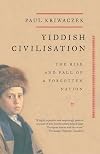
Engaging history, multidextrous, sprinting through two thousand years of swirling, unfocused history to achieve its own unfocused swirl. Whenever people reminisce of Yiddish they seem too nostalgic for the `boue` of the impoverished shtetl, or for the anti-Zionist idealism of the Bundt and their insistence on doikayt — though either way, they are forgetting the thousands of Jewish history in Europe that preceded those Fiddler days. Those thousands of years of history is what this book show more tries to narrate, infused into the wider European and global history.
So much history here, packed into such a small area. Yiddish(ele) is the language of diminutive suffixes, and really only arrives a quarter or a third of the way into the book, with the Cambridge codex from 1382 (found in Cairo, not Ashkenaz.) Kriwaczek deftly explains what Yiddish is: Definitely not a straightforward combination of the most useful parts of German and Hebrew and Slavic, but a mishmash of them, organically formed over the course of centuries.
In the beginning, Kriwaczek seems to conjecture, Jews may have moved deeper and deeper into the woods of sparsely-populated Eastern Europe from the more populated Mediterranean areas. And what about the infamous Khazar theory? Not discussed, perhaps indicating the author's unfitness for historiographic review, which could have made this highly contested topic more interesting. He mentions the influence of Tatar (think the nomadic Turkic-Mongols) on modern-day Hasidic dress (think furry black hats, shtreimels) via Polish nobility. He discusses the impact of the Protest Reformation on the Jews — seemingly a disastrous one, leading to turmoil and expulsions, following the ones from England and Spain. He discusses the Hassidic-Mitnaged split, and the many famous characters and heroes and even antagonists of Yiddish civ and of the Jewish world in general (like the Rama, the false messiah Shabtai Zvi, the Besht, Moses Mendelson...) One of my favorite parts was the story of Glikel of Hameln -- a matriarch who wrote a diary after her husband died, the tale of an ordinary life of a grieving Yiddish-speaking woman.
So much is missing, too! I was looking for some description of the Yiddish theater scene. Perhaps a word or two about Spinoza (did he not speak Yiddish?), and many more words about the exile of Jews from Palesine, and nothing, really, comes after the World War I in the this book. Alas. show less
So much history here, packed into such a small area. Yiddish(ele) is the language of diminutive suffixes, and really only arrives a quarter or a third of the way into the book, with the Cambridge codex from 1382 (found in Cairo, not Ashkenaz.) Kriwaczek deftly explains what Yiddish is: Definitely not a straightforward combination of the most useful parts of German and Hebrew and Slavic, but a mishmash of them, organically formed over the course of centuries.
In the beginning, Kriwaczek seems to conjecture, Jews may have moved deeper and deeper into the woods of sparsely-populated Eastern Europe from the more populated Mediterranean areas. And what about the infamous Khazar theory? Not discussed, perhaps indicating the author's unfitness for historiographic review, which could have made this highly contested topic more interesting. He mentions the influence of Tatar (think the nomadic Turkic-Mongols) on modern-day Hasidic dress (think furry black hats, shtreimels) via Polish nobility. He discusses the impact of the Protest Reformation on the Jews — seemingly a disastrous one, leading to turmoil and expulsions, following the ones from England and Spain. He discusses the Hassidic-Mitnaged split, and the many famous characters and heroes and even antagonists of Yiddish civ and of the Jewish world in general (like the Rama, the false messiah Shabtai Zvi, the Besht, Moses Mendelson...) One of my favorite parts was the story of Glikel of Hameln -- a matriarch who wrote a diary after her husband died, the tale of an ordinary life of a grieving Yiddish-speaking woman.
So much is missing, too! I was looking for some description of the Yiddish theater scene. Perhaps a word or two about Spinoza (did he not speak Yiddish?), and many more words about the exile of Jews from Palesine, and nothing, really, comes after the World War I in the this book. Alas. show less
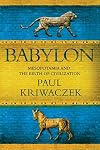
By some quirk, many Westerners habitually think of the Nile Valley in Egypt as the birthplace of civilization. I may be projecting a little, but until not too long ago, I operated from that point of view. With only slightly more exposure to archeology, we learn that that honor belongs to Mesopotamia. In a highly readable, persuasive text, Paul Kriwaczek recounts the beginning of what’s called the Urban Revolution, through the multiple cultures and empires that arose between the Tigris and show more Euphrates rivers, to a final absorption by Cyrus the Great of Persia in about 323 BCE.
Near the shore of the Southern Sea, what we now call the Persian Gulf, many miles north of its current location, at some point prior to 4000 BCE, some people thought about the earth in a new way. Rather than try to adjust to seasonal and annual lotteries of rainfall, flood, and drought, they decided they would become the earth’s master, and improve it to further their own ends. So at a place called Eridu, they built a permanent edifice, visible above the sandy and windswept expanse of the surrounding steppe, a shrine to kingship which had descended from heaven. It was the first permanent signal of a modern human culture still alive in various ways and manifestations today.
Called the Urban Revolution, the making of cities was actually the least of this sea change in human affairs. As Kriwaczek says,
With the city came the centralized state, the hierarchy of social classes, the division of labour, organized religion, monumental building, civil engineering, writing, literature, sculpture, art, music, education, mathematics and law, not to mention a vast array of new inventions and discoveries, from items as basic as wheeled vehicles and sailing boats to the potter’s kiln, metallurgy, and the creation of synthetic materials. And on top of all that was the huge collection of notions and ideas so fundamental to our way of looking at the world, like the concept of numbers, or weight, quite independent of actual items counted or weighed, that we have long forgotten that they had to be discovered or invented. Southern Mesopotamia was the place where all that was first achieved.
Kriwaczek provides his stamp on his history, asking us to update our understanding of ancient civilized humans—what they believed, what they aspired to, how they reacted to stresses. Much of his narrative is given over to successive empire builders, the Sumerians, the Akkadians, and the Assyrians, among others, and to who was skilled and who bungled archeological digs, and how Assyrian and Babylonian geopolitics is reflected in the various books of the Old Testament.
If you are interested in Mesopotamia, the Cradle of Civilization, this is an excellent entry point. Written by a lay person for lay people, it is a very useful and concise recap of the fateful moment when people decided to socialize in permanent settlements, and the broad sweep of human history which followed. There are probably other, more detailed speculations about Babylon’s precincts, architecture, and plan, but they will be just that, speculations. As Kriwaczek laments, the truly glorious city was wiped away in a flood, and its foundations are lost to history. show less
Near the shore of the Southern Sea, what we now call the Persian Gulf, many miles north of its current location, at some point prior to 4000 BCE, some people thought about the earth in a new way. Rather than try to adjust to seasonal and annual lotteries of rainfall, flood, and drought, they decided they would become the earth’s master, and improve it to further their own ends. So at a place called Eridu, they built a permanent edifice, visible above the sandy and windswept expanse of the surrounding steppe, a shrine to kingship which had descended from heaven. It was the first permanent signal of a modern human culture still alive in various ways and manifestations today.
Called the Urban Revolution, the making of cities was actually the least of this sea change in human affairs. As Kriwaczek says,
With the city came the centralized state, the hierarchy of social classes, the division of labour, organized religion, monumental building, civil engineering, writing, literature, sculpture, art, music, education, mathematics and law, not to mention a vast array of new inventions and discoveries, from items as basic as wheeled vehicles and sailing boats to the potter’s kiln, metallurgy, and the creation of synthetic materials. And on top of all that was the huge collection of notions and ideas so fundamental to our way of looking at the world, like the concept of numbers, or weight, quite independent of actual items counted or weighed, that we have long forgotten that they had to be discovered or invented. Southern Mesopotamia was the place where all that was first achieved.
Kriwaczek provides his stamp on his history, asking us to update our understanding of ancient civilized humans—what they believed, what they aspired to, how they reacted to stresses. Much of his narrative is given over to successive empire builders, the Sumerians, the Akkadians, and the Assyrians, among others, and to who was skilled and who bungled archeological digs, and how Assyrian and Babylonian geopolitics is reflected in the various books of the Old Testament.
If you are interested in Mesopotamia, the Cradle of Civilization, this is an excellent entry point. Written by a lay person for lay people, it is a very useful and concise recap of the fateful moment when people decided to socialize in permanent settlements, and the broad sweep of human history which followed. There are probably other, more detailed speculations about Babylon’s precincts, architecture, and plan, but they will be just that, speculations. As Kriwaczek laments, the truly glorious city was wiped away in a flood, and its foundations are lost to history. show less
In Search of Zarathustra: Across Iran and Central Asia to Find the World's First Prophet by Paul Kriwaczek
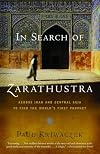
A failure in what could have been a great book on a fascinating and overlooked subject matter. Zarathustra was a historical figure in Ancient Persia who through his teachings and prophesies gave rise to a religious belief system acknowledging one creator and stressing a dualism between light and shadow/good and evil. Once predominant in Persia, it has survived to this day in small communities.
The author tries hard to establish this book as an authoritative account of Zoroastrianism’s show more history, beliefs and impact, but is unconvincing. I found this book to be at times presumptuous in the conclusions it draws from the evidence presented, and hollow in what it tangible information it offers: despite promising to reveal all about Zarathustra, I had to do my own internet research on Parsi, one of the few surviving communities in India and one can find much better resources on the link between Zoroastrianism/Manichaeism and the Bulgars/Cathars.
A book that does not know whether to be an entertaining travelogue or thoughtful historical research, and ends up being neither. show less
The author tries hard to establish this book as an authoritative account of Zoroastrianism’s show more history, beliefs and impact, but is unconvincing. I found this book to be at times presumptuous in the conclusions it draws from the evidence presented, and hollow in what it tangible information it offers: despite promising to reveal all about Zarathustra, I had to do my own internet research on Parsi, one of the few surviving communities in India and one can find much better resources on the link between Zoroastrianism/Manichaeism and the Bulgars/Cathars.
A book that does not know whether to be an entertaining travelogue or thoughtful historical research, and ends up being neither. show less
Lists
Reading list (1)
Awards


You May Also Like


Associated Authors
Statistics
- Works
- 5
- Members
- 1,300
- Popularity
- #19,756
- Rating
- 3.8
- Reviews
- 16
- ISBNs
- 36
- Languages
- 7
- Favorited
- 3