
Richard C. Foltz
Author of Religions of the Silk Road: Overland Trade and Cultural Exchange from Antiquity to the Fifteenth Century
About the Author
Richard Foltz is Professor of Religions and Cultures at Concordia University, Canada.
Works by Richard C. Foltz
Religions of the Silk Road: Overland Trade and Cultural Exchange from Antiquity to the Fifteenth Century (1999) 180 copies, 2 reviews
Spirituality in the Land of the Noble: How Iran Shaped the World's Religions (2004) 38 copies, 1 review
Associated Works
Conversations With Emperor Jahangir (Bibliotheca Iranica: Literature Series) (1998) — Translator — 7 copies
Tagged
Common Knowledge
- Birthdate
- 1961
- Gender
- male
- Education
- Harvard University (PhD)
- Occupations
- scholar of Middle Eastern history
university professor - Organizations
- Concordia University [Montreal]
- Nationality
- Canada
- Associated Place (for map)
- Canada
Members
Reviews
Religions of the Silk Road: Overland Trade and Cultural Exchange from Antiquity to the Fifteenth Century by Richard C. Foltz
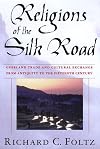
This book is a rapid-fire survey of Central Asian cultural exchange from Alexander to Tamerlane. The core idea is that trade is the backbone of cultural exchange. The result is mostly that Islam came to dominate in Central Asia because Muslims dominated in trade. Somehow Buddhism dominated in e.g. Mongolia... hmm, were Buddhists expert traders too? Or was Kublai Khan's Buddhist advisor particularly persuasive?
Anyway the central argument of the book is interesting and somewhat useful. At show more least it provides some glue to hold the book together. But for me... I am a total amateur in this realms, but - OK, go get the CD in the Secret Museum of Mankind series, the CD dedicated to Central Asian music, compiled from old 78 rpm disks, from like the 1920s and 1930s. If you weren't fascinated with Central Asia before, surely you will be after listening! Or maybe I had some not-too-long-ago incarnation in Central Asia, who knows. Anyway, this book is chock full of fantastic tidbits, amazing little nuggets about ancient cities etc. There are dozens of historical fiction novels that could be seeded from sentences in this book!
It's got a good bibliography too, so wherever you might want to dig in, there is at least a starting point provided. Nothing about this book is comprehensive. It's a grand appetizer though! show less
Anyway the central argument of the book is interesting and somewhat useful. At show more least it provides some glue to hold the book together. But for me... I am a total amateur in this realms, but - OK, go get the CD in the Secret Museum of Mankind series, the CD dedicated to Central Asian music, compiled from old 78 rpm disks, from like the 1920s and 1930s. If you weren't fascinated with Central Asia before, surely you will be after listening! Or maybe I had some not-too-long-ago incarnation in Central Asia, who knows. Anyway, this book is chock full of fantastic tidbits, amazing little nuggets about ancient cities etc. There are dozens of historical fiction novels that could be seeded from sentences in this book!
It's got a good bibliography too, so wherever you might want to dig in, there is at least a starting point provided. Nothing about this book is comprehensive. It's a grand appetizer though! show less
Religions of the Silk Road: Overland Trade and Cultural Exchange from Antiquity to the Fifteenth Century by Richard C. Foltz
A bit too scattered to get a decent overview of any one place or time. But doing justice to such a broad topic would have taken 500 pages. Not a good primer, but piqued my interest to read on into more specialized studies.
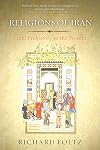
This is a useful book looking at the expression of religion in Iran. Many faiths have existed here and some started here, such as Zoroastrianism, Mithraism, and Mazdaism. These and later expressios of faith have a considerable degree of intermixing and reflect Iranian culture. The author uses Pool Theory in his reflections, where a pool of ideas and behaviors my be drawn upon for particular worldviews. The story is brought up to date to the current Islamic Republic with a major aside looking show more at eclecticism among Iranians themselves. show less
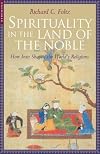
Rather brief but very solid introduction to how Iran/Persia either created or modified the various religions of the world. The section on Babaism/Bahai was well done, the bit about Buddhism in Iran came as a surprise. Would have like a bit more on Zoroastrianism and Manicheanism, but that is more my personal preference than any complaint I can make at the author.
About the only complaint I can make is that the author seemed a tad too close to his subject. As in, he was bound and determined to show more make connections to Judaism, Christianity, Buddhism, etc. He might actually be right, but my feeling is that he was forcing things a bit. show less
About the only complaint I can make is that the author seemed a tad too close to his subject. As in, he was bound and determined to show more make connections to Judaism, Christianity, Buddhism, etc. He might actually be right, but my feeling is that he was forcing things a bit. show less
Awards


You May Also Like


Associated Authors
Statistics
- Works
- 17
- Also by
- 1
- Members
- 380
- Popularity
- #63,550
- Rating
- 3.8
- Reviews
- 5
- ISBNs
- 41
- Languages
- 3