
Joe Ide
Author of IQ
About the Author
Joe Ide is a Japanese American author, born in 1959. He grew up surrounded by the gangs and street crime of South Central Los Angeles, California. He enjoyed reading the Sherlock Holmes stories by Sir Arthur Conan Doyle and had read them multiple times before he was in eighth grade. He is a college show more graduate and went on to get a graduate degree in education. Before becoming a writer, he worked as a school teacher, college lecturer, business consultant, and other jobs. One of those jobs was writing screenplays for major studios. He went on to write his debut novel, IQ, published in 2016. It won the Anthony Award for Best First Novel. His second book is Righteous, published in 2017. (Bowker Author Biography) show less
Series
Works by Joe Ide
IQ | Righteous 2 copies
Tagged
Common Knowledge
- Birthdate
- 1959
- Gender
- male
- Occupations
- teacher
lecturer
business consultant
building manager
director of NGO
screenwriter - Agent
- Esther Newberg
- Relationships
- Fukuyama, Francis (cousin)
- Nationality
- USA
- Birthplace
- USA
- Places of residence
- East Adams, Los Angeles, California, USA
Santa Monica, California, USA - Associated Place (for map)
- California, USA
Members
Reviews
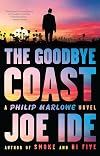
This originally appeared at The Irresponsible Reader.
---
“Reassembling the past, reconstructing relationships, trying to link someone's words with the facts at hand or facts yet to be discovered. You overlay a hundred different constructs over the exact same information and you'll come up with a hundred different theories. Everyone sees, interprets and understands things differently. Everyone has their own aspirations, anxieties and fears. It’s what they call human nature.” Basilio show more paused to search his molars with his tongue. “Don’t get me wrong, kid. I’m not saying it'll all be mundane. There are things inside people so vicious and depraved you'd think their breath would smell like roadkill. They're out there, Marlowe. Every vile infection, mutant species, every simmering brew of psychopathic evil are waiting for you right outside the door.” Basilio unwrapped a toothpick and continued the search. “Sure you're still game?”
That was ten years ago and yes, Marlowe was still game.
MY FAULTY ASSUMPTION
When I heard that Joe Ide was going to do a Philip Marlowe novel, I assumed it was going to be in the same vein as his South Central Sherlock Holmes novel, IQ-this time with a Marlowe-esque figure in a contemporary L.A.
Nope. This time out, Ide isn't messing around with something inspired by one of the greats. He's it's a full bore re-imagining. We've got Philip Marlowe in his tenth year of being a P.I. in a 2020-is L.A. The question is, will this work?
WHAT'S THE GOODBYE COAST ABOUT?
An aging star of Rom-Coms hires Marlowe to find her stepdaughter, a 16-year-old runaway, Cody. Cody's father, Terry, was a director who had one mega-success and a series of flops. He appears to have fallen in with a group of Russian and Albanian gangsters as a way to secure funding for one last attempt at saving his career. Sadly, he was murdered in front of their home. That was six weeks ago. A month later, Cody runs away, stealing the housekeeper's car to do so.
It's been two weeks, and no sign of her has been found. Kendra James hires Marlowe, not to look into the murder, but to track down Cody. Something doesn't sit right about this with Marlowe, but James is paying a ridiculous amount of money, so he takes the case. Marlowe definitely doesn't like James, the way she treats her staff, or spends her money. But that doesn't mean he can't some of that money.
Naturally, Marlowe ends up looking into the murder, and the questions surrounding it, the victim, and Marlowe's client start to add up.
While in the middle of this investigation, Marlowe is approached by a British woman looking for her son—her ex-husband has abducted the boy and flown home to L.A. as the lastest step in their bitter divorce. She's spent pretty much everything she has to get to L.A., and after a series of rejections from Private Investigators who expect to be paid for their efforts, she's been referred to Marlowe.
EMMETT MARLOWE
Marlowe's father, Emmett, is a 17-year-veteran of the LAPD. Currently on leave, following the death of his wife from cancer and the drinking (both excessive and habitual) he turned to after that.
The relationship between father and son is strained, and the closest they get is when they work together—Emmett is essentially Marlowe's partner in some of his cases, unofficially using LAPD resources in the service of the case.
The emotional core of this novel is the relationship between Emmett and Marlowe. There are a lot of ups and downs just in these three hundred pages, and it's clear that this is nothing new—all of this has happened before, and it will all happen again. I'm not sure what they have could be love—it really doesn't seem to be affection—but they're family.
PHILLIP MARLOWE, REALLY?
I'm really not sure about this part. How Phillip Marlowe-y is this guy? Do we need Marlowe in the 21st Century? I wondered about that as soon as I finally understood what Ide was doing in this book a few weeks ago, and at this point in the book, I still have questions about that.
One thing that I stumbled over is Ide's use of the third person. Chandler's Marlowe is notably a first-person narrator—and his narration served as the template for so many P.I.s that followed. Ide is about to work in some touches that make me think of Chandler's narration but it's not the same and takes some getting used to.
There are plenty of similarities between the two author's take on the character, a similar attitude, aptitude, mannerisms, and likes. On the other hand, Ide's Marlowe's backstory and the involvement of his father are significant divergences. That's his prerogative, and there's nothing inherently wrong with that—but at a certain point, if enough tweaks are made, is it Phillip Marlowe?
I cannot stress enough—I would have absolutely no qualms about this character if he had any other name under the sun. But tagging him with Philip Marlowe means something, right? I'm not prepared to say that Ide gave us a version of Chandler's character for the Twenty-First Century. For me, I think I have to think of Ide's Marlowe as some guy who by some crazy, random happenstance shares his name with a P.I. from the same city in the 30s and 40s.
SO, WHAT DID I THINK ABOUT THE GOODBYE COAST?
A PI didn't have to produce evidence that held up in court. A PI speculated, deduced and conjectured until a theory formed that felt right to an experienced investigator. Marlowe could never replicate [redacted]'s thinking or [their] individual moves. The best he could do was ask himself, How would you do it, Marlowe?
It took me no time at all to get hooked by this—and hooked solidly. If it weren't for prior obligations (like, say, work), I'd have eagerly stayed up all night reading.
Everything about the Cody/Terry/Kendra case is murky—the more time that Marlowe and his father spend on it, the worse it gets. Every time they or the reader think they've gotten to the bottom of what happened, and to the depth of the depravity involved, within a few pages they're proven wrong. By the end, you see that Ide has fully embraced the noir ethos of Chandler's detective and runs with it.
I'm not sure I liked much about the father taking the child story, the resolution was satisfying enough, though. But what I appreciated about it was the way it brought the child's mother, Ren, into the novel. She played a significant role in the Cody story in several ways. Also, the best bit of dialogue in the novel comes from the first conversation that Mom and Marlowe had. I'm a sucker for banter, and Ide nailed this one. If there is a sequel to this, I'd love for Ide to come up with some excuse to bring Ren into it.
Speaking of the dialogue, as a whole it's crisp, snappy, and witty. The characters leap off the page, and it didn't take me long to get invested in the whole thing. This version of L.A. shares a lot with Chandlers, too—the collision of an abundance of wealth and a dearth of ethics/morality helps to create a dynamite setting for a P.I. novel. Between the narrative voice, dialogue, and frequent Chandler-esque similies, this is the most entertaining writing from Ide yet--I'm talking the technical bits, not the character or plot (nothing against them, I'm trying to distinguish things here).
I got the impression this is intended as a stand-alone, but I could be wrong. If there's a sequel, I'm there in a heartbeat. I can see this Marlowe rivaling Isaiah Quintabe in my eyes. P.I. fans—go get your hands on this. show less
---
“Reassembling the past, reconstructing relationships, trying to link someone's words with the facts at hand or facts yet to be discovered. You overlay a hundred different constructs over the exact same information and you'll come up with a hundred different theories. Everyone sees, interprets and understands things differently. Everyone has their own aspirations, anxieties and fears. It’s what they call human nature.” Basilio show more paused to search his molars with his tongue. “Don’t get me wrong, kid. I’m not saying it'll all be mundane. There are things inside people so vicious and depraved you'd think their breath would smell like roadkill. They're out there, Marlowe. Every vile infection, mutant species, every simmering brew of psychopathic evil are waiting for you right outside the door.” Basilio unwrapped a toothpick and continued the search. “Sure you're still game?”
That was ten years ago and yes, Marlowe was still game.
MY FAULTY ASSUMPTION
When I heard that Joe Ide was going to do a Philip Marlowe novel, I assumed it was going to be in the same vein as his South Central Sherlock Holmes novel, IQ-this time with a Marlowe-esque figure in a contemporary L.A.
Nope. This time out, Ide isn't messing around with something inspired by one of the greats. He's it's a full bore re-imagining. We've got Philip Marlowe in his tenth year of being a P.I. in a 2020-is L.A. The question is, will this work?
WHAT'S THE GOODBYE COAST ABOUT?
An aging star of Rom-Coms hires Marlowe to find her stepdaughter, a 16-year-old runaway, Cody. Cody's father, Terry, was a director who had one mega-success and a series of flops. He appears to have fallen in with a group of Russian and Albanian gangsters as a way to secure funding for one last attempt at saving his career. Sadly, he was murdered in front of their home. That was six weeks ago. A month later, Cody runs away, stealing the housekeeper's car to do so.
It's been two weeks, and no sign of her has been found. Kendra James hires Marlowe, not to look into the murder, but to track down Cody. Something doesn't sit right about this with Marlowe, but James is paying a ridiculous amount of money, so he takes the case. Marlowe definitely doesn't like James, the way she treats her staff, or spends her money. But that doesn't mean he can't some of that money.
Naturally, Marlowe ends up looking into the murder, and the questions surrounding it, the victim, and Marlowe's client start to add up.
While in the middle of this investigation, Marlowe is approached by a British woman looking for her son—her ex-husband has abducted the boy and flown home to L.A. as the lastest step in their bitter divorce. She's spent pretty much everything she has to get to L.A., and after a series of rejections from Private Investigators who expect to be paid for their efforts, she's been referred to Marlowe.
EMMETT MARLOWE
Marlowe's father, Emmett, is a 17-year-veteran of the LAPD. Currently on leave, following the death of his wife from cancer and the drinking (both excessive and habitual) he turned to after that.
The relationship between father and son is strained, and the closest they get is when they work together—Emmett is essentially Marlowe's partner in some of his cases, unofficially using LAPD resources in the service of the case.
The emotional core of this novel is the relationship between Emmett and Marlowe. There are a lot of ups and downs just in these three hundred pages, and it's clear that this is nothing new—all of this has happened before, and it will all happen again. I'm not sure what they have could be love—it really doesn't seem to be affection—but they're family.
PHILLIP MARLOWE, REALLY?
I'm really not sure about this part. How Phillip Marlowe-y is this guy? Do we need Marlowe in the 21st Century? I wondered about that as soon as I finally understood what Ide was doing in this book a few weeks ago, and at this point in the book, I still have questions about that.
One thing that I stumbled over is Ide's use of the third person. Chandler's Marlowe is notably a first-person narrator—and his narration served as the template for so many P.I.s that followed. Ide is about to work in some touches that make me think of Chandler's narration but it's not the same and takes some getting used to.
There are plenty of similarities between the two author's take on the character, a similar attitude, aptitude, mannerisms, and likes. On the other hand, Ide's Marlowe's backstory and the involvement of his father are significant divergences. That's his prerogative, and there's nothing inherently wrong with that—but at a certain point, if enough tweaks are made, is it Phillip Marlowe?
I cannot stress enough—I would have absolutely no qualms about this character if he had any other name under the sun. But tagging him with Philip Marlowe means something, right? I'm not prepared to say that Ide gave us a version of Chandler's character for the Twenty-First Century. For me, I think I have to think of Ide's Marlowe as some guy who by some crazy, random happenstance shares his name with a P.I. from the same city in the 30s and 40s.
SO, WHAT DID I THINK ABOUT THE GOODBYE COAST?
A PI didn't have to produce evidence that held up in court. A PI speculated, deduced and conjectured until a theory formed that felt right to an experienced investigator. Marlowe could never replicate [redacted]'s thinking or [their] individual moves. The best he could do was ask himself, How would you do it, Marlowe?
It took me no time at all to get hooked by this—and hooked solidly. If it weren't for prior obligations (like, say, work), I'd have eagerly stayed up all night reading.
Everything about the Cody/Terry/Kendra case is murky—the more time that Marlowe and his father spend on it, the worse it gets. Every time they or the reader think they've gotten to the bottom of what happened, and to the depth of the depravity involved, within a few pages they're proven wrong. By the end, you see that Ide has fully embraced the noir ethos of Chandler's detective and runs with it.
I'm not sure I liked much about the father taking the child story, the resolution was satisfying enough, though. But what I appreciated about it was the way it brought the child's mother, Ren, into the novel. She played a significant role in the Cody story in several ways. Also, the best bit of dialogue in the novel comes from the first conversation that Mom and Marlowe had. I'm a sucker for banter, and Ide nailed this one. If there is a sequel to this, I'd love for Ide to come up with some excuse to bring Ren into it.
Speaking of the dialogue, as a whole it's crisp, snappy, and witty. The characters leap off the page, and it didn't take me long to get invested in the whole thing. This version of L.A. shares a lot with Chandlers, too—the collision of an abundance of wealth and a dearth of ethics/morality helps to create a dynamite setting for a P.I. novel. Between the narrative voice, dialogue, and frequent Chandler-esque similies, this is the most entertaining writing from Ide yet--I'm talking the technical bits, not the character or plot (nothing against them, I'm trying to distinguish things here).
I got the impression this is intended as a stand-alone, but I could be wrong. If there's a sequel, I'm there in a heartbeat. I can see this Marlowe rivaling Isaiah Quintabe in my eyes. P.I. fans—go get your hands on this. show less
'IQ' felt fresh, cliché-free and real. It was immersive from the first page, plunging me into the life of Isaiah Quintabe, the IQ of the title, as he helped people in his East Long Beach neighbourhood with cases the police cannot or will not get involved in.
I loved the writing in this novel. The dialogue was perfect, capturing how people speak and how their conversations flow. The pace of the storytelling was compelling and the images were vivid. The possibility of violence was there on show more almost every page, but it wasn't melodramatic, it was as taken for granted as traffic noise in a city.
What I liked most about the novel was that its starting point was the people and the realities of their situation, not with a clever conceit that the characters have been constructed to reveal. 'IQ' is constructed to reveal Isaiah's character and history while delivering an exciting plot. I liked that Isaiah and the people around him were believably complex. They were people who were more than one thing, who couldn't be summed up by what they do or neatly classified into Good Guy and Bad Guy.
Isaiah Quintabe is a great creation. He's just a very bright young man who has grown up, largely alone, in East Long Beach, Los Angeles. After some early involvement in petty crime and a brush with gang culture via his friend Dodson, Isaiah got his life together and deployed his logical mind and his ability to stay calm under pressure to help people in his neighbourhood sort out things that police won't help them with. Locally, he is seen as a kind of poor man's Sherlock Holmes. He still has to pay the bills so he also takes on paying clients. The plot revolves around what happens when his estranged friend Dodson, reappears and offers Isaiah a well-paid case working for a rap star millionaire who believes someone is trying to kill him.
Isaiah's story is told in two timelines, 2013 (now) and 2005 (then). I was impressed by how Joe Ide integrated the timelines so that they worked together to build a picture of Isaiah's character and his complicated history with Dodson that captures how both of them have become who they are in 2013.
The plot worked well. It was populated with memorable people who were sometimes linked in unexpected ways and managed to deliver a few surprises without losing touch with reality.
This was a great start to a new series. I'm just sorry that it took me so long to find this book. It won lot's of acclaim when it came out in 2016. It wonthe Anthony Award for Best First Novel 2017, the Macavity Award for Best First Mystery 2017, the Shamus Award for Best First P. I. Novel 2017. I've already added the audiobook version of 'Righteous', the second book in this six-book series, to my TBR shelf.
I strongly recommend the audiobook version of 'IQ'. Sullivan Jones' narration is wonderful. It won him AudioFile Earphones Award 2016. Click on the SoundCloud link below to hear a sample.
https://soundcloud.com/hachetteaudio/iq-joe-ide show less
I loved the writing in this novel. The dialogue was perfect, capturing how people speak and how their conversations flow. The pace of the storytelling was compelling and the images were vivid. The possibility of violence was there on show more almost every page, but it wasn't melodramatic, it was as taken for granted as traffic noise in a city.
What I liked most about the novel was that its starting point was the people and the realities of their situation, not with a clever conceit that the characters have been constructed to reveal. 'IQ' is constructed to reveal Isaiah's character and history while delivering an exciting plot. I liked that Isaiah and the people around him were believably complex. They were people who were more than one thing, who couldn't be summed up by what they do or neatly classified into Good Guy and Bad Guy.
Isaiah Quintabe is a great creation. He's just a very bright young man who has grown up, largely alone, in East Long Beach, Los Angeles. After some early involvement in petty crime and a brush with gang culture via his friend Dodson, Isaiah got his life together and deployed his logical mind and his ability to stay calm under pressure to help people in his neighbourhood sort out things that police won't help them with. Locally, he is seen as a kind of poor man's Sherlock Holmes. He still has to pay the bills so he also takes on paying clients. The plot revolves around what happens when his estranged friend Dodson, reappears and offers Isaiah a well-paid case working for a rap star millionaire who believes someone is trying to kill him.
Isaiah's story is told in two timelines, 2013 (now) and 2005 (then). I was impressed by how Joe Ide integrated the timelines so that they worked together to build a picture of Isaiah's character and his complicated history with Dodson that captures how both of them have become who they are in 2013.
The plot worked well. It was populated with memorable people who were sometimes linked in unexpected ways and managed to deliver a few surprises without losing touch with reality.
This was a great start to a new series. I'm just sorry that it took me so long to find this book. It won lot's of acclaim when it came out in 2016. It wonthe Anthony Award for Best First Novel 2017, the Macavity Award for Best First Mystery 2017, the Shamus Award for Best First P. I. Novel 2017. I've already added the audiobook version of 'Righteous', the second book in this six-book series, to my TBR shelf.
I strongly recommend the audiobook version of 'IQ'. Sullivan Jones' narration is wonderful. It won him AudioFile Earphones Award 2016. Click on the SoundCloud link below to hear a sample.
https://soundcloud.com/hachetteaudio/iq-joe-ide show less
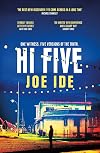
Isaiah Quintabe, IQ, is an unlicensed but successful private investigator who has had run-ins with just about every gang in LA. When he received a call from Angus Byrne he is reluctant to meet but Angus threatens his girlfriend and so has Isaiah. His right-hand man has been killed the police have homed in on his daughter Christiana but there is a catch, Christiana has multiple personality disorder and there are five different witnesses in one body. Add into the mix the return of Isaiah's show more true love, a romance between a rough but kind man and a tough, embittered woman and a valuable gun who possession if fought over by all the major crews and IQ is in a bind he may not get out of.
Ide claims to be a huge fan of Conan Doyle and it can be seen in the plotting of his novels. The setting is rough and tough LA with the gang-related issues to the fore, here ultra-right wing Neo-Nazis come up against a Cambodian crew, the plots are violent with lots of shootings. Yet there is also a cast of well-drawn characters, TK is so sympathetically handled and Dodson's tug between respectable family man and the excitement of life on the edge is really believeable. Add into that the cerebral nature of the way Isaiah thinks through his moves and this is a fantastic modern take on an ages old genre. show less
Ide claims to be a huge fan of Conan Doyle and it can be seen in the plotting of his novels. The setting is rough and tough LA with the gang-related issues to the fore, here ultra-right wing Neo-Nazis come up against a Cambodian crew, the plots are violent with lots of shootings. Yet there is also a cast of well-drawn characters, TK is so sympathetically handled and Dodson's tug between respectable family man and the excitement of life on the edge is really believeable. Add into that the cerebral nature of the way Isaiah thinks through his moves and this is a fantastic modern take on an ages old genre. show less
I didn't expect to give five stars to a detective novel, but this book does everything a detective story should and more. The lovely and accomplished Sarita, who was once Isaiah's dead brother Marcus's girlfriend, shows up out of the past with a paying case Isaiah can't refuse: rescue her sister Janine, an aspiring DJ who, with her goofball boyfriend, is in thrall to a gambling habit and loan sharks out in Las Vegas. And that's just the beginning. There are at least four sets of bad guys: show more Chinese traffickers and their associated local muscle, longtime local crew Los Locos, a small time loan shark and his extremely tall enforcer, and a haunted duo of Rwandan refugees, all warring with each other and reaching impressive levels of callousness and evil. All the characters are complex and relatable and there's plenty of dirt to go around (that, and a ton of action that didn't bore me, the action-hater), but there's also a moral core and a really satisfying, ongoing character arc for Isaiah. He does a lot of thinking about his lone-wolf status and ponders the pluses and minuses of partnerships, and he's not the only one. Out of nowhere, a minor character delivers this speech:
I liked book 1 in the series, but with this sequel I'm hooked. show less
What’s wrong with men today? Bunch of damn control freaks, always bossin’ you around. Get down on your knees. Bend over. How come the house ain’t clean? Makes me want to do as little as possible. Then the relationship ain’t nothing but one long negotiation. Tit for tat. You want something from me you gotta give something up. Buy low, sell high, and you don’t never get but half of what you wanted. How ‘bout this for an idea? You take care of me, I take care of you. I’ll give you everything, you give me everything. What’s wrong with that?
I liked book 1 in the series, but with this sequel I'm hooked. show less
Lists
Awards


You May Also Like


Associated Authors
Statistics
- Works
- 9
- Members
- 2,636
- Popularity
- #9,745
- Rating
- 3.7
- Reviews
- 164
- ISBNs
- 112
- Languages
- 5
- Favorited
- 2