
André Schwarz-Bart (1928–2006)
Author of The Last of the Just
About the Author
Image credit: Wikipedia
Works by André Schwarz-Bart
El último justo 1 copy
Associated Works
The Jewish caravan : great stories of twenty-five centuries (1965) — Contributor, some editions — 141 copies
Tagged
Common Knowledge
- Canonical name
- Schwarz-Bart, André
- Legal name
- Szwarcbart, Abraham
- Other names
- Schwarz Bart, André
A. Schwarz-Bart
Schwarz-Bart, André - Birthdate
- 1928-05-23
- Date of death
- 2006-09-30
- Gender
- male
- Education
- Sorbonne University
- Occupations
- novelist
- Organizations
- French Resistance
- Awards and honors
- Jerusalem Prize (1967)
Prix Goncourt (1959) - Relationships
- Schwarz-Bart, Simone (wife)
- Short biography
- André Schwarz-Bart was a French novelist from a family of Polish-Jewish origin. In 1941, his parents and brothers were deported to Auschwitz. Soon after, Schwarz-Bart, who was only a young teenager and barely spoke French, joined the Resistance. Later he worked as a manual laborer and taught himself to read and write French from library books. His experiences as a Jew during the German Occupation of World War II informed his great work, considered one of the greatest books of the Holocaust, The Last of the Just (Le Dernier des justes, 1960). It follows a Jewish family from the time of the Crusades to the death camp of Auschwitz. Schwarz-Bart lived the final years of his life in Guadeloupe with his wife Simone.
- Nationality
- France
- Birthplace
- Metz, France
- Places of residence
- Metz, France
Guadeloupe
Oléron, France
Angoulême, France - Place of death
- Pointe-à-Pitre, Guadeloupe
- Associated Place (for map)
- France
Members
Reviews

...the ancient Jewish tradition of the Lamed-Vov, a tradition that certain Talmudists trace back to the source of the centuries, to the mysterious time of the prophet Isaiah. Rivers of blood have flowed, columns of smoke have obscured the sky, but surviving all these dooms, the tradition has remained inviolate down to our own time. According to it, the world reposes upon thirty-six Just Men, the Lamed-Vov, indistinguishable from simple mortals; often they are unaware of their station. But if show more just one of them were lacking, the sufferings of mankind would poison even the souls of the newborn, and humanity would suffocate with a single cry. For the Lamed-Vov are the hearts of the world multiplied, and into them, as into one receptacle, pour all our griefs.
I have read many novels, memoirs, and histories about the Holocaust, but this may be the most literary that I've encountered. It is beautifully written and weaves history, legend, and religion into a fascinating story about the transference of the Just Man from one generation to the next within the Levy family, culminating in the life and death of Ernie Levy. The story begins with the horrific tales of Rabbi Yom Tov Levy and his progeny who suffered death and martyrdom over and over throughout the centuries in most of the countries of Europe. It is a seemingly endless cycle of persecution bringing us into the present with the story of Ernie's grandfather, Mordecai.
As an adolescent, Mordecai was forced to leave the shtetl of Zemyock, Poland and hire himself out as a farm hand in order to keep his parents and siblings from starvation. They would rather starve, because to the Hasidic Levy family, nothing is worth turning from the study of God. Furthermore, on every job, Mordecai is forced to fight in order to establish his place in the hierarchy. Eventually, he becomes an itinerant peddler and meets and falls in love with a fiery young woman named Judith. Although his family doesn't approve of her, eventually Mordecai and Judith settle in Zemyock and raise a family. Finally, Mordecai is able to devote himself to religious study.
Their oldest son, Benjamin, doesn't seem to fit the bill as the next Just Man. He is skinny and small with a large head, unlike his three more robust younger brothers, and Mordecai fairly ignores him. A vicious pogrom forces Benjamin to leave Zemyock and move to Germany, where things seem much safer than in Eastern Europe. Ah, do you see the shadow of destiny falling? Benjamin becomes a tailor and eventually earns enough to bring his parents to live with him and soon his wife. Completely cowed by the headstrong Judith, Fraulein Leah Blumenthal is the mother to a large brood of children, yet remains naive and impotent of power.
And so we come to Ernie, neither the oldest or youngest, small and unassuming, but possessed of an undeniably sensitive soul. Nurtured and protected by his family, especially the patriarch Mordecai, Ernie nonetheless suffers from the growing Nazi presence in Stillenstadt. The story of his childhood is sweet and horrible and a window into the suffering of Jewish children in 1930's Germany. Ernie's innocence is gnawed away until he is only a shell filled with despair and hopelessness. As a young man he wanders, believing himself to be nothing more than the dog the Nazi's have labeled him. The story of his redemption in Paris and his ultimate fate, I will leave you to discover, but needless to say, as a Just Man, Ernie's destiny is not an easy one.
I loved the language of this book, although it is not an easy read emotionally. The author writes beautifully of the tortures of a sensitive soul, affinity with nature, the trials of childhood relationships, and the bleakness of losing your way in life. And arching over all of this, humanity, lies the Holocaust. It's as awful as you might imagine, but even worse is the idea you are left with. What if we have murdered the Last Just Man? To what brink have we brought ourselves spiritually, and is it possible to recover?
Highly recommended. show less
I have read many novels, memoirs, and histories about the Holocaust, but this may be the most literary that I've encountered. It is beautifully written and weaves history, legend, and religion into a fascinating story about the transference of the Just Man from one generation to the next within the Levy family, culminating in the life and death of Ernie Levy. The story begins with the horrific tales of Rabbi Yom Tov Levy and his progeny who suffered death and martyrdom over and over throughout the centuries in most of the countries of Europe. It is a seemingly endless cycle of persecution bringing us into the present with the story of Ernie's grandfather, Mordecai.
As an adolescent, Mordecai was forced to leave the shtetl of Zemyock, Poland and hire himself out as a farm hand in order to keep his parents and siblings from starvation. They would rather starve, because to the Hasidic Levy family, nothing is worth turning from the study of God. Furthermore, on every job, Mordecai is forced to fight in order to establish his place in the hierarchy. Eventually, he becomes an itinerant peddler and meets and falls in love with a fiery young woman named Judith. Although his family doesn't approve of her, eventually Mordecai and Judith settle in Zemyock and raise a family. Finally, Mordecai is able to devote himself to religious study.
Their oldest son, Benjamin, doesn't seem to fit the bill as the next Just Man. He is skinny and small with a large head, unlike his three more robust younger brothers, and Mordecai fairly ignores him. A vicious pogrom forces Benjamin to leave Zemyock and move to Germany, where things seem much safer than in Eastern Europe. Ah, do you see the shadow of destiny falling? Benjamin becomes a tailor and eventually earns enough to bring his parents to live with him and soon his wife. Completely cowed by the headstrong Judith, Fraulein Leah Blumenthal is the mother to a large brood of children, yet remains naive and impotent of power.
And so we come to Ernie, neither the oldest or youngest, small and unassuming, but possessed of an undeniably sensitive soul. Nurtured and protected by his family, especially the patriarch Mordecai, Ernie nonetheless suffers from the growing Nazi presence in Stillenstadt. The story of his childhood is sweet and horrible and a window into the suffering of Jewish children in 1930's Germany. Ernie's innocence is gnawed away until he is only a shell filled with despair and hopelessness. As a young man he wanders, believing himself to be nothing more than the dog the Nazi's have labeled him. The story of his redemption in Paris and his ultimate fate, I will leave you to discover, but needless to say, as a Just Man, Ernie's destiny is not an easy one.
I loved the language of this book, although it is not an easy read emotionally. The author writes beautifully of the tortures of a sensitive soul, affinity with nature, the trials of childhood relationships, and the bleakness of losing your way in life. And arching over all of this, humanity, lies the Holocaust. It's as awful as you might imagine, but even worse is the idea you are left with. What if we have murdered the Last Just Man? To what brink have we brought ourselves spiritually, and is it possible to recover?
Highly recommended. show less
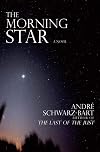
I finally got around to reading a book that's been waiting for me: A Morning Star by Andre Schwarz-Bart, posthumously finished and published by his wife Simone, whom I identify, rightly or wrongly, as the subject of the only other book (A Woman of Solitude) he wrote after the prizewinning The Last of the Just, the incredibly moving and mystical account of the Holocaust written decades ago.
The new book makes clear why there have been no more books by this incredibly fine writer. Simone tells show more us in the foreword that he wrote draft after draft of this semi-autobiographical account of the Tragedy and found them all wanting. He could find no language to adequately convey the true horror of his experiences. What he saw and heard and smelled, imprinted on his brain forever, could not be shared without dishonoring his theme. As he says, in his epigraph for Chapter VII :
Staying silent is not enough and talking is too much: we need to find the right cries, mutterings, or start singing a new song that encompasses all words, all silences, all cries.
It is his sense of inadequacy to do the task justice, his very reluctance to put his observations and reflections into words, that the reader intuits from Schwartz-Barts ironic understatement in relating the nature of the events the protagonist experienced. His descriptions of the tragic events are lean, spare. Relatives disappear in a sentence and are never heard from again. God-awful things happen in parenthetical phrases. For me, reading Schwarz-Bart is like communing with a likeminded soul. I get him, and feel his sadness in my bones, with no need for details. On the contrary, I am relieved by the lack of specificity. A reader who can't read between the lines or doesn't know the underlying history, will not like the book. I do.
An epigraph for Chapter VI quotes Moses pleading with God:
If you have reserved such a fate for me, ah! please, let me die instead if I've found favor in your sight, somay no longer see all this affliction. Numbers 11:15
Exactly. show less
The new book makes clear why there have been no more books by this incredibly fine writer. Simone tells show more us in the foreword that he wrote draft after draft of this semi-autobiographical account of the Tragedy and found them all wanting. He could find no language to adequately convey the true horror of his experiences. What he saw and heard and smelled, imprinted on his brain forever, could not be shared without dishonoring his theme. As he says, in his epigraph for Chapter VII :
Staying silent is not enough and talking is too much: we need to find the right cries, mutterings, or start singing a new song that encompasses all words, all silences, all cries.
It is his sense of inadequacy to do the task justice, his very reluctance to put his observations and reflections into words, that the reader intuits from Schwartz-Barts ironic understatement in relating the nature of the events the protagonist experienced. His descriptions of the tragic events are lean, spare. Relatives disappear in a sentence and are never heard from again. God-awful things happen in parenthetical phrases. For me, reading Schwarz-Bart is like communing with a likeminded soul. I get him, and feel his sadness in my bones, with no need for details. On the contrary, I am relieved by the lack of specificity. A reader who can't read between the lines or doesn't know the underlying history, will not like the book. I do.
An epigraph for Chapter VI quotes Moses pleading with God:
If you have reserved such a fate for me, ah! please, let me die instead if I've found favor in your sight, somay no longer see all this affliction. Numbers 11:15
Exactly. show less
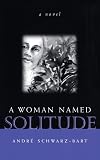
I really wanted to like this book more than I did. At first glance,the summary on the back of the book seemed promising (SPOILER ALERT): "Conceived aboard a slave ship and bound for the Caribbean, Solitude was born into slavery and sold on the auction block, a black chattel of a corrupt society-- until she heard the ringing of rebellion on the island wind."
The story is based on legends of a real woman named Solitude. The historical facts themselves are fascinating, and the book poignantly show more depicts the devastating impact of slavery on slave, master and society. Also brilliantly described are the psychological effects of captivity on the slaves.
There was just something missing, and I couldn't fully engage in the story. My edition is translated to English from the original French, so something may have been lost there. But I think what was lacking, for me, was character development. I felt very removed from the character of Solitude throughout the story. Perhaps this was intentional on the part of the author, a means to depict the emotional distance at which Solitude kept others in order to survive, and maintain her as an enigma.
Perhaps a reread in the future will yield a different experience. But for now, this novel just left me wanting something more. show less
The story is based on legends of a real woman named Solitude. The historical facts themselves are fascinating, and the book poignantly show more depicts the devastating impact of slavery on slave, master and society. Also brilliantly described are the psychological effects of captivity on the slaves.
There was just something missing, and I couldn't fully engage in the story. My edition is translated to English from the original French, so something may have been lost there. But I think what was lacking, for me, was character development. I felt very removed from the character of Solitude throughout the story. Perhaps this was intentional on the part of the author, a means to depict the emotional distance at which Solitude kept others in order to survive, and maintain her as an enigma.
Perhaps a reread in the future will yield a different experience. But for now, this novel just left me wanting something more. show less

[A Woman Named Solitude] by [[Andre Schwarz-Bart]] is the next. This one was definitely outside of my usual box. I was attracted by the title, since I have always liked Soledad as a name, and intrigued by the description on the cover: 'A beautiful, heartbreaking story of slavery and the survival of the human spirit.' The book was originally written in French. Certainly a grim topic, but perhaps something I should confront more often. My overall reaction? Ambivalence, uncertainty, confusion, show more mixed feelings. I'm not sure I like the book well enough to keep it, but I feel like maybe I should make another attempt to wrap my brain around it. I have that same reaction to [A Canticle for Leibowitz] and [A Case of Conscience].
The novel begins in 1755 among the Diola people of West Africa. Part 1 is the story of the young girl Bayangumay coming into adulthood and marriage. The story does an excellent job, from what I can tell, of portraying something of the culture and mindset and general ways of perceiving the world of this young West African girl. It ends with her capture and transport on a slave vessel to the island of Guadeloupe (a French colony). The second part of the book tells the story of her daughter, Solitude. The first chapter is still narrated essentially by Bayungamay. The second chapter is from her daughter's perspective--in this chapter the mother's name is Man Bobette and the daughter's is Rosalie, because of course these things are dictated by the owners. The third chapter is split between the child Rosalie and Louis Mortier, the general plantation manager (de facto slaveowner). It is at the end of this chapter that the heroine names herself Solitude after a series of masters and their marks of ownership. The rest of the book covers the slave revolt, brief independence of the island, and the eventual return of white authority and the arrest and execution of various 'ringleaders' including Solitude.
The opening quote and epilogue make it clear that this story was based on real people and events, including Solitude herself. The information about the author makes his motivation and inspiration clear--he survived the Nazi genocide of Jews of WWII and married a woman from the island of Guadeloupe.
I am not sure if my lack of appreciation stems from my lacking the appropriate literary background or the appropriate cultural background. Most of my reading about slavery (whether fiction or not) relates to its practice on the mainland, here in the United States, so a French island is certainly a different perspective on the ugly underbelly of colonial history. There isn't much in the way of character development or scintillating dialogue. And no plot as such, just vignettes that appear largely unconnected. The choppiest part of the book is the accounting of the revolution and temporary freedom on the island. Solitude somehow becomes a folk legend, but it doesn't seem particularly plausible and the narration isn't particularly coherent.
The author did an excellent job portraying the people and the era and making it feel viscerally real and immediate. I was deeply moved by some of the descriptions. For example, in a scene involving the public torture/execution of a slave woman who dared kill her baby (and thus steal profit from the owners):
'The child had looked in amazement from the old man's placid face to Man Bobette's tight, impassive features, and suddenly discovered that they were both observing the scene with the same eyes: two little land crabs darting this way and that, searching, biting the air roundabout. It was very hard to look at the world with such eyes. When you examined it coldly in this way, the claws of your eyes turned back into your head and tore it to pieces.'
Later on, as Rosalie was trained to become a house servant: 'But at other times she would stiffen her neck with rage and let the crabs fly at Man Bobette, or thrust out her belly and hurl the crabs at the big house...' Such imagery!
The book does a good job showing some of the chilling sensibilities and casual atrocities involved in this peculiar institution, and the conflicts it creates within the black communities. Rosalie is given to the manager's daughter when they are both still quite young, perhaps five or six years old. The girl already has four other personal slavegirls. And here is one exchange:
''Didn't To-Souls know that niggers didn't feel pain as white poeple do?...But runaway niggers, Mademoiselle went on in her sweet gentle voice, didn't seem to feel anything at all. There was sorcery behind it, no other explanation was possible. Whatever you did to them, they just smiled or calmly insulted you, as though you weren't worthy of their anger.' It gives whole new levels of meaning to the cluelessness that comes with white privilege.
In essence, this book is a portrait of slavery and its effects on the black people who suffered under it. But it is very unlike most novels in terms of tone, style, plot, etc., at least in my experience. So while I liked the prose, I didn't care for the storytelling. show less
The novel begins in 1755 among the Diola people of West Africa. Part 1 is the story of the young girl Bayangumay coming into adulthood and marriage. The story does an excellent job, from what I can tell, of portraying something of the culture and mindset and general ways of perceiving the world of this young West African girl. It ends with her capture and transport on a slave vessel to the island of Guadeloupe (a French colony). The second part of the book tells the story of her daughter, Solitude. The first chapter is still narrated essentially by Bayungamay. The second chapter is from her daughter's perspective--in this chapter the mother's name is Man Bobette and the daughter's is Rosalie, because of course these things are dictated by the owners. The third chapter is split between the child Rosalie and Louis Mortier, the general plantation manager (de facto slaveowner). It is at the end of this chapter that the heroine names herself Solitude after a series of masters and their marks of ownership. The rest of the book covers the slave revolt, brief independence of the island, and the eventual return of white authority and the arrest and execution of various 'ringleaders' including Solitude.
The opening quote and epilogue make it clear that this story was based on real people and events, including Solitude herself. The information about the author makes his motivation and inspiration clear--he survived the Nazi genocide of Jews of WWII and married a woman from the island of Guadeloupe.
I am not sure if my lack of appreciation stems from my lacking the appropriate literary background or the appropriate cultural background. Most of my reading about slavery (whether fiction or not) relates to its practice on the mainland, here in the United States, so a French island is certainly a different perspective on the ugly underbelly of colonial history. There isn't much in the way of character development or scintillating dialogue. And no plot as such, just vignettes that appear largely unconnected. The choppiest part of the book is the accounting of the revolution and temporary freedom on the island. Solitude somehow becomes a folk legend, but it doesn't seem particularly plausible and the narration isn't particularly coherent.
The author did an excellent job portraying the people and the era and making it feel viscerally real and immediate. I was deeply moved by some of the descriptions. For example, in a scene involving the public torture/execution of a slave woman who dared kill her baby (and thus steal profit from the owners):
'The child had looked in amazement from the old man's placid face to Man Bobette's tight, impassive features, and suddenly discovered that they were both observing the scene with the same eyes: two little land crabs darting this way and that, searching, biting the air roundabout. It was very hard to look at the world with such eyes. When you examined it coldly in this way, the claws of your eyes turned back into your head and tore it to pieces.'
Later on, as Rosalie was trained to become a house servant: 'But at other times she would stiffen her neck with rage and let the crabs fly at Man Bobette, or thrust out her belly and hurl the crabs at the big house...' Such imagery!
The book does a good job showing some of the chilling sensibilities and casual atrocities involved in this peculiar institution, and the conflicts it creates within the black communities. Rosalie is given to the manager's daughter when they are both still quite young, perhaps five or six years old. The girl already has four other personal slavegirls. And here is one exchange:
''Didn't To-Souls know that niggers didn't feel pain as white poeple do?...But runaway niggers, Mademoiselle went on in her sweet gentle voice, didn't seem to feel anything at all. There was sorcery behind it, no other explanation was possible. Whatever you did to them, they just smiled or calmly insulted you, as though you weren't worthy of their anger.' It gives whole new levels of meaning to the cluelessness that comes with white privilege.
In essence, this book is a portrait of slavery and its effects on the black people who suffered under it. But it is very unlike most novels in terms of tone, style, plot, etc., at least in my experience. So while I liked the prose, I didn't care for the storytelling. show less
Lists
Awards


You May Also Like


Associated Authors
Statistics
- Works
- 8
- Also by
- 2
- Members
- 1,259
- Popularity
- #20,383
- Rating
- 4.1
- Reviews
- 26
- ISBNs
- 69
- Languages
- 8
- Favorited
- 3