

J. R. Dunn
Author of Days of Cain
Works by J. R. Dunn
the names of all spirits 3 copies
For Keeps 2 copies
Intruders 2 copies
Nocturne 2 copies
Arcadia 1 copy
Stout Hearts {novelette} 1 copy
Associated Works
Tagged
Common Knowledge
- Other names
- Jeffrey R Dunn
- Birthdate
- 1953
- Gender
- male
Members
Reviews
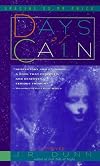
If it hadn't been for someone on LJ or LinkedIn recommending this to me as an important piece of time-travel fiction, I'd not have heard of it at all; it was because of that same recommendation that I persevered with the novel even though I found the first few tens of pages pretty hard work. Now, I'm astonishingly glad that I kept going. This is the kind of novel that -- full of challenging ideas, genuine moral questioning, good writing (although there are some annoyances in the show more copyediting), and the courage to face the human abyss -- gives science fiction a good name.
Gaspar James is a monitor within the Moiety, a sort of time-like regime, founded in the far future, whose realm extends through humankind's history from the dawn of history to a time so distant that the stars have burned themselves out. The personnel of the Moiety dwell primarily within the Extension, a "place" that's outside time; from here they can make excursions into mainstream reality, either for research or in order to correct or prevent the activities of renegades, rogue operatives who, in hopes of improving the human lot, attempt to alter history and thereby threaten the survival of untold trillions of humans (and post-humans) further up the near-infinitely long timeline of our species' existence.
One such instance has just been discovered. A team led by an operative whom James once mentored, Alma Lewin, has inserted itself into the mid-20th century -- a century known to the end of time as the Age of Massacre -- in an attempt to avert the worst of the Holocaust by (although it takes James a long while to unearth this) by liberating the death camps some years early. Lewin herself has infiltrated Auschwitz with the intention of undermining the regime there from within, or at the very least saving as many lives as she can among the female inmates in the months leading up to the arrival of her liberating team-mates in helicopter gunships purloined from later in the century. Much of the novel, while ostensibly about James's attempts to stop Lewin before she can disrupt history, is really about the atrocity within Auschwitz as seen through the eyes of the prisoner, Rebeka, who becomes Lewin's sidekick and also by the Nazi officer in charge of the camp's correspondence, Reber, a man who is not so much fundamentally evil as simply too weak to stand up against the appalling evil all around him, no matter how much it repels him, no matter how much he realizes it has destroyed his soul. The novel's portrayal of existence within this hell upon earth is, as far as I can establish, close to the hideous reality; Days of Cain is a gruelling rather than a comforting read.
To all concerned, even the team sent under James to nullify Lewin's efforts, the notion of subverting the Holocaust has enormous appeal, no matter what the consequences might be. James, despite his hard-man exterior and his devotion to duty, is not immune from the impulse, especially as more and more layers of Auschwitz's horror are revealed to him; he has, like he assumes all of the Moiety's operatives have, occasionally succumbed to the temptation before, in small ways -- saving an individual life, perhaps, or putting food in the way of a starving child: acts of humanity that, while they'll almost certainly not materially effect the fate of the recipient, at least make it possibly for the operatives to live with themselves. At the end of the day, it having been explained to James that the Holocaust is an essential part of human history, a benchmark of human evil so extreme that forever peoples will retreat from the risk of emulating it (we gloss over Pol Pot), his loyalty to future humanity wins out, and he fulfils his mission.
The implications of this setup in terms of free will are obviously considerable. If our role in life is merely to follow a script that our descendants know as one already written, where does that leave us? Do we have any freedom of choice at all, or are we simply living under the illusion that we do? And, if our choices are already predetermined, and if evil actions are as desirable as good ones in terms of preserving the weal of our distant descendants, what role is there left for our concepts of morality -- or ar they, equally, illusory? Dunn works his way through these ethical mazes for the most part successfully, managing to keep the philosophical discussion from obtruding too clumsily into the main thrust of his novel . . . except, of course, that in a way, and a very satisfying way, the novel itself is that philosophical discussion.
Very, very, very strongly recommended, as it was recommended to me. show less
Gaspar James is a monitor within the Moiety, a sort of time-like regime, founded in the far future, whose realm extends through humankind's history from the dawn of history to a time so distant that the stars have burned themselves out. The personnel of the Moiety dwell primarily within the Extension, a "place" that's outside time; from here they can make excursions into mainstream reality, either for research or in order to correct or prevent the activities of renegades, rogue operatives who, in hopes of improving the human lot, attempt to alter history and thereby threaten the survival of untold trillions of humans (and post-humans) further up the near-infinitely long timeline of our species' existence.
One such instance has just been discovered. A team led by an operative whom James once mentored, Alma Lewin, has inserted itself into the mid-20th century -- a century known to the end of time as the Age of Massacre -- in an attempt to avert the worst of the Holocaust by (although it takes James a long while to unearth this) by liberating the death camps some years early. Lewin herself has infiltrated Auschwitz with the intention of undermining the regime there from within, or at the very least saving as many lives as she can among the female inmates in the months leading up to the arrival of her liberating team-mates in helicopter gunships purloined from later in the century. Much of the novel, while ostensibly about James's attempts to stop Lewin before she can disrupt history, is really about the atrocity within Auschwitz as seen through the eyes of the prisoner, Rebeka, who becomes Lewin's sidekick and also by the Nazi officer in charge of the camp's correspondence, Reber, a man who is not so much fundamentally evil as simply too weak to stand up against the appalling evil all around him, no matter how much it repels him, no matter how much he realizes it has destroyed his soul. The novel's portrayal of existence within this hell upon earth is, as far as I can establish, close to the hideous reality; Days of Cain is a gruelling rather than a comforting read.
To all concerned, even the team sent under James to nullify Lewin's efforts, the notion of subverting the Holocaust has enormous appeal, no matter what the consequences might be. James, despite his hard-man exterior and his devotion to duty, is not immune from the impulse, especially as more and more layers of Auschwitz's horror are revealed to him; he has, like he assumes all of the Moiety's operatives have, occasionally succumbed to the temptation before, in small ways -- saving an individual life, perhaps, or putting food in the way of a starving child: acts of humanity that, while they'll almost certainly not materially effect the fate of the recipient, at least make it possibly for the operatives to live with themselves. At the end of the day, it having been explained to James that the Holocaust is an essential part of human history, a benchmark of human evil so extreme that forever peoples will retreat from the risk of emulating it (we gloss over Pol Pot), his loyalty to future humanity wins out, and he fulfils his mission.
The implications of this setup in terms of free will are obviously considerable. If our role in life is merely to follow a script that our descendants know as one already written, where does that leave us? Do we have any freedom of choice at all, or are we simply living under the illusion that we do? And, if our choices are already predetermined, and if evil actions are as desirable as good ones in terms of preserving the weal of our distant descendants, what role is there left for our concepts of morality -- or ar they, equally, illusory? Dunn works his way through these ethical mazes for the most part successfully, managing to keep the philosophical discussion from obtruding too clumsily into the main thrust of his novel . . . except, of course, that in a way, and a very satisfying way, the novel itself is that philosophical discussion.
Very, very, very strongly recommended, as it was recommended to me. show less
A remarkable book that confronts the Holocaust in the format of a science fiction novel. If I had had a clearer idea of what the book was about before I started to read it, I would probably never have begun -- the idea of fictionalizing the Holocaust seems sacrilegious, at least in an "entertainment" genre like Sci-Fi. But I didn't have a clear idea, so I read the book, and discovered that Dunn has treated the subject with an appropriate solemnity and horror. Moreover, the book raises a show more tantalizing question -- if it were possible to undo the horrors of the past, would it be right? Dunn posits a future society which has mastered time travel, but which maintains an absolute commitment not to change the past. One woman, however, feels that this part of the past must be undone, and goes back to try to do so. I found this book totally engrossing, and profoundly thought-provoking -- but also very painful to read. show less

This book features and interesting story set in the near future - the back-story: groups have experimented with direct-computer interfaces using chips embedded in the skull. This is in conjunction with an apparently benign virus that allows these individuals to interface via any connection with the systems they are "hacking." However everything goes awry when many of these "chip-heads" begin exhibiting various psychosis as a result of the over-load of information - this causes everything to show more fall apart so the individuals, who can't seem to stop "hacking" and are in hiding in remote areas are hunted down by a government group.
The main plot line involves an agent of the government group investigating a brutal murder in a small town in Montana with occurred during what looks to be a "chip-head" incursion into the local data net. Without giving too much away, I rather liked the basic premise and story. The world-building and action were fast paced and believable. My only real issue was with the dialog which just didn't work for me. show less
The main plot line involves an agent of the government group investigating a brutal murder in a small town in Montana with occurred during what looks to be a "chip-head" incursion into the local data net. Without giving too much away, I rather liked the basic premise and story. The world-building and action were fast paced and believable. My only real issue was with the dialog which just didn't work for me. show less
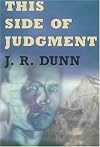
This book pulled me through it with no diificulty - excellent pacing. I read it too long ago to remember details, but I found it rather moving, which is extremely unusual for a book written as a thriller, and I made a point of finding other books he wrote. He hasn't had any new novels out for a long time now, but he's a writer whose work I find extremely worth reading.
You May Also Like


Associated Authors
Statistics
- Works
- 15
- Also by
- 9
- Members
- 371
- Popularity
- #64,991
- Rating
- 3.4
- Reviews
- 5
- ISBNs
- 16
- Languages
- 1