

Paul Preuss
Author of Arthur C. Clarke's Venus Prime: Breaking Strain
About the Author
Dr. Paul G. Preuss has completed 36 years of service in the public schools of New York State as teacher, principal, superintendent, and as assistant Board of Cooperative Educational Services (BOCES) superintendent
Image credit: via Alchetron.com
Series
Works by Paul Preuss
Associated Works
The Norton Book of Science Fiction: North American Science Fiction, 1960-1990 (1993) — Contributor — 344 copies, 6 reviews
Tagged
Common Knowledge
- Canonical name
- Preuss, Paul
- Birthdate
- 1942-03-07
- Gender
- male
- Nationality
- USA
- Places of residence
- San Francisco, California, USA
- Associated Place (for map)
- California, USA
Members
Reviews

La primera vez que leí este libro, era una chavita de unos 20 añitos y me encantó. Tenía una protagonista que resuelve un misterio en el espacio, que además sabe perfecto como dar trancazos, como toda una espía; por eso le puse 4 estrellas.
Lo leí otra vez mucho después, y ahora opino que sólo es de 2 estrellas.
Lo leí otra vez mucho después, y ahora opino que sólo es de 2 estrellas.

My reactions to reading this novel in 1994. Spoilers follow.
While it probably has been done already, this novel and Greg Bear’s Blood Music naturally suggest a compare-and-contrast essay.
Both were published in the same year (though Bear’s novel was based on an earlier short story of the same title which may or may not have inspired Preuss – there is a blurb from him on Bear’s novel) and both are based on the same idea: biological computers that develop sentience and become, as show more Bear’s novel has it, an “intelligent plague”.
Both novels have ugly, social misfit scientists who unleash – accidentally – the plague on man (both are even from the South). Vergil I. Ulam is a reckless, selfish, impractical man who foolishly – and unmindful of the dangers of infection even his non-scientist mother immediately sees – unleashes the noocytes in Blood Music. Adrian Storey of Human Error is less irresponsible, less criminal (Ulam tampers with computer records and tries to steal work from his employer) than Ulam but more careless in managing his Epicell work.
Both novels feature profound, scary, transcendental changes in man. A Locus reviewer very rightly compared the tone and emotion of Blood Music to Arthur C. Clarke’s Childhood’s End.
Both feature startling transformations in least a portion of man. At the end of Blood Music, man has been absorbed into a globe spanning civilization of intelligent cells (which, among other things, create their own macro-organisms) which appears to enter another dimension, the “thought universe”. The end of Human Error (and that title sums up a plot that pivots on greed, carelessness, and ignorance) has man entering a new time, “the beginning of the Golden Age” (the last words of the novel).
While both Bear and Preuss are fine writers, they approach the tone and style of their stories differently. Bear delivers a tale emphasizing alien communication, perceptions, and dimensions; he shows the externalities (for instance, a North America covered by his noocytes) of the noocytes' implications; he covers the initial political disruptions from the plague (Russia contemplates nuking America). In other words, Bear works in the tradition of the sf story; while his writing is fine, he emphasizes the sense of wonder (and horror and terror and awe). Preuss works in a much more “literary” style. In other words, he is much more concerned with nuances of characterization (Though Bear does a good job with his characters, particularly the relation between Ulam and his mother, and has just as many. His characterization is more through dialogue than the internal thoughts of characters like Preuss.) Bear develops thematic variations through plots and subplots. Preuss delineates the changes in his humanity through dialogue and small scenes (like a narrowly avoided car accident.). It is the soul and talent of man that has changed, a change that is not readily noticeable externally yet promises a golden age. (However, the question arises as to how human the infected characters though they delight in their change. Still, the possibility arises – yet seems discounted in the end – that the epicell intelligence is merely masquerading as human. Unlike Bear’s noocytes, the epicell plague mostly expands pre-existing talents and pre-dispositions in its victims. Yet newborn children are more extensively modified with yet unknown abilities.
Both novels ultimately see humanity’s transformation as good. Preuss’ novel regards the plague as a divine gift. In both novels, the irresponsible scientist who creates this new life is killed. Ulam is murdered to stop his infection from spreading. Storey dies when his friend Toby Bridgeman tries to talk the plague into retreating from Storey’s body. Both novels feature ambitious and greedy scientists who make a bad situation utterly disastrous. It’s Nobel Prize winner Michael Bernard in Blood Music who seeks to exploit Ulam’s work. Jack Chatterjee, CEO of Compugen, spreads the Epicell plague by releasing computers based on it before the cells’ full potential is known. Bear covers the political turmoil unleashed by Ulam’s work. Storey’s invention leads to an attempt to suppress it by the NSA.
Another interesting point of similarity is that both authors organize their novels into parts labeled as “phases” of various sorts, nomenclature mimicking the biological development of other plagues. Bear approaches idea from the biological end and does a good job of describing the theory of intelligent, cellular computers. Preuss approaches the conceit through the computer end and explains things less clearly though it must be said that his descriptions of physicists, neurologists, computer scientists, doctors, and psychologists at work show he’s done a lot of home work.
What Human Error has much more than Blood Music is a fuller sense of thematic exploration, specifically the theme of human isolation – isolation from self-knowledge as wells as from other humans. Storey’s only friend is Bridgeman. Storey can’t understand women. Bridgeman is a womanizer who avoids the complication of love, who becomes what a woman wants but doesn’t come to love them. (After he’s infected, lover Joana Davies remakes him in a desired form – reprogramming him in effect). Joana Davies seeks to bring her mental patients – including the infected Storey – back in to the human fold. At story’s end she gets a precious self-knowledge (a strengthening of her interests and talents via infection). Also her brain damaged infectious nephew is restored to “normal” (his abilities will probably be extraordinary) development. Joana sister Susana forsakes marriage yet still has children. Storey is alienated from his family.
This is a good, rich book. I didn’t like as well as Blood Music because that novel’s science was better developed and the story grander though Preuss novel doesn’t suffer from Bear’s mystical ending. show less
While it probably has been done already, this novel and Greg Bear’s Blood Music naturally suggest a compare-and-contrast essay.
Both were published in the same year (though Bear’s novel was based on an earlier short story of the same title which may or may not have inspired Preuss – there is a blurb from him on Bear’s novel) and both are based on the same idea: biological computers that develop sentience and become, as show more Bear’s novel has it, an “intelligent plague”.
Both novels have ugly, social misfit scientists who unleash – accidentally – the plague on man (both are even from the South). Vergil I. Ulam is a reckless, selfish, impractical man who foolishly – and unmindful of the dangers of infection even his non-scientist mother immediately sees – unleashes the noocytes in Blood Music. Adrian Storey of Human Error is less irresponsible, less criminal (Ulam tampers with computer records and tries to steal work from his employer) than Ulam but more careless in managing his Epicell work.
Both novels feature profound, scary, transcendental changes in man. A Locus reviewer very rightly compared the tone and emotion of Blood Music to Arthur C. Clarke’s Childhood’s End.
Both feature startling transformations in least a portion of man. At the end of Blood Music, man has been absorbed into a globe spanning civilization of intelligent cells (which, among other things, create their own macro-organisms) which appears to enter another dimension, the “thought universe”. The end of Human Error (and that title sums up a plot that pivots on greed, carelessness, and ignorance) has man entering a new time, “the beginning of the Golden Age” (the last words of the novel).
While both Bear and Preuss are fine writers, they approach the tone and style of their stories differently. Bear delivers a tale emphasizing alien communication, perceptions, and dimensions; he shows the externalities (for instance, a North America covered by his noocytes) of the noocytes' implications; he covers the initial political disruptions from the plague (Russia contemplates nuking America). In other words, Bear works in the tradition of the sf story; while his writing is fine, he emphasizes the sense of wonder (and horror and terror and awe). Preuss works in a much more “literary” style. In other words, he is much more concerned with nuances of characterization (Though Bear does a good job with his characters, particularly the relation between Ulam and his mother, and has just as many. His characterization is more through dialogue than the internal thoughts of characters like Preuss.) Bear develops thematic variations through plots and subplots. Preuss delineates the changes in his humanity through dialogue and small scenes (like a narrowly avoided car accident.). It is the soul and talent of man that has changed, a change that is not readily noticeable externally yet promises a golden age. (However, the question arises as to how human the infected characters though they delight in their change. Still, the possibility arises – yet seems discounted in the end – that the epicell intelligence is merely masquerading as human. Unlike Bear’s noocytes, the epicell plague mostly expands pre-existing talents and pre-dispositions in its victims. Yet newborn children are more extensively modified with yet unknown abilities.
Both novels ultimately see humanity’s transformation as good. Preuss’ novel regards the plague as a divine gift. In both novels, the irresponsible scientist who creates this new life is killed. Ulam is murdered to stop his infection from spreading. Storey dies when his friend Toby Bridgeman tries to talk the plague into retreating from Storey’s body. Both novels feature ambitious and greedy scientists who make a bad situation utterly disastrous. It’s Nobel Prize winner Michael Bernard in Blood Music who seeks to exploit Ulam’s work. Jack Chatterjee, CEO of Compugen, spreads the Epicell plague by releasing computers based on it before the cells’ full potential is known. Bear covers the political turmoil unleashed by Ulam’s work. Storey’s invention leads to an attempt to suppress it by the NSA.
Another interesting point of similarity is that both authors organize their novels into parts labeled as “phases” of various sorts, nomenclature mimicking the biological development of other plagues. Bear approaches idea from the biological end and does a good job of describing the theory of intelligent, cellular computers. Preuss approaches the conceit through the computer end and explains things less clearly though it must be said that his descriptions of physicists, neurologists, computer scientists, doctors, and psychologists at work show he’s done a lot of home work.
What Human Error has much more than Blood Music is a fuller sense of thematic exploration, specifically the theme of human isolation – isolation from self-knowledge as wells as from other humans. Storey’s only friend is Bridgeman. Storey can’t understand women. Bridgeman is a womanizer who avoids the complication of love, who becomes what a woman wants but doesn’t come to love them. (After he’s infected, lover Joana Davies remakes him in a desired form – reprogramming him in effect). Joana Davies seeks to bring her mental patients – including the infected Storey – back in to the human fold. At story’s end she gets a precious self-knowledge (a strengthening of her interests and talents via infection). Also her brain damaged infectious nephew is restored to “normal” (his abilities will probably be extraordinary) development. Joana sister Susana forsakes marriage yet still has children. Storey is alienated from his family.
This is a good, rich book. I didn’t like as well as Blood Music because that novel’s science was better developed and the story grander though Preuss novel doesn’t suffer from Bear’s mystical ending. show less

This was an interesting little sci fi book. A fun light space exploration story, if a bit shallow, but the plot device that gets them out exploring ends up not being just a plot device but actually comes back around and gives the book a turn in the third act.
https://nwhyte.livejournal.com/3395861.html
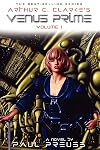
This was part of a Humble Bundle that I got in 2016 because of various Zelazny-related items. It's an expansion of "Breaking Strain", a 1949 story by Arthur C. Clarke, and the first in a series of six volumes by Preuss featuring the mysterious Sparta, whose memories of her own origin are unclear and unreliable, and gets mixed up with a very weird plot involving the transport of a first edition of Seven Pillars of Wisdom to the planet Venus. It show more started a bit clunky but developed well enough and kept my attention to the end; not Great Literature but a step or two ahead of the pulp stories which it is rooted in. show less
This was part of a Humble Bundle that I got in 2016 because of various Zelazny-related items. It's an expansion of "Breaking Strain", a 1949 story by Arthur C. Clarke, and the first in a series of six volumes by Preuss featuring the mysterious Sparta, whose memories of her own origin are unclear and unreliable, and gets mixed up with a very weird plot involving the transport of a first edition of Seven Pillars of Wisdom to the planet Venus. It show more started a bit clunky but developed well enough and kept my attention to the end; not Great Literature but a step or two ahead of the pulp stories which it is rooted in. show less
Awards

You May Also Like


Associated Authors
Statistics
- Works
- 23
- Also by
- 5
- Members
- 3,569
- Popularity
- #7,103
- Rating
- 3.5
- Reviews
- 29
- ISBNs
- 127
- Languages
- 5
- Favorited
- 3