
Edgar Morin (1921–2026)
Author of Introduction à la pensée complexe
About the Author
Edgar Morin is emeritus researcher at the Centre national de recherche scientifique.
Image credit: David Monniaux
Works by Edgar Morin
Encore un moment...: Textes personnels, politiques, sociologiques, philosophiques et littéraires (2023) 13 copies, 1 review
Vidal and His Family: From Salonica to Paris - The Story of a Sephardic Family in the Twentieth Century (1989) 7 copies
Signalement af vor tid 7 copies
Saberes globais e saberes locais: O olhar transdisciplinar (Idéias sustentáveis) (Portuguese Edition) (2000) 6 copies
Dialogue sur la connaissance suivi de Reliances : Entretiens avec des lycéens (2003) 5 copies, 1 review
The Cinema, or The Imaginary Man 2 copies
Teorie dell'evento 2 copies
Por una política del hombre 2 copies
S'il est minuit dans le siècle: La première et fondamentale résistance est celle de l'esprit (2024) 2 copies
El espíritu del tiempo 2 copies
Avant, pendant, après le 11 janvier : Pour une nouvelle écriture collective de notre roman national (2015) 2 copies
La France une et multiculturelle: Lettres aux citoyens de France (Documents) (French Edition) (2012) 2 copies
Semi di saggezza 1 copy
Unir los conocimientos 1 copy
Volontà. Nostra patria è il mondo intero — Author — 1 copy
A Sociedade em busca de novos valores. Para fugir à alternativa entre o cepticismo e o dogmatismo 1 copy
La politique culturelle 1 copy
Pensar a Europa 1 copy
MARXISMO Y SOCIOLOGIA 1 copy
Frères d'âmes 1 copy
As Estrelas de Cinema 1 copy
Lições da História - Podemos aprender com o nosso passado? (Crítica Portugal) (Portuguese Edition) 1 copy
Le lezioni della storia 1 copy
Nhập môn tư duy phức hợp 1 copy
REMOUR IN ORLEANS 1 copy
La vía 1 copy
O Homeme e a Morte 1 copy
Ninguém sabe que dia nascerá 1 copy
Avrupa'yı Düşünmek 1 copy
A favor y en contra de Marx 1 copy
Cultura de Massas no Seculo XX o Espirito do Tempo - Neurose e Necrose (Em Portugues do Brasil) (2000) 1 copy
Vidal e os Seus Livro 1 1 copy
Reinventar la Educacion 1 copy
Associated Works
Tagged
Common Knowledge
- Canonical name
- Morin, Edgar
- Legal name
- Nahoum, Edgar
- Birthdate
- 1921-07-08
- Date of death
- 2026-05-29
- Gender
- male
- Education
- University of Paris
- Occupations
- philosopher
sociologist - Organizations
- Centre national de recherche scientifique
French Resistance (WWII) - Awards and honors
- Grand-Croix, Ordre national de la Légion d'honneur (2021)
- Nationality
- France
- Birthplace
- Paris, France
- Associated Place (for map)
- Paris, France
Members
Reviews
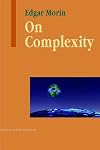
This book is partly the translation of Morin's Introduction à la pensée complexe. It contains 5 essays that were collected in the original, French book. Nevertheless, I definitely recommend this English edition, because there’s also a foreword with an excellent introduction into the life and work of this giant of modern French philosophy and sociology (unfortunately less known than Sartre, Derrida or Foucault). And there are 4 extra even more interesting essays, but without mention where show more they were published before.
Because this book is a collection of essays it isn’t a systematic introduction into the complexity-thinking of Morin: there’s a lot of repetition, some articles are rather polemical (against the classic science paradigm), and in general Morin gives rather fragmentary insight into the alternative that he proposes. Only in the last appendix (of this book) he offers a short but systematic view on the complexity of the world.
Passing over the flaws in the structure of this book, of course, the fundamental intuition of Morin, and of complexity thinking in general is very fascinating. The classic Western approach (the paradigm that has been ruling our world since Descartes) is based on simplification, disjunction and reduction. This approach has resulted (and still does) in spectacular new insights into our world, especially in natural sciences, and based upon this in enormous technological advances. But according to Morin this kind of thinking in the 20th Century has reached its limits. Both in natural sciences, but more so in human sciences and in our globalized world in general, a lot of issues have emerged that can’t be explained nor resolved through the classic approach.
Morin, and complexity thinking in general, proposes an alternative, namely a real paradigm shift. In broad outlines (because this is only an introduction) he pleads to acknowledge that reality is complex (in different degrees), that there’s a high level of uncertainty in our relation to this reality, because subject and object cannot really be separated. In our reality order, disorder and organization always interact in such a way that you have to take chance, coincidence, and emergence as valid, acting principles. So instead of linear thinking, reductionism and simplification Morin says we must focus on conjunction, interrelation with the eco-environment, auto-organisation and dialogue.
Morin doesn’t offer a really worked out alternative. But in his essays several times he stresses the use of strategies in stead of programs: strategies are more realistic, because they are flexible and acknowledge that at all times there is uncertainty and there can be surprises that force us to change route. In that way he was a precursor of the now very popular notion of ‘disruption’. Instead Morin opens up to freedom and emergence, but always understood as complex concepts (concurring and antagonistic with determinism and dependence).
One last remarkable feature of Morin’s thinking is his outspoken rejection of holism. Since the 1970’s holism often also is presented as an alternative for reductionist western science. According to Morin holism just is another form of reductionism, because it’s only focussing on the whole, and deducting the most wild and unlikely views from it. I think he’s right. Instead Morin says we have to focus on the complex relationship between the parts and the whole, the interaction between them, even the retroaction between them, opening up to nonlinear thinking and uncertainty.
In general Morin’s view is a breath of fresh air, opening up new perspectives on reality. Perhaps this book isn’t offering all the answers (but then again, that just isn’t possible according to Morin), but it’s a nice start to begin to look differently at things. show less
Because this book is a collection of essays it isn’t a systematic introduction into the complexity-thinking of Morin: there’s a lot of repetition, some articles are rather polemical (against the classic science paradigm), and in general Morin gives rather fragmentary insight into the alternative that he proposes. Only in the last appendix (of this book) he offers a short but systematic view on the complexity of the world.
Passing over the flaws in the structure of this book, of course, the fundamental intuition of Morin, and of complexity thinking in general is very fascinating. The classic Western approach (the paradigm that has been ruling our world since Descartes) is based on simplification, disjunction and reduction. This approach has resulted (and still does) in spectacular new insights into our world, especially in natural sciences, and based upon this in enormous technological advances. But according to Morin this kind of thinking in the 20th Century has reached its limits. Both in natural sciences, but more so in human sciences and in our globalized world in general, a lot of issues have emerged that can’t be explained nor resolved through the classic approach.
Morin, and complexity thinking in general, proposes an alternative, namely a real paradigm shift. In broad outlines (because this is only an introduction) he pleads to acknowledge that reality is complex (in different degrees), that there’s a high level of uncertainty in our relation to this reality, because subject and object cannot really be separated. In our reality order, disorder and organization always interact in such a way that you have to take chance, coincidence, and emergence as valid, acting principles. So instead of linear thinking, reductionism and simplification Morin says we must focus on conjunction, interrelation with the eco-environment, auto-organisation and dialogue.
Morin doesn’t offer a really worked out alternative. But in his essays several times he stresses the use of strategies in stead of programs: strategies are more realistic, because they are flexible and acknowledge that at all times there is uncertainty and there can be surprises that force us to change route. In that way he was a precursor of the now very popular notion of ‘disruption’. Instead Morin opens up to freedom and emergence, but always understood as complex concepts (concurring and antagonistic with determinism and dependence).
One last remarkable feature of Morin’s thinking is his outspoken rejection of holism. Since the 1970’s holism often also is presented as an alternative for reductionist western science. According to Morin holism just is another form of reductionism, because it’s only focussing on the whole, and deducting the most wild and unlikely views from it. I think he’s right. Instead Morin says we have to focus on the complex relationship between the parts and the whole, the interaction between them, even the retroaction between them, opening up to nonlinear thinking and uncertainty.
In general Morin’s view is a breath of fresh air, opening up new perspectives on reality. Perhaps this book isn’t offering all the answers (but then again, that just isn’t possible according to Morin), but it’s a nice start to begin to look differently at things. show less

I wrote it before (https://www.goodreads.com/review/show/1785081683) : Edgar Morin is one of those typical French "monstres sacrés", a man with an enormous erudition and culture that has a say about almost everything. In this book he traces the roots of his thinking, and he immediately illustrates the many interesting side paths that he has walked on to constitute his personal vision. Especially his interpretation of Heraclitus, Montaigne, Rousseau and Dostoevsky are captivating. On Hegel show more and Marx he gives a little too much place to an apology of his own aberrations (Morin is clearly a child of his time). But it is especially his continuing emphasis on a new kind of thinking that attracts me in him: a thinking that accepts contradictions as a feature of reality, a thinking that states that chaos is an essential element of being, and that finally also leaves room for mystery, a dimension that will always transcend us. This sounds somewhat flou, I know, but it resonates with how I look at the world. It is time that I put my teeth in the actual work of Morin. show less
Another disappointing ipad book. I very much appreciate the sentiments and goals of this book written with the late French philosopher Morin, but the book itself was so abstract it was very difficult to follow. It is also unrealistically optimistic that people care about each other so much that they would sacrifice much for a better world.
Sociologue et intellectuel, Morin donne ici un testament de sa pensée; j'en ai fait une lecture rapide qui m'a laissé peu surpris ayant déjà suivi son parcours; cette somme de ses idées pourrait constituer un programme, si ce n'est qu'il pêche par son coté "il faut..."!
La réalité politico-économique et l'immense inertie de nos sociétés laissent peu de place à cet idéalisme, et c'est bien l'abime qui nous attend, l'auteur en est conscient; ce livre est en fait une sorte de show more baroud d'honneur , on ne pourra pas dire qu'on ne savait pas! show less
La réalité politico-économique et l'immense inertie de nos sociétés laissent peu de place à cet idéalisme, et c'est bien l'abime qui nous attend, l'auteur en est conscient; ce livre est en fait une sorte de show more baroud d'honneur , on ne pourra pas dire qu'on ne savait pas! show less
Awards


You May Also Like


Associated Authors
Statistics
- Works
- 255
- Also by
- 2
- Members
- 2,640
- Popularity
- #9,722
- Rating
- 3.8
- Reviews
- 56
- ISBNs
- 510
- Languages
- 13
- Favorited
- 4