

Michel Onfray
Author of Atheist Manifesto: The Case Against Christianity, Judaism, and Islam
About the Author
Michel Onfray is a French philosopher who established the free Universit Populaire in Caen, Normandy, where he teaches. He is the author of numerous books.
Image credit: Michel Onfray, Torino, Italy, 13th April 2009.
Series
Works by Michel Onfray
Atheist Manifesto: The Case Against Christianity, Judaism, and Islam (2005) 1,186 copies, 23 reviews
Contre-histoire de la philosophie, Tome 6 : Les radicalités existentielles (2009) 32 copies, 1 review
Ánima: La vida y la muerte del alma de Lascaux al transhumanismo (Contextos) (2023) 10 copies, 1 review
Tocqueville et les Apaches : Indiens, nègres, ouvriers, Arabes et autres hors-la-loi (2017) 5 copies
Ars Moriendi : cent petits tableaux sur les avantages et les inconvénients de la mort (1995) 5 copies
Les allaus de Sils Maria: Geologia de Friedrich Nietzsche (Assaig) (Catalan Edition) (2019) 5 copies
Front populaire - Hors-série 3 Fin de l'Occident ? Houellebecq, Onfray, la rencontre (2022) 3 copies
teoria di gesù 1 copy
Le Front populaire: Expliqué par Michel Onfray, Frank Lanot, Gérard Poulouin, Jacky Desquesnes, Nicolas Béniès et Joël Pouthas (2018) 1 copy
L'archipel pré-chrétien. D'Epicure à Diogène d'Œnoanda 1: Contre-histoire de la philosophie 2.1 1 copy
La résistance au nihilisme: Contre-histoire de la philosophie, tome XII (essai français) (2020) 1 copy
Hommage à Bachelard : Eugène Van Lamsweerde, Bernard Pagès, Paul Rebeyrolle, Klaus Rinke (1998) 1 copy
Le Siècle du Moi 2 1 copy
Le Siècle du Moi 1 1 copy
Ernest Pignon-Ernest 1 copy
Associated Works
Tagged
Common Knowledge
- Birthdate
- 1959
- Gender
- male
- Education
- Université de Caen, Basse-Normandie, France (Doctorat de 3e cyvle, Philosophie, Thèse 'Les implications éthiques et politiques des pensées négatives de Schopenhauer à Spengler', 19 86)
- Occupations
- Professeur (Philosophie)
Auteur (Philosophie)
Chroniqueur médias - Organizations
- Université populaire de Caen (Fondateur, 2002)
Université populaire du goût (Fondateur, 2006)
Lycée technique Sainte-Ursule, Caen (Professeur, 1983|2002)
Association Diogène & Co (Président, 20 02 | )
Association Épicure & Co (Président, 20 06 | ) - Awards and honors
- Prix Médicis (1993)
- Relationships
- Goyard-Fabre, Simone (Directeur de thèse)
Enthoven, Jean-Paul (Ami) - Nationality
- France (birth)
- Birthplace
- Argentan, Orne, Normandie, France
- Places of residence
- Argentan, France (birth)
- Map Location
- France
- Associated Place (for map)
- Argentan, France
Members
Reviews

Em nenhum lugar desprezei aquele que acreditava nos espíritos, na alma imortal, no sopro dos deuses, na presença dos anjos, nos efeitos da prece, na eficácia do ritual, na legitimidade das encantações, no contato com os loas, nos milagres com hemoglobina, nas lágrimas da virgem, na ressurreição de um homem crucificado, nas virtudes dos cauris, nas forças xamânicas, no valor do sacrifício animal, no efeito transcendental do nitro egípcio, nas moinhas de preces. No chacal show more ontológico. Em nenhum lugar. Mas em toda parte constatei o quanto os homens fabulam para evitar olhar o real de frente. A criação de além-mundos não seria muito grave se seu preço não fosse tão alto: o esquecimento do real, portanto a condenável negligência do único mundo que existe. Enquanto a crença indispõe com a imanência, portanto com o eu, o ateísmo reconcilia com a terra, outro nome da vida. (M.O) show less
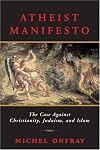
On a second reading after a few years, I have revised my opinion. I think I can see its weaknesses now, There are some factual assertions which are simply false. Among some examples, he states that no Christian or Muslim thinkers condemn the violence and misogyny so evident in the churches and mosques. That's simply false: has he never heard of Christian pacifists? I'm persuaded by atheism/agnosticism, but this falsity really weakens the book, making its opponents into straw people. Also, a show more second reading shows how wedded he is to Foucault, not surprising in a French thinker. (He criticises Foucault's attitude to Iran, in the end.)
Knowledge is inextricably linked to power, says Foucault, and Christian power in the west pollutes all medical and other knowledge. Assertion, assertion. Is there no room for independent knowledge? How else did the Enlightenment emerge?
He then seeks to base a new epistemology on Bentham's utilitarianism despite Bentham's very obvious weakness of oppression of the minority for the benefit of the majority, the greatest number.
Towards the end, the book is less atheist than hostile to religion. The two are not the same.
I enjoyed the first reading. Not so much the second, despite the clarity of his writing and strength of his anti-religion arguments. show less
Knowledge is inextricably linked to power, says Foucault, and Christian power in the west pollutes all medical and other knowledge. Assertion, assertion. Is there no room for independent knowledge? How else did the Enlightenment emerge?
He then seeks to base a new epistemology on Bentham's utilitarianism despite Bentham's very obvious weakness of oppression of the minority for the benefit of the majority, the greatest number.
Towards the end, the book is less atheist than hostile to religion. The two are not the same.
I enjoyed the first reading. Not so much the second, despite the clarity of his writing and strength of his anti-religion arguments. show less
In Defense of Atheism is the sort of book that will anger religious believers who will accuse the author of prejudice and hatred of religion, while for non-believers (among whom I count myself) it will clarify and reinforce many things they already feel about the weaknesses and pernicious, negative effects of religion.
Onfray makes a distinction between what he calls Christian atheism that engages the god-denier who is just the flip side of the priestly coin, as opposed to atheistic atheism show more which is more than just the denial of God in calling for a new set of ideas to place morality and politics on a new base, one that is post-Christian. The book sets out to accomplish three objectives: deconstruction of the three monotheisms, deconstruction of Christianity, and deconstruction of theocracy. On the first point, despite perceived differences, Onfary sees a variety of shared fundamentals among the three monotheisms: a sequence of waves of hatred set in violet motion throughout history; hatred of intelligence in favour of submission and obedience; hatred of life coupled with a passionate and unshakable obsession with death; hatred of the here and now, consistently undervalued in favour of a beyond; hatred of the corruptible body while the soul is invested with all the higher qualities and virtues; and hatred of women, condemnation of liberated sexuality and sex for pleasure.
The list above and the following quote give a pretty good idea of the tone of the book:
"Christianity grew on the fertile soil of collective hysteria: a psychological term for the fears and volatile state of the masses. It rooted itself in fallacious principles; it put forward lies, fiction, and myths and the conferred on them the stamp of authenticity. The repetition of a sum of errors by the greatest number eventually becomes a corpus of truths that is sacrosanct. Questioning those truths could be dangerous for freethinkers—from the Christian bonfires of the day before yesterday to the Muslim fatwas of today."
Onfray does not concede that Jesus was a real figure (noting the almost complete lack of references except two or three written many years after Christ was supposed to have lived). For Onfray, Jesus was:
"...a concept. His whole reality resides in that definition. Certainly he existed, but not as a historical figure...He existed as a crystallization of the aspirations of his era and of the reverence for the miraculous common to the authors of antiquity, articulated in the performative register that creates by naming....The believers invented their creation, then made it the object of a cult: the very essence of willing self-deception."
Onfray consistently argues for the application of reason and intelligence in assessing the likelihood of events or even beliefs. He decries the violence sanctioned and even encouraged in the great texts of the Bible, the Torah, the Koran (he is especially hard on the latter), draws parallels between the Catholic church and totalitarian systems, including the close links between the Catholic church and the Nazis (which the church has still not recognized nor apologized for) and more recently the utterly shameful performance of the church in Rwanda, he details church support through the centuries for ethnocide, genocide, slavery, he deconstructs the contradictions in Bible, and other texts written sometimes centuries after the events with clear political agendas, and asks how these can be taken as the inerrant word of God (for greater detail on this see also Bart Ehrman: Misquoting Jesus).
How to move forward? This is more difficult. Onfray calls for the "injection of reason into human consciences", a move away from "religious secularism" under which adherents cherry-pick from religious books, beliefs, activities to construct a benevolent god or system. Onfray wants a "post-Christian secularism" that moves beyond relativism and defends the Enlightenment's values against magical propositions.
"For by decreeing the equality of all religions and of those who reject them, as today's regnant brand of secularism recommends, we condone relativism: equality of magical thinking and rational thought, of fable, myth, and reasoned argument, of thaumaturgic discourse and scientific thinking, of the Torah and Descarte's Discourse on Method, the New Testament and the Critique of Pure Reason, the Koran and the Genealogy of Morality. We declare Moses the equal of Descartes, Jesus of Kant, and Muhammad of Nietzsche."
The book could have done with some tighter editing as Onfray repeats himself in a few places, and once in awhile he slips into academic jargon that made me re-read a sentence two or three times to get at what he was saying. And, as I said at the beginning: this book will infuriate some and satisfy others, such as me. show less
Onfray makes a distinction between what he calls Christian atheism that engages the god-denier who is just the flip side of the priestly coin, as opposed to atheistic atheism show more which is more than just the denial of God in calling for a new set of ideas to place morality and politics on a new base, one that is post-Christian. The book sets out to accomplish three objectives: deconstruction of the three monotheisms, deconstruction of Christianity, and deconstruction of theocracy. On the first point, despite perceived differences, Onfary sees a variety of shared fundamentals among the three monotheisms: a sequence of waves of hatred set in violet motion throughout history; hatred of intelligence in favour of submission and obedience; hatred of life coupled with a passionate and unshakable obsession with death; hatred of the here and now, consistently undervalued in favour of a beyond; hatred of the corruptible body while the soul is invested with all the higher qualities and virtues; and hatred of women, condemnation of liberated sexuality and sex for pleasure.
The list above and the following quote give a pretty good idea of the tone of the book:
"Christianity grew on the fertile soil of collective hysteria: a psychological term for the fears and volatile state of the masses. It rooted itself in fallacious principles; it put forward lies, fiction, and myths and the conferred on them the stamp of authenticity. The repetition of a sum of errors by the greatest number eventually becomes a corpus of truths that is sacrosanct. Questioning those truths could be dangerous for freethinkers—from the Christian bonfires of the day before yesterday to the Muslim fatwas of today."
Onfray does not concede that Jesus was a real figure (noting the almost complete lack of references except two or three written many years after Christ was supposed to have lived). For Onfray, Jesus was:
"...a concept. His whole reality resides in that definition. Certainly he existed, but not as a historical figure...He existed as a crystallization of the aspirations of his era and of the reverence for the miraculous common to the authors of antiquity, articulated in the performative register that creates by naming....The believers invented their creation, then made it the object of a cult: the very essence of willing self-deception."
Onfray consistently argues for the application of reason and intelligence in assessing the likelihood of events or even beliefs. He decries the violence sanctioned and even encouraged in the great texts of the Bible, the Torah, the Koran (he is especially hard on the latter), draws parallels between the Catholic church and totalitarian systems, including the close links between the Catholic church and the Nazis (which the church has still not recognized nor apologized for) and more recently the utterly shameful performance of the church in Rwanda, he details church support through the centuries for ethnocide, genocide, slavery, he deconstructs the contradictions in Bible, and other texts written sometimes centuries after the events with clear political agendas, and asks how these can be taken as the inerrant word of God (for greater detail on this see also Bart Ehrman: Misquoting Jesus).
How to move forward? This is more difficult. Onfray calls for the "injection of reason into human consciences", a move away from "religious secularism" under which adherents cherry-pick from religious books, beliefs, activities to construct a benevolent god or system. Onfray wants a "post-Christian secularism" that moves beyond relativism and defends the Enlightenment's values against magical propositions.
"For by decreeing the equality of all religions and of those who reject them, as today's regnant brand of secularism recommends, we condone relativism: equality of magical thinking and rational thought, of fable, myth, and reasoned argument, of thaumaturgic discourse and scientific thinking, of the Torah and Descarte's Discourse on Method, the New Testament and the Critique of Pure Reason, the Koran and the Genealogy of Morality. We declare Moses the equal of Descartes, Jesus of Kant, and Muhammad of Nietzsche."
The book could have done with some tighter editing as Onfray repeats himself in a few places, and once in awhile he slips into academic jargon that made me re-read a sentence two or three times to get at what he was saying. And, as I said at the beginning: this book will infuriate some and satisfy others, such as me. show less
A Hedonist Manifesto: The Power to Exist (Insurrections: Critical Studies in Religion, Politics, and Culture) by Michel Onfray
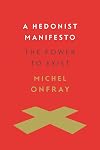
Very good. Thought provoking, practical, and personal in style. Had its French-y-er moments but over all a solid defense of hedonism as the author defines the term.
P 7 “to say again: the dominant historiography is idealist. It can be split into three periods: the Platonic period, the Christian Era, and German Idealism. In the language of official school syllabi: Plato, Descartes, and Kant. The Republic and its came of Ideas, the Discourse on Method and its thinking substance, and The show more Critique of Pure Reason, with its phenomena, of course, but mainly its noumena, the German reincarnation of the Platonic Idea.”
P 24 “I often put forward the following maxim of Chamfort, because it serves as a hedonist categorical imperative: “enjoy and have others enjoy, without doing harm to yourself or anyone else; that is all there is to morality.””
P 138 “These elective micro societies engage in microresistance capable of temporarily disrupting dominant microfascisms. The micrological era that we live in compels us to permanent action and perpetual engagement. “ show less
P 7 “to say again: the dominant historiography is idealist. It can be split into three periods: the Platonic period, the Christian Era, and German Idealism. In the language of official school syllabi: Plato, Descartes, and Kant. The Republic and its came of Ideas, the Discourse on Method and its thinking substance, and The show more Critique of Pure Reason, with its phenomena, of course, but mainly its noumena, the German reincarnation of the Platonic Idea.”
P 24 “I often put forward the following maxim of Chamfort, because it serves as a hedonist categorical imperative: “enjoy and have others enjoy, without doing harm to yourself or anyone else; that is all there is to morality.””
P 138 “These elective micro societies engage in microresistance capable of temporarily disrupting dominant microfascisms. The micrological era that we live in compels us to permanent action and perpetual engagement. “ show less
Lists
Awards


You May Also Like


Associated Authors
Statistics
- Works
- 191
- Also by
- 2
- Members
- 3,926
- Popularity
- #6,444
- Rating
- 3.8
- Reviews
- 97
- ISBNs
- 522
- Languages
- 13
- Favorited
- 12

