
Alan Judd (1) (1946–)
Author of The Devil's Own Work
For other authors named Alan Judd, see the disambiguation page.
Series
Works by Alan Judd
The Quest for C: Mansfield Cumming and the Founding of the Secret Service (1999) 74 copies, 1 review
Associated Works
Tagged
Common Knowledge
- Legal name
- Petty, Alan Edwin
- Birthdate
- 1946
- Gender
- male
- Education
- University of Oxford
- Occupations
- soldier
diplomat
security analyst
writer
novelist - Awards and honors
- Granta's Best of Young British Novelists (1983)
Royal Society of Literature (1990) - Short biography
- Alan Judd is a pseudonym of Alan Edwin Petty, born in the UK. A graduate of Oxford University, he served as an officer in the British Army in Northern Ireland before later joining the Foreign Office. Since then, he has worked as a security analyst and a journalist. It was while working for the Foreign Office that he began writing novels. He made his literary debut with A Breed of Heroes (1981), which won the Winifred Holtby Award and was adapted by the BBC into a television drama. The main character, Charles Thoroughgood, returned in three more books so far, Legacy (2001), Uncommon Enemy (2012), and Inside Enemy (2014). Other novels include Short of Glory (1984), Tango (1989), and The Noonday Devil (1987). His historical fiction includes The Kaiser's Last Kiss (2003), which was adapted into the film The Exception in 2016, and Dancing With Eva (2007). In 1990, he published a biography of Ford Madox Ford, and wrote another novel, The Devil's Own Work (1991), paying homage to Ford. Judd is a regular contributor to the Daily Telegraph and the Spectator. In 1990, he was made a Fellow of the Royal Society of Literature.
- Nationality
- UK
- Map Location
- UK
Members
Reviews

4.5/5
The Devil's Own Work is a beautifully written, subtly told Faustian tale, which the narrator performs perfectly.
A man relates the story of his friend, Edward, and how he became a famous and successful writer. A writer who, although he writes many words, ultimately has nothing of substance to say. Further along, we discover that Edward inherited a manuscript from a recently deceased author named Tyrell. With that manuscript he also seems to have inherited a beautiful, ageless woman show more named Eudoxy.
As the story unfolds, we learn more about the manuscript, (which only can be read one letter at a time, because to try to see an actual word results in the reader seeing gibberish.) It's when this manuscript falls into Edward's hands that he suddenly becomes successful. Is that because of the manuscript itself, or because of the mysterious Eudoxy? You'll have to read this to find out!
This novella length story is tight and slow to build. There isn't necessarily a denouement, but instead a growing realization of horror and what is truly involved. If you are a reader expecting a lot of action, this isn't the tale for you. However, if you have a love of language and precise storytelling, AND this premise sounds intriguing to you, I highly recommend you give The Devil's Own Work a try. It probably won't provoke any screams or shouts of terror from you, but I bet it will give you a bad case of the heebies-jeebies.
Highly recommended!
*This audiobook was provided free of charge by the narrator, in exchange for my honest feedback. This is it.* show less
The Devil's Own Work is a beautifully written, subtly told Faustian tale, which the narrator performs perfectly.
A man relates the story of his friend, Edward, and how he became a famous and successful writer. A writer who, although he writes many words, ultimately has nothing of substance to say. Further along, we discover that Edward inherited a manuscript from a recently deceased author named Tyrell. With that manuscript he also seems to have inherited a beautiful, ageless woman show more named Eudoxy.
As the story unfolds, we learn more about the manuscript, (which only can be read one letter at a time, because to try to see an actual word results in the reader seeing gibberish.) It's when this manuscript falls into Edward's hands that he suddenly becomes successful. Is that because of the manuscript itself, or because of the mysterious Eudoxy? You'll have to read this to find out!
This novella length story is tight and slow to build. There isn't necessarily a denouement, but instead a growing realization of horror and what is truly involved. If you are a reader expecting a lot of action, this isn't the tale for you. However, if you have a love of language and precise storytelling, AND this premise sounds intriguing to you, I highly recommend you give The Devil's Own Work a try. It probably won't provoke any screams or shouts of terror from you, but I bet it will give you a bad case of the heebies-jeebies.
Highly recommended!
*This audiobook was provided free of charge by the narrator, in exchange for my honest feedback. This is it.* show less

Hitler's forces have just invaded the Netherlands. Martin Krebbs, a young ambitious SS officer, has been assigned to head the security detail at the home of Kaiser-in-exile Wilhelm II. While there, he encounters Akki, a Dutch maid, and he is drawn to her, eventually discovering, to his definitely mixed emotions, that she is Jewish. -- An intriguing, fascinatingly-written historical novel that asks probing questions about motivations and goals and remaining true to one's self. The Kaiser show more (whom Krebbs thinks of as 'unreasonable and inconsistent') is particularly well-drawn. The final scenes of the book are deeply moving. One of the best fiction I have read in some time. show less
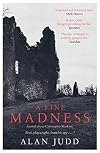
Alan Judd's A Fine Madness, which is being republished in February 2022, has received mixed reviews on GoodReads, which I think is more about genre expectations that about the quality of the novel itself, which is first-rate. Marginally, A Fine Madness is a mystery novel: it's a imagined recounting of the espionage career and murder of the Elizabethan writer and sometimes intelligencer Christopher Marlowe by Elizabeth I's top code-breaker Thomas Phelippes. But primarily, this is a novel show more about faith and mortality and the ways a tight connection between faith and State can force individuals into internal contortions—and sometimes external ones as well.
The set-up here is that Phelippes is writing while imprisoned in the tower near the end of his life. A representative of James I has approached Phelippes saying the monarch wants to learn all Phelippes knows about Marlow, but without providing any context that could direct the flow of Phelippes' reminiscences. As Phelippes narrates his tale, he finds himself pondering Marlowe's approach to religion, particularly his views of mortality.
Phelippes is a cautious, conventional man in contrast to the firebrand Marlowe, who chooses to walk along every precipitous edge he can find, but the two build a warm, if at arms-length relationship. Phelippes frets over the risks Marlowe takes; Marlowe is gentle with Phelippes in ways he isn't with others.
If you're a reader expecting an action-packed tale of Elizabethan skullduggery, you're going to find this kind of ruminative novel unsatisfying. But if you're ready for a novel that makes you think about the issues that trouble Marlowe—and later Phelippes—you're in for a very rewarding experience. This is the kind of novel that merits more than a single reading and the repays readers' efforts in proportion to those efforts. Don't let the lack of swashbuckling blind you to the gem this novel truly is.
I received a free electronic review copy of this title from the publisher via Edelweiss; the opinions are my own. show less
The set-up here is that Phelippes is writing while imprisoned in the tower near the end of his life. A representative of James I has approached Phelippes saying the monarch wants to learn all Phelippes knows about Marlow, but without providing any context that could direct the flow of Phelippes' reminiscences. As Phelippes narrates his tale, he finds himself pondering Marlowe's approach to religion, particularly his views of mortality.
Phelippes is a cautious, conventional man in contrast to the firebrand Marlowe, who chooses to walk along every precipitous edge he can find, but the two build a warm, if at arms-length relationship. Phelippes frets over the risks Marlowe takes; Marlowe is gentle with Phelippes in ways he isn't with others.
If you're a reader expecting an action-packed tale of Elizabethan skullduggery, you're going to find this kind of ruminative novel unsatisfying. But if you're ready for a novel that makes you think about the issues that trouble Marlowe—and later Phelippes—you're in for a very rewarding experience. This is the kind of novel that merits more than a single reading and the repays readers' efforts in proportion to those efforts. Don't let the lack of swashbuckling blind you to the gem this novel truly is.
I received a free electronic review copy of this title from the publisher via Edelweiss; the opinions are my own. show less
Oh, I really liked this. I think it helped that I know little enough of Marlowe to begin with that I wasn’t irked about errors or fabrications in his biography. If anything, the book has inspired me to read more about Marlowe.
What I also really like is that this book could have been a thriller of derring do and using Kit as and “action hero”. Judd doesn’t do this. This is told by a character (a specialist in cyphers and fellow “spy”) who is imprisoned in the Tower and is show more interviewed by someone 30 years after Marlowe’s death. The interview is being conducted apparently about Marlowe by order of the King.
It’s all about Kit’s character and more so his way of thinking, with his search for honesty (and whether it can be found in religion) in the foreground.
The suspense element is built around us not knowing why Thomas is being questioned about Marlowe.
It does become clear in the last chapter but in keeping with the espionage theme and the vagueness and ambiguity of what each of the characters say to each other, it is never spelled out for the reader.
Apart from the investigation into Marlowe’s thinking and character (both of which I thought were done really well), I loved the structure and style in which the story was told. I totally felt immersed in the Jacobean politics and plotting that made it impossible to trust any of the characters completely. Judd pitched this against the main character describing Marlowe’s search for truth in everything, which I felt was a superb contrast to the description of the environment in which Marlowe lived.
The ending also really worked for me. It finally touches on a point that other books such as Tamburlaine Must Die have picked up about Marlowe, but I really liked how Judd deals with it. Again, it seemed that Judd acknowledges that too little fact is known to be certain of much about Marlowe, and that speculation may actually distract from the bigger picture.
"What I can say is that a man is more than his proclivities. Christopher had hot blood and a fearless mind. He walked where the rest of us fear to tread and he dissolved my faith in the life to come. Yet he sought not to destroy, but to be true. His bequest to me was honest doubt. That is what I believe is important about him, more than his plays or his verses, of which I know sadly little. His life showed that the courage to be honest is the best exemplar of whatever life might be to come. If there is one. And if there is no life to come, only nothingness, then being honest about that and living fully in the face of nothing is an even greater virtue, the very best we can do. And that surely is deserving of something."
I very much look forward to reading more by Alan Judd. show less
What I also really like is that this book could have been a thriller of derring do and using Kit as and “action hero”. Judd doesn’t do this. This is told by a character (a specialist in cyphers and fellow “spy”) who is imprisoned in the Tower and is show more interviewed by someone 30 years after Marlowe’s death. The interview is being conducted apparently about Marlowe by order of the King.
It’s all about Kit’s character and more so his way of thinking, with his search for honesty (and whether it can be found in religion) in the foreground.
The suspense element is built around us not knowing why Thomas is being questioned about Marlowe.
It does become clear in the last chapter but in keeping with the espionage theme and the vagueness and ambiguity of what each of the characters say to each other, it is never spelled out for the reader.
Apart from the investigation into Marlowe’s thinking and character (both of which I thought were done really well), I loved the structure and style in which the story was told. I totally felt immersed in the Jacobean politics and plotting that made it impossible to trust any of the characters completely. Judd pitched this against the main character describing Marlowe’s search for truth in everything, which I felt was a superb contrast to the description of the environment in which Marlowe lived.
The ending also really worked for me. It finally touches on a point that other books such as Tamburlaine Must Die have picked up about Marlowe, but I really liked how Judd deals with it. Again, it seemed that Judd acknowledges that too little fact is known to be certain of much about Marlowe, and that speculation may actually distract from the bigger picture.
"What I can say is that a man is more than his proclivities. Christopher had hot blood and a fearless mind. He walked where the rest of us fear to tread and he dissolved my faith in the life to come. Yet he sought not to destroy, but to be true. His bequest to me was honest doubt. That is what I believe is important about him, more than his plays or his verses, of which I know sadly little. His life showed that the courage to be honest is the best exemplar of whatever life might be to come. If there is one. And if there is no life to come, only nothingness, then being honest about that and living fully in the face of nothing is an even greater virtue, the very best we can do. And that surely is deserving of something."
I very much look forward to reading more by Alan Judd. show less
Lists
Awards


You May Also Like


Associated Authors
Statistics
- Works
- 19
- Also by
- 2
- Members
- 865
- Popularity
- #29,594
- Rating
- 3.8
- Reviews
- 20
- ISBNs
- 127
- Languages
- 3