
Aviaq Johnston
Author of Taaqtumi: An Anthology of Arctic Horror Stories
About the Author
Image credit: Courtney Edgar
Works by Aviaq Johnston
Associated Works
Tagged
Common Knowledge
- Birthdate
- 1992-10-23
- Gender
- female
- Nationality
- Canada
- Birthplace
- Igloolik, Nunavut, Canada
- Places of residence
- Iqaluit, Nunavut, Canada
Ottawa, Ontario, Canada - Associated Place (for map)
- Nunavut, Canada
Members
Reviews
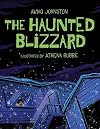
I am really loving this graphic novel for middle-aged kids. It is part of the great renaissance of graphic novels from Indigenous authors and artists that is going on right now (e.g. the Moonshot collections). It is such a fabulous way to tell stories from the Indigenous perspective considering that these are societies with strong oral traditions where the story tellers would use graphic elements such as masks, dances, firelight, carvings, etc. With stories like this that have a show more horror/fantasy element, the graphic novel format becomes an especially good choice as a way to embrace those supernatural elements that are part of many Indigenous stories. I like how the mysterious nature of the blizzard is conveyed with the brightness of the snow contrasting with the darkness beyond (great art!) where the threatening presence of the inhuman follower lurks. Add in the smattering of Indigenous language and this is a wonderfully atmospheric read. show less
 This review was written for LibraryThing Early Reviewers.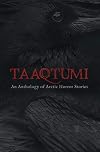
Taaqtumi is an Inuktitut word that means “in the dark” and captures the isolation, limited sunlight, and snowblindness present in this collection of short stories by Inuit, Métis, and First Nations authors. Stories range from a child hiding from something hidden in a blizzard, surviving a zombie apocalypse by living in the extreme Northern tundras, and the confession of cannibal who hunts free range humans. These stories draw on indigenous folklore as well as the struggles of modern show more indigenous people in settler-colonial societies. The effects of the climate crisis also contribute to everyday horrors. It's a short but chilling collection of imaginative stories.
Favorite Passages:
Favorite Passages:
My mother doesn’t know. She’s too grown up to remember the scary parts of our land. The scary things that hide around us. She thinks that the land is nothing more than the science of the space around us, environment and nature. She thinks this is all that lives outside. For some reason, elders and children know more than adults do, and I wonder why that is. They act like they know everything, as if everything has an explanation. At some point in their lives they forget the stories children are told, dismissing them as fairy tales and myths. They think that the scary women in the ice aren’t real, or that the little folk that you can only see at sunset are just imaginary, or that giants never roamed the earth. Just like all adults, my mother has forgotten all those things the elders had passed down. - from "The Haunted Blizzard" by Aviaq Johnston
A child who grows without love doesn’t grow into a peaceful or rational person. It was too late for me. The love that came too late brought up other feelings. Jealousy. Paranoia. Cowardice. Distrust. - from Revenge by Thomas Anguti Johnston
It’s easy to look inside yourself as a fellow man and see all those dark secrets, horrible thoughts, moronic attitudes, and then take your self-hatred out on some poor bastard who you know harbours all the same flaws deep down. All men are the same, some are just better at hiding this shared disease than others.show less
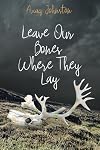
Aviaq Johnston's Leave Our Bones Where They lay is a remarkable little read—and I'm using "little" in terms of the book's 136 pages, not implying there is anything small about the content or the writing.
Set in a First People's community in Canada, the book opens with Jupi moving through the frozen landscape on a journey to meet with and tell a story to Kipik, an otherworldly being. Generations and generations back, one of Jupi's ancestors angered Kipik. Since then, at each solstice a show more member of the family Jupi is descended from, must make this trek to tell Kipik a story—or...? We don't know what the "or" is because so far, Jupi's line has succeeded in providing these stories, but we do know that the "or" will be huge and horrendous.
Jupi is aging, and Kipik is troubling him about the choice of the next generation's storyteller. The role used to be passed from father to son, but rapid changes in culture means Jupi doesn't have an obvious heir and must look beyond his own sons to find someone with fortitude and intelligence necessary to take on the role.
The novel moves between the story of Jupi's efforts to find an heir and the stories that are told to Kipik.
The writing here is exquisite—clear and unadorned, the way one might imagine an arctic winter landscape to be. The characters, their lives, the culture they are trying to maintain or to forget or reshape are riches enough to move the book along. Johnston has worked magic here just by letting the small events of a daily life play out.
The best comparisons I can make are to Helen Humphreys' [book:The Frozen Thames|2025598] and Laird Hunt's [book:Zorrie|53138232]. If you're familiar with the rich minimalism of these two titles, you'll have a sense of what I mean when I refer to Johnston's magical writing.
Pick up Leave Our Bones Where They Lay when you want a read that is contemplative and doesn't need to be scattered with high drama or literary pretension. Reading it is like enjoying a glass of ice cold water when thirsty—anything more elaborate wouldn't be as satisfying. I am doing to be carefully tracking Johnston's work and look forward to reading more.
I received a free electronic review copy of this title from the publisher via Edelweiss+; the opinions are my own. show less
Set in a First People's community in Canada, the book opens with Jupi moving through the frozen landscape on a journey to meet with and tell a story to Kipik, an otherworldly being. Generations and generations back, one of Jupi's ancestors angered Kipik. Since then, at each solstice a show more member of the family Jupi is descended from, must make this trek to tell Kipik a story—or...? We don't know what the "or" is because so far, Jupi's line has succeeded in providing these stories, but we do know that the "or" will be huge and horrendous.
Jupi is aging, and Kipik is troubling him about the choice of the next generation's storyteller. The role used to be passed from father to son, but rapid changes in culture means Jupi doesn't have an obvious heir and must look beyond his own sons to find someone with fortitude and intelligence necessary to take on the role.
The novel moves between the story of Jupi's efforts to find an heir and the stories that are told to Kipik.
The writing here is exquisite—clear and unadorned, the way one might imagine an arctic winter landscape to be. The characters, their lives, the culture they are trying to maintain or to forget or reshape are riches enough to move the book along. Johnston has worked magic here just by letting the small events of a daily life play out.
The best comparisons I can make are to Helen Humphreys' [book:The Frozen Thames|2025598] and Laird Hunt's [book:Zorrie|53138232]. If you're familiar with the rich minimalism of these two titles, you'll have a sense of what I mean when I refer to Johnston's magical writing.
Pick up Leave Our Bones Where They Lay when you want a read that is contemplative and doesn't need to be scattered with high drama or literary pretension. Reading it is like enjoying a glass of ice cold water when thirsty—anything more elaborate wouldn't be as satisfying. I am doing to be carefully tracking Johnston's work and look forward to reading more.
I received a free electronic review copy of this title from the publisher via Edelweiss+; the opinions are my own. show less
Disclaimer: I won this during a LIbrarything Giveaway.
This spooky horror graphic novel focuses on a young girl, Inu, who walks home in a blizzard and encounters something dark and horrifying.
It is a short story with an ambiguous ending. If you know a bit about folklore, not even necessarily Inuit folklore, what the monster is becomes clear, though it is never directly spelled out.
In a few panels both Johnston and Gubbe set up the friendship between the children as well as how the show more community looks after, or tries to look after, each other. Johnston uses Inuktitut words (there is a glossary in the back), and the story gets a real feel that makes the horror aspect, well, more horrifying.
Both Johnston and Gubbe do an excellent job at depicting the emotions of Inu and the other characters. Even with the spare use of language and the sparse detail in some of the panels, conflict, care, and pain come across.
The publisher lists the book as a YA graphic novel. The ending is open ended, no doubt in part for the creepy story but because it can also lead to deeper discussions among readers. show less
This spooky horror graphic novel focuses on a young girl, Inu, who walks home in a blizzard and encounters something dark and horrifying.
It is a short story with an ambiguous ending. If you know a bit about folklore, not even necessarily Inuit folklore, what the monster is becomes clear, though it is never directly spelled out.
In a few panels both Johnston and Gubbe set up the friendship between the children as well as how the show more community looks after, or tries to look after, each other. Johnston uses Inuktitut words (there is a glossary in the back), and the story gets a real feel that makes the horror aspect, well, more horrifying.
Both Johnston and Gubbe do an excellent job at depicting the emotions of Inu and the other characters. Even with the spare use of language and the sparse detail in some of the panels, conflict, care, and pain come across.
The publisher lists the book as a YA graphic novel. The ending is open ended, no doubt in part for the creepy story but because it can also lead to deeper discussions among readers. show less
This review was written for LibraryThing Early Reviewers.Lists
Awards


You May Also Like


Associated Authors
Statistics
- Works
- 14
- Also by
- 2
- Members
- 416
- Popularity
- #58,579
- Rating
- 3.7
- Reviews
- 33
- ISBNs
- 28
- Languages
- 2
