
Christy Jordan-Fenton
Author of Fatty Legs: A True Story
About the Author
Image credit: via Goodreads
Works by Christy Jordan-Fenton
Tagged
Common Knowledge
- Gender
- female
- Education
- Norwich University
- Nationality
- Canada
- Birthplace
- Rimbey, Alberta, Canada
- Places of residence
- Baldonnel, British Columbia, Canada
- Associated Place (for map)
- Canada
Members
Reviews
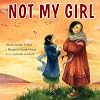
The story is of an Inuit girl who returns home to her family after being sent to a First Peoples/Native American boarding school, probably forcibly by the government. These acts of cultural genocide tore families apart, killed Native/Indigenous languages, cultures, and communities. This children's story aptly tells of a child's experience and how hard it was to return to her family. In the story, the protagonist steps off a boat and hears her mother's shock in the words "Not My Girl" and the show more story talks about how she has to relearn how to join her community.
The story is an important one to be shared with children and adults today. The last Native American boarding school only closed about 30-40 years ago which means there are still parents and grandparents who remember this horrific time period. This book should be read and talked about and included in school libraries and classrooms. I hope it doesn't end up in clearance bins, sweeping aside inconvenient history is how racism survives. show less
The story is an important one to be shared with children and adults today. The last Native American boarding school only closed about 30-40 years ago which means there are still parents and grandparents who remember this horrific time period. This book should be read and talked about and included in school libraries and classrooms. I hope it doesn't end up in clearance bins, sweeping aside inconvenient history is how racism survives. show less
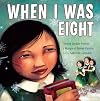
"Utterly compelling. The authors of Fatty Legs (2010) distill that moving memoir of an Inuit child’s residential school experience into an even more powerful picture book.
“Brave, clever, and as unyielding” as the sharpening stone for which she’s named, Olemaun convinces her father to send her from their far-north village to the “outsiders’ school.” There, the 8-year-old receives particularly vicious treatment from one of the nuns, who cuts her hair, assigns her endless chores, show more locks her in a dark basement and gives her ugly red socks that make her the object of other children’s taunts. In her first-person narration, she compares the nun to the Queen in Alice in Wonderland, a story she has heard from her sister and longs to read for herself, subtly reminding readers of the power of literature to help face real life. Grimard portrays this black-cloaked nun with a scowl and a hooked nose, the image of a witch. Her paintings stretch across the gutter and sometimes fill the spreads. Varying perspectives and angles, she brings readers into this unfamiliar world. Opening with a spread showing the child’s home in a vast, frozen landscape, she proceeds to hone in on the painful school details. A final spread shows the w, triumphant child and her book: “[N]ow I could read.”
Utterly compelling. (Picture book/memoir. 5-9)" A Kirkus Starred Review, www.kirkusreviews.com show less
“Brave, clever, and as unyielding” as the sharpening stone for which she’s named, Olemaun convinces her father to send her from their far-north village to the “outsiders’ school.” There, the 8-year-old receives particularly vicious treatment from one of the nuns, who cuts her hair, assigns her endless chores, show more locks her in a dark basement and gives her ugly red socks that make her the object of other children’s taunts. In her first-person narration, she compares the nun to the Queen in Alice in Wonderland, a story she has heard from her sister and longs to read for herself, subtly reminding readers of the power of literature to help face real life. Grimard portrays this black-cloaked nun with a scowl and a hooked nose, the image of a witch. Her paintings stretch across the gutter and sometimes fill the spreads. Varying perspectives and angles, she brings readers into this unfamiliar world. Opening with a spread showing the child’s home in a vast, frozen landscape, she proceeds to hone in on the painful school details. A final spread shows the w, triumphant child and her book: “[N]ow I could read.”
Utterly compelling. (Picture book/memoir. 5-9)" A Kirkus Starred Review, www.kirkusreviews.com show less
Beautifully written by Christy Jordan-Fenton and her mother-in-law Margaret-Olemaun Pokiak-Fenton, we travel with 8 year old Margaret-Olemaun to the residential school in the high Canadian arctic where she spent two years of her life. Margaret-Olemaun had begged her father to be allowed to go to the church-run school so that she could learn to read just like her older sister did. Worn down by the pleading, and feeling pressure from the school to allow her to go, Margaret-Olemaun's father show more eventually said yes. But the school wasn't the dream that Margaret-Olemaun thought it would be. She did learn to read, but she was also shamed, malnourished, bullied and worked to the bone. She was made to dress like the "outsiders" who didn't have the sense to dress warmly in the winter and she was banned from speaking her own language. Margaret-Oleman did not see her family for two years. When she was finally allowed to be reunited, her mother refused to believe that this outsider was her girl. Heartbroken, Margaret-Olemaun realized that fitting back in to her family wasn't going to be as easy as she thought it would be. This book is a great way to start a conversation with Intermediate students about Residential/Boarding Schools and Assimilation through Education. The squel to Fatty Legs, Stranger at Home, continues Margaret-Olemaun's story.
Youth review: You may have heard about the schools where Native American and Native Canadian children were taken to. In Canada they called them Residential Schools, and in the U.S. they called them Indian Boarding Schools. They started in the 1860s and ran for over 100 years. The purpose of these schools was to make the children more like White Europeans. Many indigenous children were forced to leave their families and attend these schools, but in this story Margaret-Oleman asked to go to the school because she wanted to learn how to read. Unfortunately, she wasn't treated well when she was there and wasn't allowed to see her family for two years. When she did get to go home her mother didn't recognize her. It's a good story to read to try to understand what some of these children went through. show less
Youth review: You may have heard about the schools where Native American and Native Canadian children were taken to. In Canada they called them Residential Schools, and in the U.S. they called them Indian Boarding Schools. They started in the 1860s and ran for over 100 years. The purpose of these schools was to make the children more like White Europeans. Many indigenous children were forced to leave their families and attend these schools, but in this story Margaret-Oleman asked to go to the school because she wanted to learn how to read. Unfortunately, she wasn't treated well when she was there and wasn't allowed to see her family for two years. When she did get to go home her mother didn't recognize her. It's a good story to read to try to understand what some of these children went through. show less
Desperate to learn to read, 8-year-old Olemaun badgers her father to let her leave her island home to go to the residential school for Inuit children in Aklavik, in Canada’s far north. There she encounters a particularly mean nun who renames her Margaret but cannot “educate” her into submission. The determination and underlying positive nature of this Inuvialuit child shine through the first-person narration that describes her first two years in boarding school, where their regular show more chores include emptying “honey buckets.” The torments of the nun she calls “Raven” are unrelenting, culminating in her assignment to wear a used pair of ill-fitting red stockings—giving her the mocking name found in the title. The “Margaret” of the story is co-author, along with her daughter-in-law. Opening with a map, the book closes with a photo album, images from her childhood and from archives showing Inuit life at the time. The beautiful design includes thumbnails of these pictures at the appropriate places in the text and Amini-Holmes’ slightly surreal paintings, which capture the alien flavor of these schools for their students. A moving and believable account. (Memoir. 8-12)
- Kirkus Review show less
- Kirkus Review show less
Lists
Awards


You May Also Like


Associated Authors
Statistics
- Works
- 4
- Members
- 1,020
- Popularity
- #25,252
- Rating
- 4.2
- Reviews
- 36
- ISBNs
- 40
- Languages
- 1