
Katherena Vermette
Author of The Break
About the Author
Image credit: www.katherenavermette.com/
Series
Works by Katherena Vermette
Associated Works
You Were Made for This World: Celebrated Indigenous Voices Speak to Young People (2025) — Contributor — 31 copies, 11 reviews
A Steady Brightness of Being: Truths, Wisdom, and Love from Celebrated Indigenous Voices (2025) — Contributor — 29 copies
Tagged
Common Knowledge
- Other names
- Vermette, Katherena
- Birthdate
- 1977
- Gender
- female
- Education
- University of British Columbia, Canada (MFA|Creative Writing)
- Occupations
- poet
teacher
children's book author
novelist
editor - Organizations
- Aboriginal Writers Collective of Manitoba
Simon & Schuster Canada (senior editor) - Nationality
- Canada
- Birthplace
- Winnipeg, Manitoba, Canada
- Places of residence
- Winnipeg, Manitoba, Canada
Vancouver, British Columbia, Canada - Associated Place (for map)
- Canada
Members
Reviews
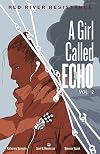
Winston Churchill once said that ‘history is written by the victors’. In Canada, that is certainly true at least in relation to First Nations and the Metis. In elementary and high school, at least when I attended way back when, the so-called Red River Rebellion of 1869-70 was seen as an example of Indigenous peoples fighting the progress that the new Canadian government and, of course, European settlers would bring to the area. Negotiations were held between the Hudson’s Bay Company show more and Canada for the transfer of what was then known as Rupert’s Land and is now part of the province of Manitoba – the Metis and First Nations who lived there were not consulted. This led to what had been classified as a rebellion by these original inhabitants and to the establishment of a provisional government led by Metis leader, Louis Riel. They were not out to overthrow the government but wanted a guarantee that their rights and way of life would be respected. The government responded to this by sending in the army. The resistance was quickly quashed and Louie Riel would eventually be tried for murder and hanged.
The graphic novel, Red River Resistance (A Girl Called Echo #2), tells the story of what has, until recently been seen, as a rebellion from the perspective of the original peoples through this tale of a young 21st c. girl, Echo Desjardine who time travels back and forth between 1869 and the present, and who witnesses the events as they unfold. It is beautifully written by Metis poet and writer, Katherena Vermette and beautifully illustrated by Scott B. Henderson. Although this is clearly aimed at a young audience, this is a side of the story that is rarely told but deserves a much wider audience especially now as Canada is being forced to deal with our sorry history of treatment of First Nations. For anyone who wants to understand the real history of an event that is seen as one of the defining chapters in the country's history as opposed to that written by the victors, I cannot recommend this highly enough.
Thanks to Netgalley and Portage & Main Press to the opportunity to read this book in exchange for an honest review show less
The graphic novel, Red River Resistance (A Girl Called Echo #2), tells the story of what has, until recently been seen, as a rebellion from the perspective of the original peoples through this tale of a young 21st c. girl, Echo Desjardine who time travels back and forth between 1869 and the present, and who witnesses the events as they unfold. It is beautifully written by Metis poet and writer, Katherena Vermette and beautifully illustrated by Scott B. Henderson. Although this is clearly aimed at a young audience, this is a side of the story that is rarely told but deserves a much wider audience especially now as Canada is being forced to deal with our sorry history of treatment of First Nations. For anyone who wants to understand the real history of an event that is seen as one of the defining chapters in the country's history as opposed to that written by the victors, I cannot recommend this highly enough.
Thanks to Netgalley and Portage & Main Press to the opportunity to read this book in exchange for an honest review show less
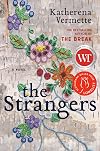
This book follows actions portrayed in Ms. Vermette's previous novel, The Break. It follows the story of The Strangers: Elsie, Phoenix, and Cedar-Sage and Elsie's mother, Margaret. It gives some back story...but not all. Notably missing are the circumstances of Phoenix's conception and why she is incarcerated. While it is a great story on its own, readers will, I think, appreciate it more (especially the very end) if they've read The Break. Or, even if they read The Break after reading The show more Strangers.
Once again, we have a story about a Metis family focusing on the women: Margaret, her daughter Elsie, and Elsie's daughters Phoenix and Cedar. It is a story of family support and estrangement...sometimes by choice, but mostly because of the way life marginalizes Indigenous peoples and then "saves" or punishes them through the child welfare and penal systems. It is a difficult book to read as the characters are beaten down over and over again, but there is some hope. It is a testament to the importance of family and culture. The writing is sharp, doesn't pull any punches, but also conveys compassion for the characters, even when they are behaving badly. show less
Once again, we have a story about a Metis family focusing on the women: Margaret, her daughter Elsie, and Elsie's daughters Phoenix and Cedar. It is a story of family support and estrangement...sometimes by choice, but mostly because of the way life marginalizes Indigenous peoples and then "saves" or punishes them through the child welfare and penal systems. It is a difficult book to read as the characters are beaten down over and over again, but there is some hope. It is a testament to the importance of family and culture. The writing is sharp, doesn't pull any punches, but also conveys compassion for the characters, even when they are behaving badly. show less
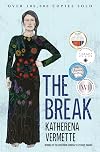
The Break by Katherena Vermette is a fabulous read about First Nations people living in the present in the North End of Winnipeg. It was short listed for both the Governor General's Prize and the Roger's Literary Prize here in Canada.
I did not expect to enjoy it so much and began reading it out of a sense of responsibility to read Can Lit and potential prize winners. Instead I was surprised by the most insightful and engaging read about First Nations people living in Winnipeg. Initially , show more Stella, who has married a man who is not First Nations ,witnesses some sort of disturbance in her front yard and calls the police. She and her husband live just a few blocks from the very rough area of the North End of Winnipeg. Two policeman arrive to take her statement. One of the policeman is an older fellow and very jaded about First Nations people , or as he is calls them - Natives. The younger and more junior policeman is Metis and takes the case much more to heart.
What follows is what led up to the attack and what happens afterwards. The story is told from many different points of view through shifting narrators. The story very much humanizes the troubled First Nations people in the North End of Winnipeg and I suppose First Nations people in general. This is not a story about resentment from living in a residential school, or coming from a Reserve, but rather focuses on the hardship of life for the disadvantaged First Nations people living in the city.
This book gave me great empathy and insight into what living as a First Nation person might be like . Instead of reading with a sense of duty, I found this a compelling and fascinating read. There is a bit of a mystery about what happened in Stella's front yard - the blood left behind - was it just a couple of drunks? A bit of a gang fight, or was there more to it? But what drives the book is the characters, who are not necessarily that likeable, but are sympathetic and behave in understandable ways.
I had a difficult time getting into the first couple of chapters, but I quickly could not put it down. First nation gangs, poverty, dysfunctional families and the prejudice and the weariness of the police that deal with this group of people really show through in this novel.
5 stars show less
I did not expect to enjoy it so much and began reading it out of a sense of responsibility to read Can Lit and potential prize winners. Instead I was surprised by the most insightful and engaging read about First Nations people living in Winnipeg. Initially , show more Stella, who has married a man who is not First Nations ,witnesses some sort of disturbance in her front yard and calls the police. She and her husband live just a few blocks from the very rough area of the North End of Winnipeg. Two policeman arrive to take her statement. One of the policeman is an older fellow and very jaded about First Nations people , or as he is calls them - Natives. The younger and more junior policeman is Metis and takes the case much more to heart.
What follows is what led up to the attack and what happens afterwards. The story is told from many different points of view through shifting narrators. The story very much humanizes the troubled First Nations people in the North End of Winnipeg and I suppose First Nations people in general. This is not a story about resentment from living in a residential school, or coming from a Reserve, but rather focuses on the hardship of life for the disadvantaged First Nations people living in the city.
This book gave me great empathy and insight into what living as a First Nation person might be like . Instead of reading with a sense of duty, I found this a compelling and fascinating read. There is a bit of a mystery about what happened in Stella's front yard - the blood left behind - was it just a couple of drunks? A bit of a gang fight, or was there more to it? But what drives the book is the characters, who are not necessarily that likeable, but are sympathetic and behave in understandable ways.
I had a difficult time getting into the first couple of chapters, but I quickly could not put it down. First nation gangs, poverty, dysfunctional families and the prejudice and the weariness of the police that deal with this group of people really show through in this novel.
5 stars show less
A very strong portrayal of the impact of a violent sexual attack on a young girl and her family in an indigenous community in Canada. It is successful in illuminating the wider societal issues through the personal and intimate. It portrays a fractured community but one which still has strengths and continues to draw on its traditional cultural values, albeit inconsistently. As portrayed in this book, the strength is mainly in the women - the men, one way or another, seem to disappear and show more play very little part in the family. Mind you, the men get very little chance to experess themselves, with 9 out of the 10 voices being female. I see this less as a criticism, more as a limitation in scope of the book. 13 September 2018 show less
Lists
Autochtonie (1)
Awards


You May Also Like


Associated Authors
Statistics
- Works
- 32
- Also by
- 8
- Members
- 1,995
- Popularity
- #12,901
- Rating
- 4.0
- Reviews
- 83
- ISBNs
- 133
- Languages
- 4
- Favorited
- 2