
Alicia Elliott
Author of A Mind Spread Out on the Ground
About the Author
Image credit: Taken from author profile: https://www.penguinrandomhouse.com/authors/2181223/alicia-elliott/
Works by Alicia Elliott
Associated Works
Shapes of Native Nonfiction: Collected Essays by Contemporary Writers (2019) — Contributor — 85 copies
Tagged
Common Knowledge
- Birthdate
- 1987
- Gender
- female
- Agent
- Stephanie Sinclair
- Nationality
- Mohawk
Haudenosaunee
USA (birth)
Canada - Birthplace
- USA
- Places of residence
- Buffalo, New York, USA
Cleveland, Ohio, USA
Six Nations Reserve, Ontario, Canada
Brantford, Ontario, Canada
Members
Reviews
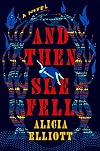
I just finished And Then She Fell by Alicia Elliott. I kept thinking I would abandon it because it is such a good look at the mind of a suffering woman that it overwhelmed me. There's a combination of racism, sexism, and, as the author states "sanityism". All you need to do is enter Alice's mind to know you don't want to live there, but even in her paranoia and self-hatred she makes sense. I'll probably read more by Elliott, but it will be with trepidation.
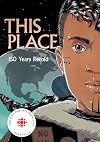
”Indigenous writers have pointed out that, as Indigenous people, we all live in a post-apocalyptic world. The world as we knew it ended the moment colonialism started to creep across these lands. But we have continued to tell our stories; we have continued to adapt. Despite everything, we have survived.”
Content warnings:
Oh, boy, lots. Because this talks about the crimes committed against Indigenous peoples by the Canadian government, things can get pretty intense and tough to read.
- show more genocide
- racism against Indigenous people
- kidnapping
- cannibalism
Maybe I haven’t fully read enough graphic novels, but I haven’t come across any graphic novel anthologies before this one. And what a wonderful idea! Especially in this case because as has been said (I think in the foreword), graphic novels are a very accessible and easy way to learn about things that may be less so in a thick nonfiction book written in difficult academic text (and they're more straightforward than fiction).
This anthology contains eleven graphic novel shorts, each with a summary and timeline of events talking a bit about the events in the graphic novel or what inspired it. All of the stories are about Indigenous peoples living in what’s known as Canada.
As with all anthologies, some stories are hit and miss. In this case, it’s the art styles. Some of them aren’t my thing, but none of them are objectively awful. All of the stories, however, are engaging and serve more as springboards into further research than they do a thorough explanation or overview of things. Which is a great thing, actually! I have more notes saved to look things into from this anthology than from many nonfiction books. By covering lots of ground, this anthology is able to get people interested and outraged by what has happened to many of these different Indigenous peoples.
I really hope this is something that will be done more often, because I think it’s very effective. show less
Content warnings:
Oh, boy, lots. Because this talks about the crimes committed against Indigenous peoples by the Canadian government, things can get pretty intense and tough to read.
- show more genocide
- racism against Indigenous people
- kidnapping
- cannibalism
Maybe I haven’t fully read enough graphic novels, but I haven’t come across any graphic novel anthologies before this one. And what a wonderful idea! Especially in this case because as has been said (I think in the foreword), graphic novels are a very accessible and easy way to learn about things that may be less so in a thick nonfiction book written in difficult academic text (and they're more straightforward than fiction).
This anthology contains eleven graphic novel shorts, each with a summary and timeline of events talking a bit about the events in the graphic novel or what inspired it. All of the stories are about Indigenous peoples living in what’s known as Canada.
As with all anthologies, some stories are hit and miss. In this case, it’s the art styles. Some of them aren’t my thing, but none of them are objectively awful. All of the stories, however, are engaging and serve more as springboards into further research than they do a thorough explanation or overview of things. Which is a great thing, actually! I have more notes saved to look things into from this anthology than from many nonfiction books. By covering lots of ground, this anthology is able to get people interested and outraged by what has happened to many of these different Indigenous peoples.
I really hope this is something that will be done more often, because I think it’s very effective. show less
In this teen graphic, Canadian First Nation, Métis and Inuit artists and storytellers depict moments and movements, from the unbearably painful to the boldly triumphant, from the past 150 years from a native perspective. The narratives are intensely personal, and at least one had me tearing up while reading. I selected this title to fulfill the "an anthology featuring diverse voices" category for Read Harder this year, and I'm so glad I did. There is a quote in the book's Foreword that show more especially resonated with me: "Indigenous writers have pointed out that, as indigenous people, we all live in a post-apocalyptic world. The world as we knew it ended the moment colonialism started to creep across these lands." I had to sit with that for a moment, as I had not previously thought about Native history or American history in those terms. show less
The graphic novel, This Place: 150 Years Retold, showcases the voices of eleven Indigenous writers as well as several Indigenous artists. It is a powerful telling of 150 years of Canadian history from the perspective of different First Nations members, Inuit, and Metis, voices rarely heard in our history which is told mostly from the perspective of European settlers.
As in any anthology, the art is somewhat uneven and varies from black and white to full eye-catching colour. Overall, though, show more it is gorgeous and complements the stories which are uniformly well-written and shine a light on important parts of Canadian history since Confederation that few of us have learned, certainly not in school - stories about the horrors of the Residential schools, the kidnapping of their children in the '60s scoop, and the theft of land, culture, and language. Although the stories are (mostly) fictional told in the form of time travel or dystopian tales, there are references to real historical figures like Metis businesswoman Annie Bannatyne (who I had never heard of) and Louie Riel and real historical events like the Red River Rebellion, the Oka crisis, as well as one story about a young Cree boy from the future sent back to witness the effects of climate change.
This Place is a beautiful, heartbreaking, and important book. For those who think graphic novels are for children, yes, this one definitely is and for teens, adults, classrooms, and libraries as well. It gives a side of the story that has too long been hidden but needs to be told and I cannot recommend it highly enough.
Thanks to Netgalley and Portage & Main Press for the opportunity to read this book in exchange for an honest review show less
As in any anthology, the art is somewhat uneven and varies from black and white to full eye-catching colour. Overall, though, show more it is gorgeous and complements the stories which are uniformly well-written and shine a light on important parts of Canadian history since Confederation that few of us have learned, certainly not in school - stories about the horrors of the Residential schools, the kidnapping of their children in the '60s scoop, and the theft of land, culture, and language. Although the stories are (mostly) fictional told in the form of time travel or dystopian tales, there are references to real historical figures like Metis businesswoman Annie Bannatyne (who I had never heard of) and Louie Riel and real historical events like the Red River Rebellion, the Oka crisis, as well as one story about a young Cree boy from the future sent back to witness the effects of climate change.
This Place is a beautiful, heartbreaking, and important book. For those who think graphic novels are for children, yes, this one definitely is and for teens, adults, classrooms, and libraries as well. It gives a side of the story that has too long been hidden but needs to be told and I cannot recommend it highly enough.
Thanks to Netgalley and Portage & Main Press for the opportunity to read this book in exchange for an honest review show less
Lists
Autochtonie (1)
Awards


You May Also Like


Associated Authors
Statistics
- Works
- 4
- Also by
- 3
- Members
- 1,025
- Popularity
- #25,136
- Rating
- 4.1
- Reviews
- 37
- ISBNs
- 38
- Languages
- 1